
Chef Juliette
Liqueur-ice Preparations
Glaces aux liqueurs hold one exact balance: fruit-ice syrup, lemon, and liqueur measured at one part to ten, with tea, orange rind, or noyau making each spirit taste more completely itself.
Updated August 3, 2026
Escoffier's ices, carried from the salt-and-ice barrel to a home freezer. The chapter opens on the two operations that decide every one of them, the making of the preparation and the freezing, and it is the freezing that actually decides the thing. Then the cream ices, one custard of yolks, sugar, and milk running under all of them, told apart only by what is infused into it: almonds sweet and bitter, filberts torrified, coffee crushed fresh, chocolate, walnut, pistachio, pralin, tea, vanilla. Asparagus too, which sounds like a joke and is not. Then the fruit ices, built on syrup at 32 degrees instead of cream: apricot, pineapple, banana, cherry with its stones pounded in, lemon, strawberry, raspberry, red-currant, tangerine, melon, orange, peach, pear, plum, grape, and violet petals steeped in boiling syrup. Then the liqueur ices, and then the composed glaces, a mould clothed with one ice and filled with another: Alhambra, Carmen, Comtesse Marie, Dora with its Bar-le-Duc currants, Étoile du Berger on a disc of spun sugar, and the tangerines hollowed, refilled, and frosted inside their own skins. Four things decide the lot: a custard stirred to the veil of a spoon and never boiled, lemon juice in every fruit ice so the fruit tastes of itself, the freezer worked without pause so the ice sets creamy instead of grainy, and every layer frozen firm before the next goes in. The original assumed broken ice by the barrow, rock salt, saltpetre, and a commis to turn the handle; a churn does that work now, and a bowl beaten hard every half hour will do it without one. C'est la même grammaire. À table!
A cooking platform built around craft, culture, and the stories behind what we eat.
Chef Juliette
Glaces aux liqueurs hold one exact balance: fruit-ice syrup, lemon, and liqueur measured at one part to ten, with tea, orange rind, or noyau making each spirit taste more completely itself.

Chef Juliette
Glace aux Poires Williams turns ripe pear, sugar, lemon, and exact syrup density into a pale, fragrant ice: work quickly, sieve finely, and 22° Baumé gives the spoon its clean, yielding texture.

Chef Juliette
Glace aux raisins is sugar measured as structure: pressed sweet grapes, three lemons, and a precise 20° Baumé reading churn into a brilliant, fine-grained ice that tastes first of fruit.

Chef Juliette
Glace aux asperges sounds mischievous, but its lesson is exact: blanch the tips for two minutes, no more, then let milk, cream, and cold turn their green flavor into silk.
Chef Juliette
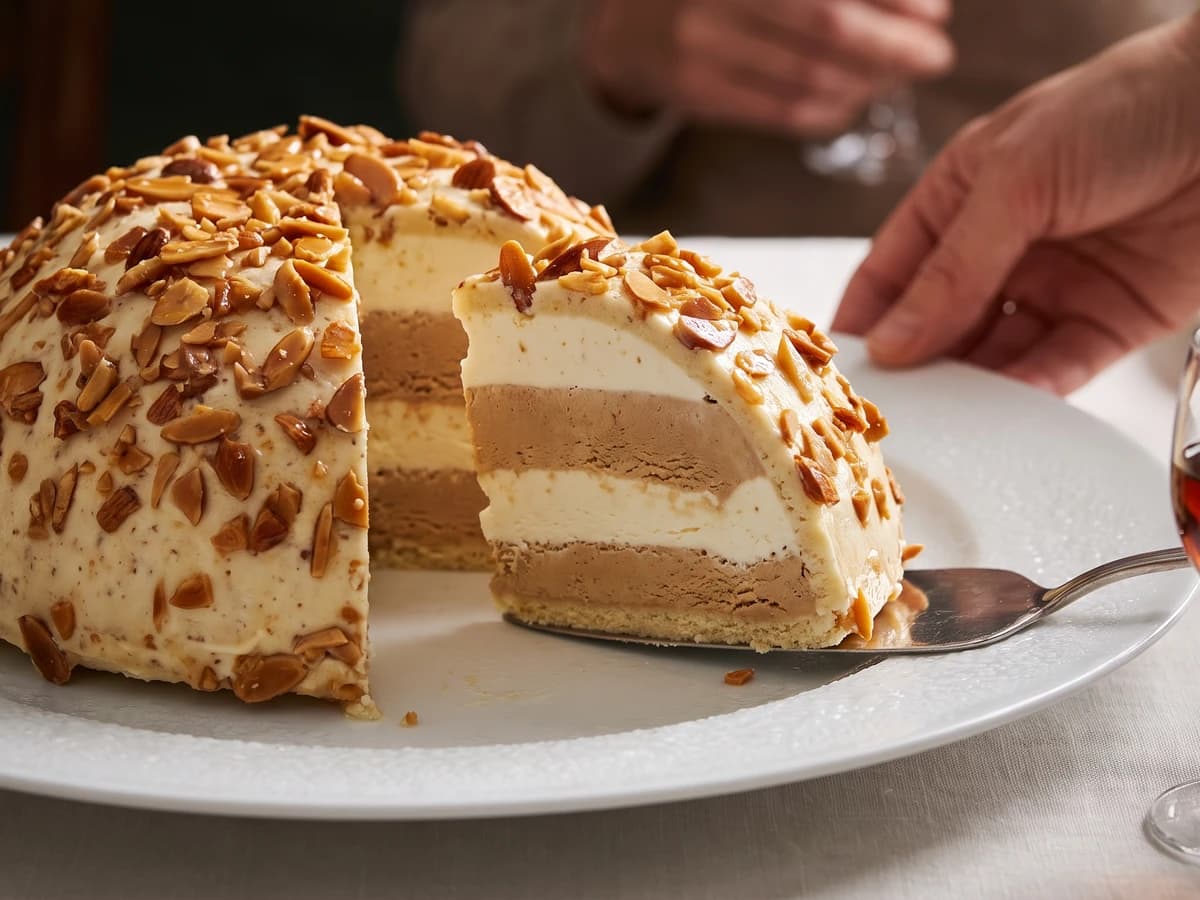
Pralined vanilla forms the cold shell around alternating rum-chestnut ice and vanilla Chantilly, then caramelized almond splinters add the crisp finish. Temperature is the discipline, and quick hands make the bombe.
Chef Juliette
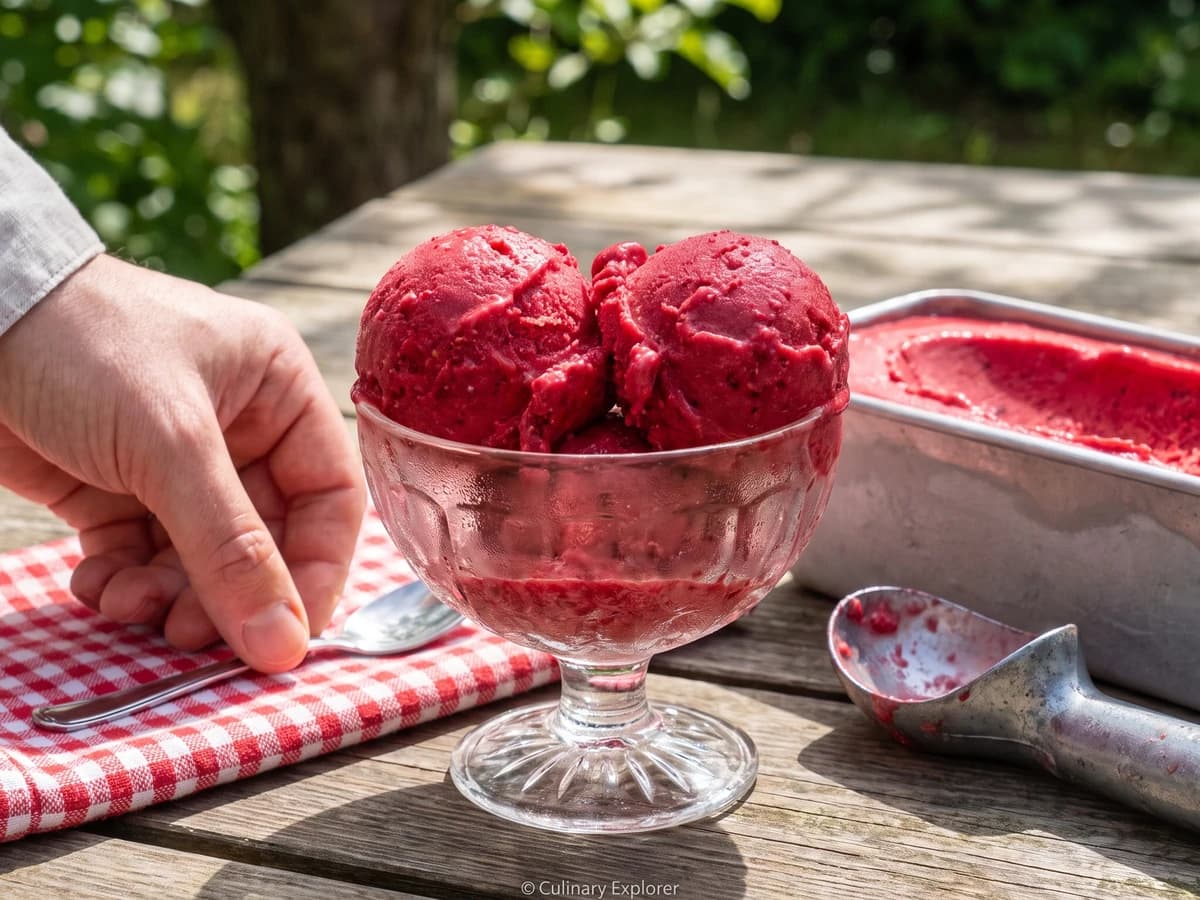
Glace aux framboises turns purée, syrup, orange, and lemon into a ruby ice, then adds cold cream at the half-set stage for a softer scoop without losing the fruit's bright edge.
Chef Juliette
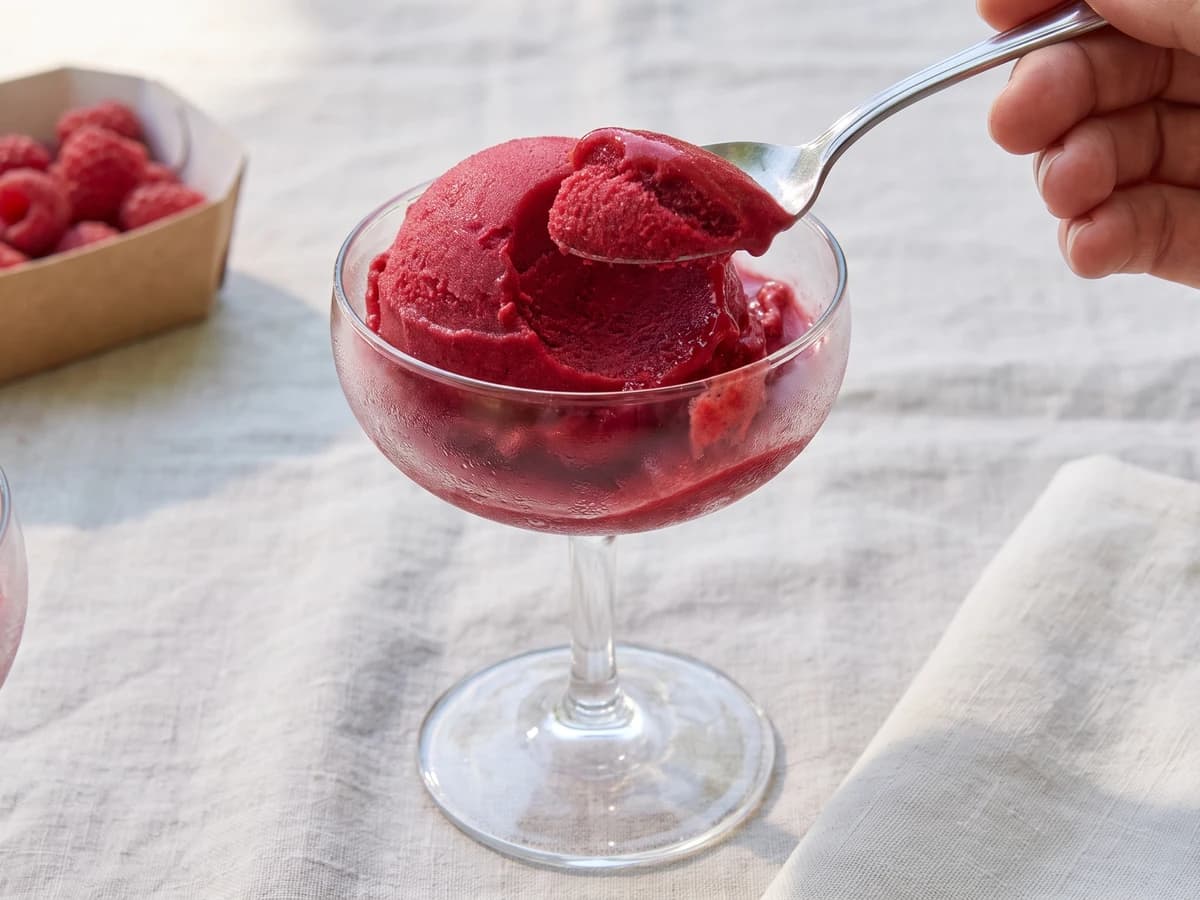
Two classical paths, one clean lesson: balance fruit and sugar while the mixture is cold, then churn it fine. Master that correction and every ripe fruit can become a proper glace.
Chef Juliette
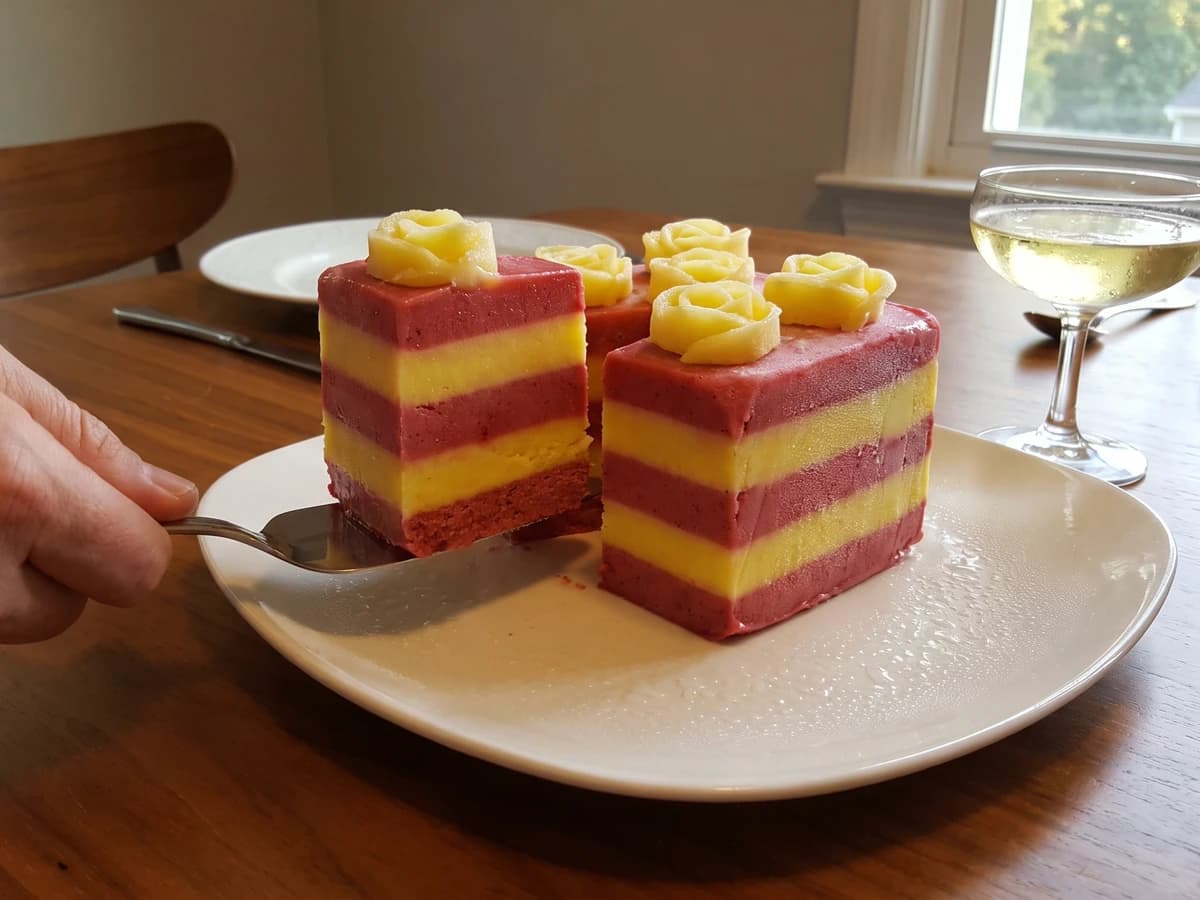
A square of vivid strawberry and pineapple ices, built in six exact layers and finished with lemon ice: the frozen dessert that teaches patience, clean edges, and the value of a level hand.

Chef Juliette
Leaf-on tangerines become their own frozen dessert: bright, smooth fruit ice tucked back into frosted shells, each green-topped lid restored for a celebration that looks grand and asks only for care.

Chef Juliette
Glace au melon is summer held cold: ripe perfumed fruit, measured syrup, bright citrus, and orange flower, churned fine enough to melt on the tongue before its fragrance disappears.
Chef Juliette
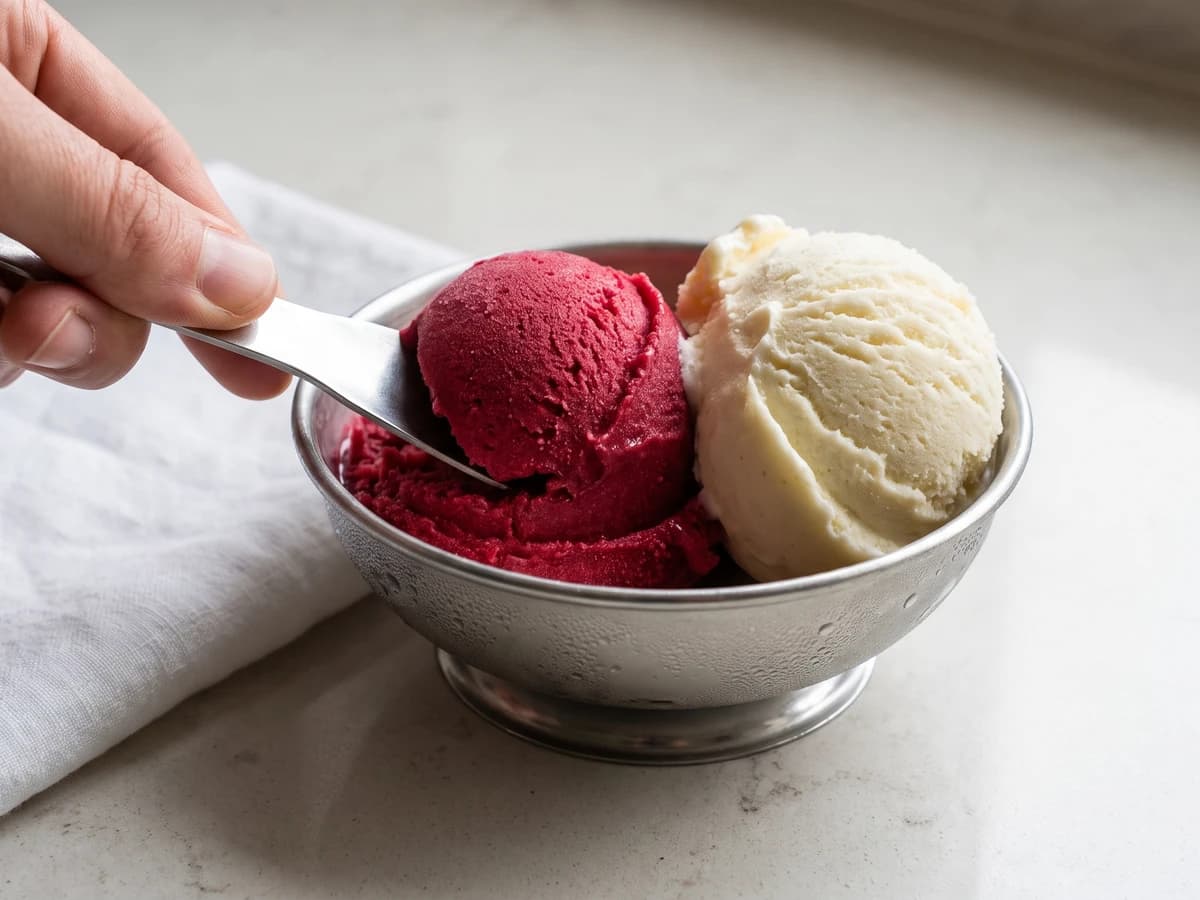
One cream base, one fruit-syrup base, and the classical rule beneath both: sugar and yolks set the texture before the freezer does, so measure first and churn only when the balance is right.

Chef Juliette
Glaces aux fruits teach the governing balance of frozen fruit: 32° syrup for body, strained purée for character, and at least one whole lemon per quart so the fruit tastes more fully of itself.
Chef Juliette
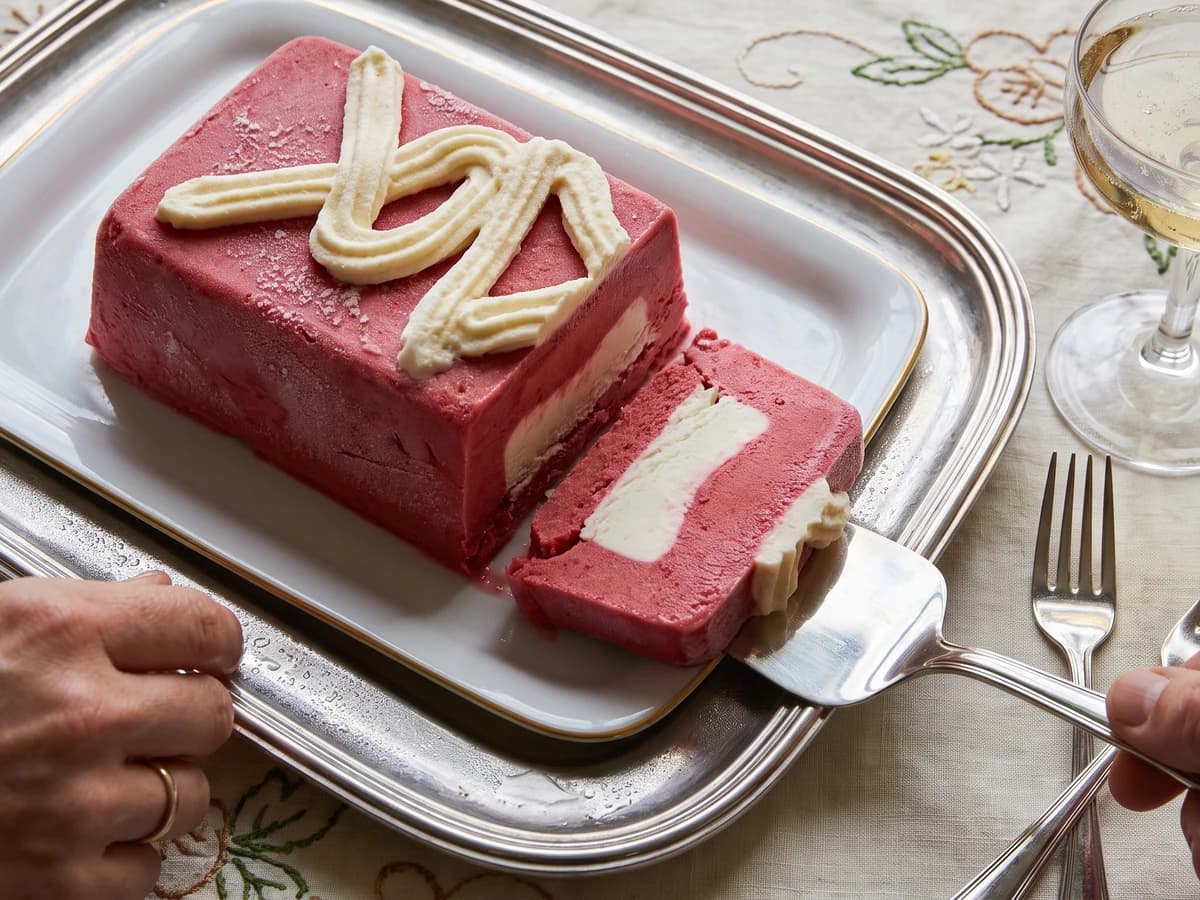
Glace Comtesse Marie turns two familiar ices into a formal frozen entremets: strawberry wrapped around vanilla, then crowned with cold, deeply grooved vanilla ribbons that hold their shape.

Chef Juliette
Chocolate ice forms the scalloped shell, vanilla Chantilly fills its heart, and tart pineapple ice crowns the unmoulded Glace Marie-Thérèse: a frozen celebration built on timing, contrast, and one decisive soft lining.
Chef Juliette
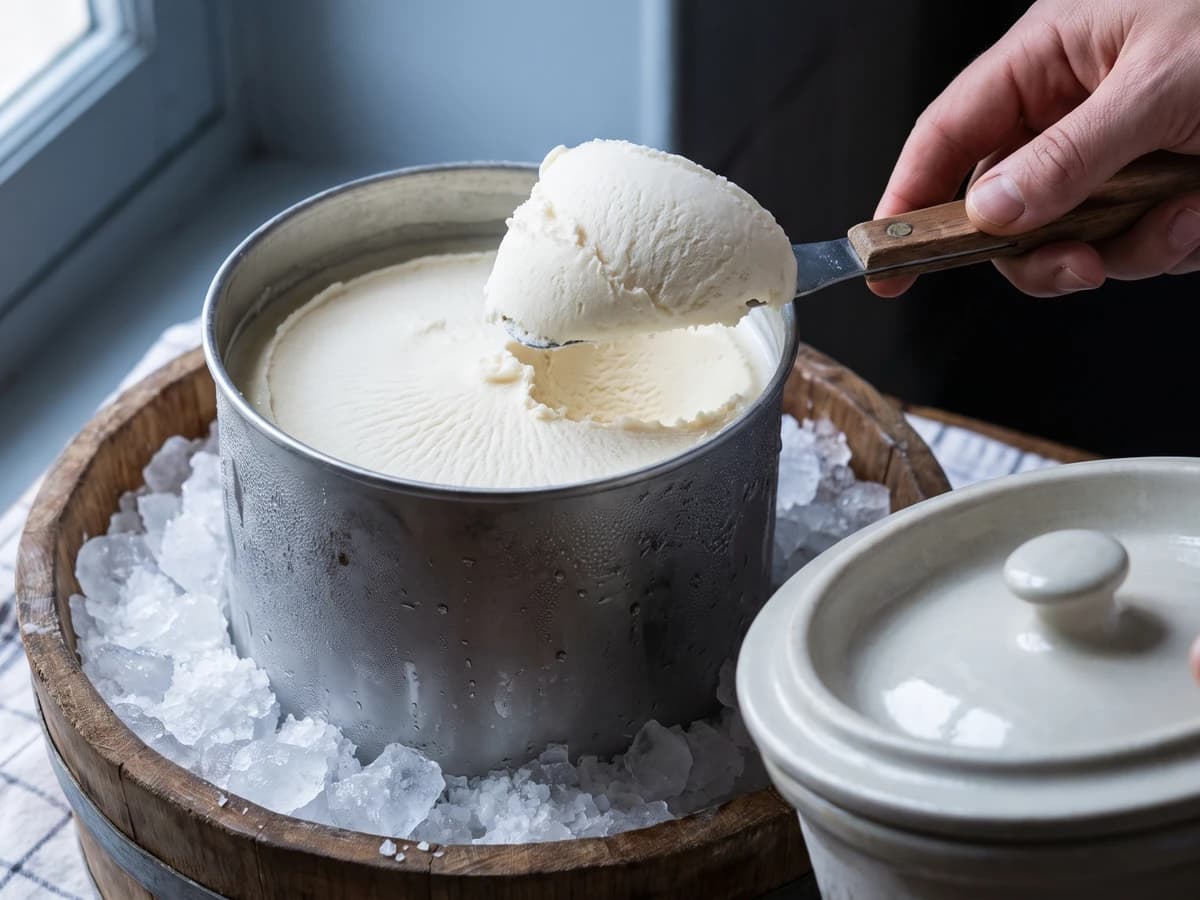
Freezing is the recipe: pack ice hard with salt, keep the canister moving, and scrape each frozen film into the base until the Glaces turn smooth, fine, and homogeneous.

Chef Juliette
Vanilla ice clothes a scallop mould around a vivid pineapple centre, two prepared ices arranged with enough precision that every slice gives cream, fruit, and the clean pleasure of contrast.
Chef Juliette
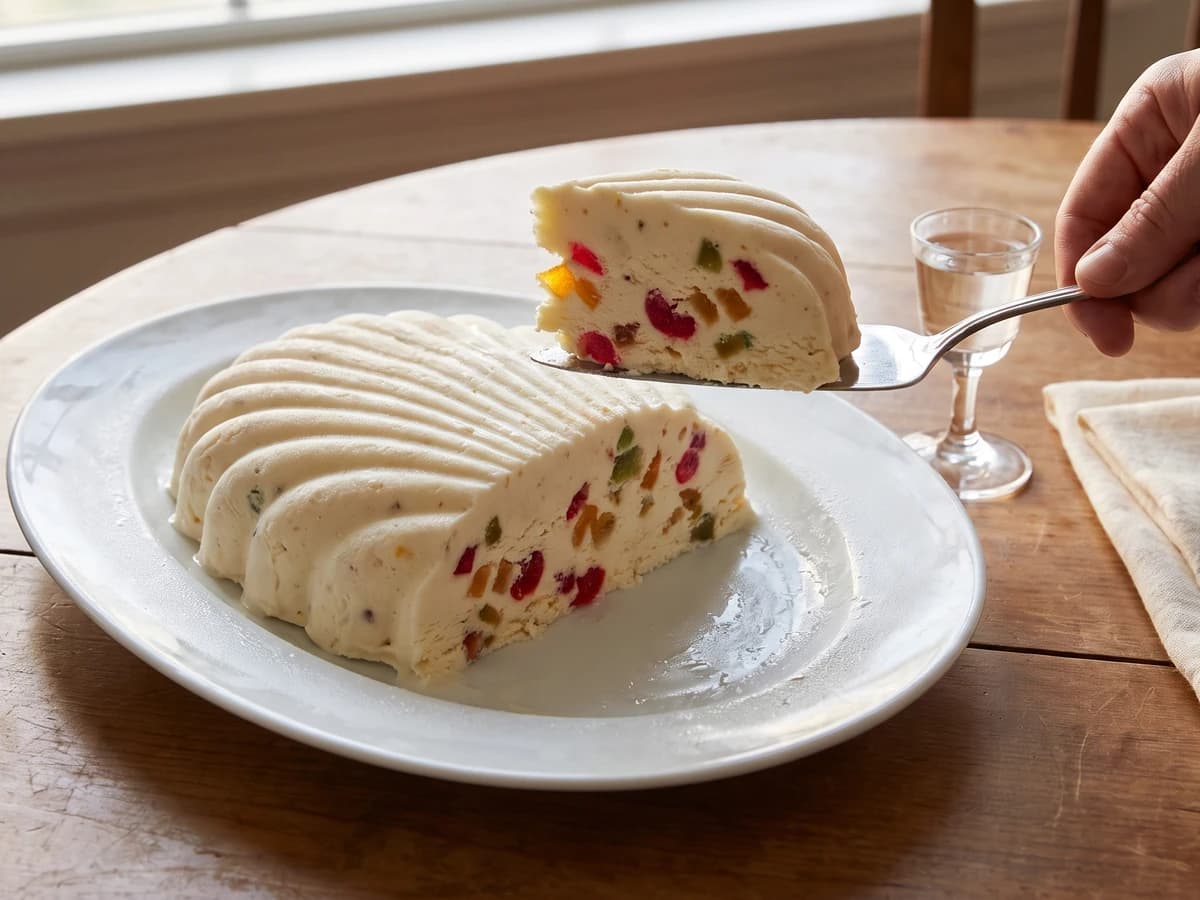
Madeleine glacée turns vanilla ice, soft Chantilly, and kirsch-tender candied fruit into a scallop-shell centerpiece, creamy enough to slice and generous enough for a holiday table.

Chef Juliette
Glace aux pêches is ripe peach held at its brightest: equal measures of fresh purée and calibrated syrup, sharpened with lemon, then frozen smooth enough to yield under the spoon.

Chef Juliette
A vanilla ice shell around kümmel-scented Chantilly and strawberries, moulded as a narrow scallop and served in generous slices: cold, fragrant, and splendid without a pastry brigade.

Chef Juliette
Glace aux Bananes proves that sweetness needs opposition: ripe banana and maraschino softened by a two-hour maceration, then cut with all three lemons and churned to a pale, fragrant ice.
Chef Juliette
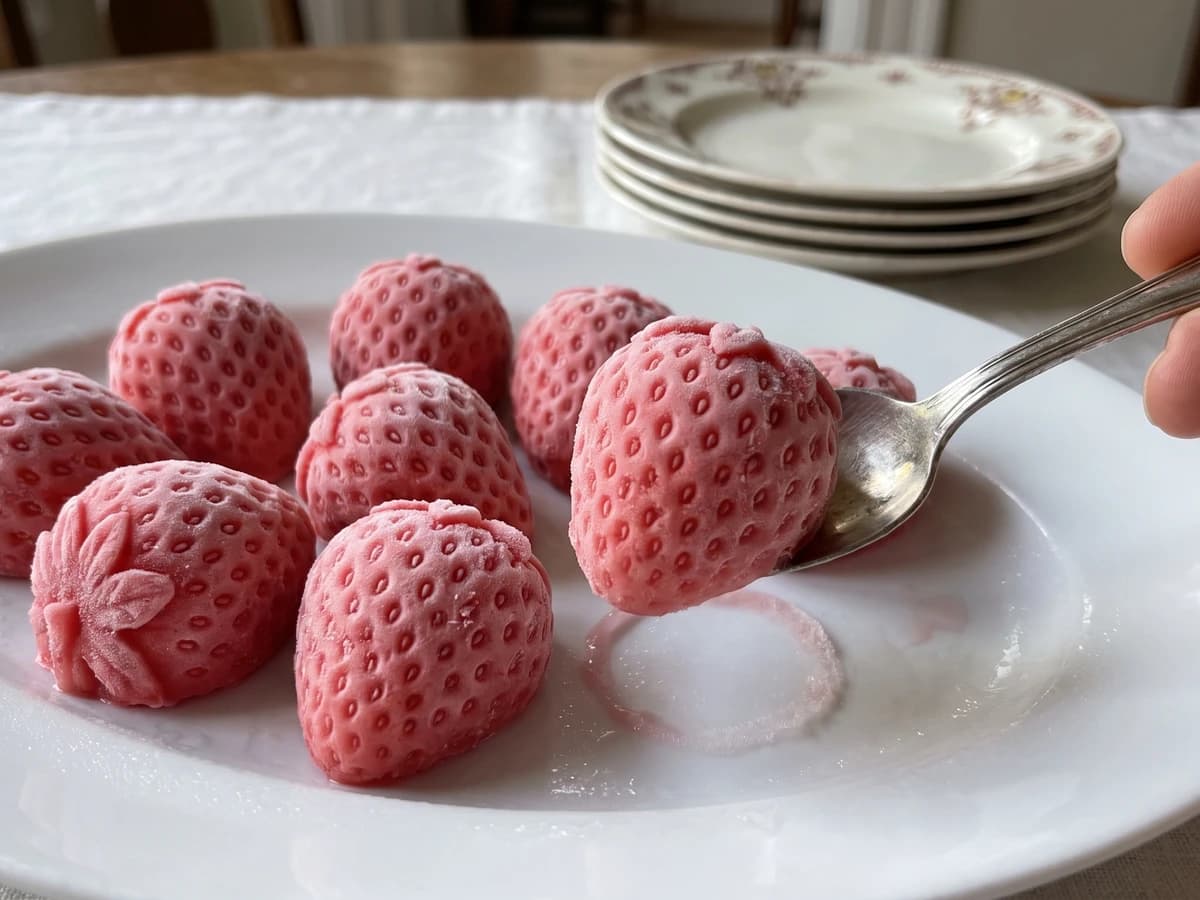
Strawberry glace pressed into fruit moulds, frozen hard, and turned out with every leaf and seed intact: a celebratory frozen dessert where flavour completes the shape.

Chef Juliette
Glace Dame-Jeanne teaches the frozen mould: a clean shell of vanilla ice cream enclosing orange-blossom pralin Chantilly, fine enough to melt as silk instead of crunching like sand.

Chef Juliette
Frosted tangerine shells hide a pale citrus mousse studded with whole Chartreuse bonbons, each cold pearl keeping its herbal bite against bright fruit in a celebration dessert made for the home freezer.

Chef Juliette
Ripe cherries, kirsched syrup, lemon, and one restrained almond note become a garnet ice that scoops softly, tastes intensely of its fruit, and waits beautifully for the long outdoor table.

Chef Juliette
Hot syrup captures the perfume of tangerine zest, fresh citrus sharpens it, and a careful sugar balance keeps every spoonful bright, smooth, and clean on the palate.
Chef Juliette
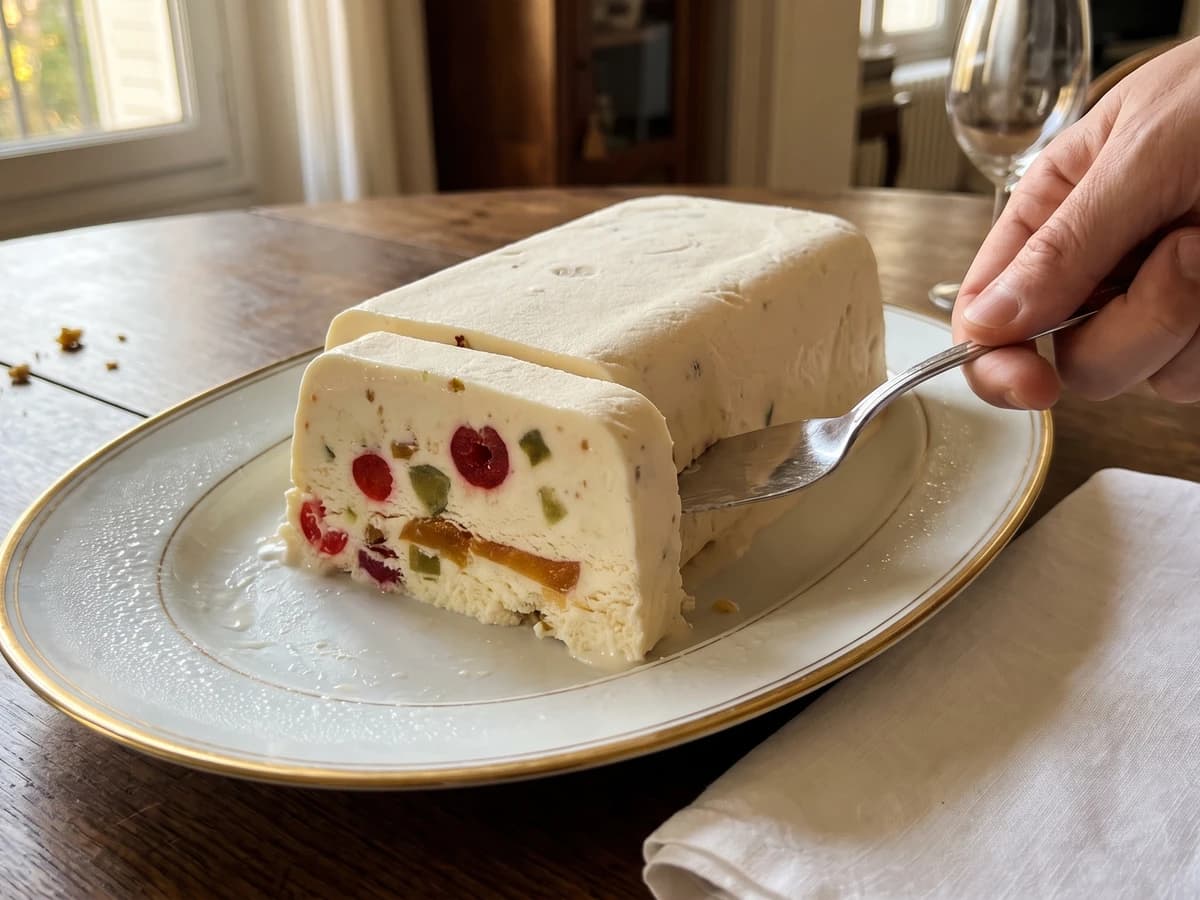
Vanilla ice cream carries jewel-bright candied fruit steeped in kirsch, while thin apricot layers cut the richness. Freeze it in one mould, unmould it whole, and let every generous slice show the pattern.
Chef Juliette
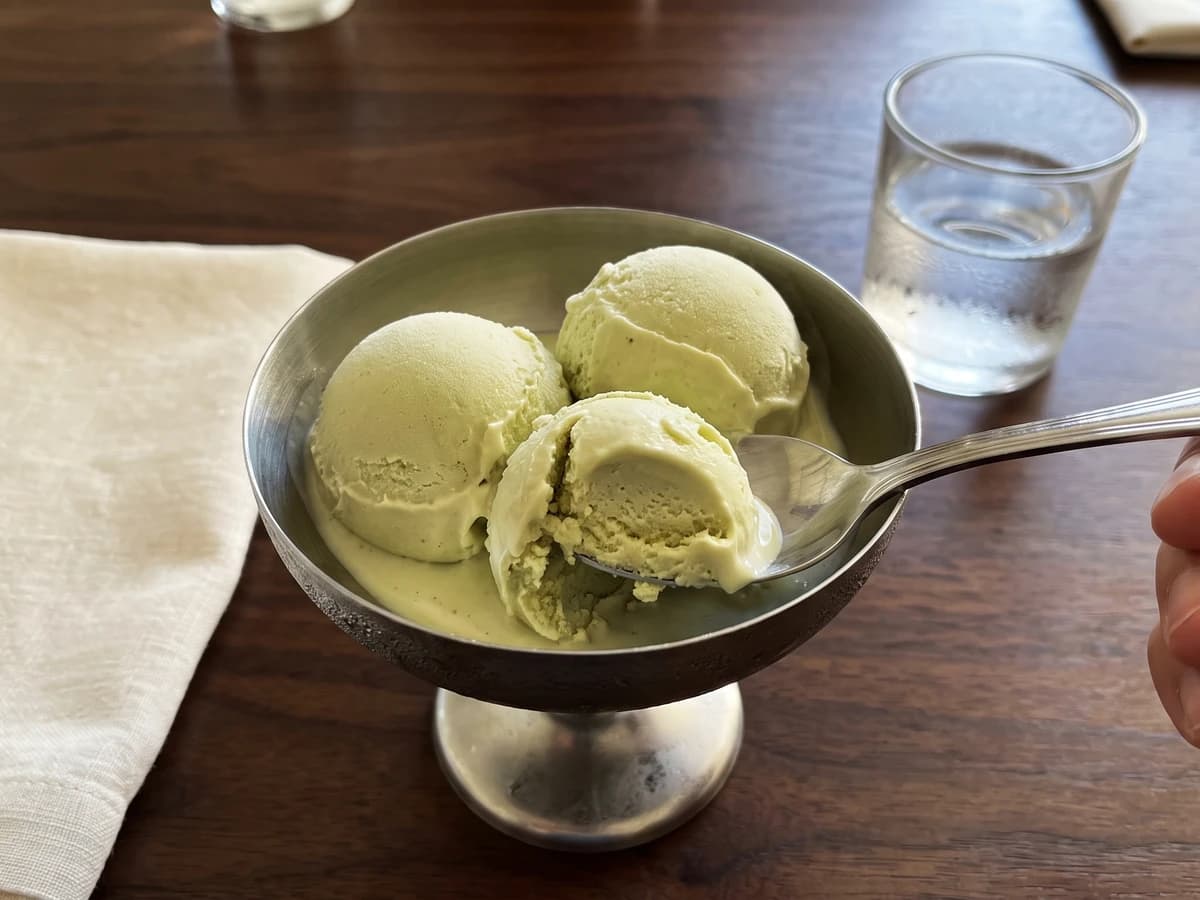
Crème glacée aux pistaches turns two nuts into one clear flavour: pistachio for fragrance and colour, sweet almond for body, held in a silken custard and churned until dense and supple.

Chef Juliette
Glace aux Groseilles proves that balance is the dessert: red-currant juice and syrup, frozen fine, with the fruit’s own acidity doing the work lemon usually must.

Chef Juliette
Raspberry ice forms a crimson star around pale Bénédictine mousse, set on a crisp disc of sucre filé whose fine rays flash between the points at the moment of serving.
Chef Juliette
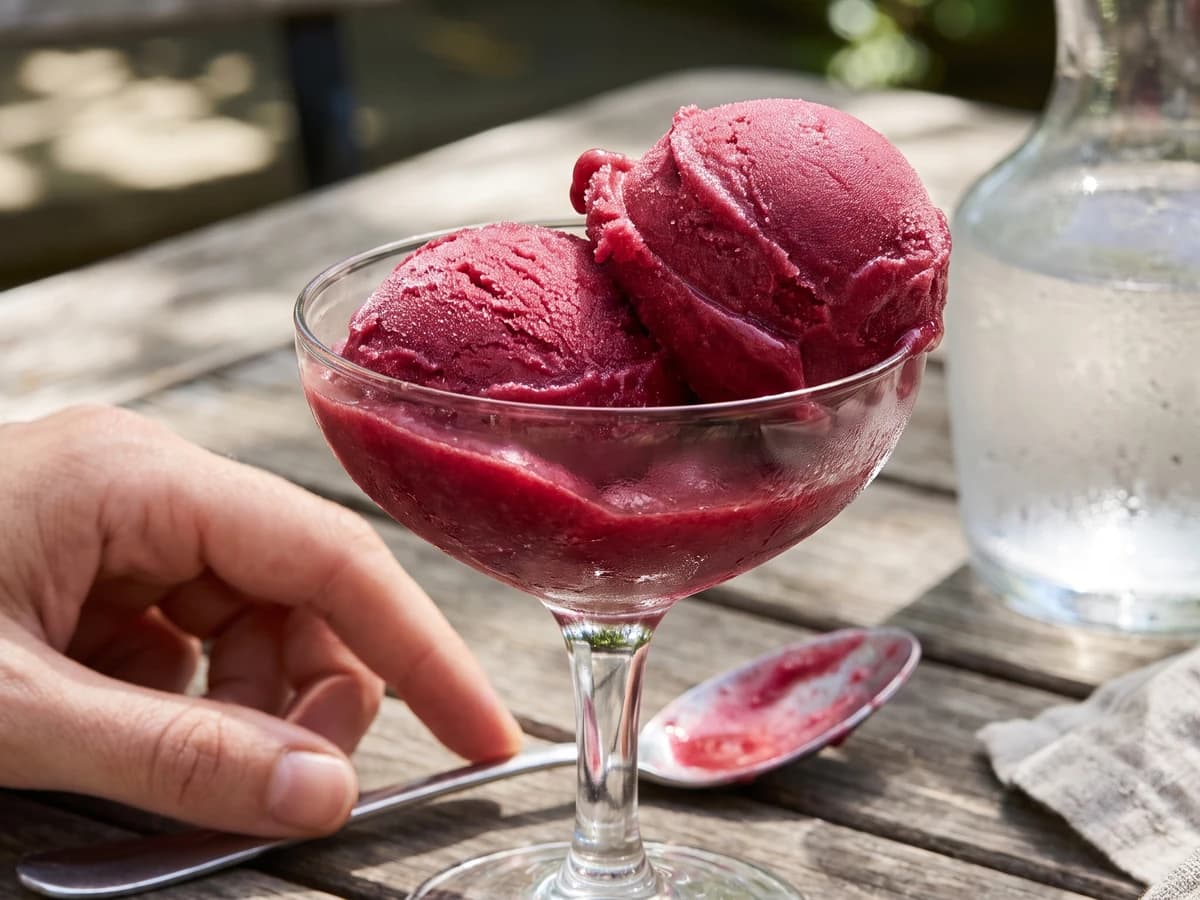
Glace aux prunes, calibrated to 20° Baumé before churning, lets ripe fruit, lemon, and syrup meet in the exact balance that keeps each spoonful bright, smooth, and softly scoopable.
Chef Juliette
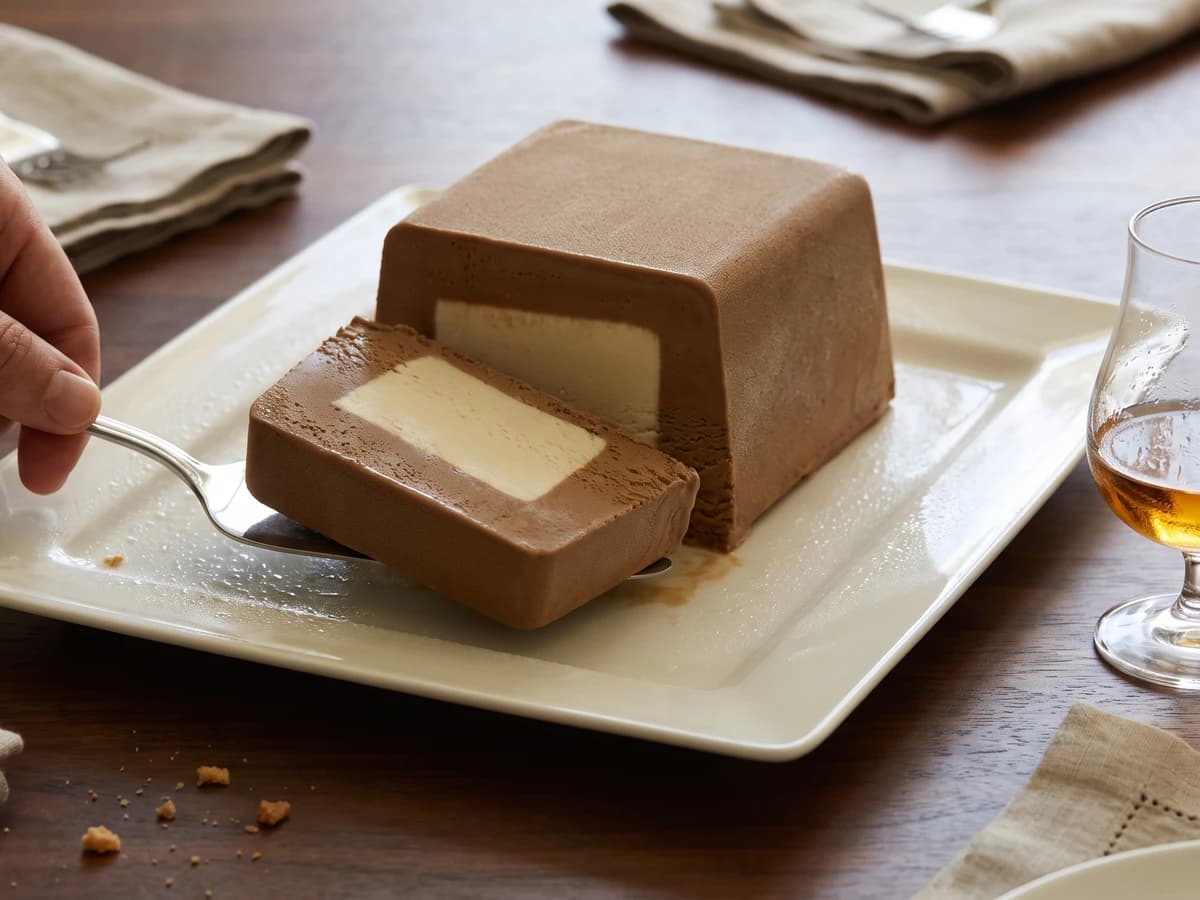
Two ices, one clean square: deep coffee around a pale Cognac center, served without garnish. Glace Francillon teaches that moulding rests on temperature, timing, and a decisive unmoulding.

Chef Juliette
Glace aux fraises keeps the berries raw and vivid, then balances their purée with superfine sugar, orange, lemon, and just enough water for a clean, soft scoop under summer shade.
Chef Juliette
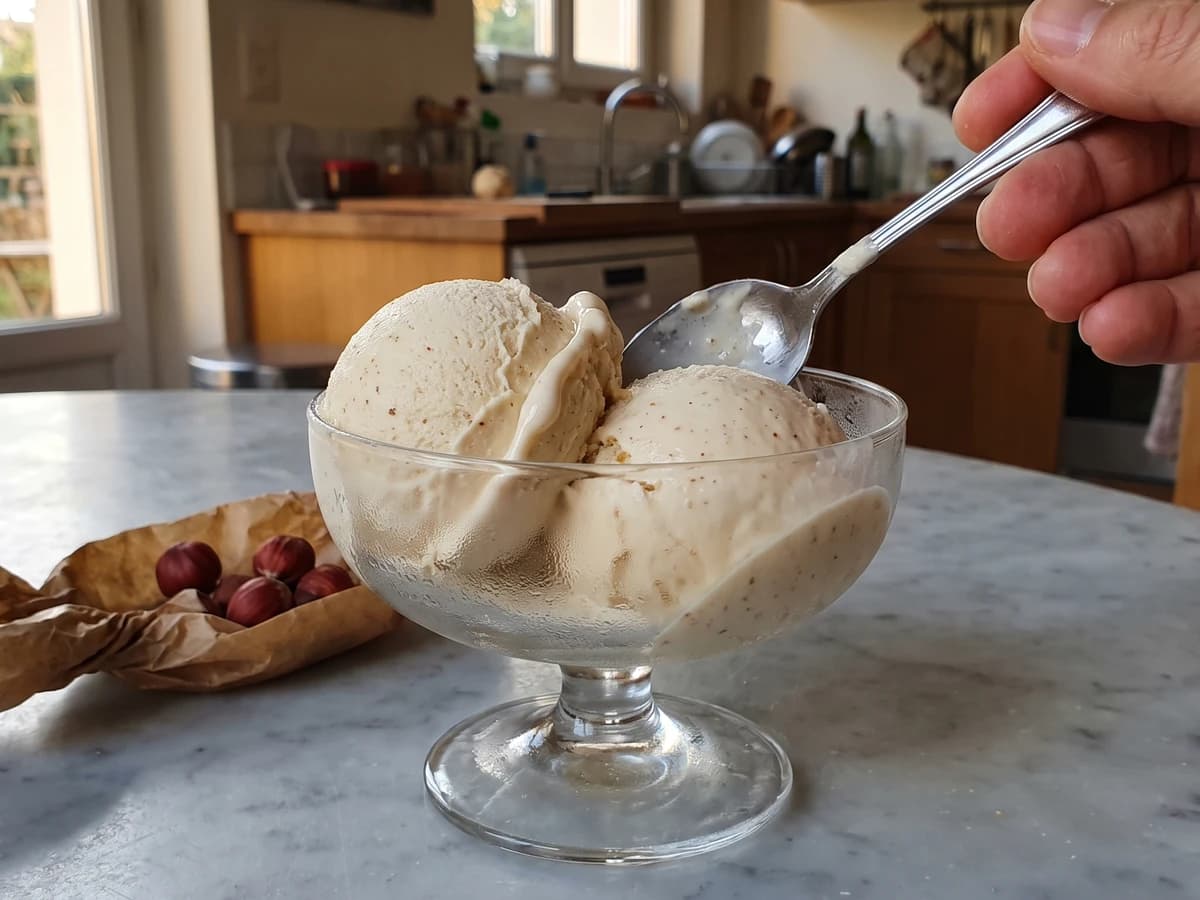
Lightly torrified filberts, pounded with milk and infused for twenty minutes, give this custard ice its round, toasted perfume. Stop at pale gold, because one shade darker turns the whole churn bitter.
Chef Juliette
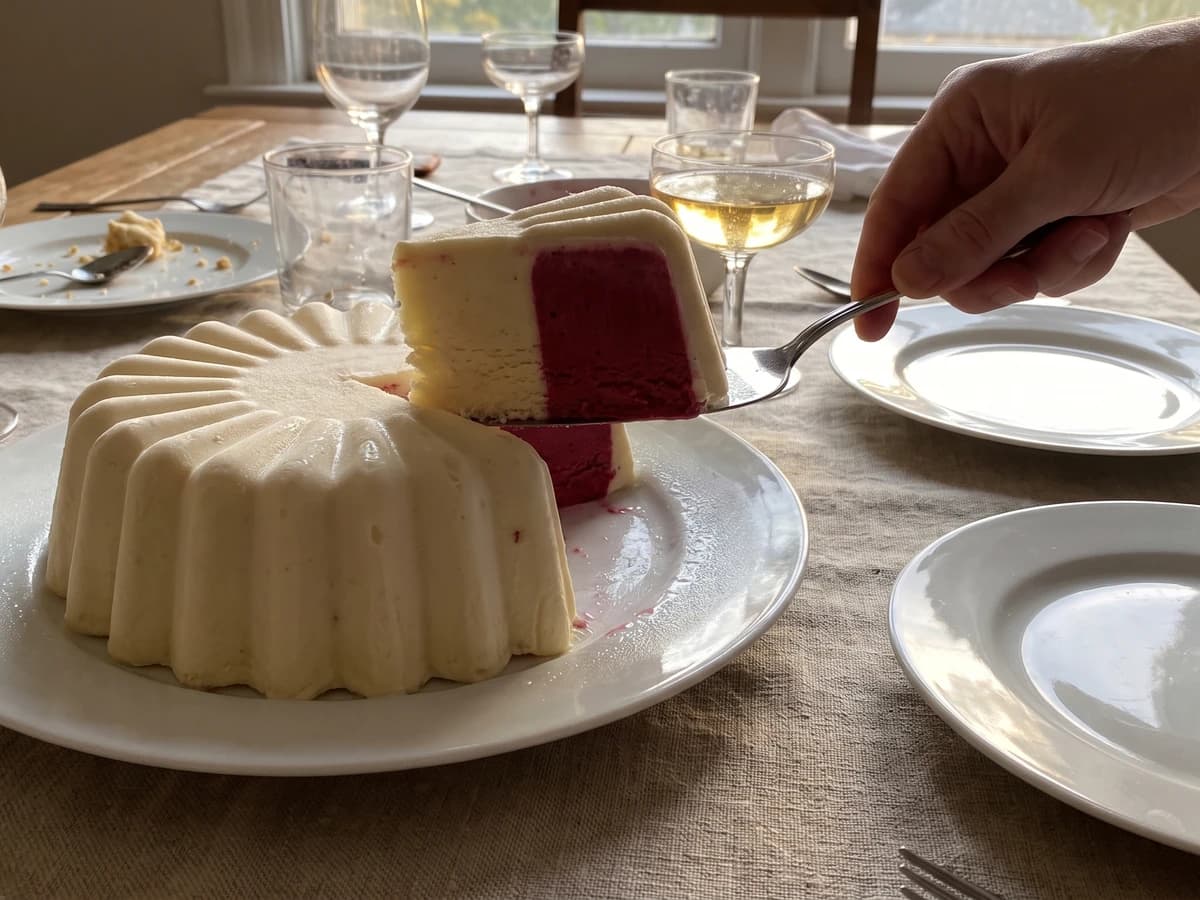
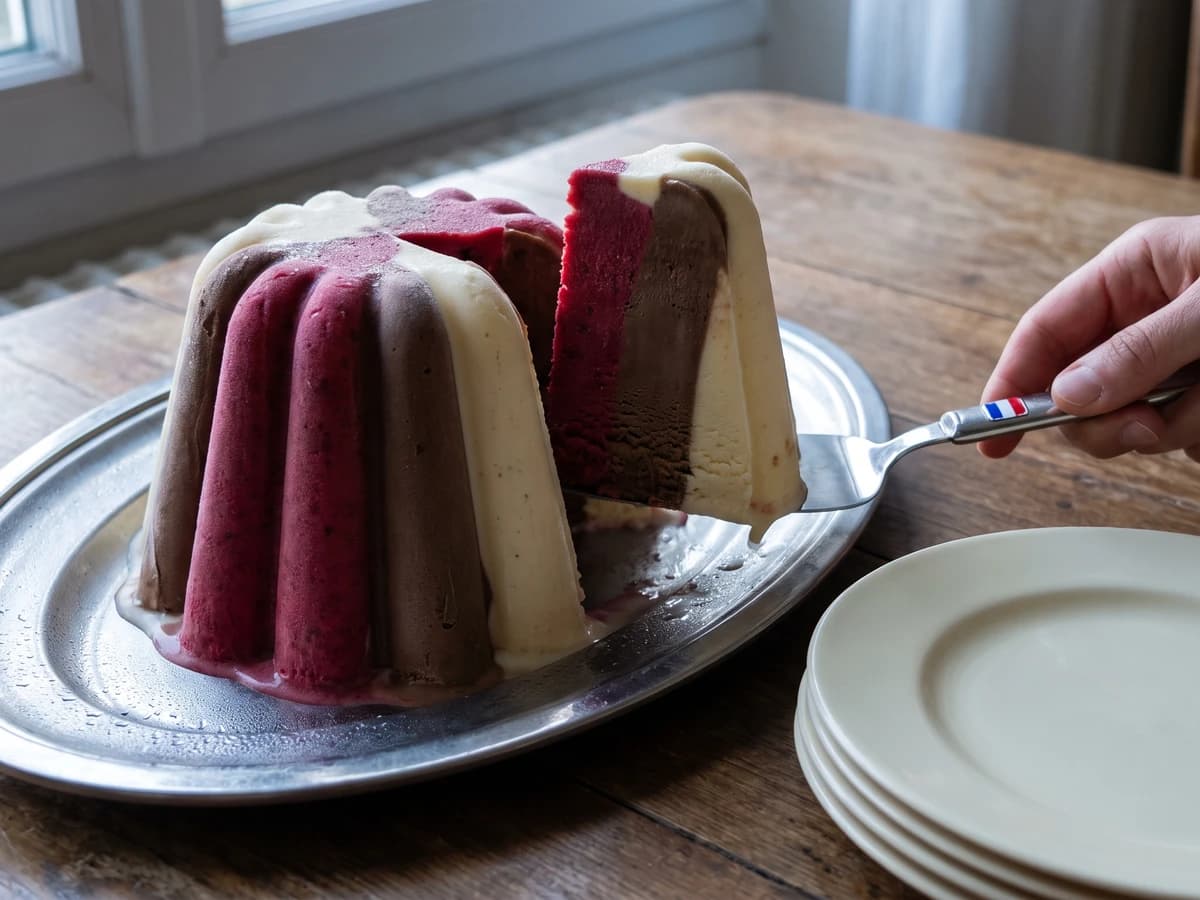
No cheese, only the confectioner's joke: vanilla crème glacée and vivid raspberry sorbet packed vertically in a fluted mould, frozen firm, and turned out with both colours running from crown to base.
Chef Juliette
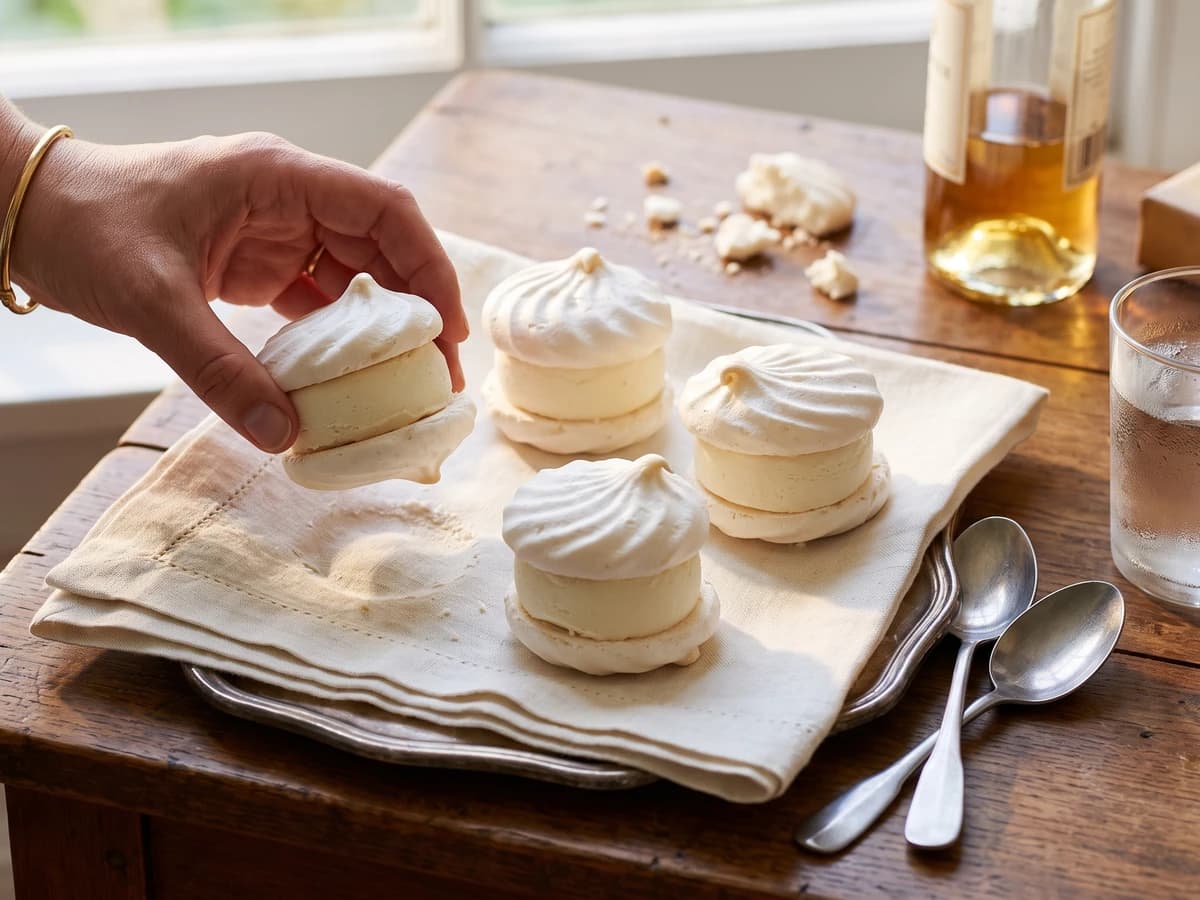
Dry, crisp meringue shells meet spoon-moulded ice only at the last moment, served singly on folded linen or joined in pairs for a celebration dessert built on timing, not fuss.
Chef Juliette
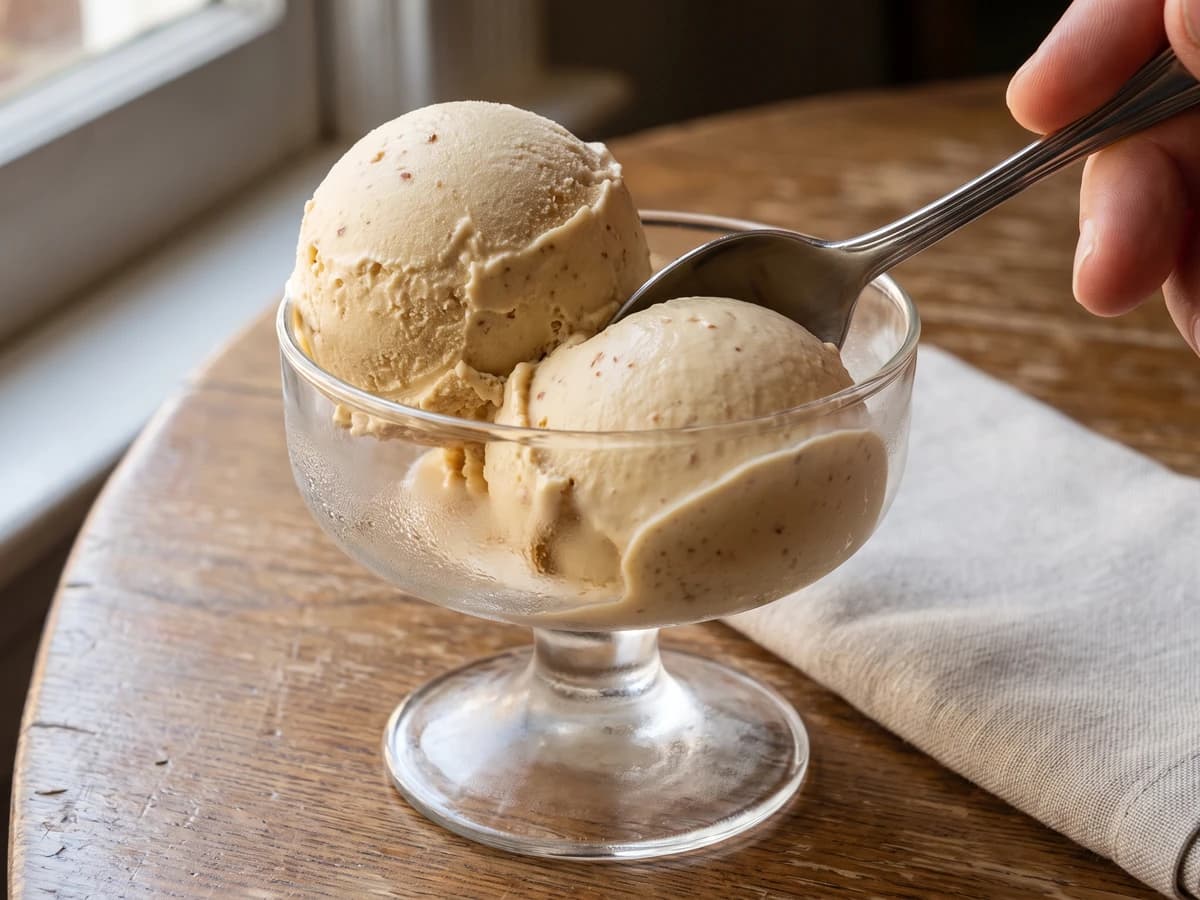
Glace pralinée turns two prepared elements into one exact dessert: old-gold almond pralin powdered fine, stirred through cold vanilla custard, then churned until caramel and cream meet without hard grit.

Chef Juliette
Glace aux abricots holds ripe fruit at the exact sweetness that freezes smooth: apricot perfume sharpened with lemon, churned pale orange, and served cold enough to soften slowly.

Chef Juliette
Glace à l’Orange is sugar concentration made delicious: zest infused in boiling syrup, fresh juice added cold, and lemon sharpening the fruit into a fine, bright ice that scoops cleanly.
Chef Juliette
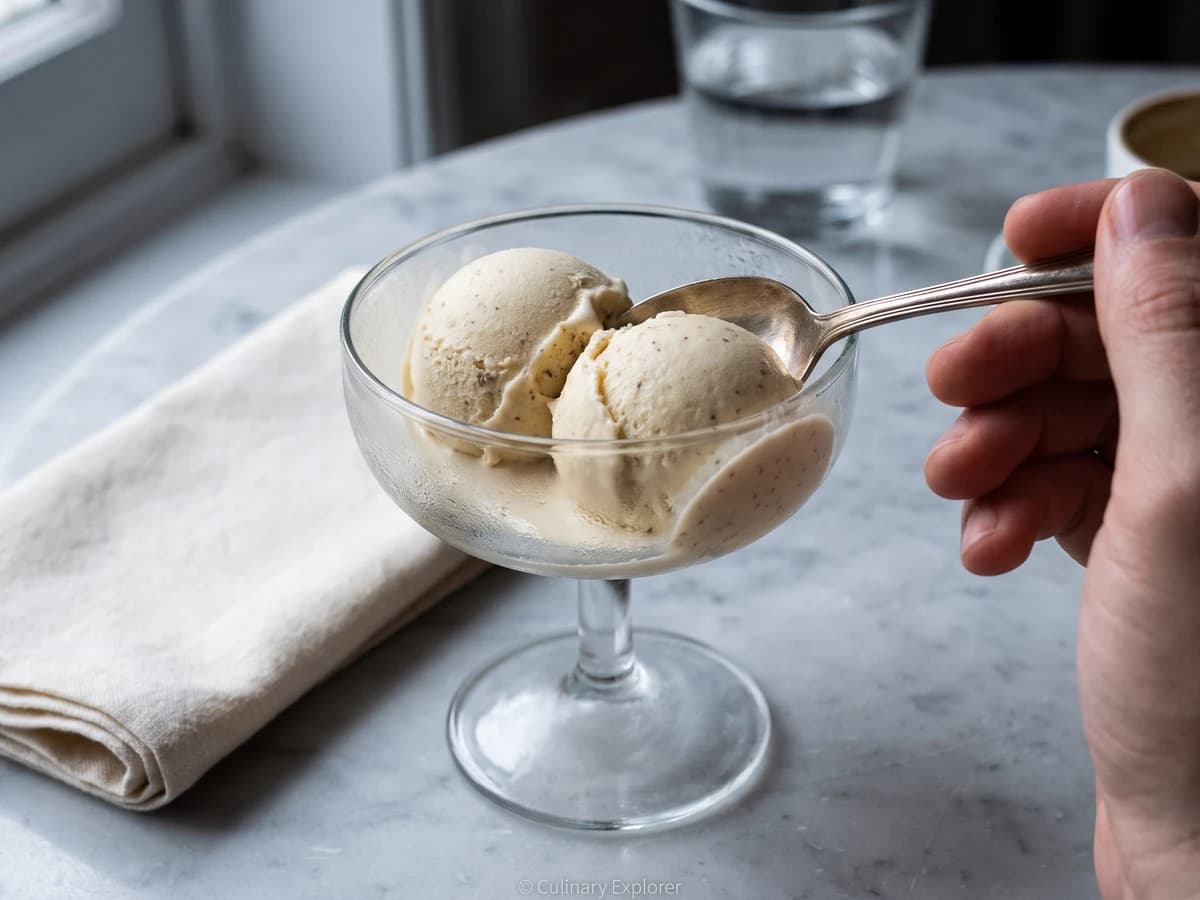
Glace aux noix turns peeled walnuts, boiling milk, and a gentle crème anglaise into pale, deeply nutty ice cream. Remove every bitter skin, then the custard and freezer can do their quiet work.

Chef Juliette
Glace à l'ananas turns ripe fruit, patient maceration, lemon, and a whisper of kirsch into a bright, fine-textured ice. Two quiet hours in syrup decide everything.
Chef Juliette
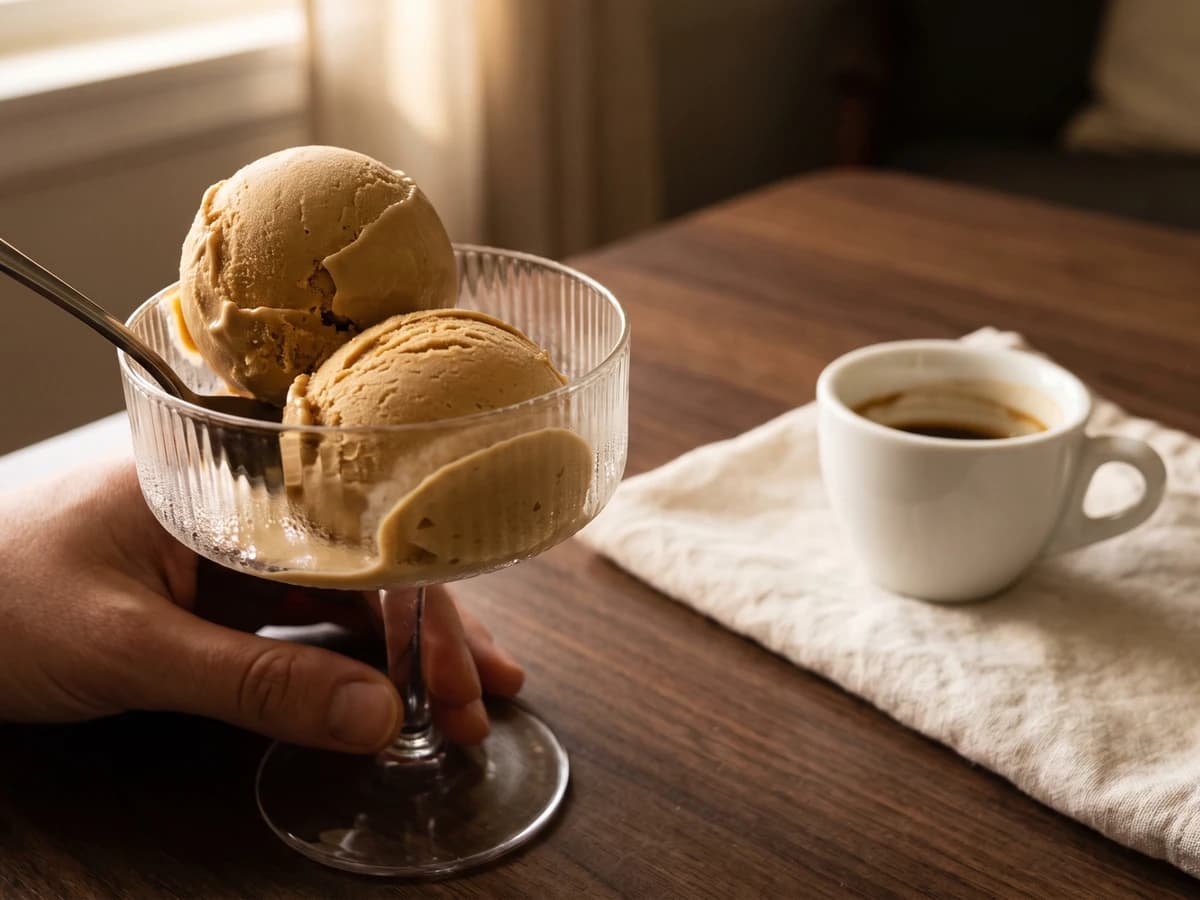
Freshly roasted beans surrender their perfume to hot milk for twenty minutes, then a silken crème anglaise turns beneath the paddle into coffee ice cream with depth, clarity, and no bitterness.

Chef Juliette
Pack a prepared glace until no air remains, harden it under salted ice, and turn it out with one quick tepid dip: clean fluting, a close surface, and no hollow pockets.
Chef Juliette
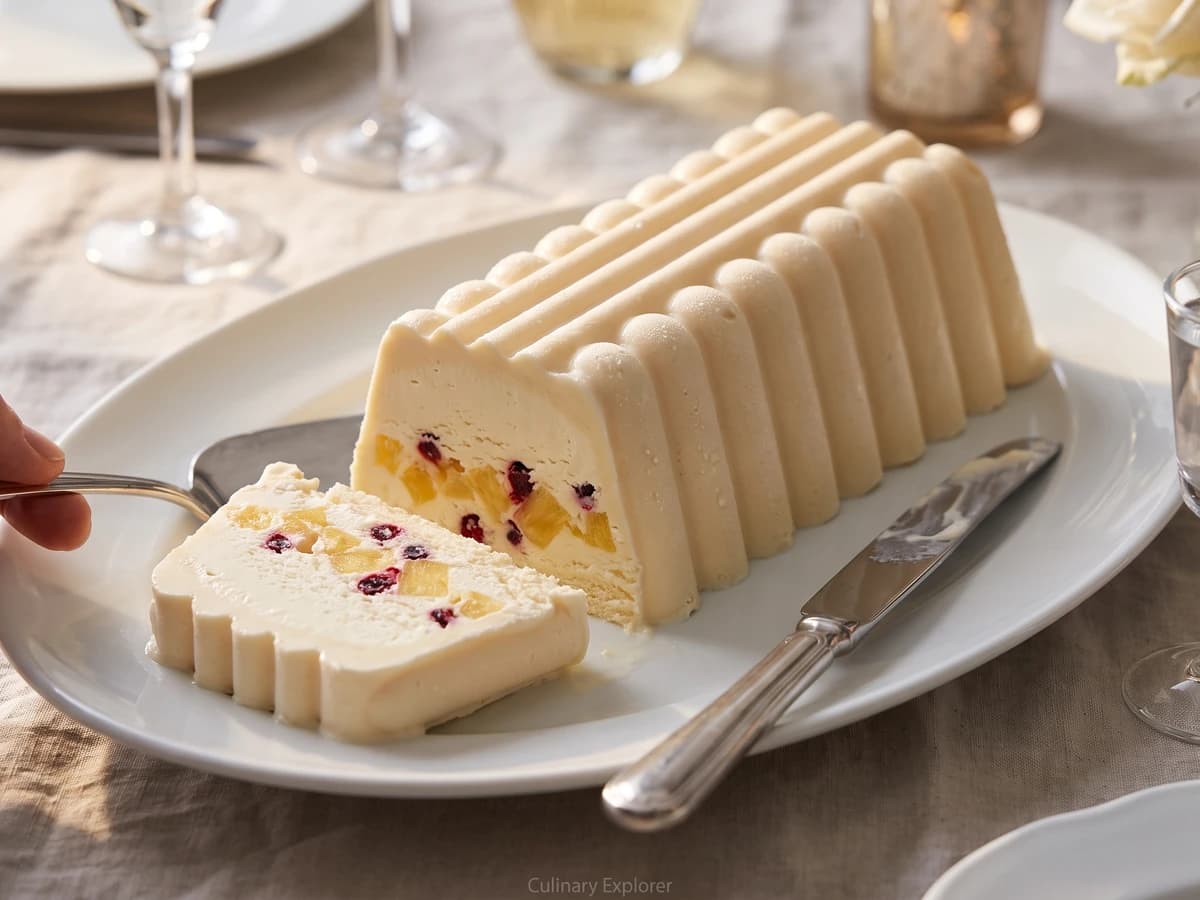
A scallop-shaped shell of vanilla ice cream holds kirsch Chantilly, neat pineapple dice, and jewel-bright Bar-le-Duc currants. Freeze each layer before asking it to support the next.

Chef Juliette
Sweet almonds give body and five bitter almonds give perfume in this milk custard, infused for twenty minutes, cooked to nappe, then churned pale and silken.

Chef Juliette
Glace au thé turns one forceful, brief infusion into a pale, silky custard ice, fragrant before it is sweet and firm enough to scoop generously after dinner.

Chef Juliette
Three lemon zests, four lemons, and two oranges make a clean, fragrant glace au citron, steeped cold and churned fine: the frozen lesson in sweetness, acid, and patience.
Chef Juliette
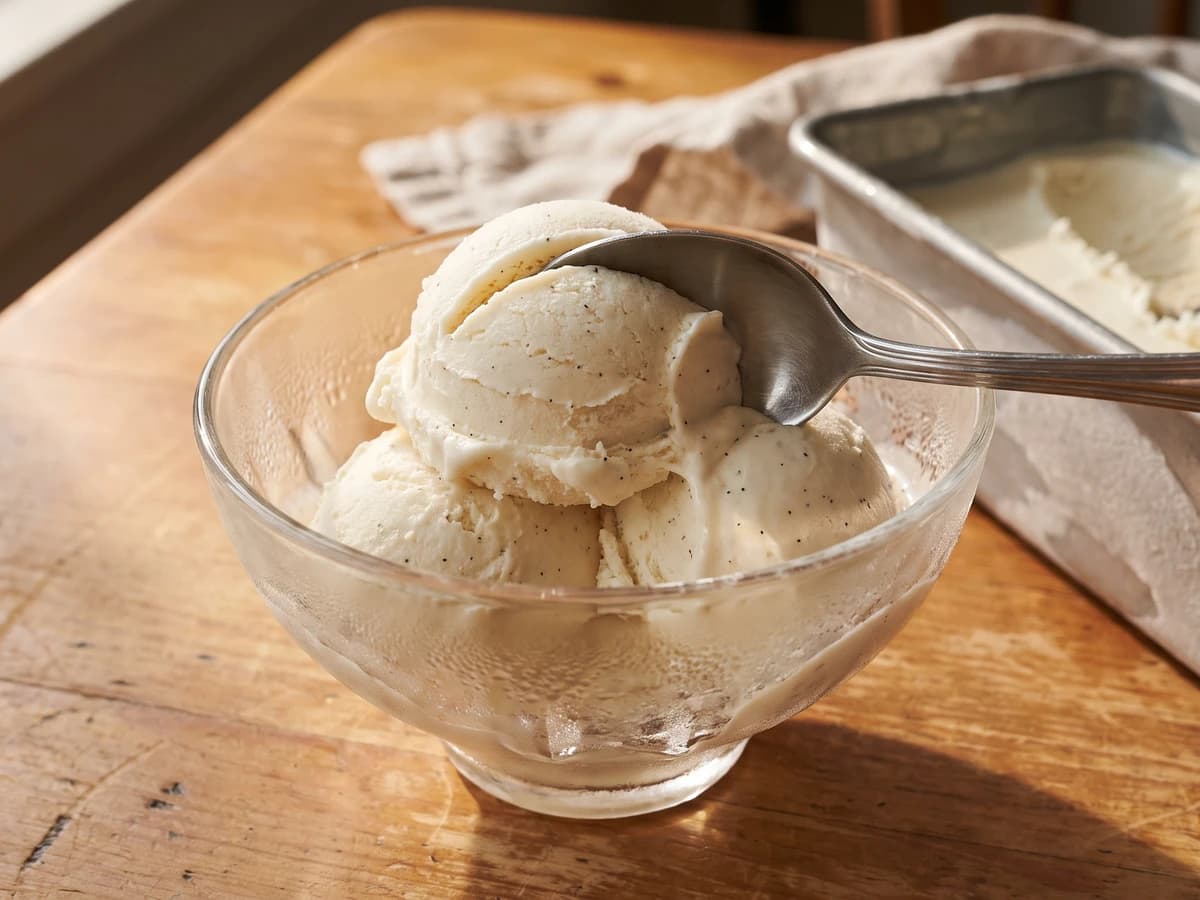
Glace à la vanille teaches the quiet discipline of infusion: boiled milk, one generous vanilla pod, and twenty covered minutes, followed by a gentle custard and a patient churn into fragrant ivory scoops.
Chef Juliette
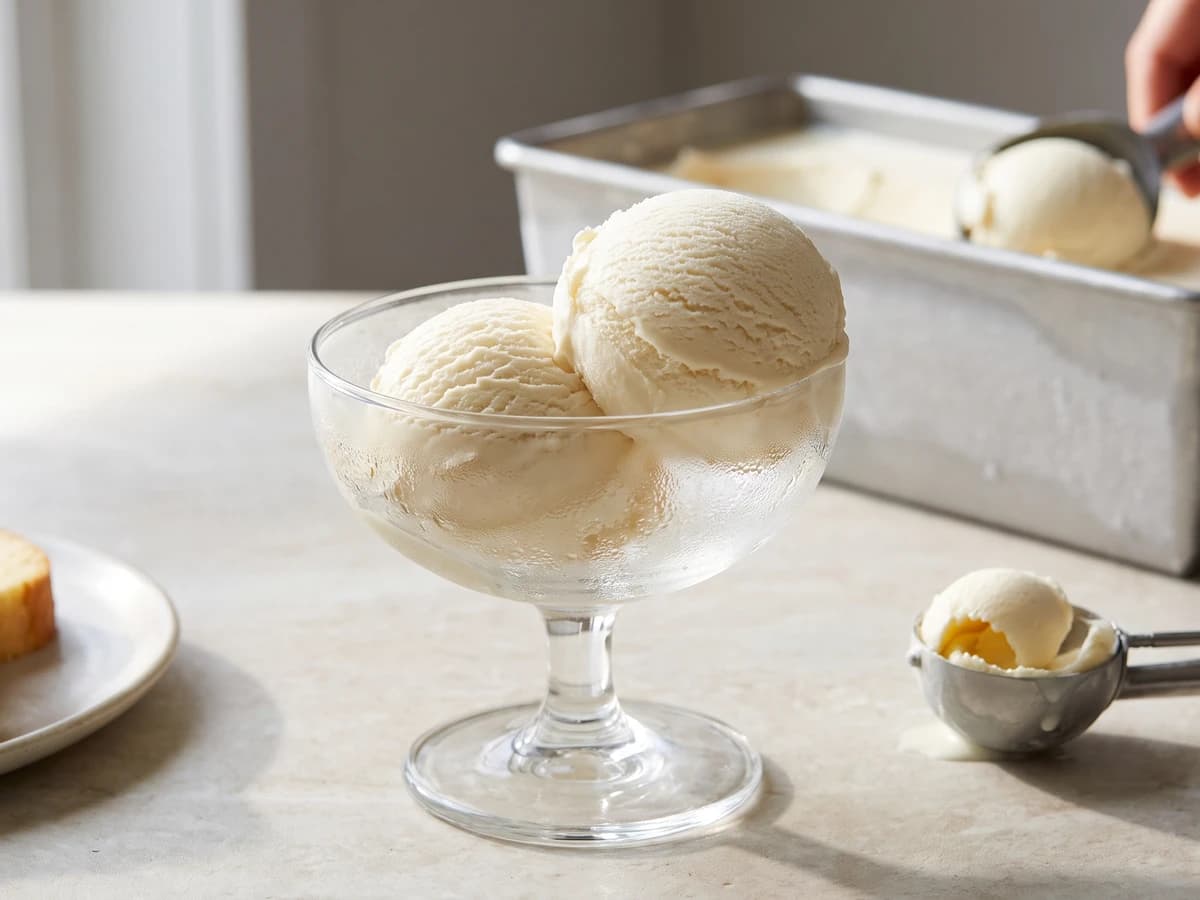
The custard beneath every French cream ice: yolks and sugar drawn to the ribbon, hot milk added slowly, then gentle heat until the spoon wears a satin veil and never a bubble.

Chef Juliette
Glace au chocolat turns vanilla-scented milk custard and water-dissolved chocolate into a dark, satin-smooth scoop, proof that careful tempering and a cold base matter more than cream.
Chef Juliette
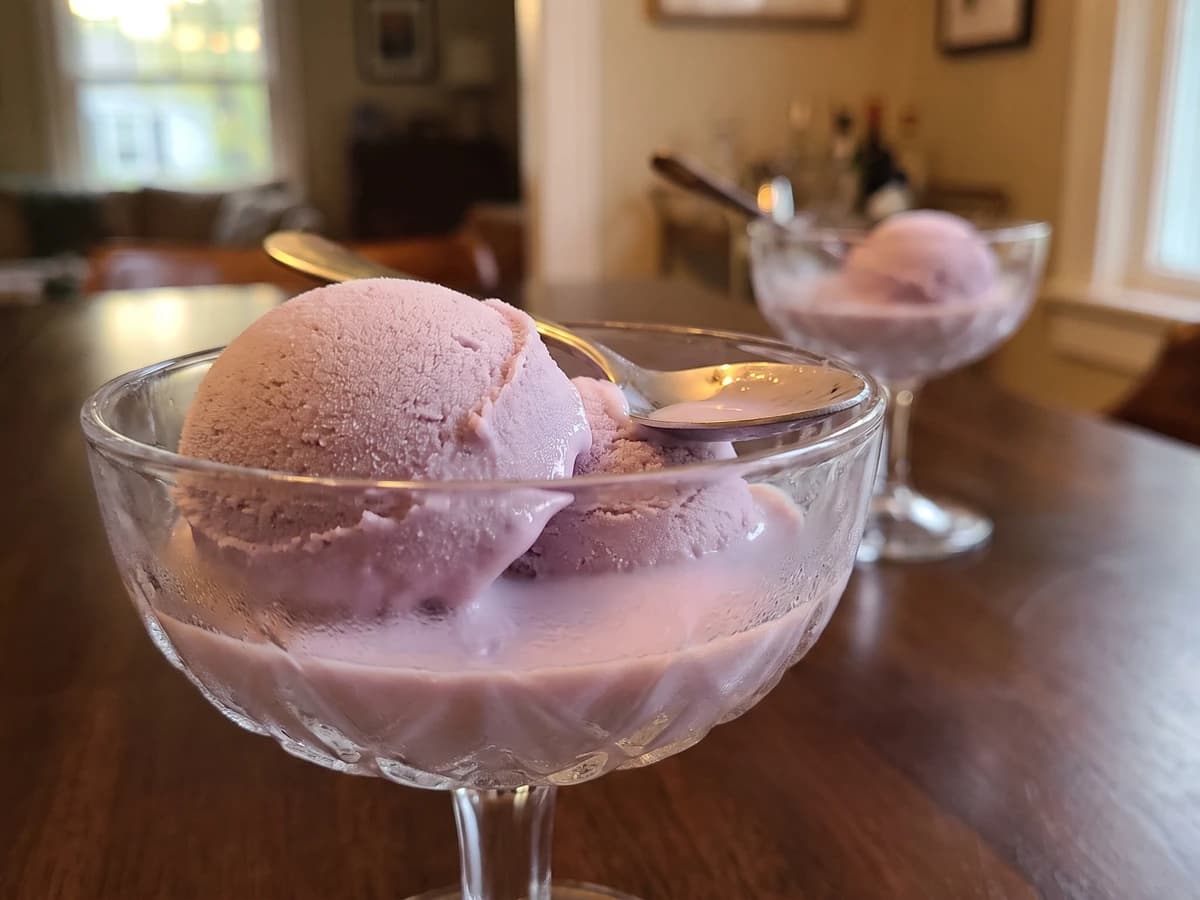
Glace aux Violettes catches a fragile perfume in boiling syrup, then sharpens it with lemon: ten minutes of infusion, no more, before a fine pale ice is churned for the table.
Chef Juliette
Three frozen flavours, one clean reveal: raspberry ice, coffee ice, and vanilla ice cream set in bold vertical stripes inside a fluted mould, a lesson in patience disguised as celebration.

Chef Juliette
Strawberry fruit ice, fragrant with Grand Marnier, folded through soft Chantilly until it turns the coral rose of an evening sky, then heaped in chilled crystal bowls for a generous, quietly splendid finish.
Culinary guides, cultural storytelling, and the editorial depth that makes cooking meaningful.
Discover Culinary Explorer