
Chef Juliette
Various Almond Preparations
Five almond preparations, one discipline: remove the skins cleanly, dry every kernel through, then cut, toast, or cloak it in pale caramel without letting its fragrant oils escape.
A cooking platform built around craft, culture, and the stories behind what we eat.
Created by Chef Juliette
Based on No. 2766, Strawberry Ice, from Le Guide Culinaire (1907) by Auguste Escoffier
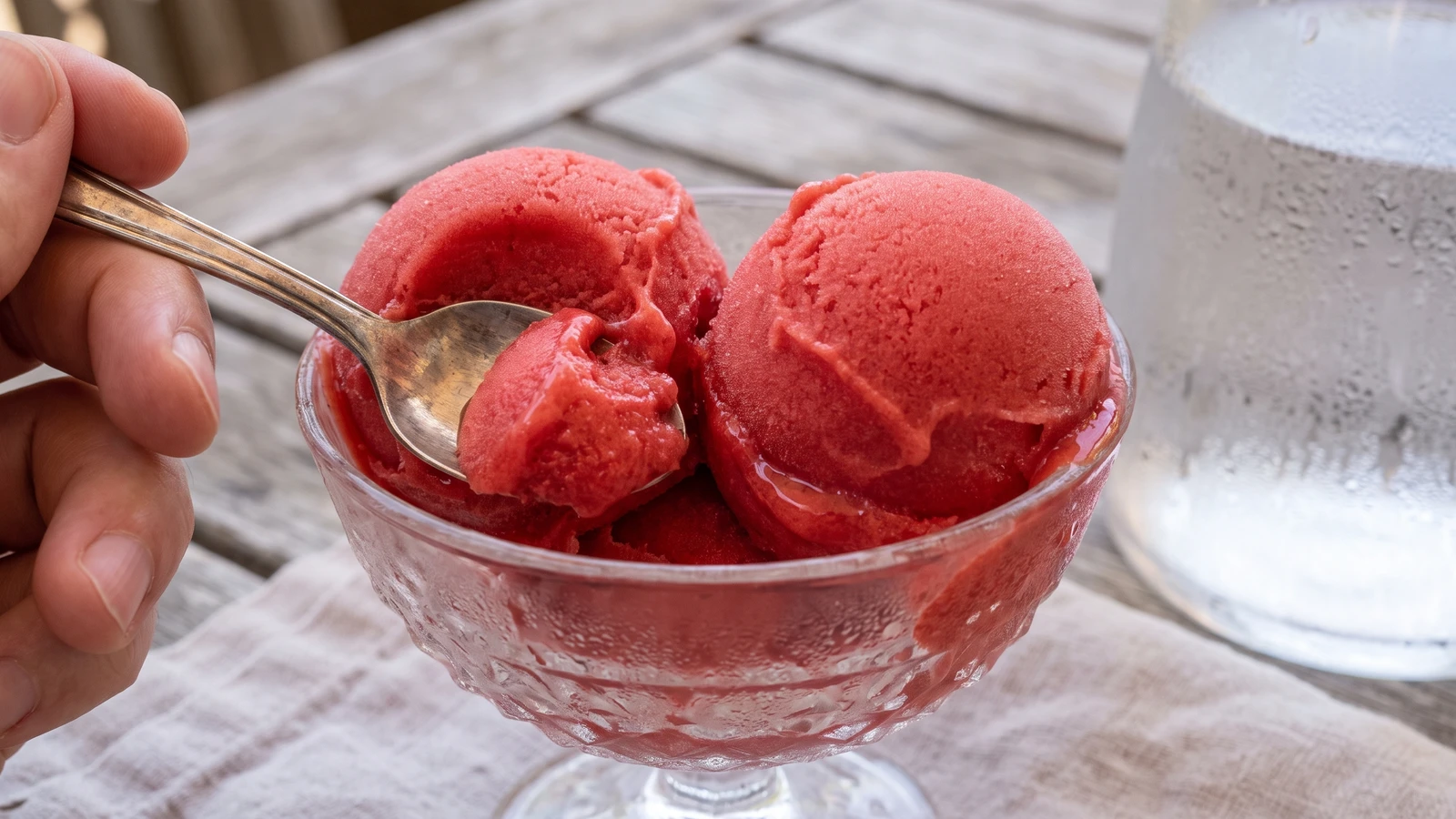
Glace aux fraises keeps the berries raw and vivid, then balances their purée with superfine sugar, orange, lemon, and just enough water for a clean, soft scoop under summer shade.
Glace aux fraises (strawberry ice) teaches the governing rule of every fruit ice: balance the mixture before it freezes, because cold quiets both sugar and acid. The raw mixture should taste almost too sweet and almost too bright, then settle into a clear strawberry note on the tongue. This is fruit, sugar, orange, lemon, and water. No cream, and none wanted.
The source recipe assumed a mortar for pounding, a fine sieve, a syrup hydrometer reading 16° to 18° Baumé, and a sorbetière watched over with salt and ice. At home, a food processor replaces the mortar, a fine-mesh sieve keeps the silky finish, measured water plus a small freezer test replaces the hydrometer, and a countertop ice-cream machine does the freezing. The quantity is halved from two pounds of berries to one, with every stated proportion kept. Superfine sugar stands in for the source's powdered sugar because current confectioners' sugar contains starch. The pounding and balance are the dish. The attended freezing pail is brigade scaffolding, and it can go. One cook, one stove, one evening, and the stove gets the night off.
Don't pour in the water by instinct. Add the first measure, test a spoonful, and adjust only if the frozen texture asks for it. That balance is the one step that matters; if you overshoot, ça se rattrape, and the repair keeps the berry-to-sugar ratio intact.
Glace aux fraises belongs to Parisian pâtisserie and the repertoire of the glacier, the specialist maker of frozen sweets, where fruit pulp was balanced with syrup before being frozen in a sorbetière packed with salt and ice. The source records both a cooked-syrup route and a raw-pounded route; the latter preserves the strawberry's fleeting perfume while orange and lemon sharpen its flavor. Its 16° to 18° means Baumé syrup density, not degrees of cold, a reminder that the classical glacier judged sugar concentration before freezing.
Quantity
3½ cups (16 oz / 454 g)
rinsed, thoroughly dried, hulled, and weighed after hulling
Quantity
1 cup plus 2 tablespoons (8 oz / 227 g)
or granulated sugar processed until very fine; do not use starch-containing confectioners' sugar
Quantity
1 medium, yielding about ¼ cup (2 fl oz / 60 ml / 60 g) juice
juiced and strained
Quantity
1 medium, yielding about 2 tablespoons (1 fl oz / 30 ml / 30 g) juice
juiced and strained
Quantity
½ cup (4 fl oz / 120 ml / 120 g), plus up to ¼ cup (2 fl oz / 60 ml / 60 g) as needed
| Ingredient | Quantity |
|---|---|
| ripe strawberriesrinsed, thoroughly dried, hulled, and weighed after hulling | 3½ cups (16 oz / 454 g) |
| superfine sugaror granulated sugar processed until very fine; do not use starch-containing confectioners' sugar | 1 cup plus 2 tablespoons (8 oz / 227 g) |
| orangejuiced and strained | 1 medium, yielding about ¼ cup (2 fl oz / 60 ml / 60 g) juice |
| lemonjuiced and strained | 1 medium, yielding about 2 tablespoons (1 fl oz / 30 ml / 30 g) juice |
| cold filtered water | ½ cup (4 fl oz / 120 ml / 120 g), plus up to ¼ cup (2 fl oz / 60 ml / 60 g) as needed |
Freeze the removable bowl of your ice-cream machine for the full time its maker requires, commonly at least 24 hours; that equipment preparation sits outside the recipe's total time. Put a small metal saucer and a shallow 1-quart storage container in the freezer. Rinse the strawberries quickly while they are still hulled, dry them thoroughly, then hull and weigh them. Clinging water changes the balance before you've begun.
Put the strawberries and superfine sugar in a food processor. Pulse until the berries are thoroughly crushed and flowing but not whipped full of air, scraping the bowl once or twice. Let the mixture stand for 15 minutes, then pulse again briefly so the sugar dissolves into the juice. This replaces pounding in a mortar; the machine is new, but breaking the raw fruit directly with sugar is the source method and must stay.
Stir in the strained orange and lemon juices. Rub the mixture through a fine-mesh sieve with the back of a ladle or flexible spatula, pressing until only a dry paste of seeds and coarse fiber remains. Don't merely drain it. The rubbing passes the fruit flesh through the mesh and gives the glace its smooth body without cooking away its perfume.
Stir in the first ½ cup (120 ml / 120 g) of filtered water. If you own a refractometer, aim for about 30° to 33° Brix, the practical current reading corresponding roughly to the source's 16° to 18° Baumé. Without one, spread a tablespoon of mixture on the frozen metal saucer and freeze it for 15 minutes. The edges should set while the center scrapes into soft, fine crystals. If it remains loose and syrupy, add water 1 tablespoon at a time and repeat the test. If you add too much and the sample freezes hard and coarse, don't cook it down and lose the raw aroma. Ça se rattrape: blend a little more strawberry and superfine sugar at the same two-to-one ratio by weight, stir it in gradually, and retest.
Cover the mixture and refrigerate it for at least 2 hours, until thoroughly cold. Stir gently before churning. A cold base freezes quickly into small crystals; a warm one lingers in the machine and turns coarse.
Start the ice-cream machine, then pour in the cold base. Churn until the glace mounds against the paddle and holds clean grooves, usually 20 to 25 minutes. It will still be soft enough to spoon. If it remains pourable after 30 minutes, stop rather than churning endlessly: the base or freezer bowl is too warm. Chill the base again, refreeze the bowl completely, and churn once more.
Pack the glace into the frozen container, level the surface, cover tightly, and freeze for about 2 hours. Let it stand at room temperature for 5 to 10 minutes before scooping, or 10 to 15 minutes if it has hardened overnight. Serve in chilled coupes while the color is vivid and the scoops are just beginning to soften at their edges. À table!
1 serving (about 115g)
Culinary guides, cultural storytelling, and the editorial depth that makes cooking meaningful.
Discover Culinary ExplorerChef Juliette
Five almond preparations, one discipline: remove the skins cleanly, dry every kernel through, then cut, toast, or cloak it in pale caramel without letting its fragrant oils escape.

Chef Juliette
A pastry pantry lesson in one tray: filberts warmed only until their red skins release, rubbed clean, cooled, and chopped into a fragrant mise-en-place for cakes, creams, pralines, and petits fours.

Chef Juliette
The smallest pâtisserie discipline decides whether a cake leaves its mould intact: clarified butter in every corner, followed by the lightest veil of dry flour or fécule.

Chef Juliette
Four whites, one spotless bowl, and a patient change of speed: whisk gently until loosened, then briskly to glossy stiffness, with powdered sugar waiting if the foam begins to granulate.