Culinary Explorer
A cooking platform built around craft, culture, and the stories behind what we eat.
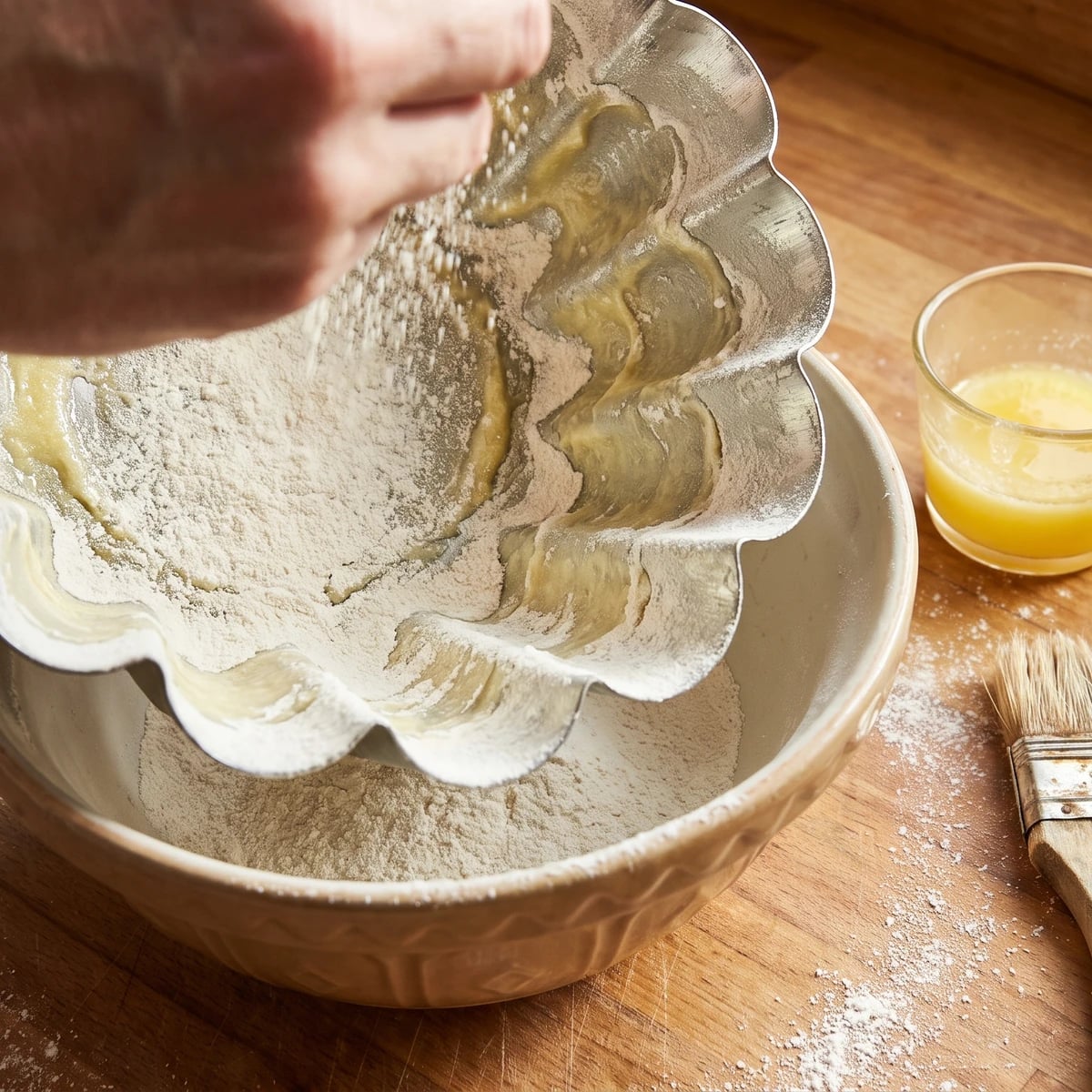
The Buttering and Glazing of Moulds
Created by Chef Juliette
The smallest pâtisserie discipline decides whether a cake leaves its mould intact: clarified butter in every corner, followed by the lightest veil of dry flour or fécule.
Beurrage et chemisage des moules teaches one true thing before you touch the pan: release is made before batter ever enters it. Clarified butter must reach every corner, seam, flute, and central tube, then very dry flour or fécule settles over it in a veil. One bare spot is enough to hold the crumb and tear a cake at turning-out.
The classical pastry kitchen assumed clarified butter kept liquid, dry dusting flour ready, a pastry brush in hand, and ranks of moulds prepared for service. At home, warm a spoonful of clarified butter, prepare one mould, and catch the excess coating in a bowl. The brigade tray and dedicated butter pot are scaffolding and can go; the unbroken layer of pure butter and the thin, even chemisage must stay. One cook, one stove, one evening.
Do not mistake more coating for better insurance. Puddled butter and clotted flour make pale ridges on a cake, while a thin, uniform film releases cleanly and leaves the fine glazed crust promised by the method. Before the batter comes near, hold the mould toward the light and inspect every inside surface. That is the step that decides it.
Ingredients
clarified butter
Quantity
1½ tablespoons (22 ml / 20 g)
liquid but barely warm; clarify from about 2 tablespoons (30 ml / 28 g) unsalted butter if needed
very dry all-purpose flour or fécule (potato starch)
Quantity
3 tablespoons (45 ml / 24 g flour; 30 g fécule)
sifted
blanched almonds (optional)
Quantity
⅓ cup (80 ml / 35 g)
finely chopped or cut into splinters; use instead of flour or fécule when directed
| Ingredient | Quantity |
|---|---|
| clarified butterliquid but barely warm; clarify from about 2 tablespoons (30 ml / 28 g) unsalted butter if needed | 1½ tablespoons (22 ml / 20 g) |
| very dry all-purpose flour or fécule (potato starch)sifted | 3 tablespoons (45 ml / 24 g flour; 30 g fécule) |
| blanched almonds (optional)finely chopped or cut into splinters; use instead of flour or fécule when directed | ⅓ cup (80 ml / 35 g) |
Where cooking meets culture.
Culinary guides, cultural storytelling, and the editorial depth that makes cooking meaningful.
Discover Culinary Explorer