Chef Juliette
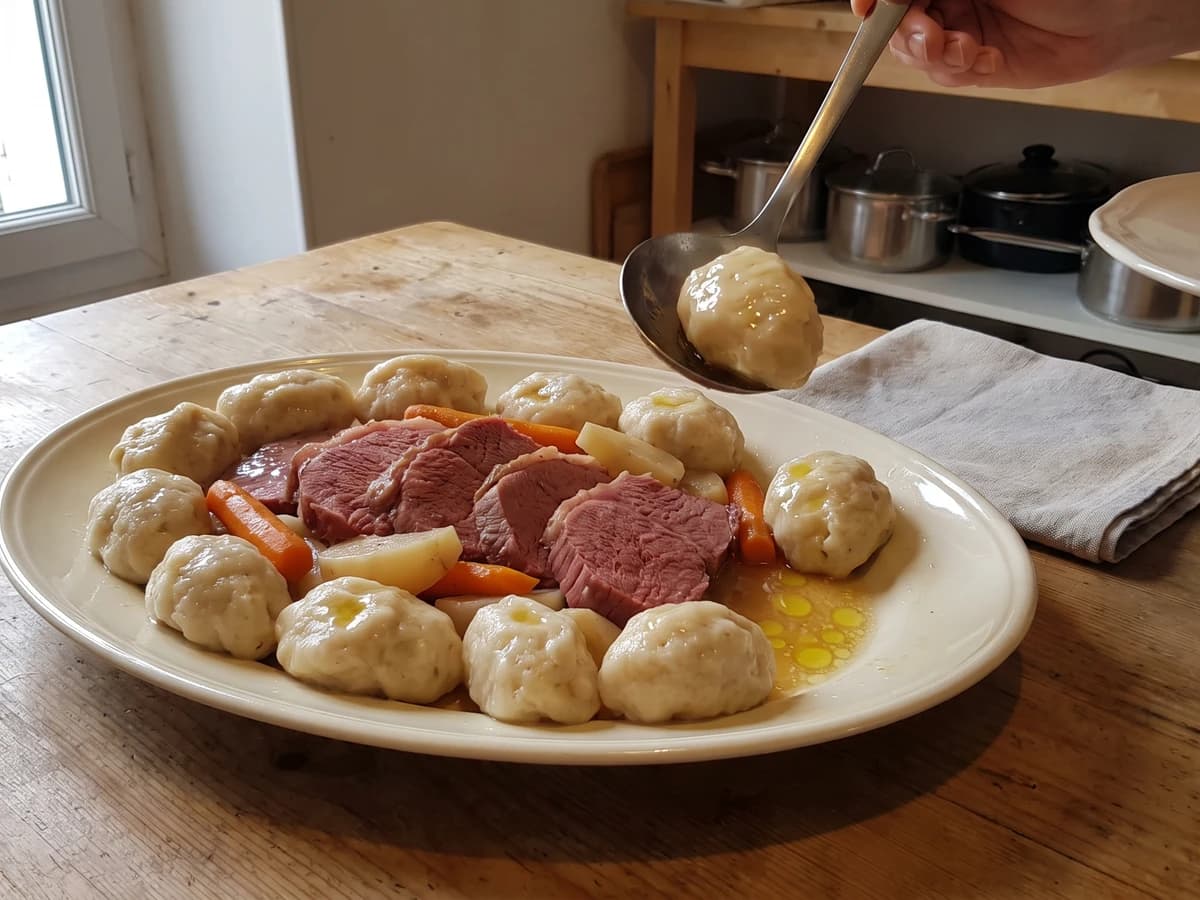
Suet Dumpling
Boulettes au suif, poached beside salt beef, turn equal weights of flour and finely chopped suet into tender, rich dumplings. Keep the beef liquor at a bare tremble and the old garnish works beautifully at home.
Recipe Archive
Side dishes should earn their place at the table. These recipes focus on contrast, seasoning, and supporting flavors that make the whole meal better.
1006 recipes
A cooking platform built around craft, culture, and the stories behind what we eat.
Chef Juliette
Boulettes au suif, poached beside salt beef, turn equal weights of flour and finely chopped suet into tender, rich dumplings. Keep the beef liquor at a bare tremble and the old garnish works beautifully at home.

Chef Juliette
Bread, flour, frangipane, and rice become four cool, supple panades for binding forcemeats, each changing body and flavor while preserving tenderness. The finest Mousselines need none, and knowing that distinction is the lesson.

Chef Juliette
Panade au pain is bread, milk, salt, heat, and attention: stir until the paste releases cleanly, butter it against a skin, and you have the quiet binder behind tender French farces.

Chef Juliette
Panade de farine teaches the drying stroke behind pâte à choux: flour meets boiling buttered water, then stays over the fire until the paste gathers, smooths, and quits the pan cleanly.

Chef Juliette
Panade frangipane turns flour, yolks, butter, and milk into a silken classical binder. Strain before heat, whisk through five gentle minutes, then cover the surface closely as it cools.

Chef Juliette
Farce de volaille à la panade et au beurre turns cold chicken, panada, butter, and eggs into a satin-smooth binding forcemeat. Keep everything cold, then let one poached spoonful tell you what it needs.

Chef Juliette
Cold is the whole craft: chicken, panada, egg white, and cream worked over ice into a pale, supple farce that poaches into fine quenelles without losing its tenderness.
Chef Juliette
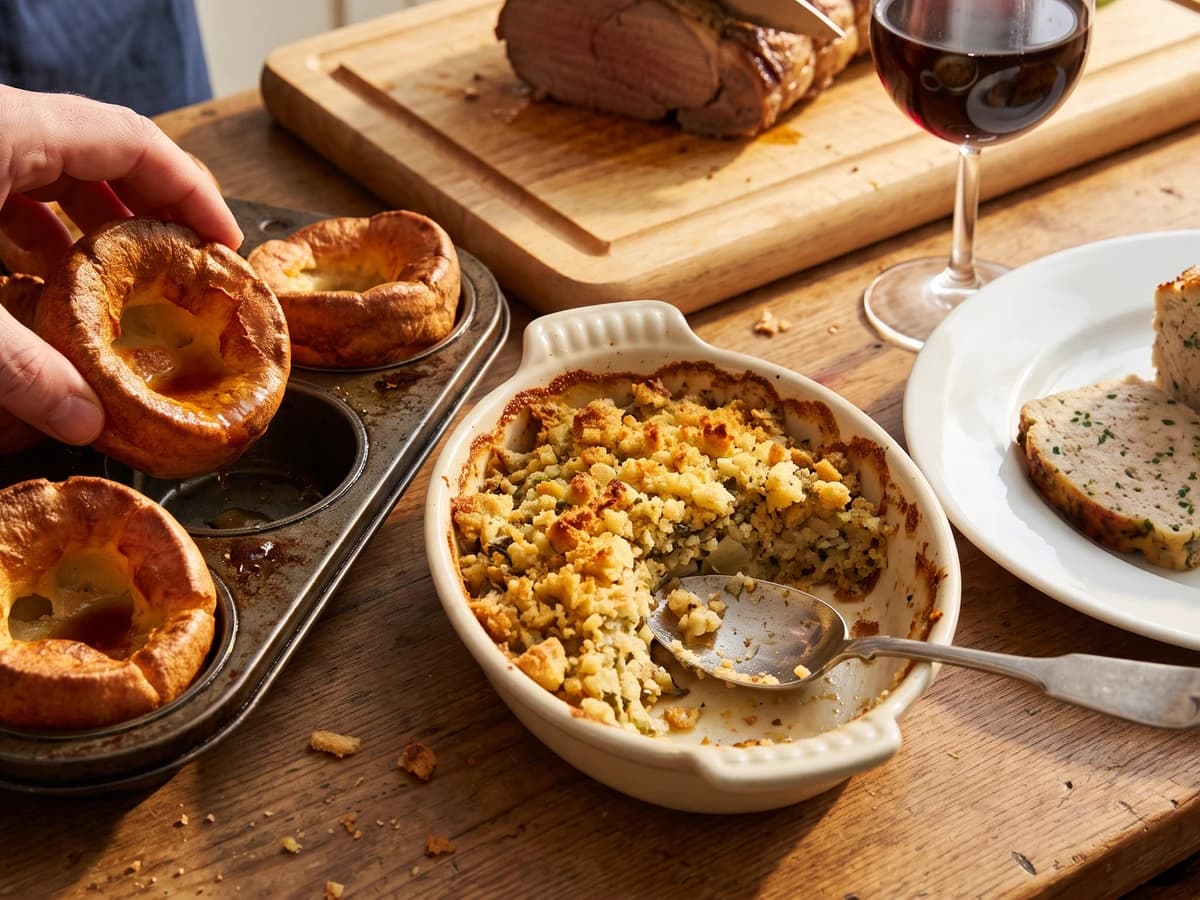
The roast keeps its sauce and gains its proper escort: lofty Yorkshire pudding for beef, sage and onion dressing for birds, or veal stuffing for pork and veal, each scaled for four.
Chef Juliette
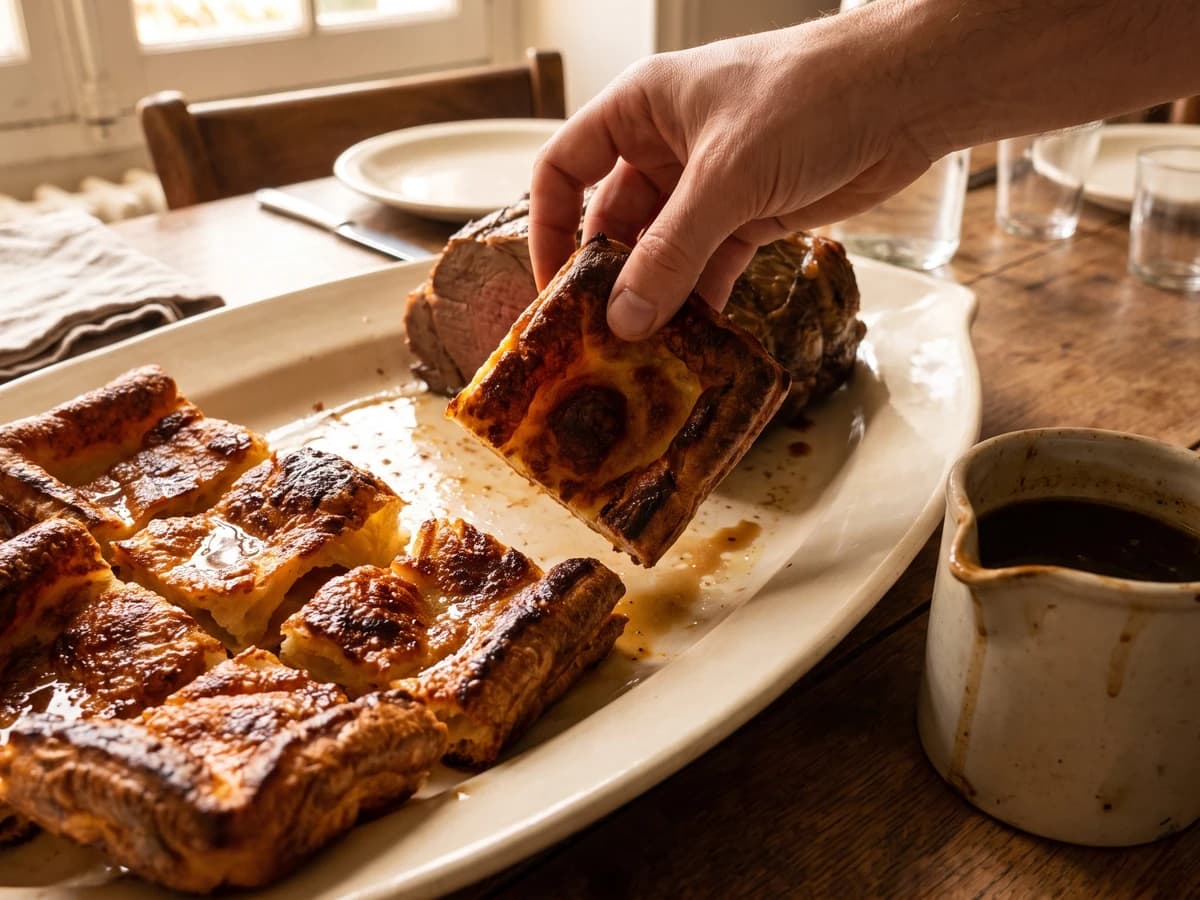
Pouding du Yorkshire teaches the law of hot fat: an egg-rich, nutmeg-scented batter poured into smoking beef dripping, rising bronze and crisp before it catches the roast's savory juices.

Chef Juliette
Whole-baked onions are the lesson: sweet before they meet the pan, never acrid, then joined with butter, dried sage, milk-softened breadcrumbs, and veal fat in the classical 2:2:1 proportion.

Chef Juliette
Equal weights of chopped suet, fine breadcrumbs, and parsley, bound with egg and plenty of nutmeg, make a compact poached farce that slices neatly beside roast veal or pork.

Chef Juliette
Farce mousseline turns chicken, egg white, and cold cream into one satin-smooth emulsion, delicate enough for soup quenelles and strong enough to bind a generous stuffing.

Chef Juliette
Cold is the craft in Godiveau: veal, dry beef kidney fat, egg, and ice worked into a supple forcemeat, rested overnight, then corrected by one small test poach before it goes to the table.

Chef Juliette
Farce de veau grasse à la crème turns cold veal, beef suet, egg, and cream into a satin-smooth stuffing, with one test-poached spoonful telling you exactly how to correct the whole batch.

Chef Juliette
Artichauts à la Barigoule turns tender artichokes into little braising vessels, packed with mushrooms and fat bacon, wrapped, wine-braised, then dressed with only a spoonful of dark, concentrated sauce.

Chef Juliette
Artichoke hearts, spring peas, and carrot settle into one buttered cocotte, cooking gently until tender before Manied Butter (No. 151) gives their clear vegetable liquor the lightest gloss.

Chef Juliette
Artichauts aux sauces diverses bring one generous lesson to the table: tie, boil, and drain the vegetables properly, then let one well-made sauce turn each leaf and heart into supper.

Chef Juliette
Artichauts à la Provençale turns a tight lid into technique: small artichokes, sweet peas, and lettuce soften in olive oil and their own juices, emerging tender, green, and quietly glossy.

Chef Juliette
Artichoke quarters, lemoned before they can darken, are sweated over aromatics, braised in white wine and brown stock, then glossed with Sauce Italienne for a generous classical side dish.

Chef Juliette
Firm, pale artichoke bottoms hold savory duxelles beneath a buttered crumb, then meet fierce heat just long enough to gratinée, with glossy Madeira sauce passed at the table.
Chef Juliette
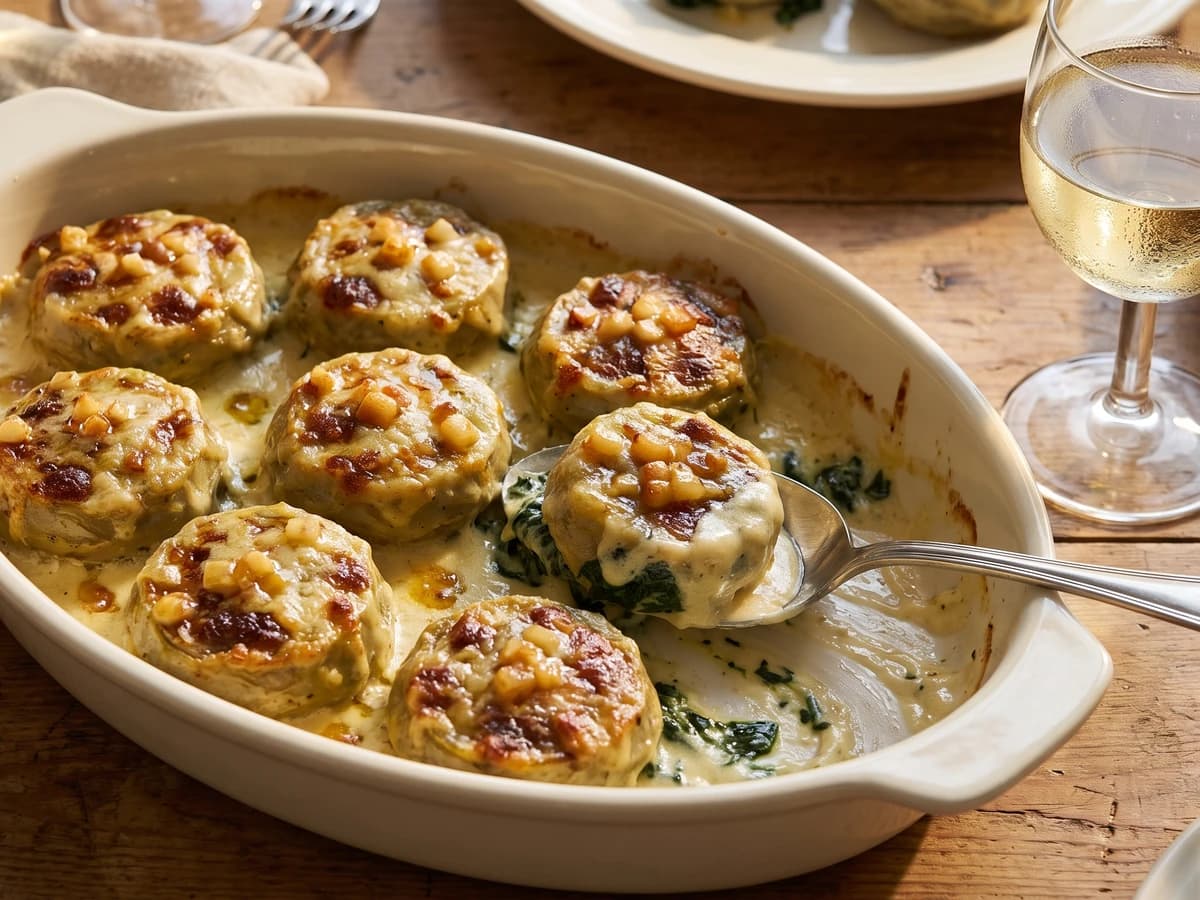
Tender artichoke bottoms cradle spinach cooked dry with onion, garlic, and anchovy, then disappear beneath ivory Mornay and tiny dice of Gruyère before a fierce final glaze.

Chef Juliette
Eight tender artichoke bottoms carry green asparagus tips bound with cream, veiled in Mornay, and flashed under fierce heat until the sauce freckles gold without dulling the spring beneath.

Chef Juliette
Raw young artichoke bottoms meet a hot buttered pan, bronze at the edges, and finish under fines herbes. The lesson is simple and exact: tenderness begins with youth, and browning begins with heat.

Chef Juliette
Artichoke bottoms kept ivory, cooked through in butter, and passed fine with that butter, then steadied by half their bulk of silky potato and sharpened by beurre noisette.
Culinary guides, cultural storytelling, and the editorial depth that makes cooking meaningful.
Discover Culinary Explorer