
Chef Lupita
Arroz a la Oaxaqueña
Oaxaca's red rice, stained with tomato and fried in lard, steamed with carrots, ejotes, black beans, and epazote. The side that anchors a Oaxacan family meal and earns its place beside the main.
A cooking platform built around craft, culture, and the stories behind what we eat.

Created by
Tabasco's everyday white rice, cooked loose and clean with onion and garlic, then crowned with sweet fried ripe plantain from the lowland kitchen.
Tabasco, the humid lowland state between river, lagoon, and cacao country, knows what plantain is for. This arroz con platano belongs beside robalo, frijol puerco, pejelagarto, or a guisado de carne. It is not decoration. It is the starch that steadies the plate.
The rice stays white. No tomato. No cumin. No chile powder pretending to be Mexico. The flavor comes from rinsed long-grain rice, a little onion and garlic, and the ripe platano macho fried until the edges turn deep gold and the center softens. The sweet plantain against plain rice is the point. Tabasco cooks understand that not every Mexican dish needs to shout.
I learned this kind of rice from a senora near Villahermosa who served it in a low clay cazuela with chile amashito on the table, not mixed into the pot. She told me the rice must fall apart grain by grain, never clump like wet masa. Rinse it until the water runs clear, fry it lightly, cover it, and leave it alone. No me vengas con atajos. The patience is small, but it matters.
Cada estado, su propia cocina. In Tabasco, plantain is not a garnish borrowed from somewhere else. It grows in the heat, feeds the house, and tells you exactly where you are.
Rice entered Mexican cooking through Spanish colonial trade after the 16th century and became especially important in Gulf and tropical regions where it paired naturally with fish, beans, and stewed meats. Plantain, brought to the Americas through Iberian and African routes, adapted quickly to the humid soils of southeastern Mexico, including Tabasco, where it became an everyday starch beside corn, yuca, and cacao-based preparations. Tabasco's arroz con platano reflects that lowland pantry: plain rice for balance, ripe plantain for sweetness, and chile amashito kept at the table for those who want heat.
Quantity
1 1/2 cups
rinsed until the water runs clear and drained well
Quantity
2 tablespoons
Quantity
1/4 medium
finely chopped
Quantity
1 large
finely minced
Quantity
2 1/2 cups
Quantity
1 teaspoon, plus more to taste
Quantity
2
yellow with black spots, peeled and sliced on the diagonal 1/2 inch thick
Quantity
1/3 cup
for frying the plantain
Quantity
for serving on the side
| Ingredient | Quantity |
|---|---|
| long-grain white ricerinsed until the water runs clear and drained well | 1 1/2 cups |
| manteca de cerdo or neutral oil | 2 tablespoons |
| white onionfinely chopped | 1/4 medium |
| garlic clovefinely minced | 1 large |
| hot water or light chicken broth | 2 1/2 cups |
| kosher salt | 1 teaspoon, plus more to taste |
| ripe platano machoyellow with black spots, peeled and sliced on the diagonal 1/2 inch thick | 2 |
| neutral oilfor frying the plantain | 1/3 cup |
| chile amashito (optional) | for serving on the side |
Put the rice in a bowl and cover with cool water. Swish it with your hand, drain, and repeat until the water is almost clear. Drain it in a fine-mesh strainer for at least 10 minutes. This is what keeps the grains separate. If you skip it, the rice turns sticky and then you blame the pot. The pot did nothing.
Heat the manteca de cerdo or oil in a heavy 2-quart saucepan over medium heat. Add the drained rice and stir for 4 to 5 minutes, until the grains turn opaque and sound dry against the spoon. Do not brown it. This is arroz blanco, not arroz rojo. Add the onion and garlic and cook for 1 minute, just until the garlic smells alive.
Add the hot water or light chicken broth and the salt. Stir once, only once. Bring to a gentle boil, then lower the heat to the lowest setting and cover tightly. Cook for 16 minutes without lifting the lid. Rice needs quiet. Every time you open the pot, you steal the heat it needs to finish.
Turn off the heat and let the covered pot stand for 10 minutes. Then uncover and fluff gently with a fork from the edges toward the center. The grains should be tender, separate, and white, with the onion nearly disappeared into the rice.
While the rice rests, heat the 1/3 cup neutral oil in a skillet over medium heat. Add the plantain slices in one layer and fry for 2 to 3 minutes per side, until deep golden at the edges and soft in the center. The plantain must be ripe, yellow with black spots. Green plantain belongs to another preparation. Here you need sweetness.
Spoon the rice into a warm clay cazuela or shallow serving dish. Arrange the fried plantain over the top, not hidden underneath. Set chile amashito on the side if you have it, whole or lightly crushed with salt. The rice stays plain. The chile is for the table. Asi se hace y punto.
1 serving (about 220g)
Culinary guides, cultural storytelling, and the editorial depth that makes cooking meaningful.
Discover Culinary ExplorerChef Lupita
Oaxaca's red rice, stained with tomato and fried in lard, steamed with carrots, ejotes, black beans, and epazote. The side that anchors a Oaxacan family meal and earns its place beside the main.
Chef Lupita
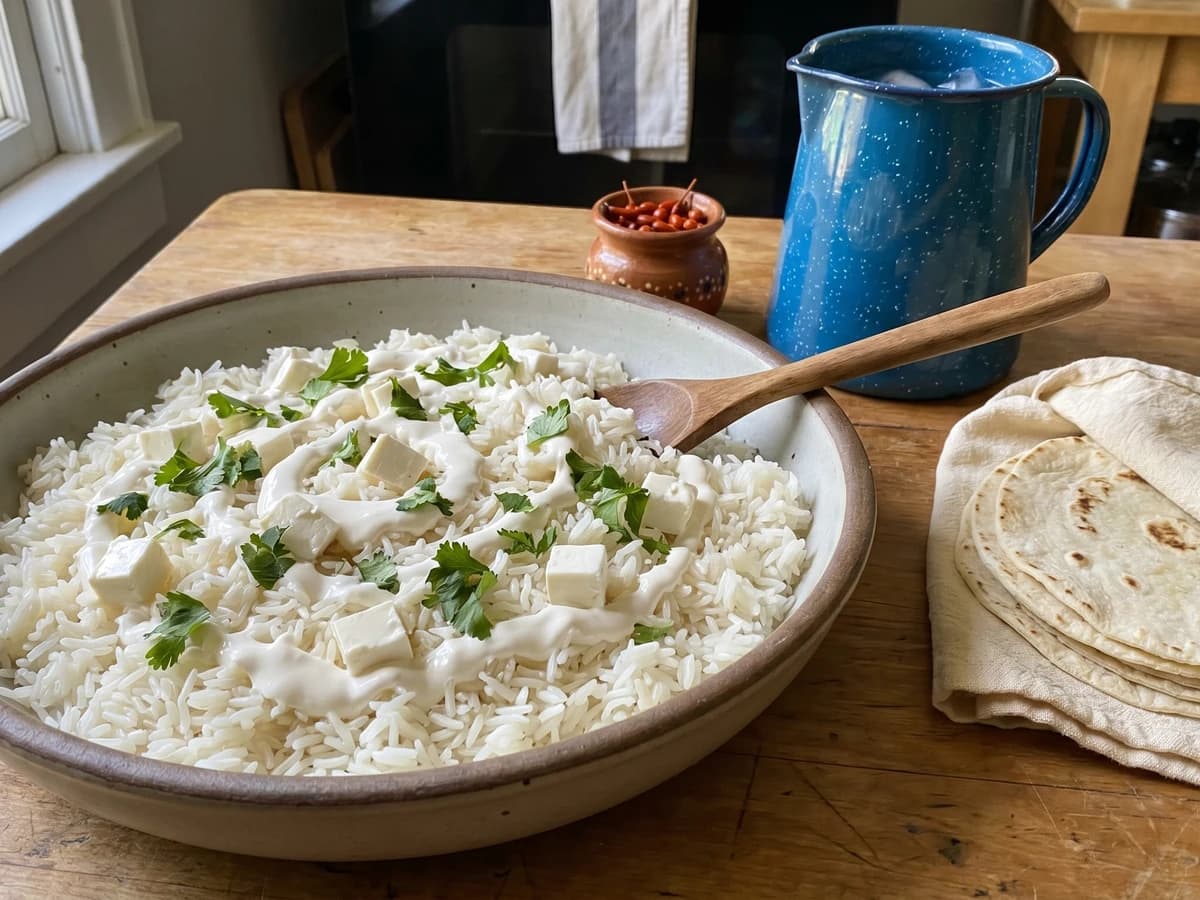
Sinaloa's home-cook white rice topped with cold cubes of cream cheese that soften into the warm grain, finished with crema and a sprinkle of chiltepin at the table. The trick that makes a side dish feel like a small luxury.
Chef Lupita
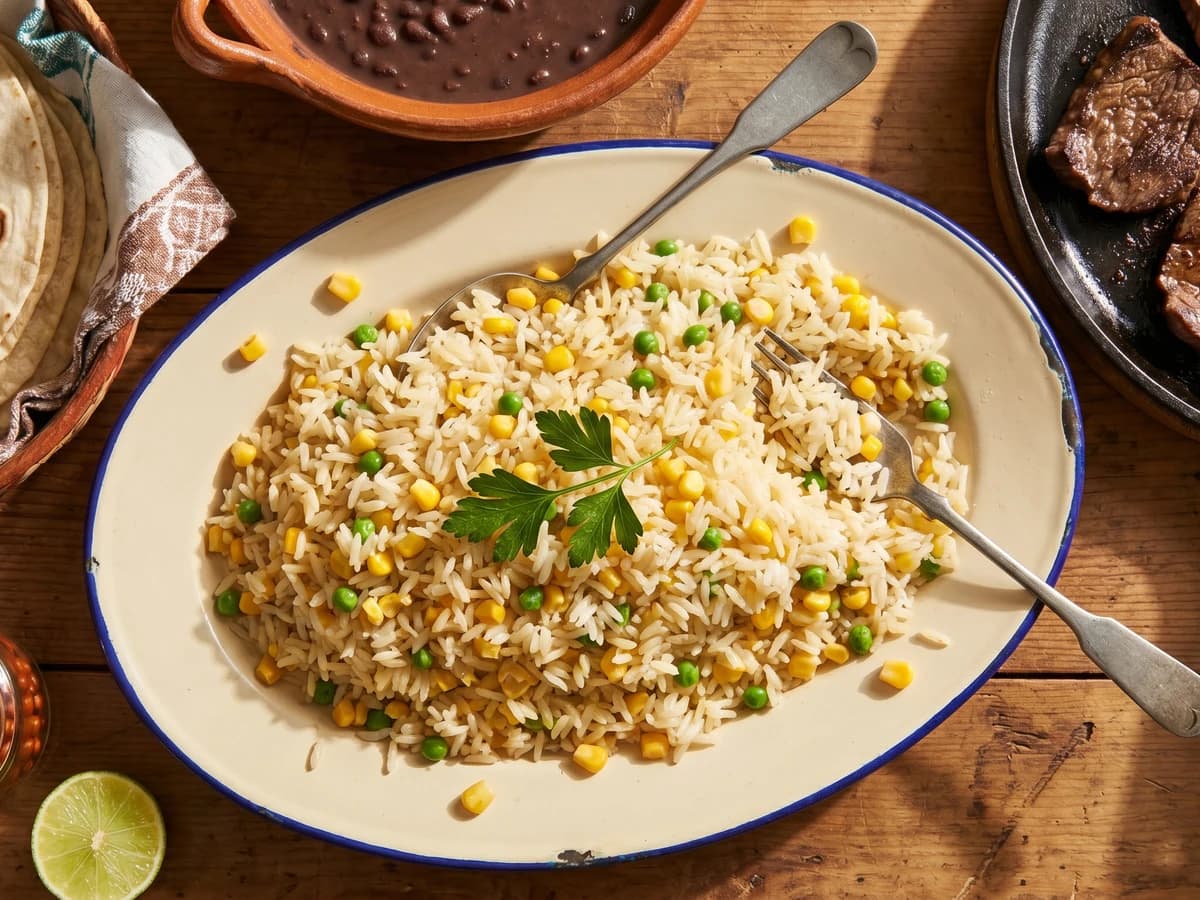
Sonora's white rice, toasted in butter and steamed with sweet corn and tender peas. The clean, quiet partner to a plate of carne asada, not the red rice of central Mexico.

Chef Lupita
Yucatán's white rice with sweet corn kernels, toasted in lard with garlic and onion. The quiet base that holds up against the peninsula's bold achiote-stained stews.