Culinary Explorer

A cooking platform built around craft, culture, and the stories behind what we eat.
Discover Culinary Explorer
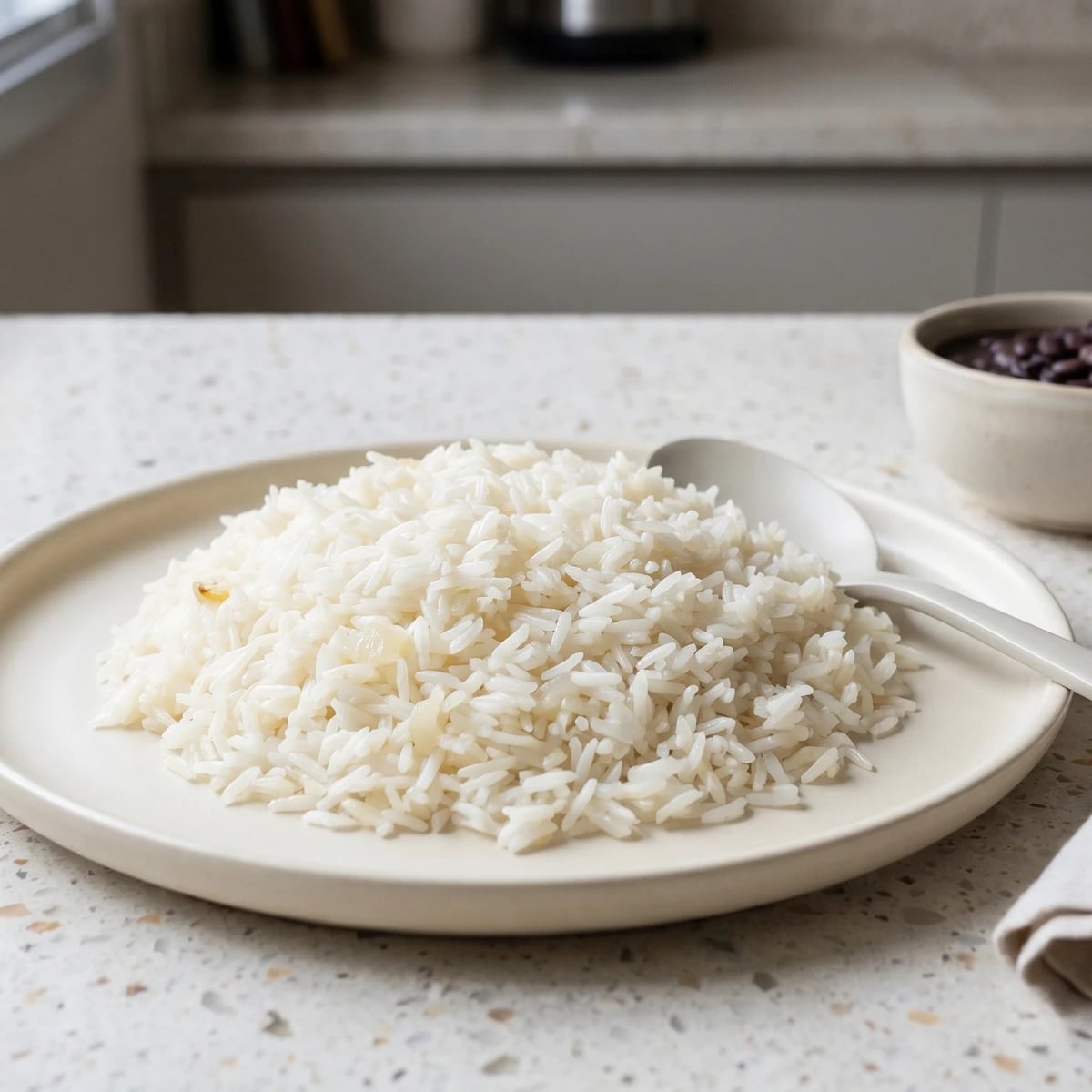
Arroz Branco Soltinho do Dia a Dia

Arroz Branco Soltinho do Dia a Dia

Created by

Everyone swears they can't make good rice. They're wrong. Refogue onion and garlic, use two parts water to one rice, then close the lid and leave the poor thing alone.

Side Dishes
Brazilian
Weeknight
Budget Friendly
Comfort Food
5 min
Active Time
20 min cook25 min total
Yield4 servings

You know that little voice saying, isso não é pra mim, I always ruin rice? I know her. I had her in my kitchen for years, standing beside me while I made paste one day and little white stones the next. Cozinhar não é dom, é um aprendizado. Rice proves it faster than almost anything.

Arroz soltinho is not a trick. It's a sequence. Wash off the extra surface starch so the grains don't cling like a nervous family. Refogue onion and garlic in a little oil until the kitchen smells like dinner has started. Toast the rice for a minute so each grain gets coated in fat, then add boiling water, salt, lid, low heat. After that, the method is mostly discipline. Stop stirring. I know. Very difficult. We are dramatic people around a pot.

This is the quiet half of the Brazilian pê-efe: rice, beans, a piece of meat or an egg, and something green. It looks ordinary because it is ordinary, and that's the point. Ordinary is how a country feeds itself. Learn this and you can resolver o jantar with beans from the freezer, a fried egg, couve in a pan, and no packet of powder pretending it helped.

Anota aí: two parts water to one part rice, a real refogado, low heat, ten minutes of rest. That's a receita que funciona. Tonight, you make rice. Tomorrow, you stop saying you can't.

White rice became one of Brazil's daily staples through centuries of Indigenous, African, Portuguese, and Asian growing and cooking practices, with irrigated rice production especially important in the south by the nineteenth and twentieth centuries. On the everyday prato feito, rice sits beside beans not as decoration but as structure: the pair is cheap, filling, and nutritionally complementary, which is why it anchored Brazilian home tables long before anyone needed a label to explain it. The style called arroz soltinho, with separate grains started in a refogado, is the home-kitchen ideal across much of the country.

The technique, the tradition, and the story behind every dish.

Discover Culinary Explorer

Ingredients

long-grain white rice

Quantity

1 cup

boiling water

Quantity

2 cups

neutral oil

Quantity

1 tablespoon

onion

Quantity

2 tablespoons

finely chopped

garlic

Quantity

1 clove

minced

salt

Quantity

1 teaspoon, or to taste

Equipment Needed

  • Small heavy 2-liter pot with tight-fitting lid
  • Fine-mesh sieve
  • Fork for fluffing
  • Measuring cup

Instructions

  1. 1

    Wash the rice

    Put the rice in a bowl, cover with water, swirl with your fingers, and drain. Repeat 2 or 3 times, until the water looks much less cloudy. You are washing off loose starch from the outside of the grains. Leave too much there and the rice cooks sticky, then you blame your hands instead of the starch.

  2. 2

    Drain it well

    Tip the washed rice into a sieve and let it drain for 5 minutes while you chop the onion and garlic. The grains should look damp, not sitting in a puddle. Extra water sneaks into the pot and throws off the measure, and arroz soltinho likes arithmetic more than drama.

  3. 3

    Build the refogado

    Warm the oil in a small heavy pot over medium heat. Add the onion and cook, stirring now and then, until it softens and turns see-through, about 3 minutes. Add the garlic and cook for 30 seconds to 1 minute, just until you smell it. Onion needs time to murchar and sweeten; garlic burns fast and turns bitter, and then it follows you through the whole pot.

    No seasoning packet. Salt, onion, garlic, and heat are enough. Powder is not a shortcut here, it's someone selling you back the flavor you already know how to build.
  4. 4

    Toast the grains

    Add the drained rice to the refogado and stir for 1 minute, until the grains look glossy and separate. You are coating the rice in the flavored oil, which helps the grains stay loose instead of clumping. It should sound dry and soft in the pot, not wet and sloshy.

  5. 5

    Add water and salt

    Pour in the boiling water and add the salt. Stir once, scraping the bottom so nothing is stuck, then stop. The water should bubble right away because it's hot; cold water drops the temperature and makes the rice sit around absorbing unevenly. One stir is enough. After that, leave it alone.

  6. 6

    Cook covered

    Bring the pot back to a steady bubble, then lower the heat to the smallest flame or lowest setting, cover, and cook for 12 minutes. Do not lift the lid. Do not stir. The rice is cooking by absorption, and every peek lets heat escape. Stirring breaks the grains and wakes up the starch again, which is how dinner turns into paste.

  7. 7

    Check the bottom

    After 12 minutes, tilt the pot gently. If you hear water moving, cover and cook 2 to 3 minutes more. If it sounds dry and you see small holes on the surface, turn off the heat. Those little holes are the sign that the water has been absorbed and the grains have cooked through.

  8. 8

    Rest and fluff

    Keep the lid on and let the rice rest off the heat for 10 minutes. Then fluff with a fork from the edges toward the center. Resting finishes the texture: the moisture evens out, the grains firm up, and the rice turns soltinho instead of wet at the bottom and dry on top.

Chef Tips

  • Use long-grain white rice for the everyday Brazilian pot. Short-grain rice wants to be stickier, which is lovely in its own kitchen, but not what we're doing here.
  • Boil the water before it goes into the pot. This keeps the cooking steady and makes the timing reliable, which is what a beginner deserves.
  • The honest Tuesday shortcut is skipping the onion and using only garlic in oil. It will still be rice. It won't have the same round sweetness, but dinner will happen. The shortcut I won't hand you is powdered seasoning.
  • If the bottom catches a little, don't scrape the browned layer into the whole pot. Scoop the fluffy rice from the top and let the pot soak. We learn, we don't punish dinner.
  • Leftover rice keeps well because it dries out a little in the fridge. That's not a tragedy. Tomorrow it can become arroz de forno, mexido, or a quick skillet rice with egg and greens.

Advance Preparation

  • You can wash and drain the rice up to 30 minutes before cooking. Don't soak it for hours, or the water measure changes and the grains can break.
  • Cooked rice keeps 3 to 4 days in the fridge in a covered container. Cool it quickly, refrigerate it, and reheat with a tablespoon of water in a covered pan.
  • For freezing, portion cooled rice into flat containers or bags for up to 1 month. Reheat covered from frozen or thawed with a splash of water so it comes back soft.

Frequently Asked Questions

Nutrition Information

1 serving (about 160g)

Calories
200 calories
Total Fat
4 g
Saturated Fat
1 g
Trans Fat
0 g
Unsaturated Fat
3 g
Cholesterol
0 mg
Sodium
580 mg
Total Carbohydrates
38 g
Dietary Fiber
1 g
Sugars
0 g
Protein
3 g

Note: Chef personas and recipes are created with AI assistance. Cook with care: follow safe food-handling practices, check doneness with a thermometer when needed, and adapt for allergies and your kitchen.

Where cooking meets culture.

Culinary guides, cultural storytelling, and the editorial depth that makes cooking meaningful.

Discover Culinary Explorer

More from The Everyday Plate: Arroz, Feijão & Refogado

Browse the full collection