
Chef Juliana
Açaí com Camarão do Pará
You think açaí belongs with banana and granola because that's the version that traveled. In Pará, thick unsweetened açaí sits beside shrimp, rice, and farinha. Anota aí: same fruit, different meal.
A cooking platform built around craft, culture, and the stories behind what we eat.
Created by
You don't need courage for dinner. You need a dry steak, a screaming hot pan, onions that murcham in the beef fat, and the sense not to crowd anything.
You standing there thinking "isso não é pra mim" are exactly who I want at the stove. I thought the same thing the first time I tried to make a steak and turned it into a grey little slipper. The problem wasn't me, and it isn't you. Cozinhar não é dom, é um aprendizado.
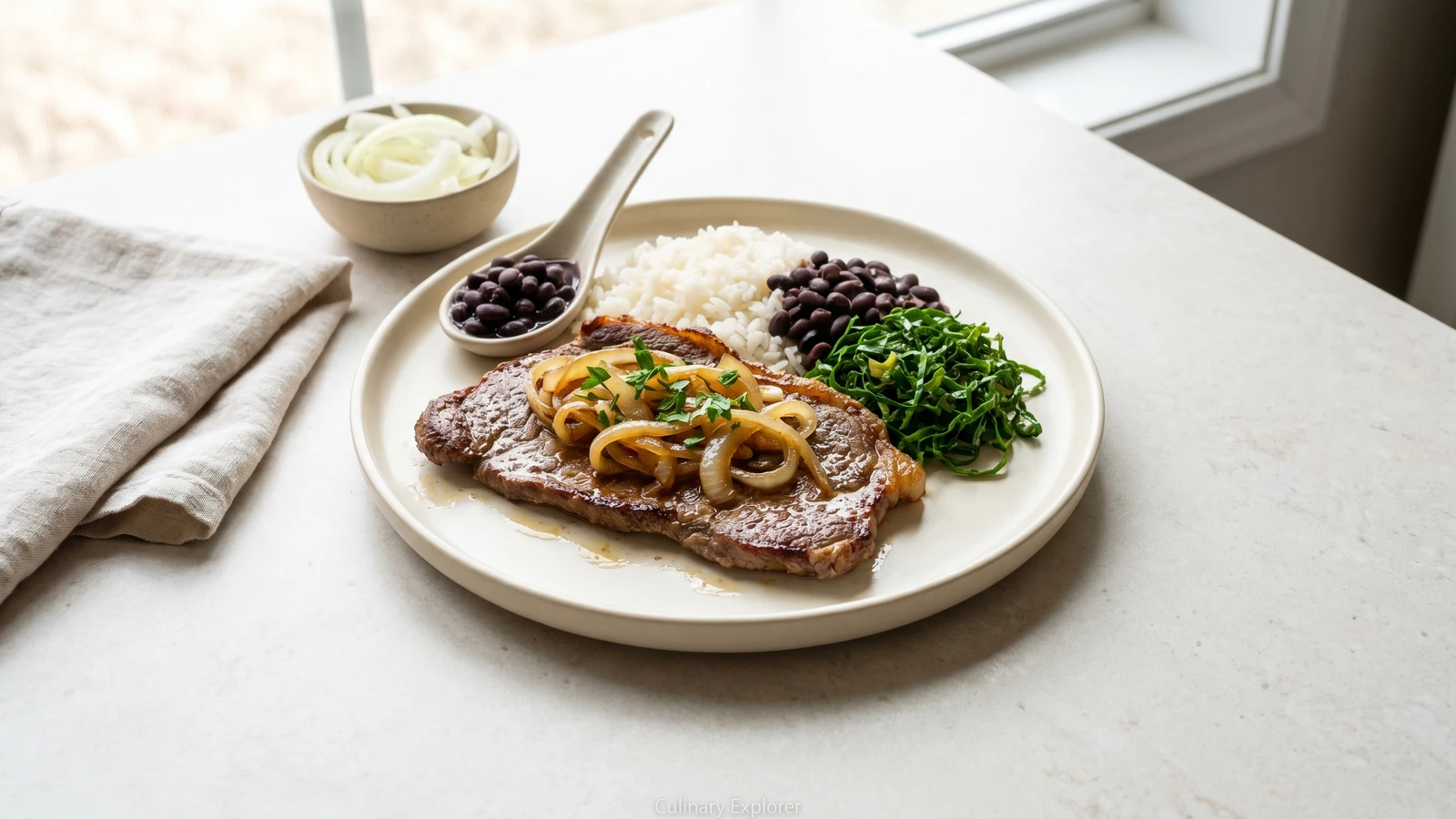
Bife acebolado belongs to the pê-efe, that everyday Brazilian plate that quietly keeps us fed: arroz soltinho, feijão with a good caldo, one honest piece of meat, something green. Nothing fancy. Nothing hidden under a packet. Just comida de verdade, cooked with attention and eaten on a Tuesday.
The secret isn't the onions, though everyone stares at them. It's the pan. Dry the steak so it browns instead of boils, heat the pan until the oil shines, sear fast, then use the same fat and browned bits to soften the onions. That's where flavor lives. Anota aí: if the pan is timid, the steak steams. If the pan is hot, dinner happens.
Serve it with rice, beans, and couve or a simple salad. You'll have a plate that tastes like home and proves the old excuse wrong, one bite at a time.
Bife acebolado became a fixture of Brazil's prato feito and lunch-counter plates in the twentieth century, especially in cities where quick beef cuts, rice, beans, and salad formed the working lunch. The dish is less a regional specialty than a national habit: a thin steak seared fast, onions softened in the same pan, and the pan juices dragged onto the rice. Its closest relatives appear across Portuguese and Brazilian home cooking, but the everyday pê-efe format is what made it unmistakably Brazilian.
Quantity
4 steaks, about 120g each
top sirloin, rump steak, or skirt steak, patted dry
Quantity
1 teaspoon, divided
Quantity
1/2 teaspoon
Quantity
2 tablespoons
Quantity
2 large
thinly sliced
Quantity
2 cloves
minced
Quantity
2 tablespoons
Quantity
1 tablespoon
Quantity
1 tablespoon
chopped
| Ingredient | Quantity |
|---|---|
| thin beef steakstop sirloin, rump steak, or skirt steak, patted dry | 4 steaks, about 120g each |
| fine salt | 1 teaspoon, divided |
| freshly ground black pepper | 1/2 teaspoon |
| oil | 2 tablespoons |
| onionsthinly sliced | 2 large |
| garlicminced | 2 cloves |
| water | 2 tablespoons |
| vinegar or lime juice | 1 tablespoon |
| parsley (optional)chopped | 1 tablespoon |
Pat the steaks very dry with paper towels, then season both sides with 3/4 teaspoon of the salt and the pepper. Let them sit on a plate while you slice the onions, about 10 minutes. Dry meat browns. Wet meat throws water into the pan and starts boiling before it ever gets color, and then you stand there blaming yourself for grey steak.
Set a heavy skillet over high heat for 2 to 3 minutes, then add the oil. When the oil looks shiny and moves quickly when you tilt the pan, it's ready. This is not the moment for a shy pan. The heat has to hit the steak hard so the outside dourar fast while the inside stays tender.
Lay in two steaks, leaving space between them, and sear without moving for 1 1/2 to 2 minutes. Flip and cook the second side for another 1 to 2 minutes, just until browned and still juicy. Move them to a plate and repeat with the remaining steaks. Don't crowd the pan. Crowd it and the meat releases water, the temperature drops, and you've made a little bath, not dinner.
Lower the heat to medium. Add the sliced onions and the remaining 1/4 teaspoon salt to the same pan. Stir and scrape the browned bits from the bottom as the onions murcham, about 5 minutes. Those dark bits are not dirt and they're not a mistake. They're the flavor the steak left behind for the onions to pick up.
Add the garlic and stir for 30 seconds to 1 minute, just until you smell it. Garlic goes in after the onions because it burns faster. Burn it now and that bitterness follows the whole plate, rude as an uninvited opinion.
Add the water and vinegar or lime juice, then scrape the pan again until the onions look glossy and lightly tangled, about 1 minute. The water lifts the browned flavor from the skillet, and the acidity wakes up the beef fat so the onions taste bright instead of heavy.
Return the steaks and any juices on the plate to the pan. Turn them once through the onions, just long enough to coat them, about 30 seconds. Don't cook them all over again. Spoon the onions over the top, scatter parsley if using, and serve with arroz soltinho, feijão, and something green.
1 serving (about 160g)
Culinary guides, cultural storytelling, and the editorial depth that makes cooking meaningful.
Discover Culinary ExplorerChef Juliana
You think açaí belongs with banana and granola because that's the version that traveled. In Pará, thick unsweetened açaí sits beside shrimp, rice, and farinha. Anota aí: same fruit, different meal.

Chef Juliana
You think savory açaí is not for you. I understand. Then you taste the cold, dark bowl beside hot fried fish, rice, greens, and farinha, and dinner gets very quiet.

Chef Juliana
You think salted beef and rice sound like trouble. Anota aí: soak the charque, brown it properly, build the refogado, and this one pot resolves dinner.

Chef Juliana
You think a Maranhão green rice belongs to somebody else's clever hands. It doesn't. Wilt the vinagreira, build the refogado, fold it through arroz soltinho, and dinner gets bright, coastal, and yours.