
Chef Lupita
Arroz a la Oaxaqueña
Oaxaca's red rice, stained with tomato and fried in lard, steamed with carrots, ejotes, black beans, and epazote. The side that anchors a Oaxacan family meal and earns its place beside the main.
A cooking platform built around craft, culture, and the stories behind what we eat.

Created by
Morelos white rice is fried until pearly, then steamed with a whole serrano and parsley, a clean table rice that knows its job beside beans, guisados, and mole verde.
Morelos sits south of Ciudad de México, between Cuernavaca, Cuautla, Jojutla, and the rice fields that made the state serious about one plain grain. This is arroz blanco estilo Morelos: rice fried in oil until pearly, then steamed with a whole chile serrano and parsley. Clean. Fluffy. No tomato. No drama.
The rice matters first. If you can find arroz Morelos, use it. The grain is plump, absorbs liquid well, and stays distinct when the cook knows what she is doing. If you use any tired supermarket rice and then blame the recipe, pregúntale a las señoras del mercado (ask the women at the market). They will tell you the truth before I have to.
The chile serrano is left whole because this dish is not supposed to be a green salsa hiding in rice. It perfumes the pot. The parsley gives a clean herbal edge that belongs to this table, especially beside mole verde, calabacitas, beans, or a weekday chicken guisado. Cada estado, su propia cocina, and Morelos knows rice is not filler. It is structure.
My mother made Jalisco rice red more often than white, but in Morelos I watched women fry the grains patiently until each one looked sealed in oil. That is the lesson. You don't stir rice to death. You prepare it, cover it, and let it become what it is supposed to be.
Rice cultivation in Morelos expanded strongly in the 19th and 20th centuries, especially around Jojutla, Cuautla, Emiliano Zapata, and the warm irrigated valleys fed by the state's rivers. In 2012, Arroz del Estado de Morelos received Denomination of Origin protection in Mexico, recognition of the grain's regional identity and quality. The white rice served in Morelos homes reflects that agricultural history: a plain preparation designed to show the grain, not cover it with tomato or heavy seasoning.
Quantity
1 1/2 cups
Quantity
as needed
for soaking the rice
Quantity
3 tablespoons
Quantity
1/4 small
finely chopped
Quantity
1
finely minced
Quantity
2 3/4 cups
Quantity
1 teaspoon, plus more to taste
Quantity
1 whole
slit once lengthwise but left intact
Quantity
3 sprigs
Quantity
1 teaspoon
| Ingredient | Quantity |
|---|---|
| arroz Morelos or long-grain white rice | 1 1/2 cups |
| hot waterfor soaking the rice | as needed |
| neutral vegetable oil | 3 tablespoons |
| white onionfinely chopped | 1/4 small |
| garlic clovefinely minced | 1 |
| hot chicken broth or water | 2 3/4 cups |
| kosher salt | 1 teaspoon, plus more to taste |
| fresh chile serranoslit once lengthwise but left intact | 1 whole |
| fresh parsley | 3 sprigs |
| fresh lime juice | 1 teaspoon |
Put the rice in a bowl and cover it with hot water by one inch. Let it stand for 10 minutes. This loosens surface starch so the grains cook separate instead of turning into paste. Drain well, rinse under cool water until the water runs mostly clear, then leave the rice in the strainer for 10 minutes. Wet rice thrown into oil spits and cooks unevenly. No me vengas con atajos.
Heat the oil in a heavy 10-inch cazuela or saucepan over medium heat. Add the drained rice and stir gently for 6 to 8 minutes, until the grains turn milky white, then pearly at the edges, and sound dry against the pan. Do not brown it. This is arroz blanco, not arroz rojo, not pilaf from somewhere else. The frying seals the grain so it steams clean.
Stir in the chopped white onion and minced garlic. Cook for 1 minute, just until the onion softens and the garlic smells sweet. If the garlic browns, you went too far. Morelos rice should taste clean, not roasted.
Pour in the hot chicken broth or hot water. It should hiss when it hits the pan. Add the salt, whole slit chile serrano, parsley sprigs, and lime juice. Stir once, only once, to distribute the salt. The serrano perfumes the pot without turning the rice hot. Not all Mexican food is trying to burn your mouth. That idea is lazy.
Bring the liquid to a steady simmer, then reduce the heat to the lowest setting. Cover tightly and cook for 15 minutes. Do not lift the lid. The women who taught me this in Cuautla listened to the pot, not to a timer alone: first bubbling, then a softer sound as the liquid disappears, then quiet. Quiet means the rice is nearly done.
Turn off the heat and let the pot sit, still covered, for 10 minutes. Remove the parsley and the chile serrano. Fluff the rice with a fork from the edges toward the center. The grains should be separate, tender, and white with a faint green scent from the parsley and chile. Taste for salt. Así se hace y punto.
Spoon the rice into a warm clay cazuela or shallow Morelos-style barro bowl. Serve it beside frijoles de olla, milanesas, mole verde, or a simple guisado. This rice is the plain counterpart on the table, and plain does not mean careless. Saber cocinar es saber vivir.
1 serving (about 150g)
Culinary guides, cultural storytelling, and the editorial depth that makes cooking meaningful.
Discover Culinary ExplorerChef Lupita
Oaxaca's red rice, stained with tomato and fried in lard, steamed with carrots, ejotes, black beans, and epazote. The side that anchors a Oaxacan family meal and earns its place beside the main.
Chef Lupita
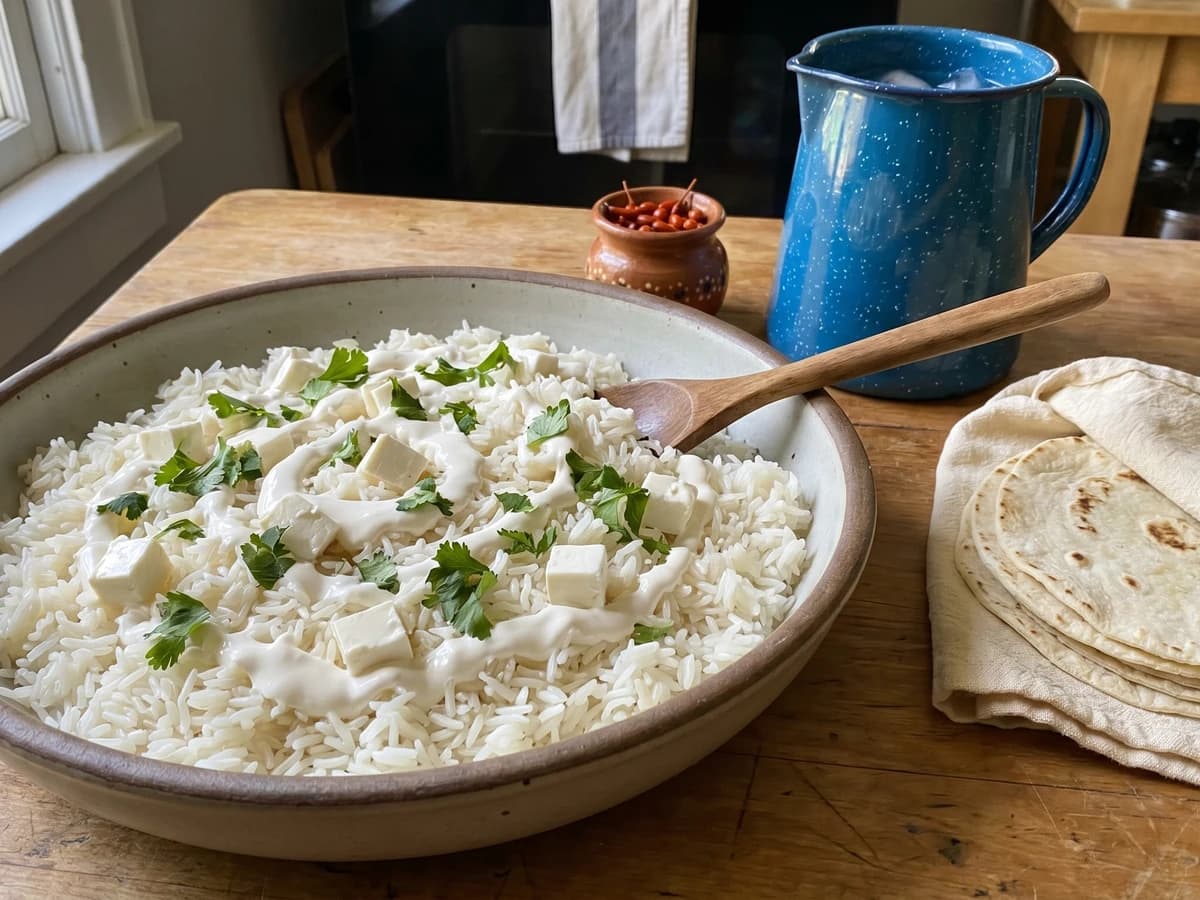
Sinaloa's home-cook white rice topped with cold cubes of cream cheese that soften into the warm grain, finished with crema and a sprinkle of chiltepin at the table. The trick that makes a side dish feel like a small luxury.
Chef Lupita
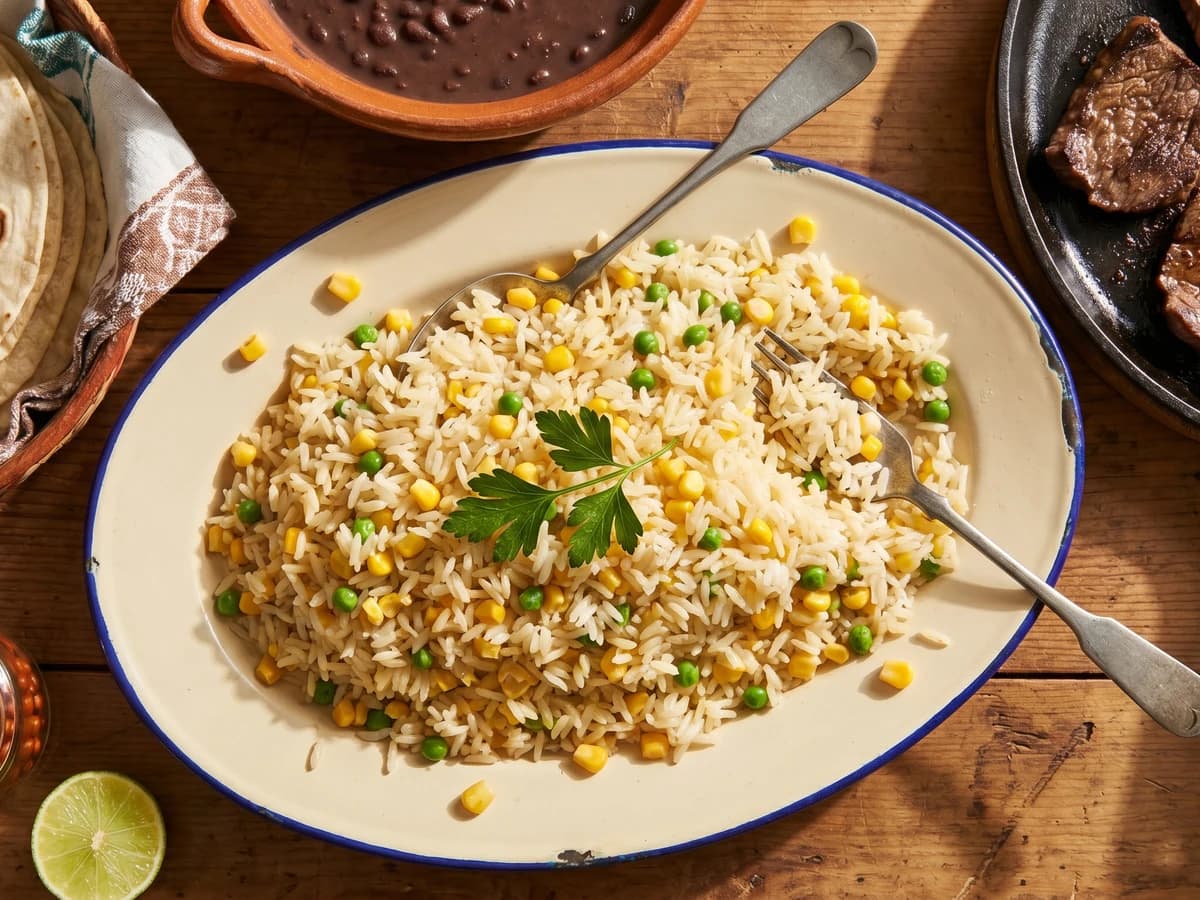
Sonora's white rice, toasted in butter and steamed with sweet corn and tender peas. The clean, quiet partner to a plate of carne asada, not the red rice of central Mexico.

Chef Lupita
Yucatán's white rice with sweet corn kernels, toasted in lard with garlic and onion. The quiet base that holds up against the peninsula's bold achiote-stained stews.