
Chef Lupita
Arroz a la Oaxaqueña
Oaxaca's red rice, stained with tomato and fried in lard, steamed with carrots, ejotes, black beans, and epazote. The side that anchors a Oaxacan family meal and earns its place beside the main.
A cooking platform built around craft, culture, and the stories behind what we eat.
Created by
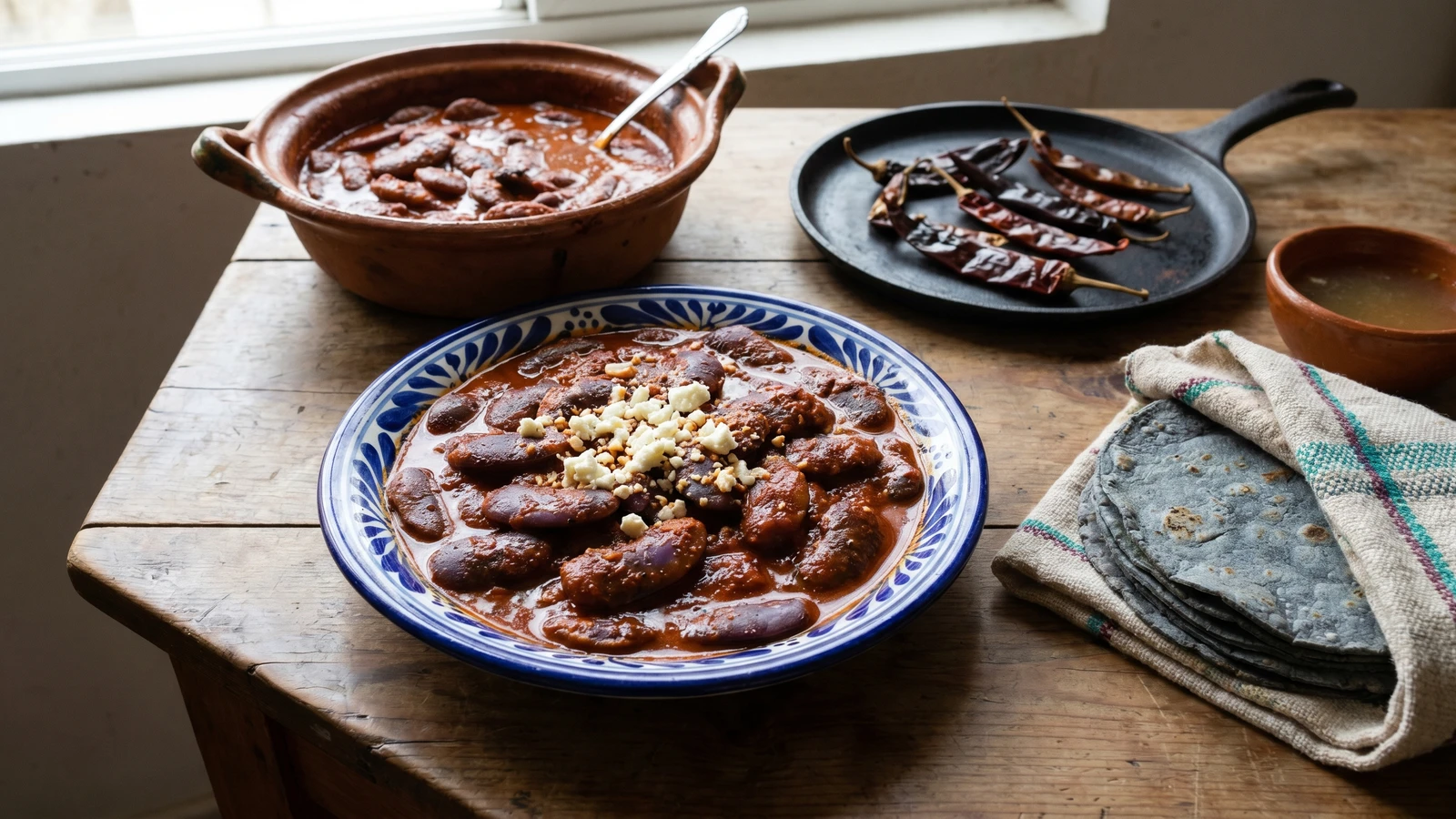
Puebla and Tlaxcala's highland ayocotes, dense runner beans from cold milpa country, simmered with epazote and finished in a smoky adobo of guajillo, ancho, pasilla, and manteca.
This belongs to the cold highlands between Puebla and Tlaxcala, where the milpa climbs toward the volcanoes and the ayocote grows big, dense, and stubborn. These are not little beans for rushing. They are giant runner beans, ayocotes morados or blancos, the kind that need soaking, slow simmering, and a cook who understands patience.
The adobo is what ties the pot to this region: chile guajillo for clean red color, chile ancho for sweetness, chile pasilla mexicano for smoke and depth, all toasted on a comal, softened, blended, strained, and fried in manteca de cerdo. La manteca es el sabor. Use oil if you must, but know what you gave up. A substitution is a compromise, not an upgrade.
I learned a version like this from a woman near Huamantla who served the beans in a clay cazuela beside roasted pork and blue corn tortillas. She did not call them a side dish. She called them comida fuerte, food with strength. That is the truth. Ayocotes fill the body and hold the adobo like meat does. Cada estado, su propia cocina, and this one lives in the Puebla-Tlaxcala highland kitchen.
Ayocotes, Phaseolus coccineus, are native runner beans domesticated in the highlands of Mesoamerica and remain especially tied to central Mexican milpa systems, where they climb maize stalks and tolerate cooler altitudes better than common beans. The word ayocote comes from Nahuatl, and in Puebla, Tlaxcala, Hidalgo, and the State of Mexico the bean has long been treated as a substantial market crop rather than a garnish. Adobos built from dried chiles became a colonial-era bridge between Indigenous chile grinding and Spanish-introduced vinegar, garlic, and spices, but the chile remains the authority.
Quantity
1 pound
preferably ayocotes morados or blancos from Puebla or Tlaxcala
Quantity
as needed
for soaking and cooking
Quantity
1/2 medium
for simmering the beans
Quantity
3
peeled, for simmering the beans
Quantity
2 large sprigs
Quantity
1 1/2 teaspoons, plus more to taste
Quantity
5
stemmed and seeded
Quantity
2
stemmed and seeded
Quantity
2
stemmed and seeded
Quantity
2
roasted until blistered
Quantity
1/4 medium
roasted, for the adobo
Quantity
2
roasted with skins on, then peeled
Quantity
2
Quantity
1/2 teaspoon
toasted
Quantity
1 teaspoon
Quantity
2 tablespoons
Quantity
3 tablespoons
Quantity
1/2 cup, plus more as needed
Quantity
for serving
crumbled
Quantity
for serving
| Ingredient | Quantity |
|---|---|
| dried ayocote beanspreferably ayocotes morados or blancos from Puebla or Tlaxcala | 1 pound |
| waterfor soaking and cooking | as needed |
| white onionfor simmering the beans | 1/2 medium |
| garlic clovespeeled, for simmering the beans | 3 |
| fresh epazote | 2 large sprigs |
| kosher salt | 1 1/2 teaspoons, plus more to taste |
| dried chile guajillostemmed and seeded | 5 |
| dried chile anchostemmed and seeded | 2 |
| dried chile pasilla mexicanostemmed and seeded | 2 |
| Roma tomatoesroasted until blistered | 2 |
| white onionroasted, for the adobo | 1/4 medium |
| garlic clovesroasted with skins on, then peeled | 2 |
| whole cloves | 2 |
| cumin seedstoasted | 1/2 teaspoon |
| dried Mexican oregano | 1 teaspoon |
| apple cider vinegar | 2 tablespoons |
| pork lard (manteca de cerdo) | 3 tablespoons |
| reserved bean broth | 1/2 cup, plus more as needed |
| queso fresco (optional)crumbled | for serving |
| warm hand-pressed corn tortillas (optional) | for serving |
Rinse the ayocotes and pick through them for stones. Cover with at least 3 inches of cool water and soak overnight, 10 to 12 hours. These beans are large and dense. If you skip the soak, you can cook them, yes, but you will wait half the day and the skins may split before the centers soften. No me vengas con atajos.
Drain the soaked beans and place them in a heavy pot or clay olla. Cover with fresh water by 2 inches. Add the half onion, 3 peeled garlic cloves, and epazote. Bring to a gentle simmer, then lower the heat and cook partially covered for 1 1/2 to 2 hours, until the beans are tender but still hold their shape. Salt them after the first hour. The broth should taste earthy and clean, with the epazote sitting in the background, not shouting.
Heat a dry comal over medium. Toast the guajillo, ancho, and pasilla mexicano separately, about 20 to 30 seconds per side, pressing lightly with tongs. The skins should puff and turn fragrant. Do not blacken them. Burned chile makes bitter adobo, and there is no fixing that later.
Place the toasted chiles in a bowl and cover with hot water, not boiling water. Let them soften for 20 minutes. Drain and transfer to a blender with the roasted tomatoes, roasted onion, roasted garlic, cloves, toasted cumin, Mexican oregano, vinegar, and 1/2 cup bean broth. Blend until completely smooth. If the blender struggles, add a little more bean broth, just enough to move the blades.
Pass the blended adobo through a fine-mesh strainer into a bowl, pressing hard with a spoon. Discard the skins and seeds left behind. This is not fussiness. Ayocotes are creamy inside and thick-skinned outside, so the sauce needs to be smooth enough to coat them without turning sandy.
Melt the manteca de cerdo in a wide cazuela or heavy skillet over medium heat. Add the strained adobo carefully. It will sputter. Cook, stirring often, for 8 to 10 minutes, until the color deepens to brick red and the fat begins to glisten at the edges. This frying step wakes up the chile and rounds out the vinegar. Skip it and the adobo tastes raw. Así se hace y punto.
Lift the cooked ayocotes from their broth with a slotted spoon and add them to the fried adobo. Add 1 cup of bean broth and fold gently so you do not break the beans. Simmer 15 to 20 minutes, until the adobo clings to the ayocotes and the sauce thickens around them. Taste for salt. The beans should be meaty, smoky, and just sharp enough from the vinegar to stand beside roast pork.
Turn off the heat and let the cazuela rest for 10 minutes before serving. Ayocotes drink the sauce as they sit. Spoon them into a Puebla talavera bowl or serve straight from the cazuela, with crumbled queso fresco if you use it and warm corn tortillas on the table. Flour tortillas belong to the north. Here, you bring corn.
1 serving (about 300g)
Culinary guides, cultural storytelling, and the editorial depth that makes cooking meaningful.
Discover Culinary ExplorerChef Lupita
Oaxaca's red rice, stained with tomato and fried in lard, steamed with carrots, ejotes, black beans, and epazote. The side that anchors a Oaxacan family meal and earns its place beside the main.
Chef Lupita
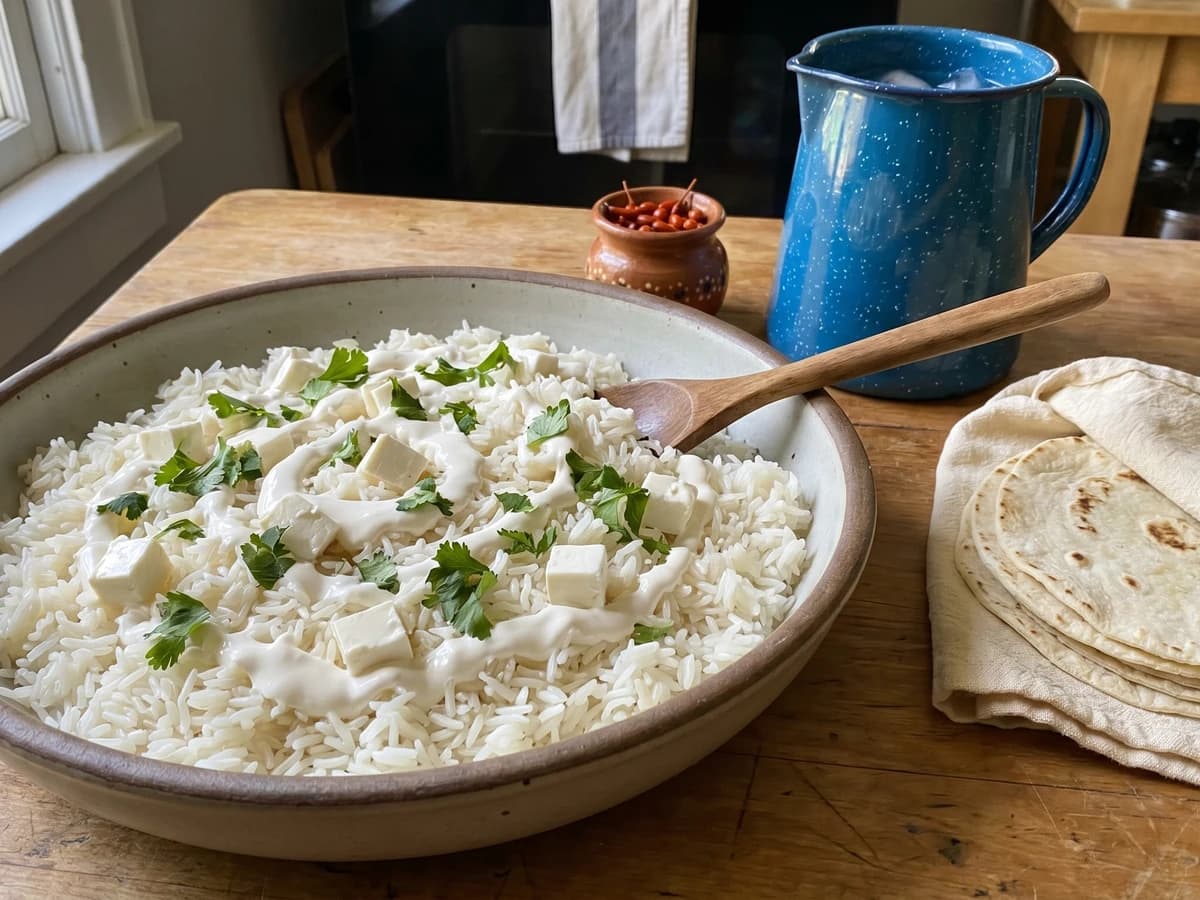
Sinaloa's home-cook white rice topped with cold cubes of cream cheese that soften into the warm grain, finished with crema and a sprinkle of chiltepin at the table. The trick that makes a side dish feel like a small luxury.
Chef Lupita
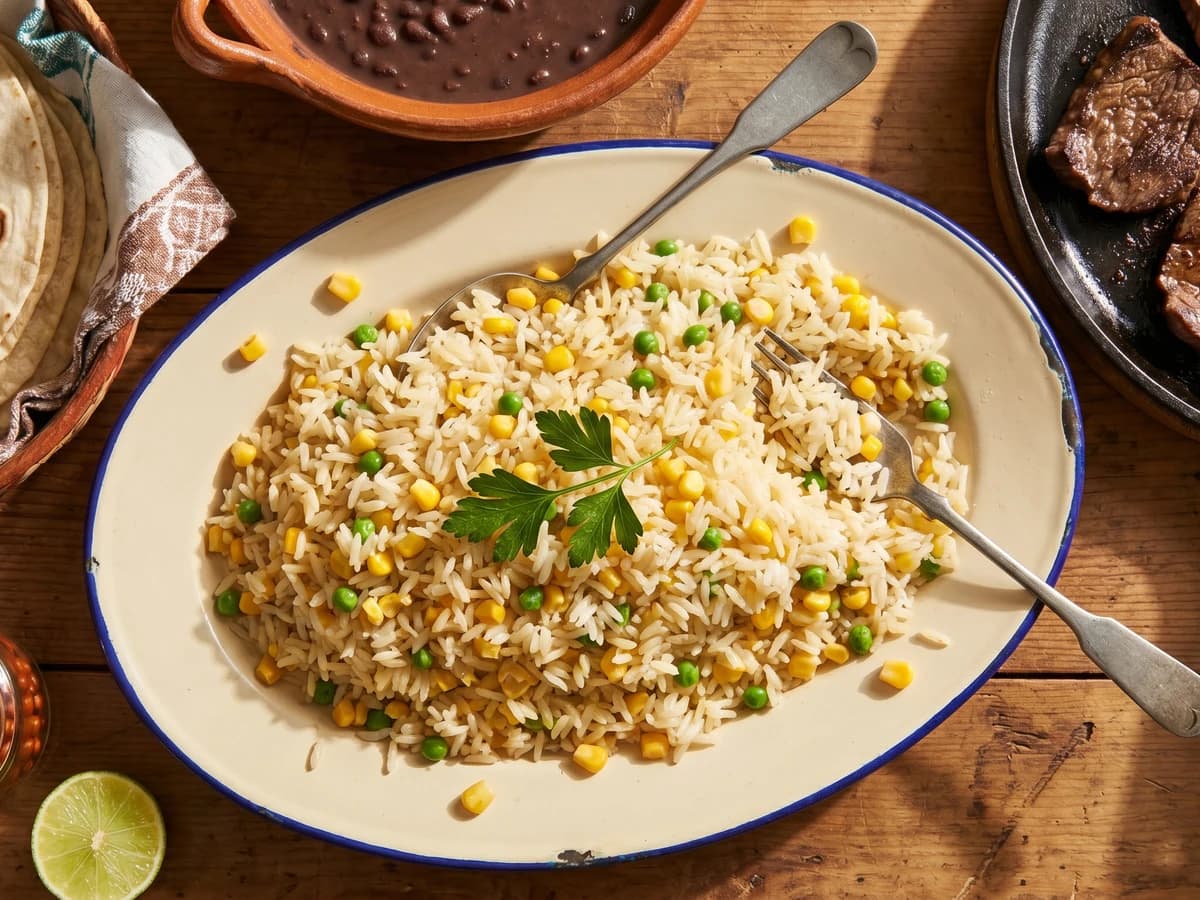
Sonora's white rice, toasted in butter and steamed with sweet corn and tender peas. The clean, quiet partner to a plate of carne asada, not the red rice of central Mexico.

Chef Lupita
Yucatán's white rice with sweet corn kernels, toasted in lard with garlic and onion. The quiet base that holds up against the peninsula's bold achiote-stained stews.