
Chef Lupita
Arroz a la Oaxaqueña
Oaxaca's red rice, stained with tomato and fried in lard, steamed with carrots, ejotes, black beans, and epazote. The side that anchors a Oaxacan family meal and earns its place beside the main.
A cooking platform built around craft, culture, and the stories behind what we eat.

Created by
Oaxaca's white rice, toasted in lard with onion and garlic, finished at the table with sliced ripe plátano. The strangest, simplest, most beloved side dish in the Valles Centrales.
This dish is from Oaxaca. Specifically from the home tables of the Valles Centrales, where it sits beside mole negro, beside tasajo asado, beside a bowl of frijoles de la olla. It is the side dish that confuses every visitor and that no Oaxacan family questions.
The rice itself is plain. Long-grain, rinsed, toasted in lard with a chunk of onion and two cloves of garlic, then steamed in hot water until each grain stands separate. Grano por grano. That is the Oaxacan standard for white rice and it is not negotiable. The toasting in lard is the step people skip and the step that matters. La manteca es el sabor. Boiled rice is not arroz blanco. Toasted, steamed rice is.
The plátano on top is what makes outsiders raise an eyebrow. Sweet, ripe banana sliced over savory rice. Cold fruit on warm grain. It sounds wrong written down. It is right at the table. The sweetness cuts the richness of mole, the cool slices reset your palate between bites of tasajo, and the contrast of textures, soft fruit against firm grain, is the whole point. In Oaxaca, the plátano dominico, those small finger-sized bananas, is the traditional choice because the flavor is more concentrated. A regular yellow banana works when the dominico is not in your market.
My mother did not cook this. She was from Jalisco and Jalisciense rice is its own thing, redder, with tomato. The first time I ate arroz blanco con plátano was at a comedor in Tlacolula and I asked the senora why. She looked at me like I was the strange one. "Asi se come," she said. This is how it is eaten. Cada estado, su propia cocina.
Rice arrived in Mexico through the Spanish, who brought it from Asia via the Manila galleon trade in the 16th century, and Oaxaca's signature pairing with plátano reflects the deeper African and Caribbean influence that traveled through Veracruz and inland to the Oaxacan valleys. The plátano dominico, a small sweet banana cultivated in Oaxaca's lowlands and the Isthmus of Tehuantepec, became the traditional accompaniment because of its concentrated flavor and the way its sweetness balanced the dense, chile-driven moles of the region. The combination is documented in 19th-century Oaxacan recetarios as the standard companion to mole negro and tasajo, and remains a cultural marker that Oaxacans abroad use to recognize a properly set table.
Quantity
1 1/2 cups
Quantity
3 tablespoons
Quantity
1/4 medium
left in one chunk
Quantity
2
peeled and smashed
Quantity
2 1/4 cups
Quantity
1 1/2 teaspoons
Quantity
1 sprig
Quantity
2
peeled and sliced into thick coins at the table
Quantity
for serving
| Ingredient | Quantity |
|---|---|
| long-grain white rice | 1 1/2 cups |
| manteca de cerdo (pork lard) or vegetable oil | 3 tablespoons |
| white onionleft in one chunk | 1/4 medium |
| garlic clovespeeled and smashed | 2 |
| hot water or light chicken broth | 2 1/4 cups |
| kosher salt | 1 1/2 teaspoons |
| fresh parsley (optional) | 1 sprig |
| ripe plátano dominico or yellow bananaspeeled and sliced into thick coins at the table | 2 |
| lime wedges (optional) | for serving |
Place the rice in a fine-mesh strainer and rinse under cold running water, swishing it with your hand, until the water runs clear. This pulls off the loose starch that would otherwise turn the pot gummy. In Oaxaca, the rice is meant to come out grano por grano, each grain separate. Skip the rinse and you have a sticky pot. No me vengas con atajos.
Shake the strainer hard to drain the rice well, then spread it on a clean kitchen towel for five minutes. The rice should be damp, not wet. Wet rice fights the lard in the next step and you lose the toasted flavor that defines Oaxacan arroz blanco.
Heat the lard in a heavy 3-quart pot or cazuela over medium heat until it shimmers. Add the rice and stir to coat every grain. Cook for four to six minutes, stirring often, until the grains turn from translucent to chalky white and the kitchen smells lightly nutty. La manteca es el sabor. This step is what separates Oaxacan arroz blanco from boiled rice. Watch it. The grains should turn opaque, never brown.
Push the rice to one side and drop in the onion chunk and the smashed garlic. Cook for thirty seconds, just until the garlic perfumes the lard. Stir everything together. The onion stays in one piece so you can fish it out at the end. This is how Oaxacan home cooks do it: the aromatics flavor the pot without breaking down into the rice.
Pour in the hot water or broth and add the salt and the parsley sprig if using. The liquid must be hot, not cold. Cold liquid stops the toasting and the grains seize. Stir once, gently, to settle the rice in an even layer. Do not stir again. Stirring rice while it cooks is what makes it gummy.
Bring the pot to a gentle boil over medium-high heat, then reduce to the lowest possible simmer. Cover tightly and cook for 18 to 20 minutes. Do not lift the lid. Do not peek. The rice is steaming and every time you open the pot you let the steam out and the cooking falters. Asi se hace y punto.
Pull the pot off the heat and let it rest, still covered, for ten minutes. This is when the grains finish absorbing the last of the moisture and settle. Skip the rest and the bottom is wet while the top is dry.
Lift the lid. Fish out the onion, garlic, and parsley sprig and discard. Fluff the rice gently with a fork. The grains should be separate, glossy from the lard, white with a faint cream tone from the toasting. Spoon onto plates. At the table, slice the ripe plátano into thick coins right over the rice so the cool sweet fruit sits on top of the warm savory grain. Eat them together in the same bite. That contrast is the dish. People who have not eaten this think it sounds wrong. People from Oaxaca know it is right.
1 serving (about 190g)
Culinary guides, cultural storytelling, and the editorial depth that makes cooking meaningful.
Discover Culinary ExplorerChef Lupita
Oaxaca's red rice, stained with tomato and fried in lard, steamed with carrots, ejotes, black beans, and epazote. The side that anchors a Oaxacan family meal and earns its place beside the main.
Chef Lupita
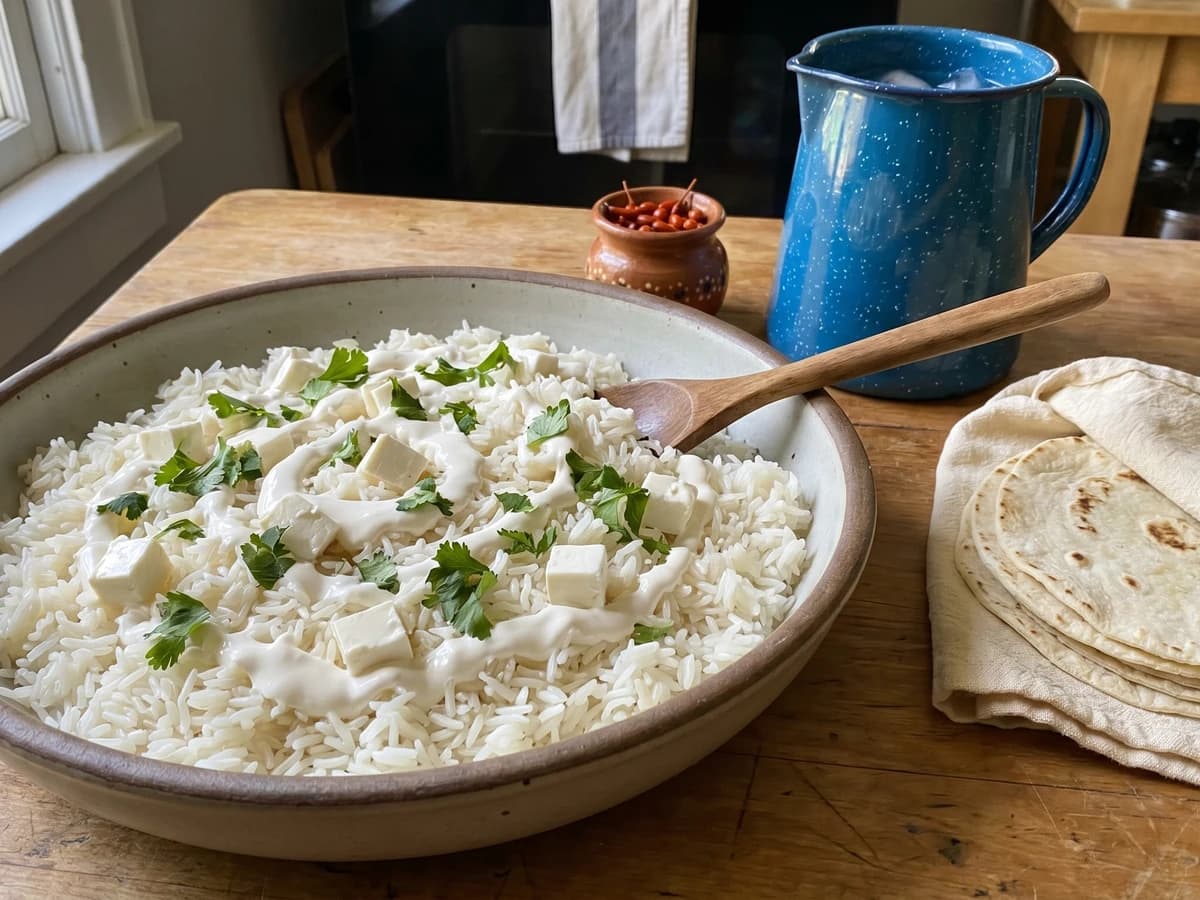
Sinaloa's home-cook white rice topped with cold cubes of cream cheese that soften into the warm grain, finished with crema and a sprinkle of chiltepin at the table. The trick that makes a side dish feel like a small luxury.
Chef Lupita
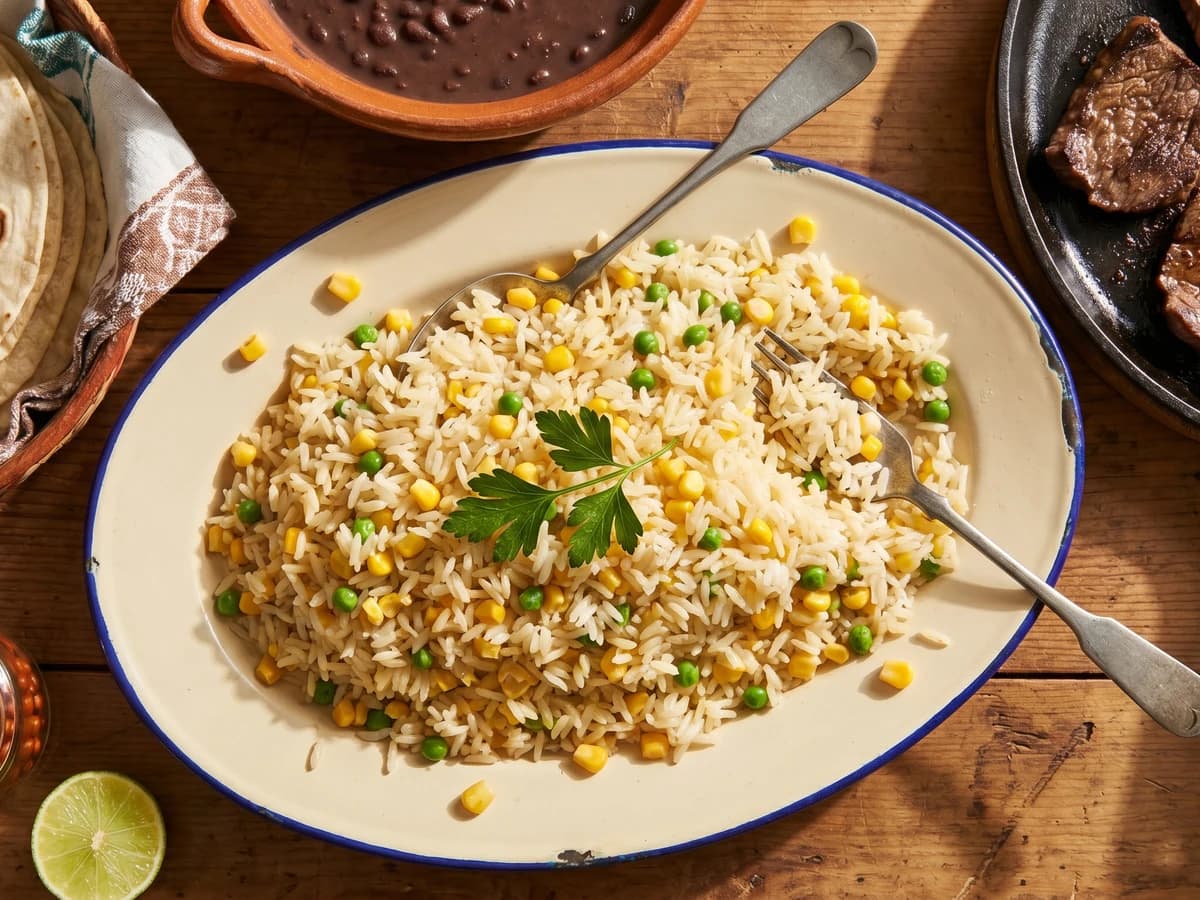
Sonora's white rice, toasted in butter and steamed with sweet corn and tender peas. The clean, quiet partner to a plate of carne asada, not the red rice of central Mexico.

Chef Lupita
Yucatán's white rice with sweet corn kernels, toasted in lard with garlic and onion. The quiet base that holds up against the peninsula's bold achiote-stained stews.