Culinary Explorer

A cooking platform built around craft, culture, and the stories behind what we eat.
Discover Culinary Explorer
Arroz Blanco con Hoja Santa

Arroz Blanco con Hoja Santa

Created by

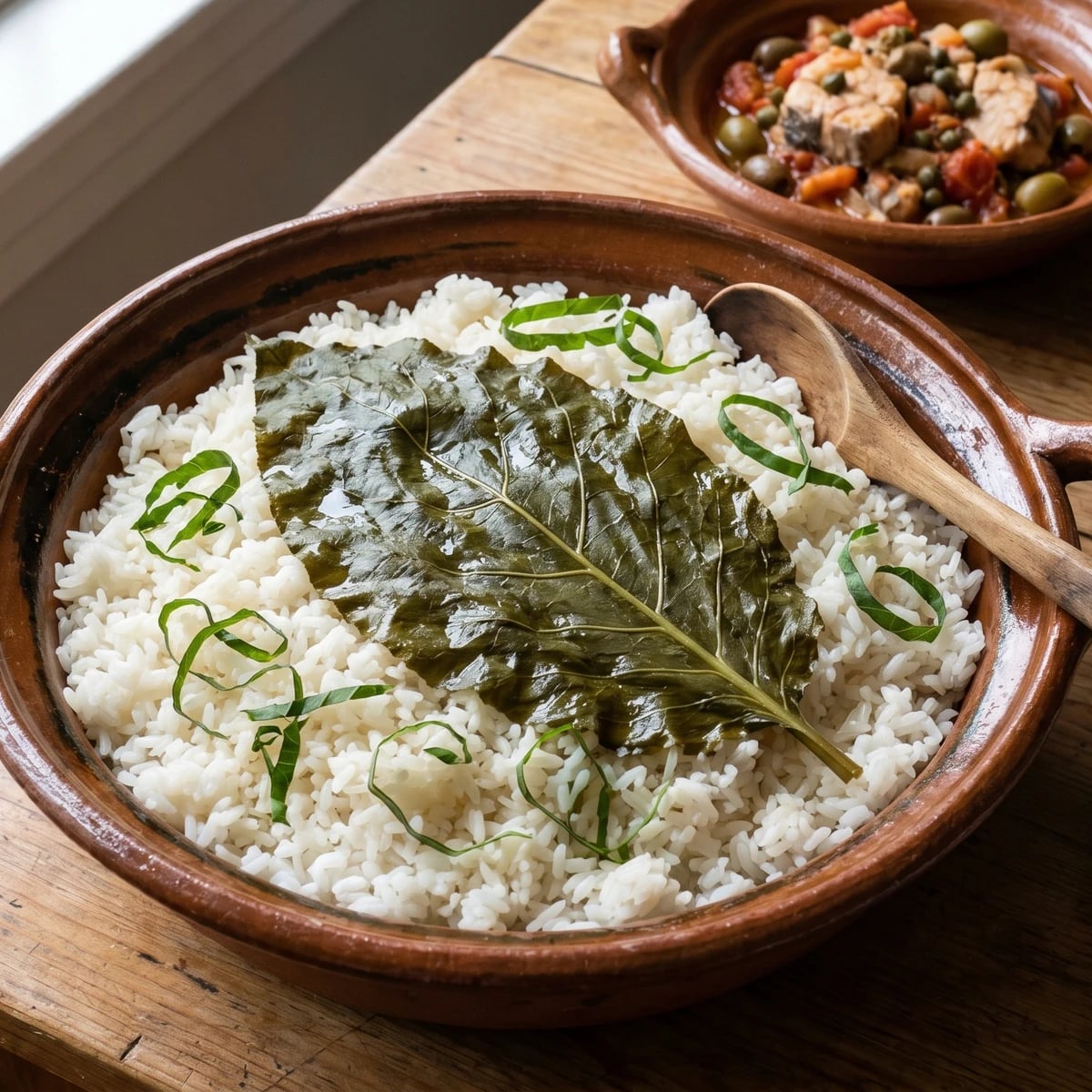
Veracruz white rice steamed with a whole hoja santa leaf laid across the top, the anise-and-pepper perfume of the leaf settling directly into the grains. The rice that belongs next to chichilo and coastal pescados.

Side Dishes
Mexican
Weeknight
Dinner Party
Special Occasion
15 min
Active Time
25 min cook40 min total
Yield6 servings

This is a Veracruz dish, with a foot also in Oaxaca and Tabasco. Anywhere hoja santa grows wild against a wall and a cook reaches up to tear off a leaf for the pot of rice on the stove. You do not find this rice in the north. You do not find it in Jalisco. You find it where the leaf grows, and the leaf grows in the hot, humid south.

Hoja santa is not a garnish. The leaf is the seasoning, and the technique is older than any recipe book: lay it whole on top of the rice while it steams, let the trapped vapor pull the oils out of the leaf and drop them into the grains. Anise, black pepper, a little sassafras, a little mint. All from one leaf. There is no substitute. If you cannot find hoja santa fresh, this is not the day to make this rice. Cook arroz blanco plain and wait until the leaf shows up at the mercado.

The rice itself is the simplest arroz blanco: rinsed, fried in lard with onion and garlic, steamed in hot broth. The discipline is in the small things. Rinsing properly. Toasting until the grains smell like popcorn. Heating the liquid before it hits the pan. Not lifting the lid. Resting off the heat. None of this is decorative. La cocina no es decoracion, es trabajo.

My mother did not cook with hoja santa. She was from Jalisco and the leaf does not grow there. I learned this rice from a senora named Dona Aurora in a kitchen in Tlacotalpan, on the Papaloapan river, who served it next to a mojarra fried whole. She told me, the leaf does the work, you stay out of its way. Recetas probadas y garantizadas.

Hoja santa, Piper auritum, is a member of the pepper family native to southern Mexico and Central America, used by the Mexica, Totonac, and Zapotec peoples for cooking and medicine long before the Spanish arrived. The plant's many regional names, hierba santa, acuyo in Veracruz, tlanepa in Nahua areas, momo in parts of Tabasco, and hoja de anis in Oaxaca, reflect how independently each region absorbed the leaf into its kitchen. In Veracruz cuisine specifically, the leaf is associated with the Sotavento region along the Papaloapan river, where it perfumes everything from rice to tamales of fresh river fish wrapped directly in the leaf, a technique that predates the use of corn husks for the same purpose.

The technique, the tradition, and the story behind every dish.

Discover Culinary Explorer

Ingredients

long-grain white rice

Quantity

1 1/2 cups

hot water or light chicken broth

Quantity

2 1/4 cups

manteca de cerdo (pork lard) or neutral oil

Quantity

2 tablespoons

white onion

Quantity

1/4 medium

left in one chunk

garlic cloves

Quantity

2

peeled and lightly smashed

kosher salt

Quantity

1 1/2 teaspoons

fresh hoja santa leaf

Quantity

1 large (about 8 inches across)

rinsed and patted dry

fresh hoja santa leaf for finishing (optional)

Quantity

1 small

finely chiffonaded

Equipment Needed

  • Heavy 3-quart saucepan or small clay cazuela with a tight-fitting lid
  • Fine-mesh strainer for rinsing the rice
  • Wooden spoon

Instructions

  1. 1

    Rinse the rice

    Place the rice in a fine-mesh strainer and rinse under cold running water. Move the grains with your fingers until the water runs almost clear. This takes a minute or two. You are washing off the surface starch that turns rice gummy. Drain well and shake out the excess water. Skipping this step gives you sticky rice. No me vengas con atajos.

    Some cooks soak the rinsed rice in warm water for ten minutes and drain again. It is not required, but it gives you longer, separate grains. The senoras at the Mercado Hidalgo in Xalapa do it without thinking.
  2. 2

    Fry the rice

    Heat the lard in a heavy 3-quart saucepan or small cazuela over medium heat until it shimmers. Add the drained rice, the chunk of onion, and the garlic. Stir steadily with a wooden spoon for four to five minutes. The grains should turn from chalky white to pale ivory and start to smell toasty, like popcorn just before it pops. La manteca es el sabor. This is where the rice learns to stay separate.

  3. 3

    Add the hot liquid

    Pour in the hot water or broth all at once. Stand back, it will hiss. Add the salt and stir once to settle the rice into an even layer. Do not stir again from this point on. Stirring breaks the grains and releases starch.

    Cold liquid added to hot oil chills the pan and steams the rice unevenly. Heat the liquid first. This is not a suggestion.
  4. 4

    Lay the hoja santa on top

    Place the whole hoja santa leaf flat across the surface of the rice, vein-side down. The leaf should cover most of the pan. As the rice steams, the leaf sweats out its anise and black-pepper oils and the perfume drops directly into the grains. This is the technique. The leaf does not get chopped, it does not get blended, it lays on top and works from above. Asi se hace y punto.

  5. 5

    Cover and steam

    Bring the liquid to a gentle simmer, then immediately lower the heat to its lowest setting. Cover with a tight-fitting lid. Cook undisturbed for 18 minutes. Do not lift the lid to check. Lifting the lid lets the steam escape and the rice cooks unevenly. Trust the time.

  6. 6

    Rest off the heat

    Remove the pan from the heat. Leave the lid on and the leaf in place. Rest for 10 minutes. The rice keeps cooking in its own retained steam and the hoja santa keeps perfuming. This rest is not optional. Skip it and the bottom is wet and the top is firm. Wait the ten minutes.

  7. 7

    Lift the leaf and fluff

    Open the pan. The hoja santa will be wilted dark green and will smell of anise and white pepper. Lift it off in one piece and set it aside. Discard the onion and garlic. Run a fork through the rice in long strokes to fluff and separate the grains. Taste for salt. If you want a stronger leaf presence, scatter the chiffonaded raw hoja santa over the top just before serving. Serve in a clay cazuela alongside chichilo, a coastal mojarra, or a simple pescado a la veracruzana. Cada estado, su propia cocina.

Chef Tips

  • Hoja santa wilts fast once picked. If you find a good leaf at the mercado, wrap it in a damp cloth, refrigerate, and use it within three days. Past that the oils fade and the perfume goes flat.
  • If your only hoja santa is a smaller leaf, use two or three laid edge to edge across the surface of the rice. The point is to cover the rice so the steam stays trapped under the leaf.
  • Manteca de cerdo gives this rice a rounder, fuller body that vegetable oil cannot match. If you keep rendered lard from carnitas in the refrigerator, this is the moment to use it. A tablespoon of it changes the dish.
  • Do not chop the leaf into the rice during cooking. The flavor turns soapy and aggressive when the leaf is bruised in liquid for too long. Whole leaf on top, lifted off at the end. That is the method.

Advance Preparation

  • The rice is best the day it is made. Reheating dulls the hoja santa perfume that is the whole point of the dish.
  • If you must reheat, sprinkle a tablespoon of water over the rice, cover, and warm in a low oven (300F) for ten minutes. Add a fresh chiffonade of hoja santa just before serving to wake the flavor back up.

Frequently Asked Questions

Nutrition Information

1 serving (about 140g)

Calories
215 calories
Total Fat
5 g
Saturated Fat
2 g
Trans Fat
0 g
Unsaturated Fat
3 g
Cholesterol
4 mg
Sodium
500 mg
Total Carbohydrates
38 g
Dietary Fiber
1 g
Sugars
0 g
Protein
4 g

Note: Chef personas and recipes are created with AI assistance. Cook with care: follow safe food-handling practices, check doneness with a thermometer when needed, and adapt for allergies and your kitchen.

Where cooking meets culture.

Culinary guides, cultural storytelling, and the editorial depth that makes cooking meaningful.

Discover Culinary Explorer

More from Oaxacan Side Dishes

Browse the full collection