
Chef Lupita
Arroz a la Oaxaqueña
Oaxaca's red rice, stained with tomato and fried in lard, steamed with carrots, ejotes, black beans, and epazote. The side that anchors a Oaxacan family meal and earns its place beside the main.
A cooking platform built around craft, culture, and the stories behind what we eat.
Created by
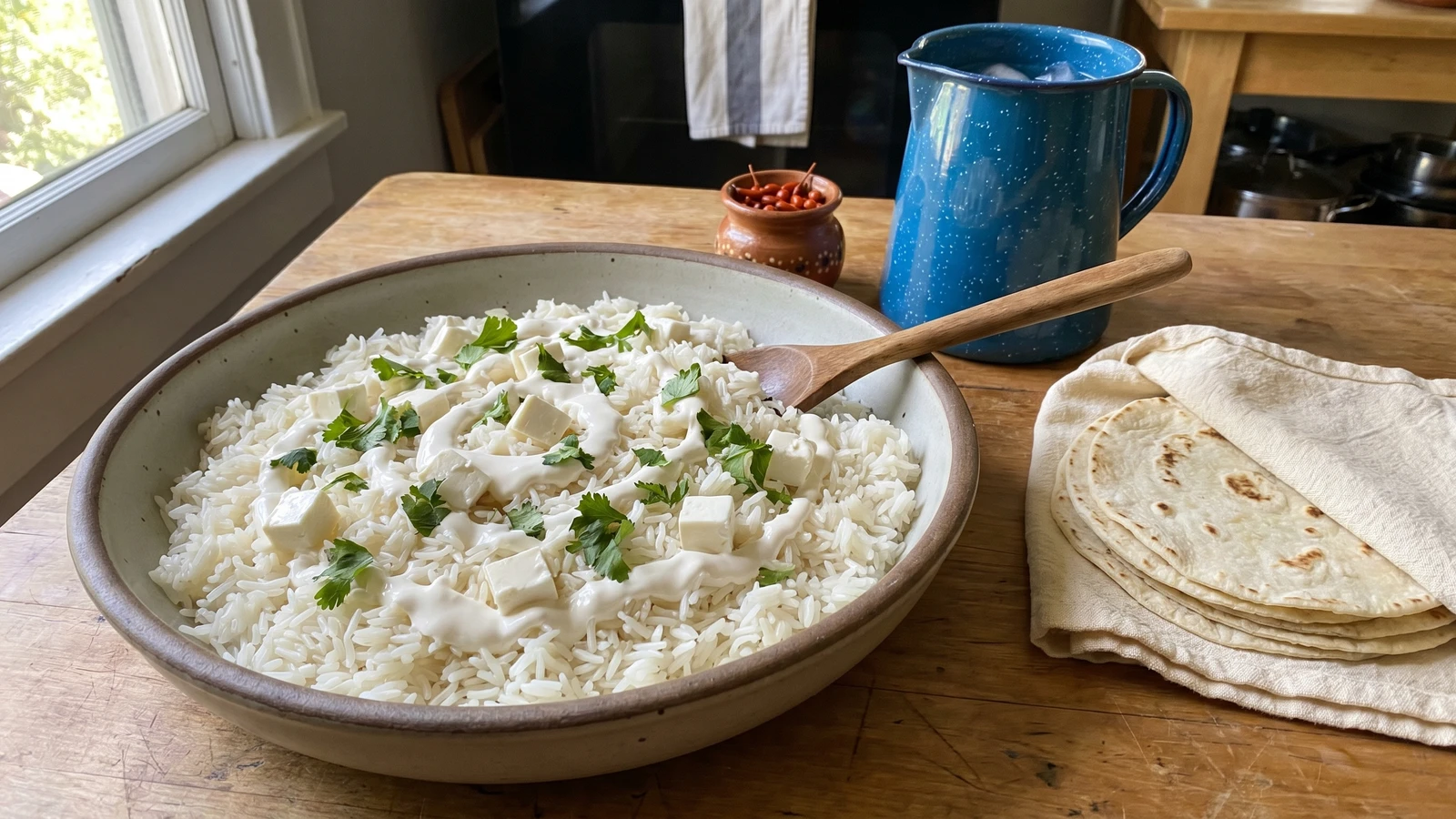
Sinaloa's home-cook white rice topped with cold cubes of cream cheese that soften into the warm grain, finished with crema and a sprinkle of chiltepin at the table. The trick that makes a side dish feel like a small luxury.
This is from Sinaloa. Specifically from the home kitchens of Culiacan, Los Mochis, and Mazatlan, where the women of the noroeste have always known that a plate of plain white rice can be turned into something memorable with a few cubes of cream cheese and a spoonful of crema. It is not restaurant food. It is mother food. The kind of trick that gets passed sideways between neighbors over a fence.
The rice itself is the foundation, and the foundation has to be right. Long-grain, rinsed once, fried in oil or manteca until the grains turn ivory, then steamed in hot broth and left alone. No stirring. No peeking. Sinaloense cooks treat their rice the way norteno ranchers treat their cattle: with respect and without fussing. When the pot comes off the heat, the cream cheese goes on top in cold cubes, the lid goes back on, and the residual heat does the work. The cubes soften at the edges and stay cool at the center. That contrast, warm grain against cool cheese, is the entire point.
My mother did not make this dish. It is not from Jalisco. I learned it from a senora in Los Mochis named Dona Cuca who served it next to a plate of camarones a la diabla and watched me to make sure I understood. She told me the cream cheese has to be cold when it goes in. She told me twice. The crema came from her neighbor's cow that morning, the chiltepin was crushed in a tiny molcajete on her counter, and the rice was the same long-grain rice she had been buying from the same tienda for forty years. Cada estado, su propia cocina, and this one belongs to Sinaloa.
Rice arrived in northwestern Mexico through the Pacific trade routes connecting Acapulco to Manila during the Spanish colonial period, and Sinaloa became one of the country's leading rice producers by the late 19th century, particularly in the river valleys around Culiacan. The pairing of rice with fresh dairy is rooted in the noroeste's strong cattle and cheesemaking traditions, which distinguish northern Mexican cooking from the corn-and-chile foundation of the central and southern states. The use of cream cheese in this style emerged in the mid-20th century when industrial dairy products like queso crema and Philadelphia-style cheese became widely available in Sinaloan supermarkets, and home cooks adopted them as an everyday luxury layered onto a familiar base.
Quantity
2 cups
Quantity
3 tablespoons
Quantity
1/4 medium
left in one piece
Quantity
2
lightly smashed
Quantity
3 1/2 cups
Quantity
1 1/2 teaspoons, or to taste
Quantity
8 ounces
cut into 1/2-inch cubes
Quantity
1/2 cup
Quantity
1
finely minced
Quantity
for serving
Quantity
for serving
| Ingredient | Quantity |
|---|---|
| long-grain white rice | 2 cups |
| neutral oil or manteca de cerdo | 3 tablespoons |
| white onionleft in one piece | 1/4 medium |
| garlic cloveslightly smashed | 2 |
| hot chicken broth or water | 3 1/2 cups |
| kosher salt | 1 1/2 teaspoons, or to taste |
| cold cream cheesecut into 1/2-inch cubes | 8 ounces |
| Mexican crema | 1/2 cup |
| fresh chiltepin or chile serrano (optional)finely minced | 1 |
| chopped cilantro (optional) | for serving |
| lime wedges (optional) | for serving |
Place the rice in a fine-mesh strainer and rinse under cold running water until the water runs clear, about a minute. Shake off the excess water and let it sit in the strainer while you heat the pan. Rinsing pulls off the surface starch. Skip it and your rice will clump like a tamal. The grains in a Sinaloa kitchen come out separate and proud.
Heat the oil or lard in a heavy 3-quart pot over medium heat until it shimmers. Add the drained rice and stir to coat every grain. Cook, stirring often, for five to seven minutes, until the grains turn from chalky white to a pale ivory and smell faintly toasted, like popcorn beginning to think about popping. This is the step that gives arroz blanco its body. La manteca es el sabor, even in a rice this simple.
Tuck the onion quarter and the smashed garlic cloves into the rice. Cook for one more minute, until the garlic perfumes the pot. The onion goes in whole because it flavors the rice without falling apart and turning the dish gray. You will fish it out later. Asi se hace y punto.
Pour in the hot broth all at once, away from your face, because the pot will sputter. Add the salt and stir once, just to settle the rice into an even layer. Do not stir again. Stirring rice while it cooks releases starch and turns the bottom into glue. Bring the liquid to a strong boil, uncovered, for about two minutes.
Lower the heat to the lowest setting your stove will hold. Cover the pot tightly. If the lid does not seal well, lay a clean kitchen towel between the pot and the lid and fold the corners up over the top so they do not catch fire. Cook undisturbed for 18 minutes. Do not lift the lid. The rice is steaming, and every peek lets the heat escape.
Pull the pot off the burner. Leave the lid on. Let the rice rest for 10 minutes. This is when the grains finish absorbing the last of the steam and firm up. Open the pot too early and the bottom layer is wet, the top layer is dry. Wait the ten minutes. Saber cocinar es saber esperar.
Lift the lid. Fish out the spent onion and garlic. Fluff the rice gently with a fork, lifting from the bottom up. Drizzle the crema over the warm rice and fold it in lightly, just enough to streak the grains. Scatter the cubes of cold cream cheese across the top. Cover the pot again for two minutes. The residual heat will soften the cubes from the outside in, leaving little pockets of cool, creamy cheese inside the warm rice. That contrast is the dish. Do not stir the cubes in. They are meant to stay whole.
Spoon the rice into a wide serving bowl, keeping the cream cheese cubes visible on top. Scatter the chopped cilantro over the surface. Set the minced chiltepin and lime wedges on the table for whoever wants them. Eat it the moment it is served. The cubes are at their best when they are still distinct, soft on the outside and cool at the center. Recetas probadas y garantizadas.
1 serving (about 250g)
Culinary guides, cultural storytelling, and the editorial depth that makes cooking meaningful.
Discover Culinary ExplorerChef Lupita
Oaxaca's red rice, stained with tomato and fried in lard, steamed with carrots, ejotes, black beans, and epazote. The side that anchors a Oaxacan family meal and earns its place beside the main.
Chef Lupita
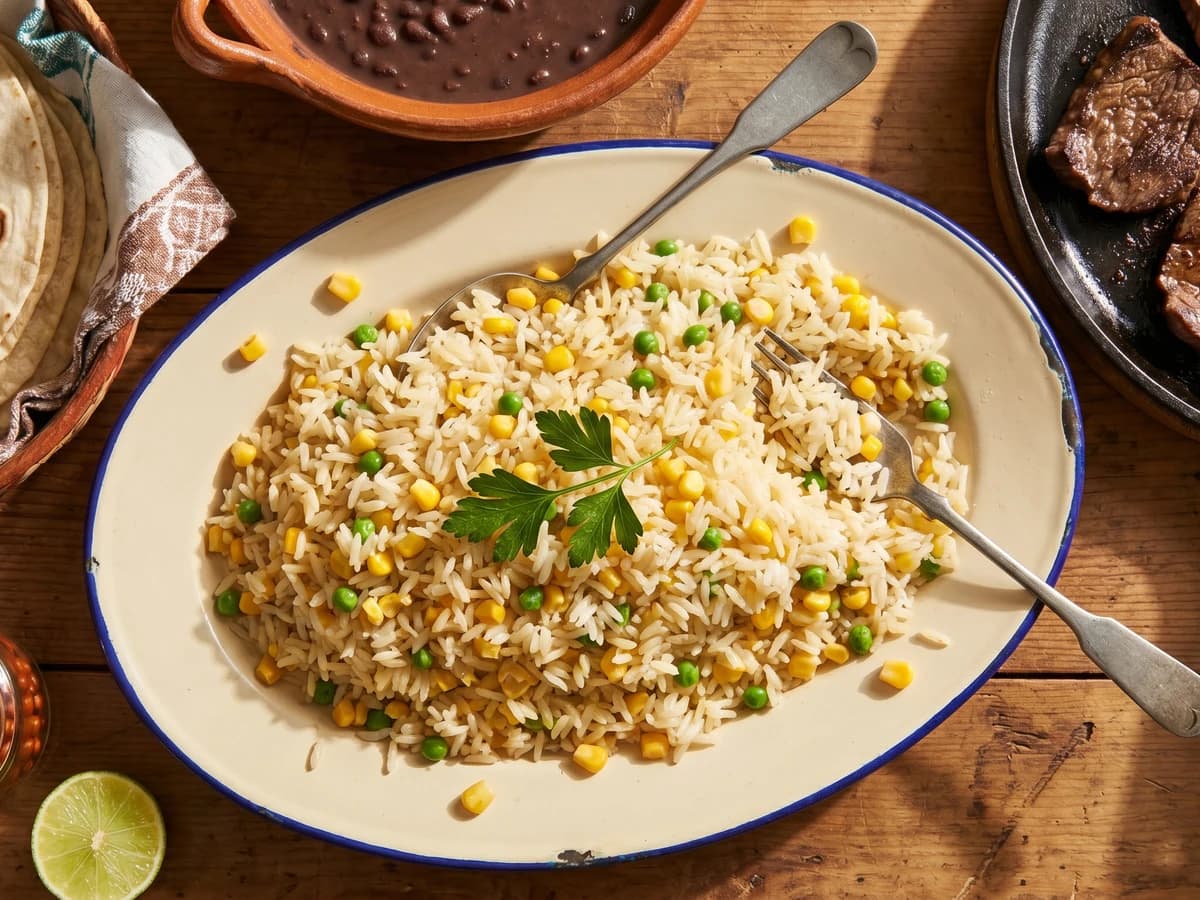
Sonora's white rice, toasted in butter and steamed with sweet corn and tender peas. The clean, quiet partner to a plate of carne asada, not the red rice of central Mexico.

Chef Lupita
Yucatán's white rice with sweet corn kernels, toasted in lard with garlic and onion. The quiet base that holds up against the peninsula's bold achiote-stained stews.

Chef Lupita
Veracruz white rice steamed with a whole hoja santa leaf laid across the top, the anise-and-pepper perfume of the leaf settling directly into the grains. The rice that belongs next to chichilo and coastal pescados.