Chef Joost
Aardappelgratin
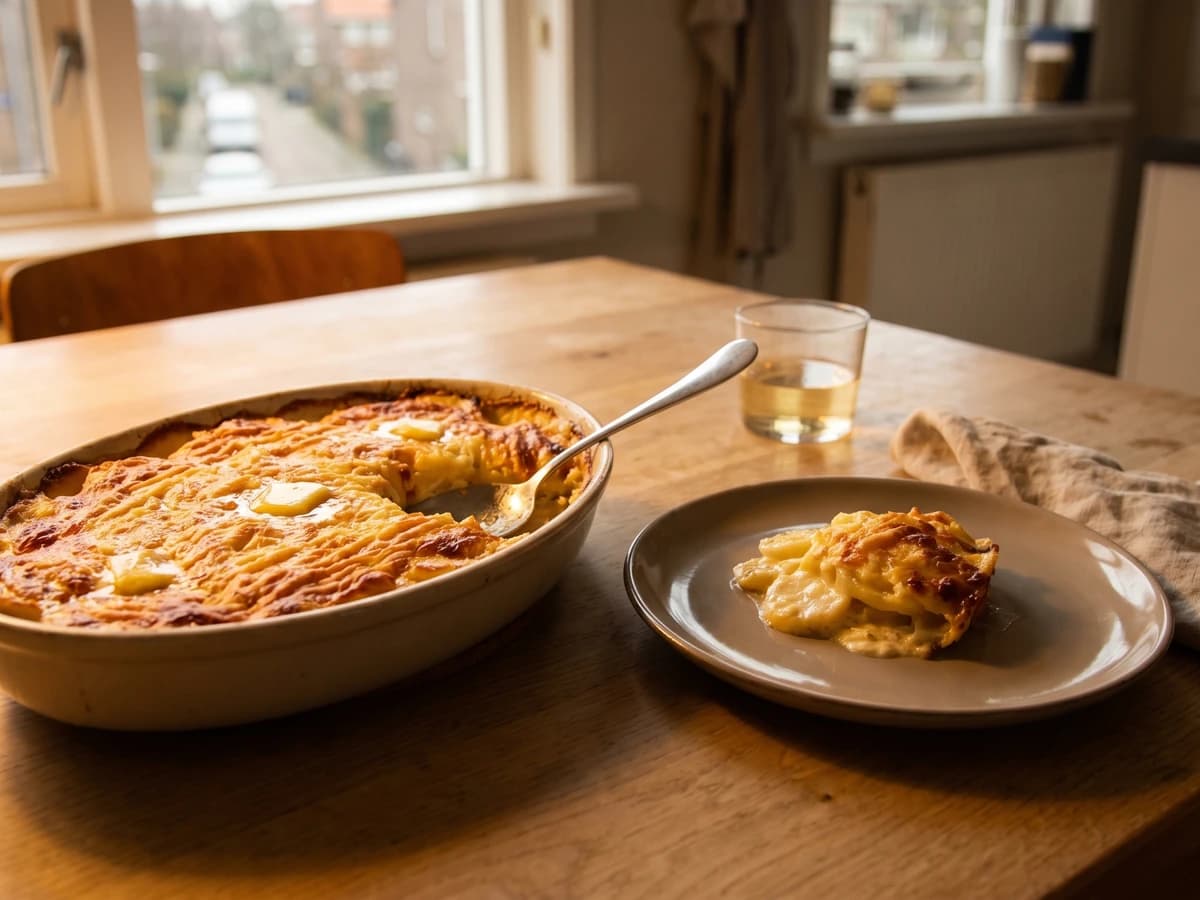
A French name, a Dutch potato, and a Sunday table: aardappelgratin is what happens when a frugal kitchen borrows richness and behaves as if it had always belonged.
A cooking platform built around craft, culture, and the stories behind what we eat.
Created by
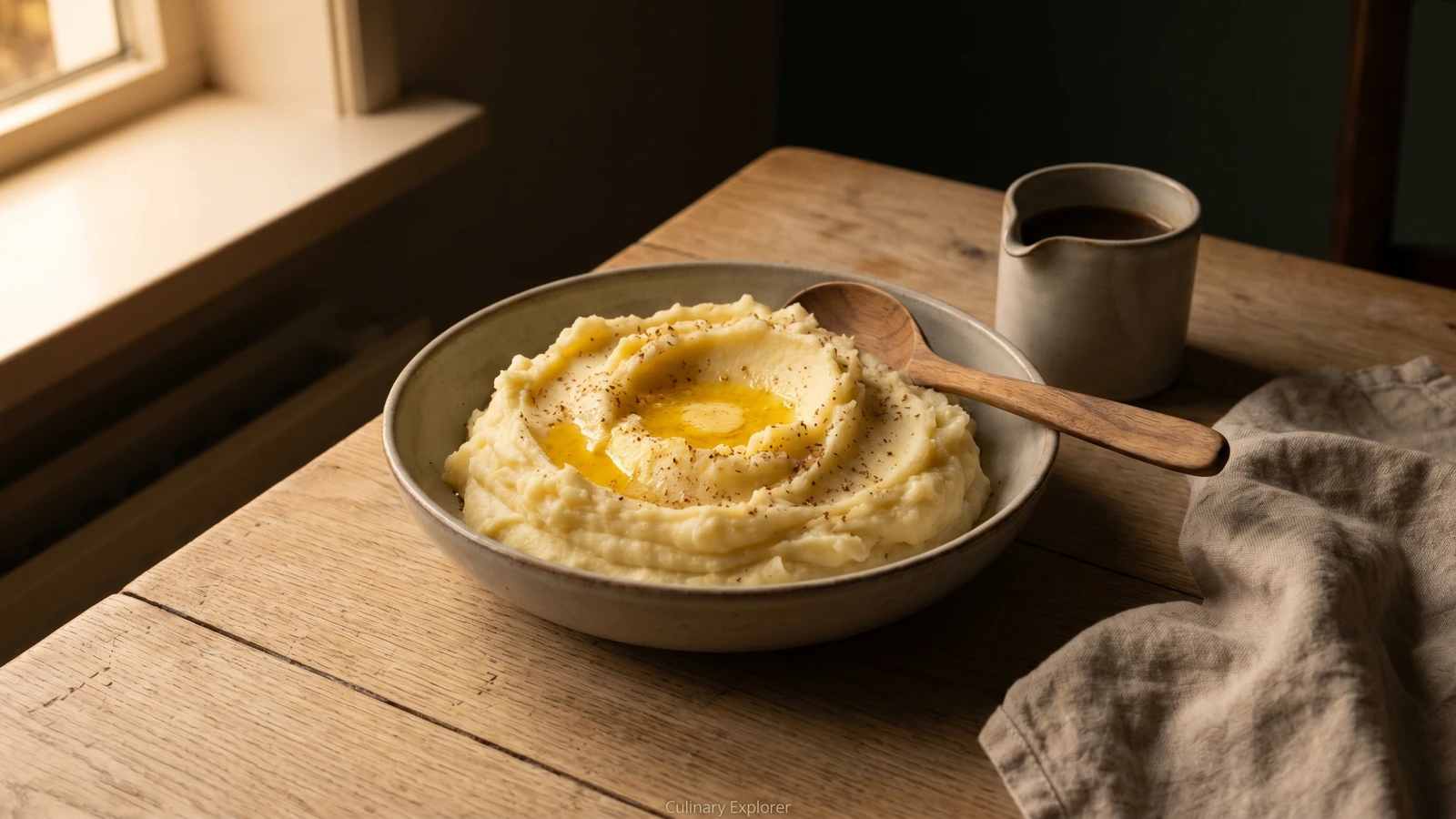
Aardappelpuree is the quiet heart of the Dutch AVG'tje: floury potatoes, warm milk, butter, nutmeg, and a small kuiltje, little well, built for the jus.
In my grandmother's second notebook, aardappelpuree barely earned a recipe. Not because it didn't matter, but because everyone was supposed to know it. Potatoes were peeled before anyone sat down, milk warmed in a little pan, butter cut with the same knife used for bread, and the mash landed on the plate with a kuiltje, a little well, pressed into the middle for the jus. Architecture, Dutch style.
The name already tells you the joke plainly: aardappel, earth apple, a modest name for a crop that changed Europe after it crossed the Atlantic and settled into our poor soils with admirable stubbornness. By the time the Dutch built the AVG'tje, aardappelen, vlees, groente, potatoes, meat, vegetables, the potato was no longer foreign. It was the table's ballast.
But let me tell you a secret. The nutmeg is not decoration. That faint warm dusting is the old spice trade sitting down to a weekday dinner, the same world of mace and clove that people forget when they call Dutch food plain. Keep the method honest: floury potatoes, drained dry, mashed while hot, then loosened with warm milk so they don't turn gluey. Hou het altijd simpel, always keep it simple. The well in the middle will do the rest.
Potatoes reached the Low Countries after the Columbian exchange and became a dependable Dutch staple in the eighteenth and nineteenth centuries, especially as rural and urban households learned how well they fed families on limited land and money. Aardappelpuree became part of the everyday AVG'tje, the plate of aardappelen, vlees, groente, potatoes, meat, vegetables, that defined twentieth-century Dutch home cooking. The customary pinch of nutmeg reflects the VOC-era normalization of once-expensive spices into ordinary Dutch kitchens, where a weeknight mash could quietly carry a trade history.
Quantity
1 kg
peeled and cut into even chunks
Quantity
2 teaspoons, plus more to taste
Quantity
150 ml
Quantity
50 g
Quantity
to taste
Quantity
to taste
| Ingredient | Quantity |
|---|---|
| floury potatoes, such as Doré, Eigenheimer, or Maris Piperpeeled and cut into even chunks | 1 kg |
| fine salt | 2 teaspoons, plus more to taste |
| whole milk | 150 ml |
| unsalted butter | 50 g |
| freshly grated nutmeg | to taste |
| freshly ground white pepper | to taste |
Put the potatoes in a pan and cover them with cold water by two fingers. Add the salt, bring to a boil, then simmer until a knife slips through the centre without resistance, about 18 to 22 minutes. Start in cold water and the potatoes cook evenly; rush them in boiling water and the outside collapses before the middle has understood the assignment.
Drain the potatoes, return them to the hot empty pan, and set over the lowest heat for 1 minute, shaking the pan gently. You want the surface moisture gone. Wet potatoes make watery puree, and no amount of butter can rescue a puddle pretending to be dinner.
Take the pan off the heat and mash the potatoes while they are still hot, using a potato masher or ricer. Do not use a blender or food processor. Potato starch dislikes violence; beat it too hard and it turns elastic, which is useful for wallpaper and very little else.
Warm the milk with the butter in a small pan until the butter melts and the milk is hot but not boiling. Add it to the potatoes in two or three splashes, folding and mashing until the puree is smooth but still has a little body. A Dutch puree should hold a well for jus, not flow across the plate like soup.
Season with white pepper, a little more salt if needed, and freshly grated nutmeg. Spoon onto warm plates and press a kuiltje, little well, into the centre with the back of the spoon. Fill that well with jus if you have it. If not, a small extra knob of butter may sit there with dignity.
1 serving (about 300g)
Culinary guides, cultural storytelling, and the editorial depth that makes cooking meaningful.
Discover Culinary ExplorerChef Joost
A French name, a Dutch potato, and a Sunday table: aardappelgratin is what happens when a frugal kitchen borrows richness and behaves as if it had always belonged.

Chef Joost
Flower cabbage under old Gouda sauce: the quiet Dutch side dish that turns one boiled vegetable into the reason everyone reaches for the spoon twice.

Chef Joost
White beans peeking through green snijbonen give this old Dutch side its nursery-table joke: bare little children in the grass, sweet garden thrift with butter, nutmeg, and no apology.

Chef Joost
Brown beans, smoky spek, and dark stroop: the Dutch cupboard doing its quiet work, turning a cheap pot of legumes into sweet-salt winter fare with nothing to prove.