Chef Joost
Aardappelgratin
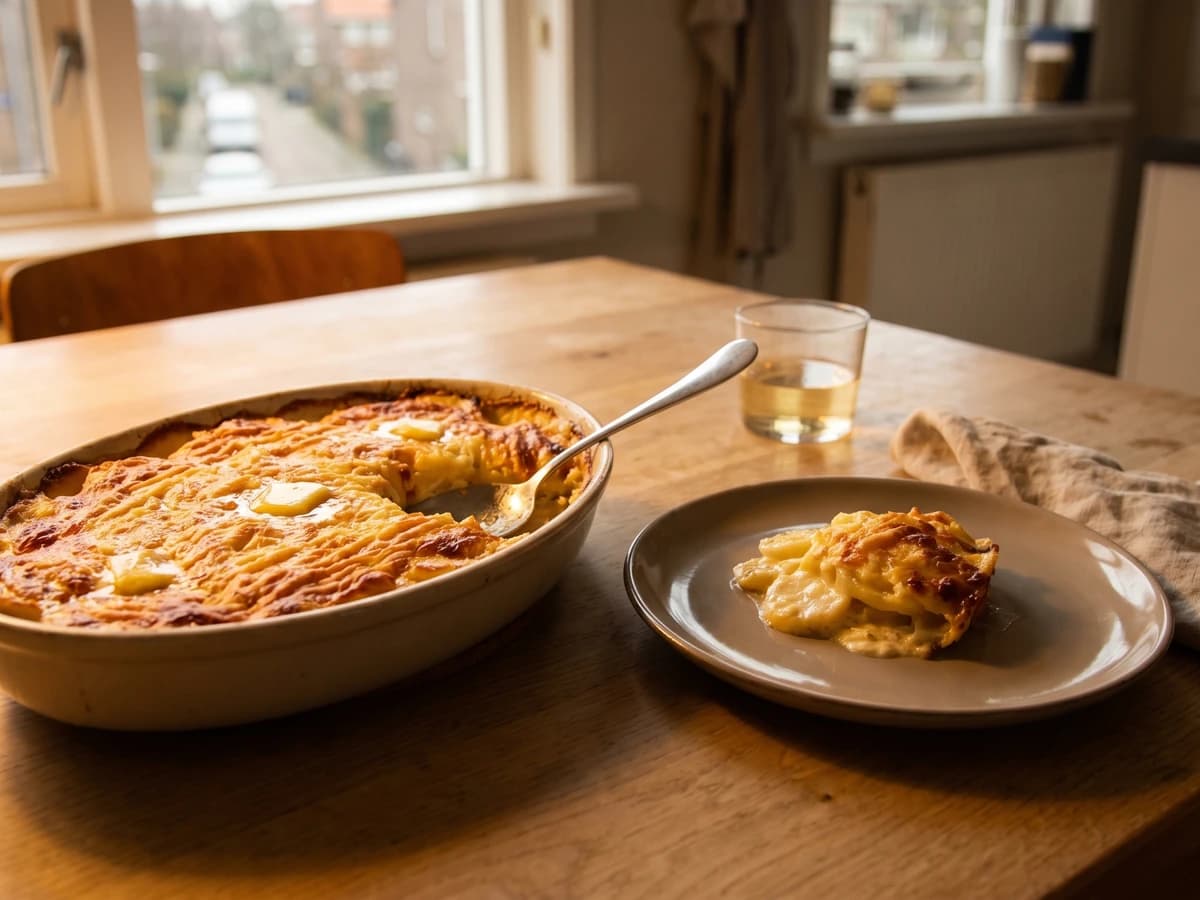
A French name, a Dutch potato, and a Sunday table: aardappelgratin is what happens when a frugal kitchen borrows richness and behaves as if it had always belonged.
A cooking platform built around craft, culture, and the stories behind what we eat.

Created by
Brown beans, smoky spek, and dark stroop: the Dutch cupboard doing its quiet work, turning a cheap pot of legumes into sweet-salt winter fare with nothing to prove.
In my grandmother's second notebook, the page for bruine bonen met spek en stroop is more smudge than script. Brown beans, spek, stroop, pepper if there is pepper. That is nearly all it says, which tells you almost everything. My grandfather, who never wasted a crust after the Hongerwinter, treated this pot with the seriousness other men reserve for roast meat.
The name is blunt enough to be the shopping list. Bruine bonen are brown beans, spek is cured or smoked pork belly, and stroop is dark syrup, the thick sweet line Dutch cooks draw through pancakes, ontbijtkoek, rye bread, and here, astonishingly to outsiders, beans. But let me tell you a secret: the syrup is not dessert wandering into supper. It is the old northern answer to salt and smoke, a small shine of generosity laid over a pot that began in poverty.
The method has the same honesty. Soak the beans so they cook evenly, simmer them until the skins give way without bursting, and add the stroop only at the end. Sugar too early makes bean skins stubborn, and stubborn beans are a lecture nobody asked for. Fry the spek slowly so its fat seasons the onion, fold everything together with a little bean liquor, and stop when the sauce clings. Hou het altijd simpel, always keep it simple. A dish like this is not improved by decoration, only by patience.
Bruine bonen met spek en stroop belongs to the Dutch clay-province larder rather than to one restaurant tradition: Zeeland, Groningen, and Noord-Holland all grew brown common beans after Phaseolus vulgaris, the common bean from the Americas, became established in Europe in the sixteenth and seventeenth centuries. The pairing of dried beans with salt pork is older than the Second World War, but the Hongerwinter of 1944-45 gave Dutch families a hard memory of pulses, rationing, and any spoonful of fat or syrup that could make a pot feed more mouths. Its sweet-salt balance is not an oddity; it sits beside a wider Dutch habit of eating stroop with pancakes, bacon, rye, and winter starches.
Quantity
300g
picked over and soaked overnight
Quantity
1.5 liters
plus more for soaking
Quantity
1
Quantity
1
halved
Quantity
1 teaspoon
plus more to taste
Quantity
200g
cut into lardons
Quantity
1 large
finely diced
Quantity
1 tablespoon
only if the spek is lean
Quantity
3 tablespoons
plus more for serving
Quantity
1 teaspoon
Quantity
to taste
Quantity
to serve
| Ingredient | Quantity |
|---|---|
| dried Dutch brown beans (bruine bonen)picked over and soaked overnight | 300g |
| cold waterplus more for soaking | 1.5 liters |
| bay leaf | 1 |
| small onionhalved | 1 |
| fine sea saltplus more to taste | 1 teaspoon |
| smoked spek or thick-cut baconcut into lardons | 200g |
| yellow onionfinely diced | 1 large |
| unsalted butter (optional)only if the spek is lean | 1 tablespoon |
| dark Dutch kitchen syrup (donkere keukenstroop)plus more for serving | 3 tablespoons |
| apple cider vinegar or pickle brine (optional) | 1 teaspoon |
| freshly ground black pepper | to taste |
| Dutch mustard or pickles (optional) | to serve |
Rinse the brown beans, pick out any stones or broken bits, and cover them with plenty of cold water. Leave them overnight, eight to twelve hours. This is not ceremony; soaking lets the beans cook evenly, so the skins soften before the insides collapse.
Drain the soaked beans and put them in a heavy pot with 1.5 liters cold water, the bay leaf, and the halved onion. Bring to a boil, skim the first grey foam, then lower to a quiet simmer. After forty-five minutes, add the salt. Cook until the beans are tender and creamy inside but still mostly whole, usually one and a quarter to one and a half hours.
While the beans finish, put the spek in a wide skillet over medium-low heat and let it render slowly. You want golden edges and enough fat in the pan to season the onion. If your spek is too lean, add the butter. Stir in the diced onion and cook until soft and lightly browned, about eight minutes.
Drain the beans, saving about 250ml of their cooking liquor, and discard the bay leaf and halved onion. Fold the beans into the spek and onion with 120ml of the bean liquor, the stroop, and a good grind of black pepper. Simmer gently for ten to fifteen minutes, shaking the pan now and then, until the sauce turns glossy and clings to the beans. Add a little more bean liquor if it tightens too much.
Taste for salt, pepper, and sweetness. If the pot feels too round, stir in the teaspoon of vinegar or pickle brine; it should sharpen the edge, not announce itself. Serve warm in a shallow bowl, with extra stroop at the table for anyone who wants a kuiltje, a little hollow, to fill. Mustard or pickles beside it are very Dutch and very sensible.
1 serving (about 210g)
Culinary guides, cultural storytelling, and the editorial depth that makes cooking meaningful.
Discover Culinary ExplorerChef Joost
A French name, a Dutch potato, and a Sunday table: aardappelgratin is what happens when a frugal kitchen borrows richness and behaves as if it had always belonged.
Chef Joost
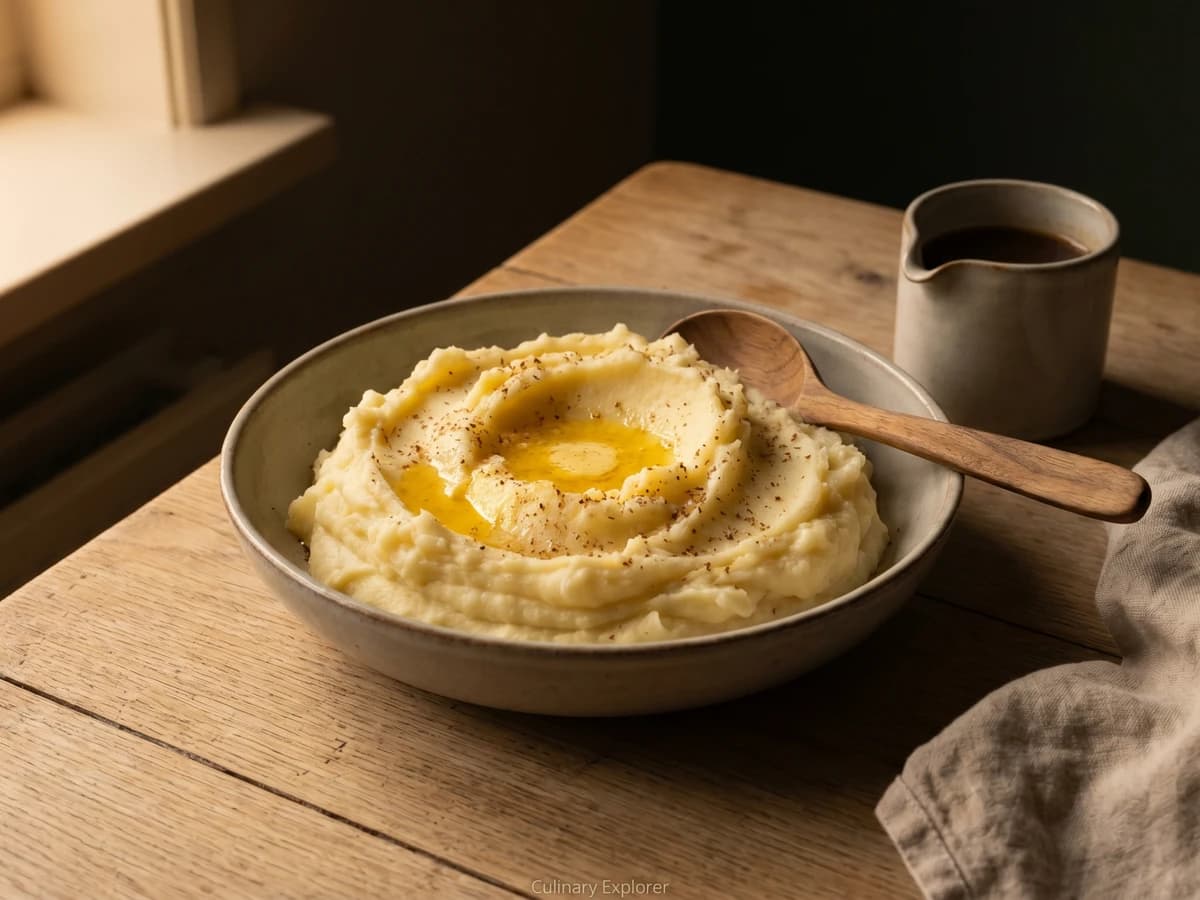
Aardappelpuree is the quiet heart of the Dutch AVG'tje: floury potatoes, warm milk, butter, nutmeg, and a small kuiltje, little well, built for the jus.

Chef Joost
Flower cabbage under old Gouda sauce: the quiet Dutch side dish that turns one boiled vegetable into the reason everyone reaches for the spoon twice.

Chef Joost
White beans peeking through green snijbonen give this old Dutch side its nursery-table joke: bare little children in the grass, sweet garden thrift with butter, nutmeg, and no apology.