Chef Joost
Aardappelpuree
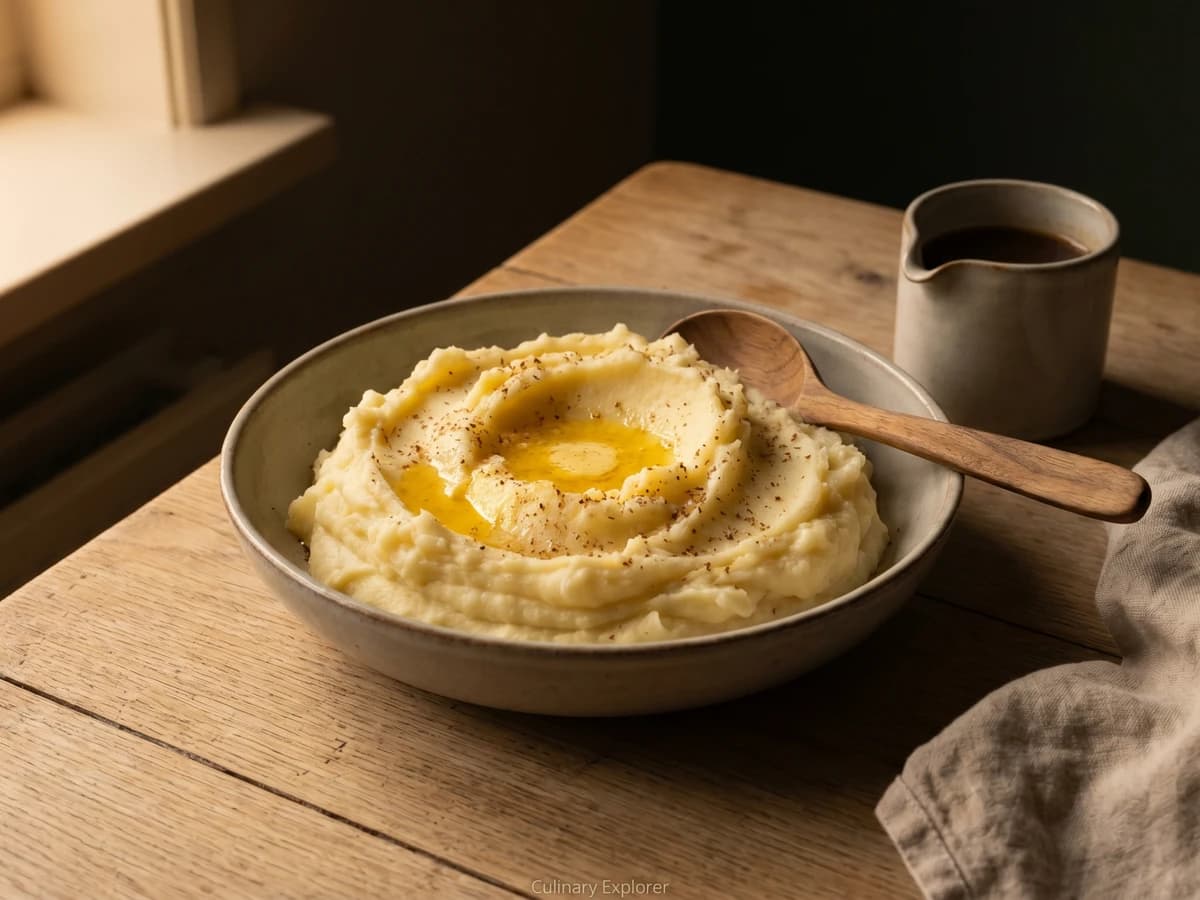
Aardappelpuree is the quiet heart of the Dutch AVG'tje: floury potatoes, warm milk, butter, nutmeg, and a small kuiltje, little well, built for the jus.
A cooking platform built around craft, culture, and the stories behind what we eat.
Created by
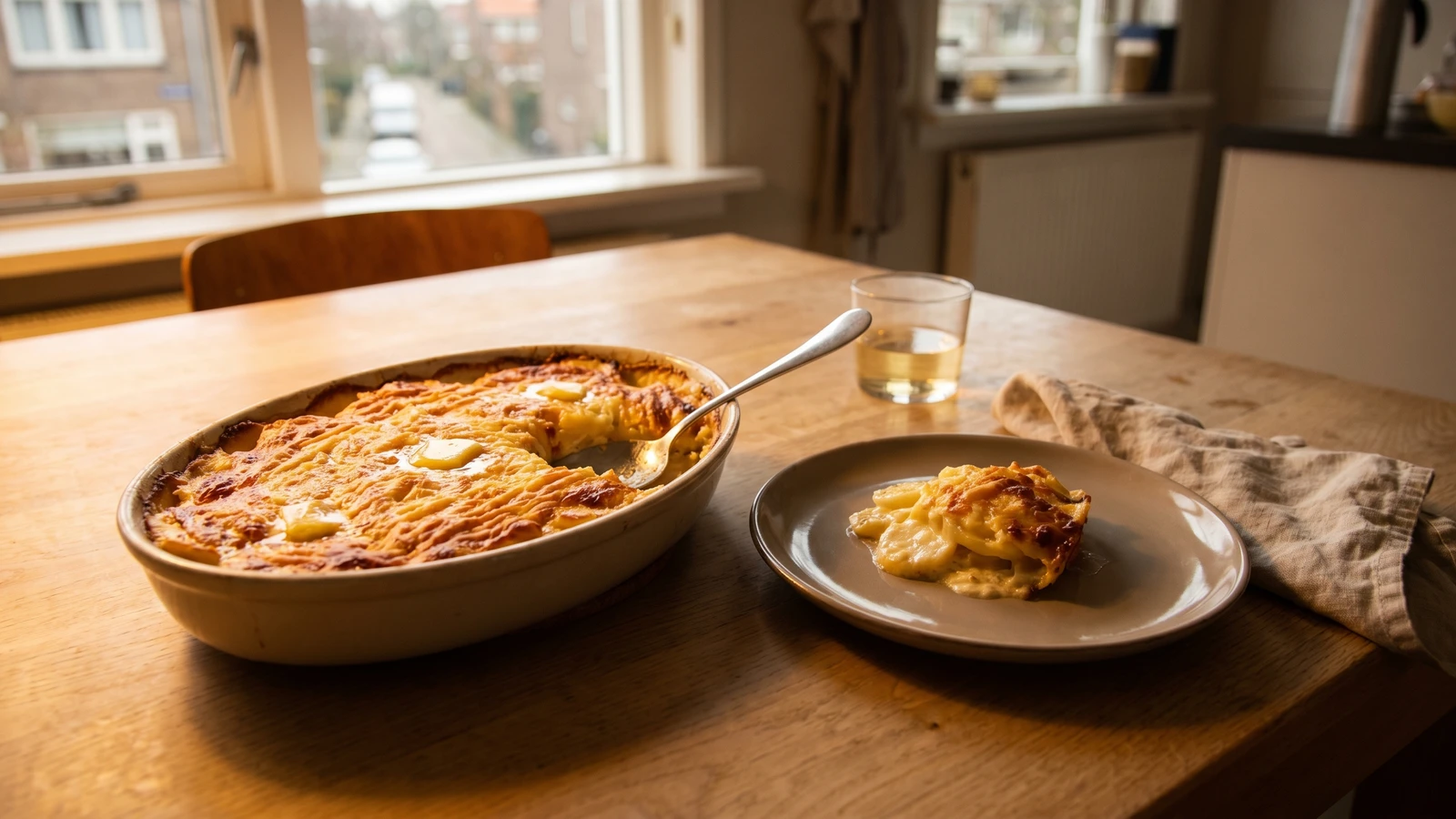
A French name, a Dutch potato, and a Sunday table: aardappelgratin is what happens when a frugal kitchen borrows richness and behaves as if it had always belonged.
In my grandmother's second notebook, the potato recipes are written with the confidence of weather reports. Boiled potatoes for Tuesday. Stamppot when the wind turned mean. Fried leftovers if nobody was looking too closely. And then, tucked between roast chicken and witlof, there is aardappelgratin, richer than the rest, wearing its French name like a borrowed coat at a family party.
The name already tells you two stories. Aardappel is the Dutch earth-apple, our plain, sustaining tuber. Gratin comes from the French kitchen, from the browned crust scraped from the dish, the part everyone pretends not to fight over. But let me tell you a secret: the Dutch did not borrow this dish because it was grand. We borrowed it because it makes ordinary potatoes generous with very little ceremony.
The method is almost suspiciously simple. Thin slices, enough cream to seep between them, a whisper of garlic, nutmeg because the Dutch cupboard has never been as plain as foreigners imagine, and time. Do not drown the potatoes. Do not rush the oven. The slow bake lets the starch thicken the cream until the layers hold together, and the browned top becomes the reason the quietest person at the table reaches first.
Potato gratin entered Dutch home cooking through French and Burgundian influence, especially in the nineteenth and twentieth centuries, when richer oven dishes became common on Sunday and celebration tables. The Dutch potato itself had become a staple by the eighteenth century, moving from botanical curiosity to daily food with unusual speed in a country that valued storage, thrift, and reliable yield. In Dutch kitchens, aardappelgratin usually keeps the French idea but speaks with a local accent: sober seasoning, cream rather than display, and often a little nutmeg from the same spice cupboard that scents hachee and bitterballen.
Quantity
1.2kg
peeled
Quantity
350ml
Quantity
150ml
Quantity
1
halved
Quantity
40g
plus more for the dish
Quantity
1 teaspoon
Quantity
1/2 teaspoon
Quantity
1/4 teaspoon
Quantity
75g
finely grated
| Ingredient | Quantity |
|---|---|
| waxy potatoespeeled | 1.2kg |
| heavy cream | 350ml |
| whole milk | 150ml |
| garlic clovehalved | 1 |
| unsalted butterplus more for the dish | 40g |
| fine sea salt | 1 teaspoon |
| freshly ground white pepper | 1/2 teaspoon |
| freshly grated nutmeg | 1/4 teaspoon |
| aged Gouda or Gruyerefinely grated | 75g |
Heat the oven to 170C. Rub a 2-liter baking dish all over with the cut sides of the garlic, then butter it generously. The garlic should perfume the dish, not announce itself like a brass band.
Slice the potatoes very thinly, about 2 to 3 millimeters. A mandoline makes quick work of it, but a sharp knife and patience are older tools. Keep the slices unwashed after cutting; the surface starch is what thickens the cream and binds the gratin.
In a saucepan, warm the cream, milk, salt, white pepper, nutmeg, and the remaining garlic halves until the mixture is hot but not boiling. Fish out the garlic. Taste the cream now; it should be well seasoned, because the potatoes will borrow every bit of it.
Arrange the potato slices in overlapping layers in the buttered dish, seasoning lightly between layers only if your cream tasted timid. Pour the warm cream mixture over the potatoes; it should come just below the top layer, not cover it completely. Dot the surface with the butter.
Cover the dish loosely with foil and bake for 50 minutes, until a knife slips through the center without meeting a hard edge. Remove the foil, scatter over the grated cheese, and bake for another 25 to 30 minutes, until the top is deep golden and the cream has thickened into the layers.
Let the gratin rest for at least 15 minutes before serving. This is not politeness, it's structure. Straight from the oven, the cream runs; after a short rest, the potatoes settle into sliceable layers and the browned top stays crisp under the spoon.
1 serving (about 270g)
Culinary guides, cultural storytelling, and the editorial depth that makes cooking meaningful.
Discover Culinary ExplorerChef Joost
Aardappelpuree is the quiet heart of the Dutch AVG'tje: floury potatoes, warm milk, butter, nutmeg, and a small kuiltje, little well, built for the jus.

Chef Joost
Flower cabbage under old Gouda sauce: the quiet Dutch side dish that turns one boiled vegetable into the reason everyone reaches for the spoon twice.

Chef Joost
White beans peeking through green snijbonen give this old Dutch side its nursery-table joke: bare little children in the grass, sweet garden thrift with butter, nutmeg, and no apology.

Chef Joost
Brown beans, smoky spek, and dark stroop: the Dutch cupboard doing its quiet work, turning a cheap pot of legumes into sweet-salt winter fare with nothing to prove.