Chef Juliette
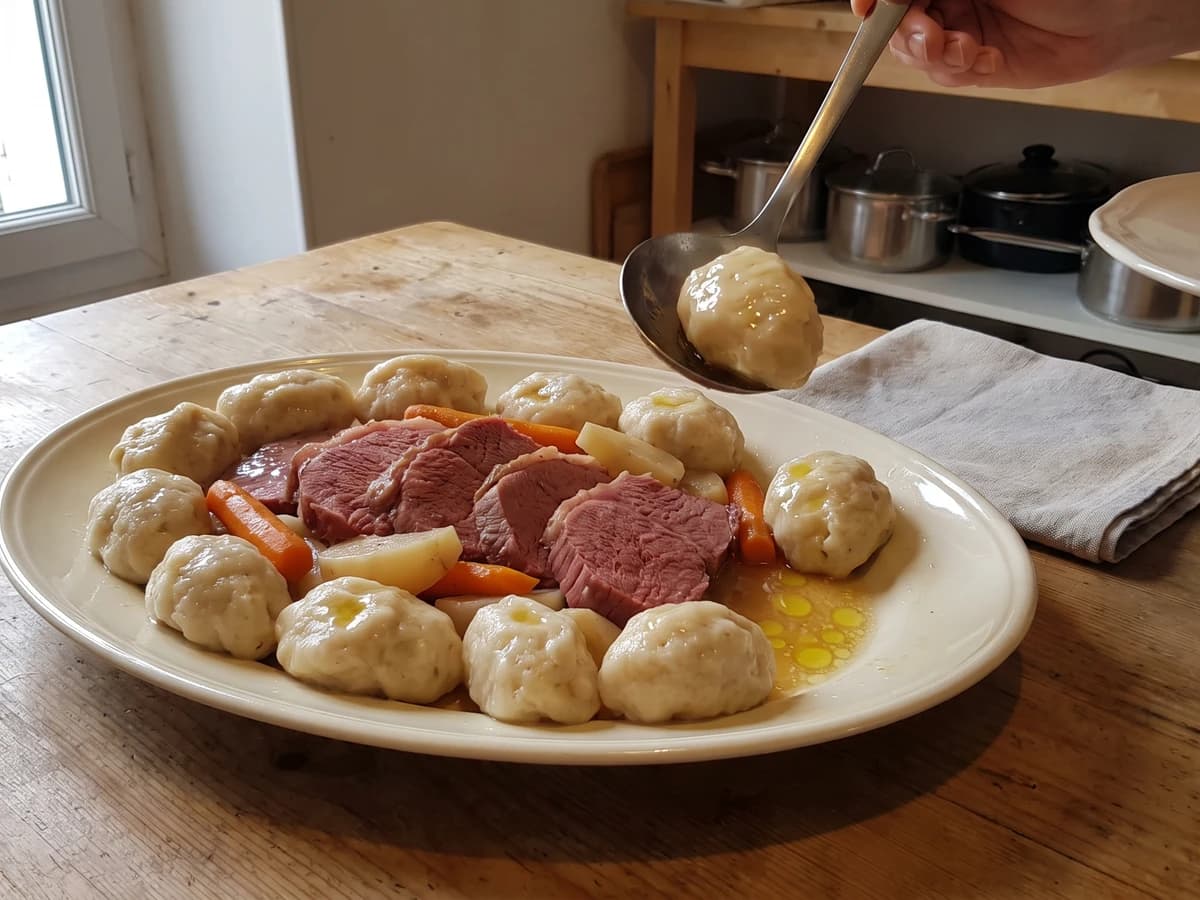
Suet Dumpling
Boulettes au suif, poached beside salt beef, turn equal weights of flour and finely chopped suet into tender, rich dumplings. Keep the beef liquor at a bare tremble and the old garnish works beautifully at home.
A cooking platform built around craft, culture, and the stories behind what we eat.
Created by
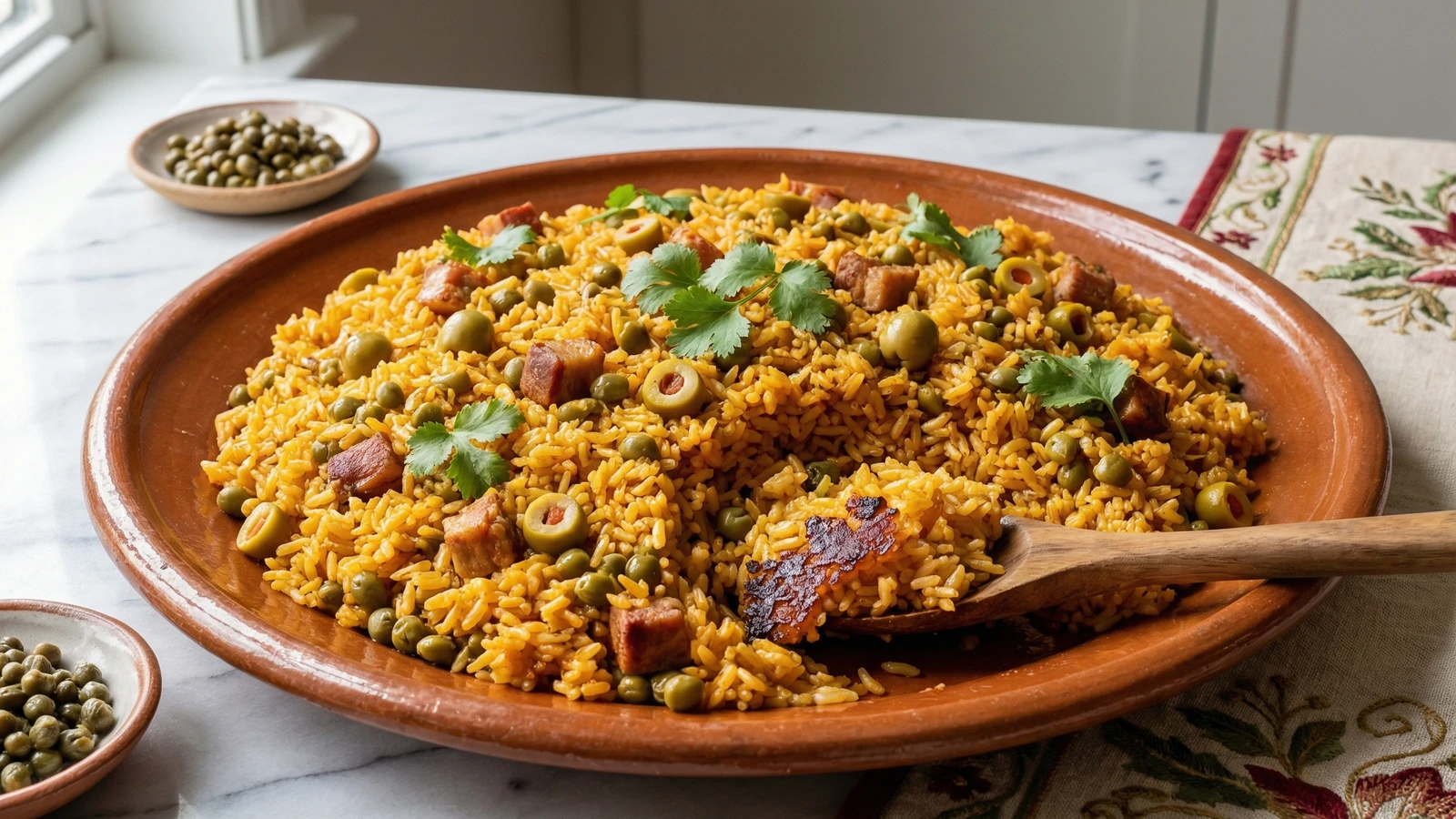
The soul of Puerto Rican Christmas in a single pot: fragrant rice studded with pigeon peas and pork, built on a foundation of sofrito and sazón, crowned with the crispy pegao that starts friendly arguments over who gets the best portion.
No Puerto Rican holiday table is complete without arroz con gandules. This is the dish that defines Nochebuena, that anchors every family gathering from Thanksgiving through Three Kings Day. To understand its importance, you must understand that this rice is not a side dish in the mainland American sense. It is the centerpiece around which pernil, pasteles, and lechón revolve.
The technique traces back centuries, blending African rice cookery traditions with Spanish sofrito and the indigenous ingredients of the Caribbean. Pigeon peas arrived from Africa. Sofrito came from Spain. Achiote, the seed that gives sazón its sunset color, grew wild in Puerto Rico long before Columbus arrived. This dish is a history lesson you can eat.
I've watched abuelas make this without measuring a single thing, adjusting by instinct honed over decades. The recipe I give you here provides the structure. After your third or fourth batch, you'll start measuring by feel too. That's how cooking traditions survive. They pass from hand to hand, pot to pot, until they become part of your muscle memory.
The secret everyone chases is the pegao: that golden crust of rice that forms on the bottom of the pot. Don't stir it away. Don't fear it. The pegao is the prize, scraped out and fought over by everyone who knows what they're doing.
Quantity
3 cups
Quantity
1 can (15 oz)
drained and rinsed
Quantity
8 oz
cut into 1/2-inch cubes
Quantity
1/2 cup
Quantity
1/2 cup
Quantity
2 packets
Quantity
1 can (8 oz)
Quantity
3 1/2 cups
Quantity
3 tablespoons
Quantity
1 teaspoon
Quantity
1 teaspoon
Quantity
2
Quantity
1 teaspoon
Quantity
1/2 teaspoon
freshly ground
Quantity
for garnish
| Ingredient | Quantity |
|---|---|
| medium-grain rice | 3 cups |
| pigeon peas (gandules)drained and rinsed | 1 can (15 oz) |
| smoked ham or salt porkcut into 1/2-inch cubes | 8 oz |
| sofrito | 1/2 cup |
| alcaparrado (olives, capers, pimentos) | 1/2 cup |
| sazón with achiote | 2 packets |
| tomato sauce | 1 can (8 oz) |
| chicken stock or water | 3 1/2 cups |
| olive oil or vegetable oil | 3 tablespoons |
| dried oregano | 1 teaspoon |
| ground cumin | 1 teaspoon |
| bay leaves | 2 |
| salt | 1 teaspoon |
| black pepperfreshly ground | 1/2 teaspoon |
| fresh cilantro (optional) | for garnish |
Place the rice in a large bowl and cover with cold water. Swirl with your hand until the water turns cloudy. Drain and repeat twice more until the water runs mostly clear. This removes excess starch that would otherwise make your rice gummy. Drain thoroughly and set aside.
Heat the oil in a large caldero, Dutch oven, or heavy-bottomed pot over medium heat. Add the ham or salt pork cubes and cook, stirring occasionally, until the edges turn golden and the fat begins to render. This takes 5 to 7 minutes. The pork should sizzle steadily but not sputter violently. You're building the flavor foundation here. Don't rush it.
Add the sofrito to the pot and stir well, scraping up any browned bits from the pork. Cook for 3 to 4 minutes until the sofrito darkens slightly and becomes intensely fragrant. Your kitchen should smell like garlic, peppers, and cilantro. If you're using store-bought sofrito, taste it first. Some brands run saltier than others.
Stir in the sazón packets, oregano, cumin, salt, and pepper. The achiote in the sazón will immediately tint everything a deep orange-gold. Add the tomato sauce and cook for 2 minutes, stirring constantly. The mixture should bubble gently and concentrate slightly.
Pour in the chicken stock and bring to a boil over high heat. Add the drained pigeon peas, alcaparrado, and bay leaves. Stir once to distribute everything evenly. Taste the liquid now. It should be well-seasoned, even slightly saltier than you'd want to eat straight, because the rice will absorb and dilute the flavor. Adjust salt if needed.
Add the rinsed rice to the pot. Do not stir yet. Let the rice settle naturally into the liquid. Increase heat to high and bring to a vigorous boil. Once boiling, give the pot one good stir from bottom to top to prevent sticking. The liquid should come about half an inch above the rice. If it doesn't, add a splash more stock.
Reduce heat to medium and cook uncovered, without stirring, until most of the visible liquid has been absorbed and small craters appear on the surface of the rice. This takes 10 to 15 minutes depending on your pot and burner. Watch the edges. When the liquid level drops below the rice and you see bubbling holes forming, you're ready for the next step.
Give the rice one final gentle stir, folding from bottom to top to redistribute the gandules and pork. Cover the pot tightly with a lid or heavy aluminum foil. Reduce heat to the lowest possible setting. Cook for 25 to 30 minutes. Do not lift the lid. Do not peek. The steam trapped inside is finishing the rice. Opening the lid releases that steam and results in unevenly cooked grains.
After 25 minutes, listen to your pot. You should hear a faint crackling sound. That's the pegao forming on the bottom. If you want a more pronounced crust, increase heat to medium-low for the final 3 to 5 minutes. The aroma will shift from steamy rice to something toasted and nutty. When you smell that transformation, remove from heat.
Let the pot rest, covered, for 5 minutes off the heat. Remove the lid, discard the bay leaves, and fluff the rice gently with a fork. Work from the edges toward the center, being careful not to disturb the pegao if you plan to serve it separately. Transfer to a serving platter or serve directly from the pot. Garnish with fresh cilantro.
1 serving (about 200g)
Culinary guides, cultural storytelling, and the editorial depth that makes cooking meaningful.
Discover Culinary ExplorerChef Juliette
Boulettes au suif, poached beside salt beef, turn equal weights of flour and finely chopped suet into tender, rich dumplings. Keep the beef liquor at a bare tremble and the old garnish works beautifully at home.

Chef Juliette
Bread, flour, frangipane, and rice become four cool, supple panades for binding forcemeats, each changing body and flavor while preserving tenderness. The finest Mousselines need none, and knowing that distinction is the lesson.

Chef Juliette
Panade au pain is bread, milk, salt, heat, and attention: stir until the paste releases cleanly, butter it against a skin, and you have the quiet binder behind tender French farces.

Chef Juliette
Panade de farine teaches the drying stroke behind pâte à choux: flour meets boiling buttered water, then stays over the fire until the paste gathers, smooths, and quits the pan cleanly.