
Chef Juliette
Various Almond Preparations
Five almond preparations, one discipline: remove the skins cleanly, dry every kernel through, then cut, toast, or cloak it in pale caramel without letting its fragrant oils escape.
A cooking platform built around craft, culture, and the stories behind what we eat.
Created by Chef Juliette
Based on No. 2748, Almond Ice-cream, from Le Guide Culinaire (1907) by Auguste Escoffier
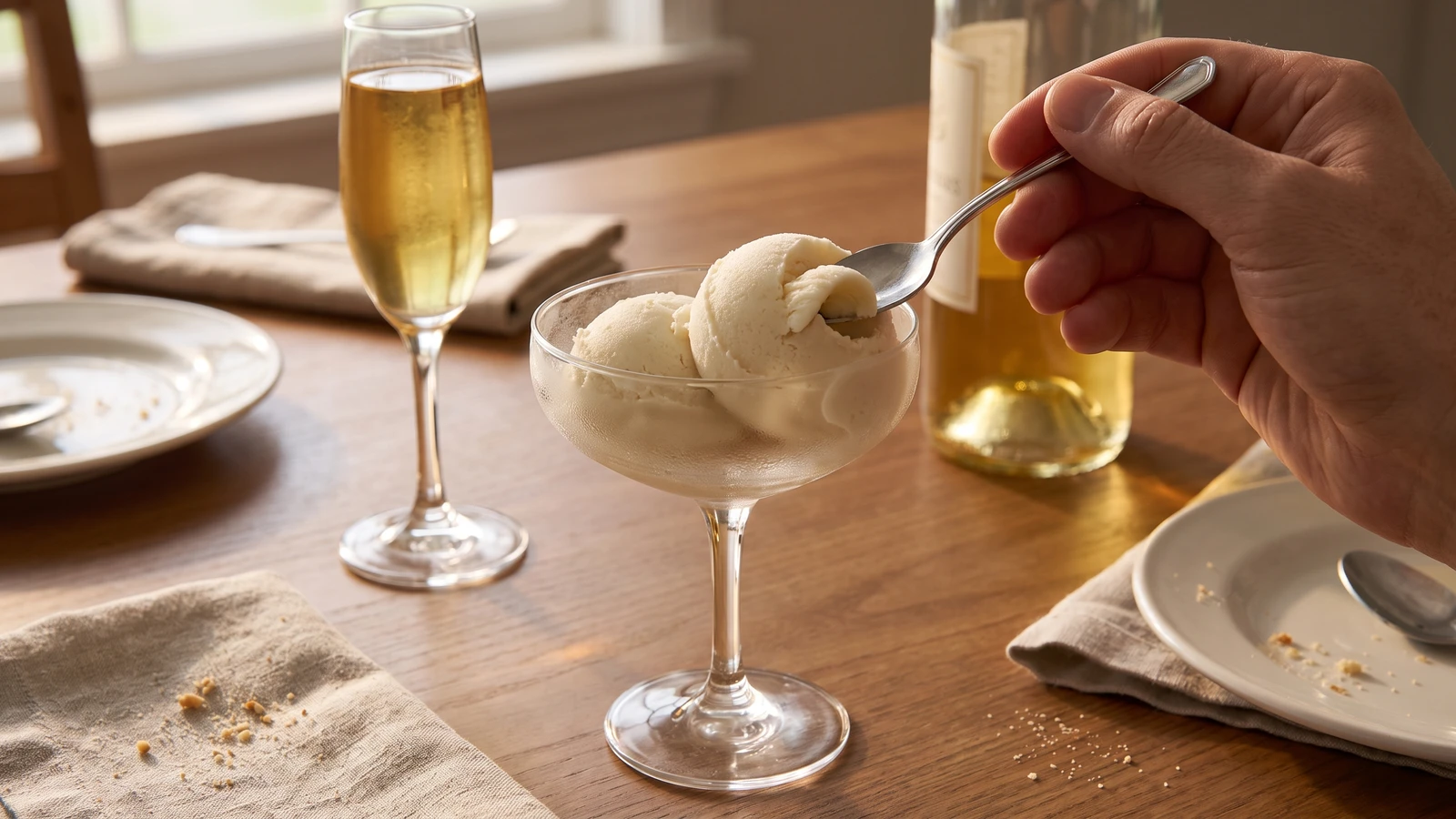
Sweet almonds give body and five bitter almonds give perfume in this milk custard, infused for twenty minutes, cooked to nappe, then churned pale and silken.
Glace aux Amandes (almond ice cream) teaches the difference between body and accent. The sweet almonds give substance and a soft marzipan roundness; the five bitter almonds give the high, penetrating perfume. Leave them out and the ice says very little.
The old formula assumed a mortar heavy enough to turn freshly skinned nuts into cream and a freezing pail kept moving by kitchen hands. Your food processor makes the same wet paste, and a small ice-cream machine supplies the steady agitation. That brigade scaffolding can go. The twenty-minute hot-milk infusion and the egg-thickened custard stay because they are the dish, with the quantities written as one home churn for eight rather than a dining room full of moulds.
The step that matters most is the custard. Cook it gently to nappe, when it coats the spatula but remains fluid, and never let it boil. Once that pale almond base is properly cooked and thoroughly chilled, the machine has the easy work.
Glace aux amandes belongs to the Parisian pâtisserie and formal entremets glacés repertoire, where nut creams were filtered smooth and frozen in moulds or churns before reaching the dining-room table. Bitter almonds served as a concentrated seasoning rather than the body of the dessert, while sweet almonds supplied its substance. The word cream in this formula describes an egg-thickened crème made with milk, not an instruction to add heavy cream; the yolks provide its richness.
Quantity
3/4 cup (100 g / 3 1/2 oz)
freshly blanched and skinned
Quantity
5 (about 6 g)
Quantity
1/4 teaspoon (1.25 ml / about 1.2 g)
use only if the five bitter almonds are unavailable
Quantity
3 tablespoons (45 ml / 45 g)
Quantity
4 1/4 cups (1 L / about 1.03 kg)
Quantity
10 (about 180 g)
Quantity
1 1/3 cups (285 g / 10 oz)
| Ingredient | Quantity |
|---|---|
| raw sweet almondsfreshly blanched and skinned | 3/4 cup (100 g / 3 1/2 oz) |
| commercially prepared bitter almonds labeled safe for culinary use (optional) | 5 (about 6 g) |
| food-grade natural bitter-almond extract (optional)use only if the five bitter almonds are unavailable | 1/4 teaspoon (1.25 ml / about 1.2 g) |
| cold water | 3 tablespoons (45 ml / 45 g) |
| whole milk | 4 1/4 cups (1 L / about 1.03 kg) |
| large egg yolks | 10 (about 180 g) |
| superfine sugar | 1 1/3 cups (285 g / 10 oz) |
Cover the sweet almonds with boiling water and leave them for one minute, then drain. Pinch each almond from its loosened skin while it is still warm and pat the nuts dry. Skin the five culinary bitter almonds too if they arrived with skins. Freshly skinned almonds give a cleaner, paler infusion than nuts left wearing their brown coats.
Put the sweet almonds and, if using them, the five bitter almonds into a food processor. Pulse until finely ground, then add the cold water one teaspoon at a time, scraping the bowl often, until the nuts become a fine, damp paste. The old formula assumed a heavy mortar and patient hands; the processor is its honest home equivalent. If the paste climbs the bowl or gathers beneath the blade, stop and scrape it down. Ça se rattrape. Add only enough water to keep the blade working, because you are making almond paste, not almond soup.
Bring the whole milk just to the boil in a heavy saucepan, watching closely so it doesn't climb over the rim. Remove it from the heat, stir in the almond paste, cover, and infuse for exactly twenty minutes. This isn't brigade scaffolding and it cannot be cut: the hot milk must draw out the sweet almonds' body and the bitter almonds' perfume. Leave out that bitter accent and the ice says very little.
Pass the infused milk through a fine-mesh sieve into the cleaned saucepan, pressing the almond paste firmly with the back of a spoon until it is nearly dry. In a heatproof bowl, whisk the yolks and sugar immediately until smooth, thick, and a shade paler. Reheat the almond milk until very hot, then pour it into the yolks in a thin stream while whisking constantly. Slow pouring protects the yolks; dumping in the milk gives you sweet scrambled eggs.
Return the mixture to the saucepan and cook over low heat, stirring constantly with a flexible spatula and sweeping the corners of the pan. The custard is ready at nappe, a coating consistency, when it reaches 79 to 82°C (174 to 180°F), lightly covers the spatula, and a finger drawn through it leaves a clean road. Never let it boil. If the first grains appear, remove the pan at once, strain the custard into a cold bowl, and blend briefly until smooth. Ça se rattrape when caught early; firm curds mean the heat went too far.
Set the bowl over an ice bath and stir until the custard is cold. If bitter almonds were unavailable, whisk in half the bitter-almond extract, taste the cold base, then add the remainder if its perfume still feels timid. Extract replaces only the five bitter almonds, not the sweet almond paste or its twenty-minute infusion. Cover and refrigerate for at least four hours, until thoroughly cold; a warm base churns slowly and grows coarse ice crystals.
Churn the cold custard in a 1 1/2-quart ice-cream machine until it swells slightly and holds soft folds, usually twenty to twenty-five minutes. Transfer it to a shallow covered container and freeze for at least two hours to firm. Without a machine, freeze it in a shallow metal pan and whisk vigorously after forty-five minutes, then every thirty minutes three or four times; the texture will be a little less fine, but the steady agitation preserves the recipe's intent. Let the Glace aux Amandes soften for ten minutes before scooping. À table!
1 serving (about 200g)
Culinary guides, cultural storytelling, and the editorial depth that makes cooking meaningful.
Discover Culinary ExplorerChef Juliette
Five almond preparations, one discipline: remove the skins cleanly, dry every kernel through, then cut, toast, or cloak it in pale caramel without letting its fragrant oils escape.

Chef Juliette
A pastry pantry lesson in one tray: filberts warmed only until their red skins release, rubbed clean, cooled, and chopped into a fragrant mise-en-place for cakes, creams, pralines, and petits fours.

Chef Juliette
The smallest pâtisserie discipline decides whether a cake leaves its mould intact: clarified butter in every corner, followed by the lightest veil of dry flour or fécule.

Chef Juliette
Four whites, one spotless bowl, and a patient change of speed: whisk gently until loosened, then briskly to glossy stiffness, with powdered sugar waiting if the foam begins to granulate.