Culinary Explorer
A cooking platform built around craft, culture, and the stories behind what we eat.
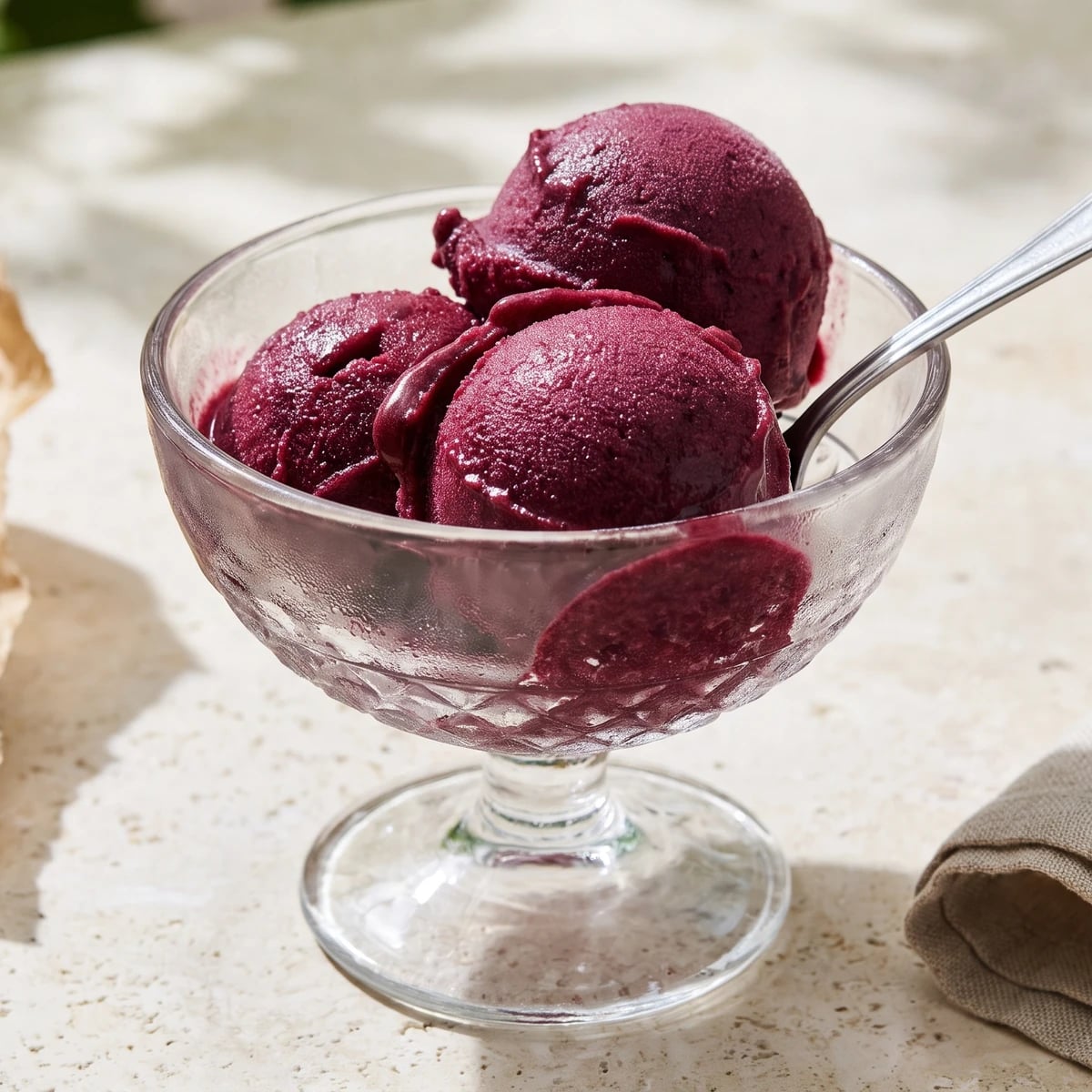
Grape Ice
Created by Chef Juliette
Glace aux raisins is sugar measured as structure: pressed sweet grapes, three lemons, and a precise 20° Baumé reading churn into a brilliant, fine-grained ice that tastes first of fruit.
Glace aux Raisins (grape ice) teaches the cleanest lesson in frozen dessert: sugar is structure before it is sweetness. The source's 20° is a Baumé syrup-gauge reading, about 35 to 36 °Bx on a modern refractometer. Hit it and the ice churns fine and yielding; miss low and it freezes hard, miss high and it slumps.
The source assumed a pèse-sirop (syrup gauge), a hand freezer packed with ice and salt, and someone available to turn it. Your honest equivalents are a pocket refractometer and a 1½-quart electric churn. The full 1½-pint measure stays because it already fits that machine and serves six to eight at home. Pure powdered sugar becomes superfine sugar, not starch-laced confectioners' sugar, because it dissolves cold without clouding the grape. The salt-and-ice pail is scaffolding; pressed juice, three lemons, the 20° reading, sieving, and churning are the dish.
Finished, the glace aux raisins is jewel-toned, tart at the first touch and deeply grapey as it melts. There is no cream or egg white hiding here. One cook, one stove, one evening, and tonight the stove can remain cold. The step that matters is simple: take the reading after all three lemons are in, then add the sugar by degrees and stop at 20°.
Ingredients
freshly pressed juice from ripe sweet grapes
Quantity
1½ Imperial pints (850 ml / about 900 g)
chilled
medium lemons
Quantity
3, yielding about ½ cup (120 ml / 120 g) juice
juiced
superfine sugar
Quantity
About 1 to 1½ cups (240 to 360 ml / 200 to 300 g), or as needed to reach 20° Baumé (about 35 to 36 °Bx)
| Ingredient | Quantity |
|---|---|
| freshly pressed juice from ripe sweet grapeschilled | 1½ Imperial pints (850 ml / about 900 g) |
| medium lemonsjuiced | 3, yielding about ½ cup (120 ml / 120 g) juice |
| superfine sugar | About 1 to 1½ cups (240 to 360 ml / 200 to 300 g), or as needed to reach 20° Baumé (about 35 to 36 °Bx) |
Where cooking meets culture.
Culinary guides, cultural storytelling, and the editorial depth that makes cooking meaningful.
Discover Culinary Explorer