
Chef Juliette
The Making of Ices
Freezing is the recipe: pack ice hard with salt, keep the canister moving, and scrape each frozen film into the base until the Glaces turn smooth, fine, and homogeneous.
A cooking platform built around craft, culture, and the stories behind what we eat.
Created by Chef Juliette
Based on No. 2787, Glace des Gourmets, from Le Guide Culinaire (1907) by Auguste Escoffier
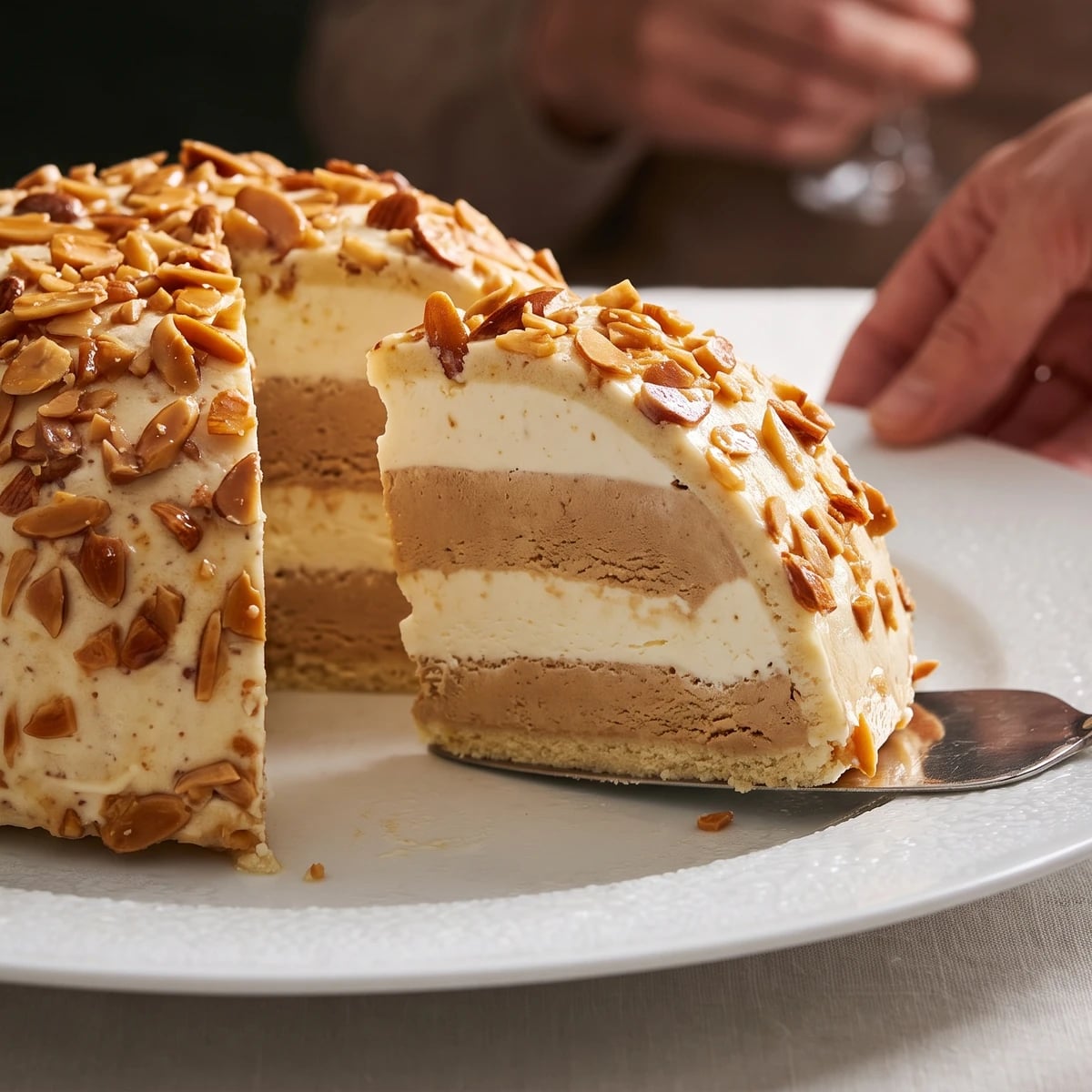
Pralined vanilla forms the cold shell around alternating rum-chestnut ice and vanilla Chantilly, then caramelized almond splinters add the crisp finish. Temperature is the discipline, and quick hands make the bombe.
Glace des Gourmets (a pralined vanilla bombe with rum chestnut ice and Chantilly) teaches one law of frozen desserts: temperature is an ingredient. The ices must be soft enough to spread and cold enough to hold, because a warm hand erases in seconds what a careful layer built. Get that balance right and the cut bombe shows clean bands of ivory Chantilly and tawny chestnut beneath a crisp coat of caramelized almond splinters.
The original entry assumed a pâtissier's freezer holding finished vanilla and chestnut ices, a bombe mould waiting on ice, and enough hands to clothe, layer, turn out, and coat without pause. At home, a 1.5-litre metal bowl replaces the bombe mould, a small ice-cream machine makes the rum chestnut ice, and good bought vanilla ice cream replaces a second custard base. Making that second base from scratch is brigade scaffolding and can go; the pralined shell, alternating layers, vanilla Chantilly, and almond coat are the dish and must stay. One cook, one stove, one evening.
Work cold and in stages. Freeze the mould after the shell and between the filling layers, then unmould only when the almond coating and serving platter are waiting. The decisive step is clothing the mould evenly, without thin spots, before the filling begins.
Glace des Gourmets belongs to the Parisian confectioner's repertory of bombes, moulded frozen desserts assembled from prepared ices and creams for celebration tables. The word bombe names the rounded mould and layered construction, not a baked meringue or a flambé. The unlikely cross-reference to Another Method of Preparing Aspics de Filets de Soles (No. 916) carries only the shared technique of clothing a cold mould; no fish preparation belongs in the dessert.
Quantity
2½ cups (590 ml / about 500 g)
softened just until spreadable
Quantity
1½ cups (360 ml / 180 g)
Quantity
¾ cup (180 ml / 150 g)
for the pralin
Quantity
¼ cup (60 ml / 60 g)
for the pralin
Quantity
1 cup (240 ml / 250 g)
Quantity
½ cup (120 ml / 125 g)
Quantity
½ cup (120 ml / 120 g)
for the chestnut ice
Quantity
¼ cup (60 ml / 50 g)
for the chestnut ice
Quantity
3
Quantity
2 tablespoons (30 ml / 28 g)
Quantity
¾ cup (180 ml / 180 g)
for the Chantilly
Quantity
2 tablespoons (30 ml / 15 g)
Quantity
1 teaspoon (5 ml / 6 g)
Quantity
1 method reference (No. 916)
consulted only for clothing the mould; no fish preparation is used
| Ingredient | Quantity |
|---|---|
| premium vanilla ice creamsoftened just until spreadable | 2½ cups (590 ml / about 500 g) |
| blanched slivered almonds | 1½ cups (360 ml / 180 g) |
| granulated sugarfor the pralin | ¾ cup (180 ml / 150 g) |
| waterfor the pralin | ¼ cup (60 ml / 60 g) |
| unsweetened chestnut purée | 1 cup (240 ml / 250 g) |
| whole milk | ½ cup (120 ml / 125 g) |
| heavy creamfor the chestnut ice | ½ cup (120 ml / 120 g) |
| granulated sugarfor the chestnut ice | ¼ cup (60 ml / 50 g) |
| large egg yolks | 3 |
| dark rum | 2 tablespoons (30 ml / 28 g) |
| cold heavy creamfor the Chantilly | ¾ cup (180 ml / 180 g) |
| confectioners' sugar | 2 tablespoons (30 ml / 15 g) |
| vanilla bean paste | 1 teaspoon (5 ml / 6 g) |
| Another Method of Preparing Aspics de Filets de Solesconsulted only for clothing the mould; no fish preparation is used | 1 method reference (No. 916) |
Set a 1.5-litre bombe mould or a smooth stainless-steel bowl in the freezer for at least 30 minutes. Chill the final serving platter and a rimmed tray as well. Clear enough freezer space to keep the mould level, because once layering begins there should be no search for somewhere to put it.
Heat the oven to 350°F (180°C). Toast the almonds until pale gold and fragrant, 7 to 9 minutes, then keep them nearby. Combine the ¾ cup sugar and water in a light-coloured saucepan, bring to a boil, and cook without stirring until the syrup turns a clear amber. Add the warm almonds, stir quickly to coat them, and spread the mixture thinly on parchment or a silicone mat. This is pralin, the caramelized almond preparation that supplies both the shell's flavour and its final coat.
Let the pralin cool until completely hard. Break it into pieces, then grind roughly one-third to a fine, sandy powder in a food processor. Chop or pulse the remainder into irregular almond splinters, mostly ⅛ to ¼ inch (3 to 6 mm), large enough to remain crisp under the teeth but small enough to cling to the bombe. Keep both portions dry and separate.
Warm the milk and ½ cup cream until small bubbles gather around the edge. Whisk the yolks with the ¼ cup sugar, then pour in the hot dairy gradually while whisking. Return everything to gentle heat and stir constantly until the custard reaches 180°F (82°C) and coats the spoon. Remove it immediately, whisk in the chestnut purée until smooth, and chill the bowl over ice. Stir in the rum only when the base is cold, which keeps its aroma lively.
Churn the thoroughly cold chestnut base until dense, smooth, and able to hold a soft ridge, usually 20 to 25 minutes. Transfer it to a shallow container and freeze for 20 to 30 minutes. You want spreadable ice, not liquid cream and not a solid block. If it becomes too firm while you work, give it 5 minutes in the refrigerator and stir it firmly with a spatula.
Fold the finely ground pralin into the softened vanilla ice cream. Chemiser le moule (clothe the mould) by spreading the pralined vanilla over the bottom and up the sides in an even layer about ⅜ inch (1 cm) thick, reserving about ½ cup (120 ml / 100 g) to close the base later. The book directs the cook to Another Method of Preparing Aspics de Filets de Soles (No. 916) for this same cold-mould action. It is a technique citation only; no sole, fish jelly, or savoury component enters the dessert. Freeze the clothed mould for 30 minutes.
Reserve 1 tablespoon of the cold cream, then whip the remainder with the confectioners' sugar and vanilla bean paste until it holds firm but supple peaks. Chantilly is sweetened, flavoured whipped cream, and here it must be sturdy enough to form a layer without becoming buttery. If it goes grainy from overwhipping, fold in the reserved cream a teaspoon at a time until it smooths. Ça se rattrape.
Spread one-third of the rum chestnut ice inside the frozen shell, pressing it gently into the curve without disturbing the vanilla. Freeze for 15 minutes, then add half the Chantilly and freeze again. Repeat with chestnut ice, Chantilly, and a final chestnut layer, leaving about ⅜ inch (1 cm) below the rim. Spread the reserved pralined vanilla ice cream across the top and join it firmly to the frozen shell, enclosing the filling. Cover and freeze until solid, at least 4 hours.
Spread the almond splinters across the chilled rimmed tray. Wrap the mould for 5 seconds in a towel wrung out in warm water, invert it onto cold parchment, and lift. If it will not release, repeat for 3 seconds rather than applying steady warmth. Using the parchment to limit contact, roll and press the bombe rapidly through the pralined almond splinters until the vanilla shell is covered. A warm hand melts the shell, so work fast. If it softens, stop and freeze it for 20 minutes before finishing the coat.
Transfer the coated bombe to the chilled platter and freeze for 20 minutes to reset its surface. Before serving, let it stand in the refrigerator for 10 minutes. Dip a long knife in hot water, dry it completely, and make each cut in one confident stroke, cleaning and reheating the blade between wedges. Serve at once, while the almonds remain crisp and the layers hold their clean edges. À table!
1 serving (about 205g)
Culinary guides, cultural storytelling, and the editorial depth that makes cooking meaningful.
Discover Culinary Explorer
Chef Juliette
Freezing is the recipe: pack ice hard with salt, keep the canister moving, and scrape each frozen film into the base until the Glaces turn smooth, fine, and homogeneous.

Chef Juliette
Pack a prepared glace until no air remains, harden it under salted ice, and turn it out with one quick tepid dip: clean fluting, a close surface, and no hollow pockets.

Chef Juliette
One cream base, one fruit-syrup base, and the classical rule beneath both: sugar and yolks set the texture before the freezer does, so measure first and churn only when the balance is right.

Chef Juliette
The custard beneath every French cream ice: yolks and sugar drawn to the ribbon, hot milk added slowly, then gentle heat until the spoon wears a satin veil and never a bubble.