Culinary Explorer

A cooking platform built around craft, culture, and the stories behind what we eat.
Discover Culinary Explorer
Glace des Iles

Glace des Iles

Created by Chef Juliette

Based on No. 2789, Glace des Iles, from Le Guide Culinaire (1907) by Auguste Escoffier

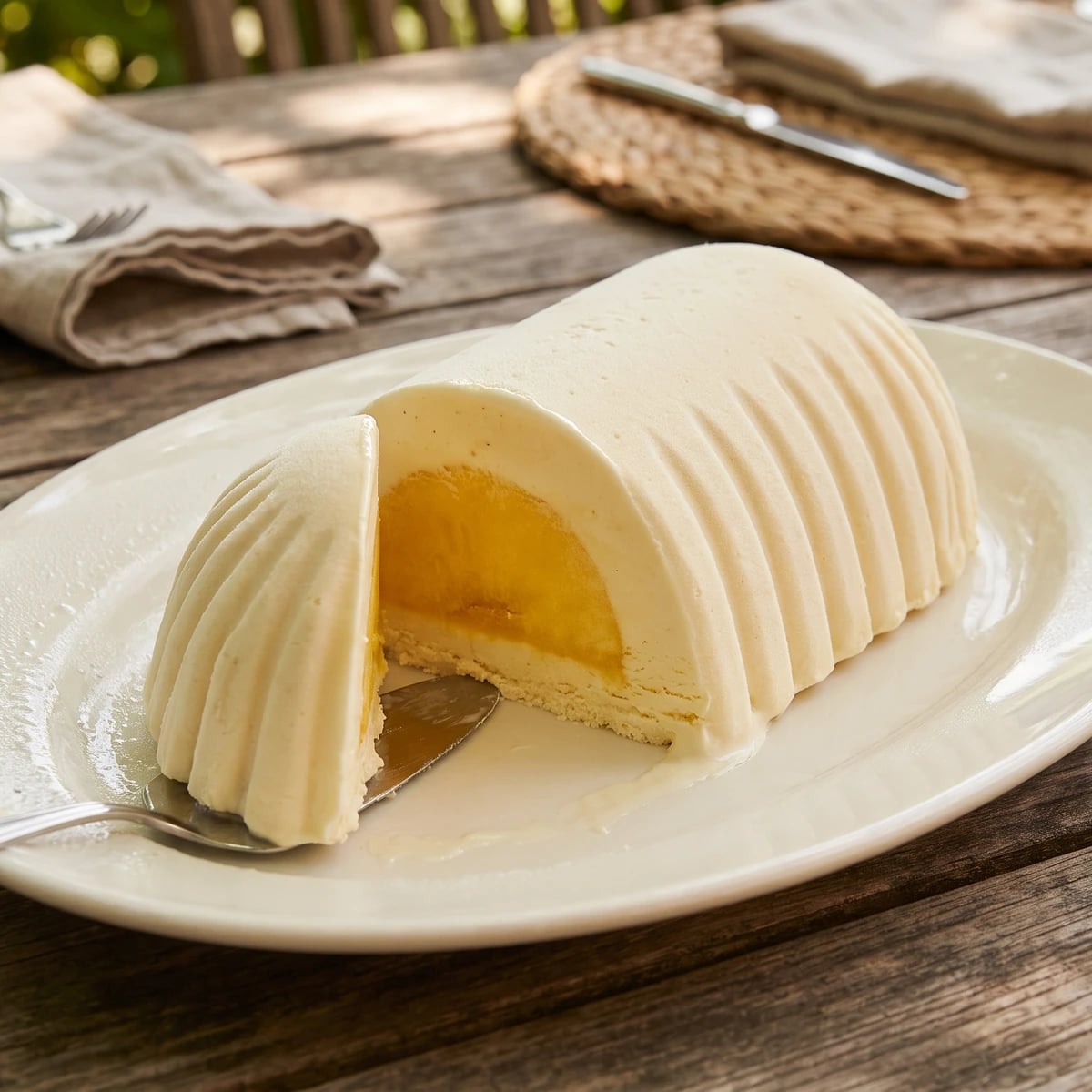
Vanilla ice clothes a scallop mould around a vivid pineapple centre, two prepared ices arranged with enough precision that every slice gives cream, fruit, and the clean pleasure of contrast.

Desserts
French
Dinner Party
Outdoor Dining
Special Occasion
35 min
Active Time
5 min cook6 hr 10 min total
YieldOne 1-quart (1 L) mould, 6 servings

Glace des Îles (moulded vanilla and pineapple ices) teaches the discipline of contrast. Two flavours only: a cool vanilla shell and pineapple bright enough to remain fragrant from the freezer. Before you touch a pan, know the one truth of this dessert: cold mutes fruit, so pineapple that tastes merely pleasant at room temperature will taste absent once frozen.

The original entry assumed a pastry station with both ices ready, a Madeleine-mould at hand, and deep cold waiting between stages. It needed no saucier, perpetual stockpot, or salamander; its professional luxury was prepared components and many hands. At home, we make one fresh pineapple ice, use excellent prepared vanilla ice cream, and substitute a narrow metal loaf tin if the scallop-shell mould is unavailable. Making a second custard is brigade scaffolding and can go. The vanilla shell and pineapple centre are the dish, and both stay. One cook, one stove, one evening.

Clothing the mould means coating its cold interior with one frozen preparation before another fills it. The layer must be even and completely firm; if the vanilla slumps or leaves a bare patch, freeze it again and patch the gap. Ça se rattrape. Freeze the vanilla shell hard before adding the pineapple. That is the step that decides the dessert.

Glace des Îles belongs to the Parisian grand-kitchen repertory of entremets glacés, where pastry cooks packed contrasting ices into decorative metal moulds for formal service. Its name points to pineapple and the French table’s image of tropical islands, not to a regional island recipe; the scallop form comes from the Madeleine-mould, a narrow shell-shaped vessel rather than the little cake.

The technique, the tradition, and the story behind every dish.

Discover Culinary Explorer

Ingredients

ripe pineapple

Quantity

1 medium, yielding 3 cups (710 ml / 500 g) flesh

peeled, cored, and cut into chunks

superfine sugar

Quantity

⅓ cup (80 ml / 65 g)

water

Quantity

3 tablespoons (45 ml / 45 g)

vanilla ice cream

Quantity

2¼ cups (530 ml / 480 g), using Another Method of Preparing Aspics de Filets de Soles (No. 916) for the clothing technique

softened until spreadable

Equipment Needed

  • 1-quart (1 L) metal Madeleine-mould, narrow scallop mould, or narrow metal loaf tin
  • Blender or food processor
  • Fine-mesh sieve
  • Ice cream machine, or shallow metal pan and food processor
  • Small offset spatula

Instructions

  1. 1

    Make the pineapple base

    Put the sugar and water in a small saucepan and warm gently, stirring only until the syrup turns clear. Let it cool completely. Purée the pineapple with the syrup until smooth, then press it through a fine-mesh sieve. Taste the cold purée: it should be vividly fragrant, not simply sweet, because freezing will quiet it further. If the fruit has no perfume now, more sugar won't repair it; change the fruit rather than lowering the standard.

    A ripe pineapple smells strongly at its base, feels heavy, and yields slightly under a thumb. If fresh fruit is dull, use good canned pineapple packed in juice, drained thoroughly and weighed. The classical pantry has solved worse problems.
  2. 2

    Chill the base

    Cover the pineapple base and chill it until thoroughly cold, about 1 hour. Put the Madeleine-mould, or its narrow loaf-tin equivalent, in the freezer at the same time. A cold base freezes with finer crystals, and a frozen mould catches the vanilla before it can slide.

  3. 3

    Clothe the mould

    Use the clothing principle from Another Method of Preparing Aspics de Filets de Soles (No. 916). Press the softened vanilla ice cream over the bottom and sides of the frozen mould with a small offset spatula, making an even shell about ½ inch (1.25 cm) thick and leaving the centre hollow. Work firmly into every scallop. If the ice cream turns glossy, slides, or gathers at the bottom, stop and freeze the mould for 10 minutes before continuing. Patch any thin places, level the upper edge, and freeze until completely hard, 45 to 60 minutes.

  4. 4

    Churn the pineapple

    Churn the cold pineapple mixture in an ice cream machine until it holds the dense texture of soft ice cream. Without a machine, freeze it in a shallow metal pan until firm around the edges, about 1½ hours, process it until smooth, then repeat once. The finished pineapple ice must be pliable enough to pack but never liquid. If it has become hard, leave it for 5 minutes; if it flows, return it to the freezer for 10 minutes.

  5. 5

    Fill and seal

    Pack the pineapple ice into the frozen vanilla shell a spoonful at a time, pressing gently into the corners so no air pockets remain. Keep the spatula away from the vanilla walls. Level the filling, then spread any reserved vanilla ice cream across the open surface to seal the pineapple inside. If the shell softens while you work, stop immediately and freeze it for 10 minutes. Ça se rattrape, but only if you don't keep pushing at melting ice.

  6. 6

    Freeze until firm

    Cover the surface closely and freeze the filled mould for at least 4 hours, preferably overnight, until solid through the centre. Chill the serving platter during the final 30 minutes. This hard freeze is part of the construction, not waiting added for ceremony; the two ices must release as one clean shape.

  7. 7

    Unmould and serve

    Wrap the mould briefly in a towel dipped in warm water and wrung dry, then invert it onto the chilled platter. If it doesn't release, warm the mould for another 3 seconds and try again rather than pulling at the dessert. Should the surface soften too far, return the unmoulded Glace des Îles to the freezer for 10 minutes. Slice with a knife dipped in hot water and wiped dry between cuts. Serve at once. À table!

Chef Tips

  • The pineapple carries the entire centre, so judge it by scent before sweetness. A fruit that perfumes the room will survive the freezer; a pale, woody one will disappear inside it.
  • Choose a vanilla ice cream made with real cream and a clear dairy flavour. Keep elaborate additions out of it. Vanilla supports the pineapple here, and biscuit pieces or caramel ribbons only muddy the clean division.
  • Temper the vanilla only until a spatula can press it smoothly. Once it looks wet or glossy, it has gone too far for clothing the mould; return it to the freezer and try again when the edges are firm.
  • For neat slices, leave the unmoulded dessert at room temperature for 3 to 5 minutes, no longer. The knife should pass through without cracking the shell or smearing the pineapple centre.

Advance Preparation

  • The pineapple base can be prepared and chilled up to 24 hours ahead. Stir it well before churning.
  • The filled mould can be frozen up to 3 days ahead if its surface is covered closely to prevent frost and freezer odours.
  • Unmould shortly before serving. Keep both the dessert and its platter frozen until the table is ready.

Frequently Asked Questions

Nutrition Information

1 serving (about 182g)

Calories
250 calories
Total Fat
9 g
Saturated Fat
5 g
Trans Fat
0 g
Unsaturated Fat
3 g
Cholesterol
35 mg
Sodium
65 mg
Total Carbohydrates
41 g
Dietary Fiber
1 g
Sugars
36 g
Protein
3 g

Note: Chef personas and recipes are created with AI assistance. Cook with care: follow safe food-handling practices, check doneness with a thermometer when needed, and adapt for allergies and your kitchen.

Where cooking meets culture.

Culinary guides, cultural storytelling, and the editorial depth that makes cooking meaningful.

Discover Culinary Explorer

More from Ices and Sherbets

Browse the full collection