
Chef Juliette
Various Almond Preparations
Five almond preparations, one discipline: remove the skins cleanly, dry every kernel through, then cut, toast, or cloak it in pale caramel without letting its fragrant oils escape.
A cooking platform built around craft, culture, and the stories behind what we eat.
Created by Chef Juliette
Based on No. 2745, The Moulding of Ices, from Le Guide Culinaire (1907) by Auguste Escoffier
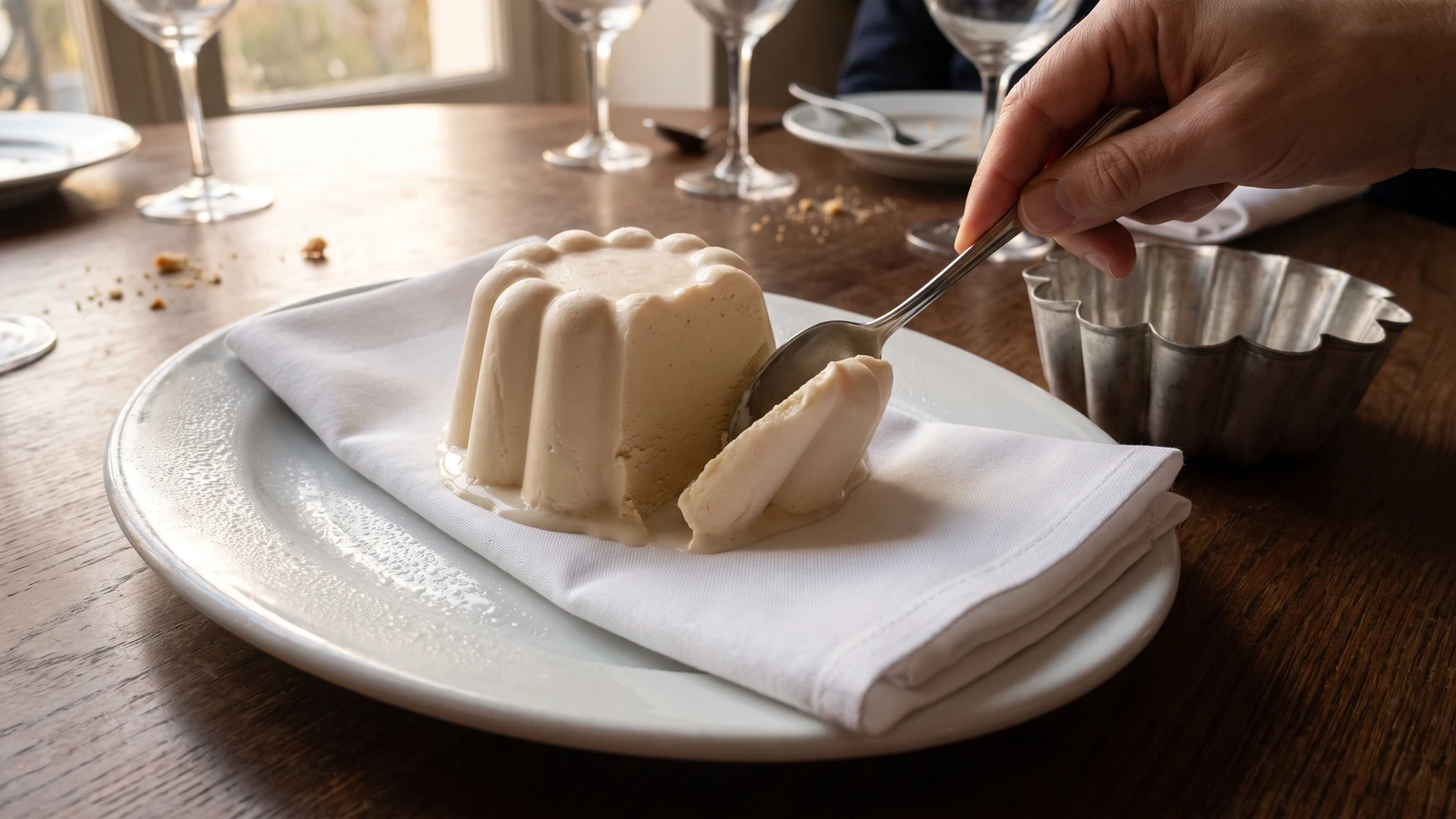
Pack a prepared glace until no air remains, harden it under salted ice, and turn it out with one quick tepid dip: clean fluting, a close surface, and no hollow pockets.
Moulage des glaces teaches compression. The one true thing to know before touching the mould is this: every pocket of air becomes a hole when the ice is turned out. Fill tightly, strike the mould against a folded towel, and let the frozen preparation settle into every curve.
The original recipe assumed a cupboard of special metal moulds with close-fitting covers, a deep receptacle kept ready with broken ice and salt, and enough hands to fill and pack without delay. At home, a 1-quart lidded metal pudding mould, a deep stockpot, and a sturdy towel do the same work. The collection of decorative moulds and the brigade hands are scaffolding, so they can go; tight packing, an hour under salted ice, a thorough wash, and the instant in tepid water are the dish and they stay. One cook, one stove standing sensibly cold, one evening.
Turned out properly, the glace has sharp fluting, a close unbroken surface, and enough firmness to reach the table whole. Don't soften it into slush merely to make filling easy. It should yield beneath the spoon but still hold its body, because packing out every pocket of air is the step that decides the result.
Moulage des glaces belongs to the Parisian pâtisserie and the grand French dining table, where closely fitted metal moulds gave frozen preparations a shape sturdy enough to carry whole into the room. Cooks also served ices en rocher, in rock form, on folded napkins or portioned them into glasses; the mould changed the presentation, not the frozen preparation. Broken ice mixed with salt formed a compact freezing chamber, while washing the mould before its tepid dip kept the salt from tainting the dessert.
Quantity
4 cups (950 ml / about 850 g)
fully frozen, then softened just until packable
Quantity
about 20 cups (4.75 L / 2.5 kg)
Quantity
2 cups (475 ml / 575 g)
| Ingredient | Quantity |
|---|---|
| prepared ice cream, sorbet, or fruit icefully frozen, then softened just until packable | 4 cups (950 ml / about 850 g) |
| broken or coarsely crushed ice | about 20 cups (4.75 L / 2.5 kg) |
| coarse rock salt | 2 cups (475 ml / 575 g) |
Chill the clean mould and its lid for 15 minutes. Place the broken ice beside a deep stockpot or bucket, but keep the rock salt separate until the mould is filled; once salt meets ice, the packing begins to melt. Fold a sturdy towel into a thick pad on the counter.
The frozen preparation should be firm but workable. If it is rigid and breaks into chunks, leave it at room temperature for 3 to 5 minutes; if it has become loose or glossy at the edges, return it to the freezer for 10 minutes. Spoon it into the chilled mould one-third at a time, pressing it firmly into every curve. Fill to the rim, set the mould upright on the folded towel, and bang it straight down several times until the surface settles and no new hollows appear. Add a final spoonful if the level drops, smooth the top, and fit the lid closely.
Mix the broken ice and rock salt. Spread a thick layer in the bottom of the deep receptacle, stand the covered mould upright on it, then pack the salted ice firmly around the sides and over the lid. Leave an ordinary, already-frozen glace buried for at least 1 hour. A light, aerated preparation put into the mould before it is fully frozen, as with bombes, needs the additional 2 hours specified by the classical method, making 3 hours in all. Replenish the packing if it sinks below the lid.
Chill the serving dish, then lay a clean folded napkin over it. Lift the mould from the packing with gloved hands and rinse its exterior thoroughly under cold water, paying particular attention to the lid and seam. Dry it well. This washing is part of the method, not decoration; one hidden grain of packing salt can taint the first spoonful.
Fill a basin with tepid water, never hot. Dip the covered mould to just below its seam for 1 to 2 seconds, only long enough to melt the thinnest film against the metal. Remove the lid, place the napkin-lined dish against the opening, invert both together, pause for a breath, and lift the mould straight upward. If the glace clings, don't twist or pull. Ça se rattrape: return the mould upright, refit the lid, dip it for 1 second more, and try again. If an overlong dip softens the details, return the covered mould to the salted ice for 10 minutes before repeating.
Carry the moulded glace to the table as soon as it releases. The folded napkin steadies it and catches the first melt. Portion it with a serving spoon or a knife dipped briefly in warm water and wiped dry between cuts. Clean edges, a smooth interior, no fussy garnish. À table!
1 serving (about 106g)
Culinary guides, cultural storytelling, and the editorial depth that makes cooking meaningful.
Discover Culinary ExplorerChef Juliette
Five almond preparations, one discipline: remove the skins cleanly, dry every kernel through, then cut, toast, or cloak it in pale caramel without letting its fragrant oils escape.

Chef Juliette
A pastry pantry lesson in one tray: filberts warmed only until their red skins release, rubbed clean, cooled, and chopped into a fragrant mise-en-place for cakes, creams, pralines, and petits fours.

Chef Juliette
The smallest pâtisserie discipline decides whether a cake leaves its mould intact: clarified butter in every corner, followed by the lightest veil of dry flour or fécule.

Chef Juliette
Four whites, one spotless bowl, and a patient change of speed: whisk gently until loosened, then briskly to glossy stiffness, with powdered sugar waiting if the foam begins to granulate.