
Chef Juliette
Various Almond Preparations
Five almond preparations, one discipline: remove the skins cleanly, dry every kernel through, then cut, toast, or cloak it in pale caramel without letting its fragrant oils escape.
A cooking platform built around craft, culture, and the stories behind what we eat.
Created by Chef Juliette
Based on No. 2769, Tangerine Ice, from Le Guide Culinaire (1907) by Auguste Escoffier
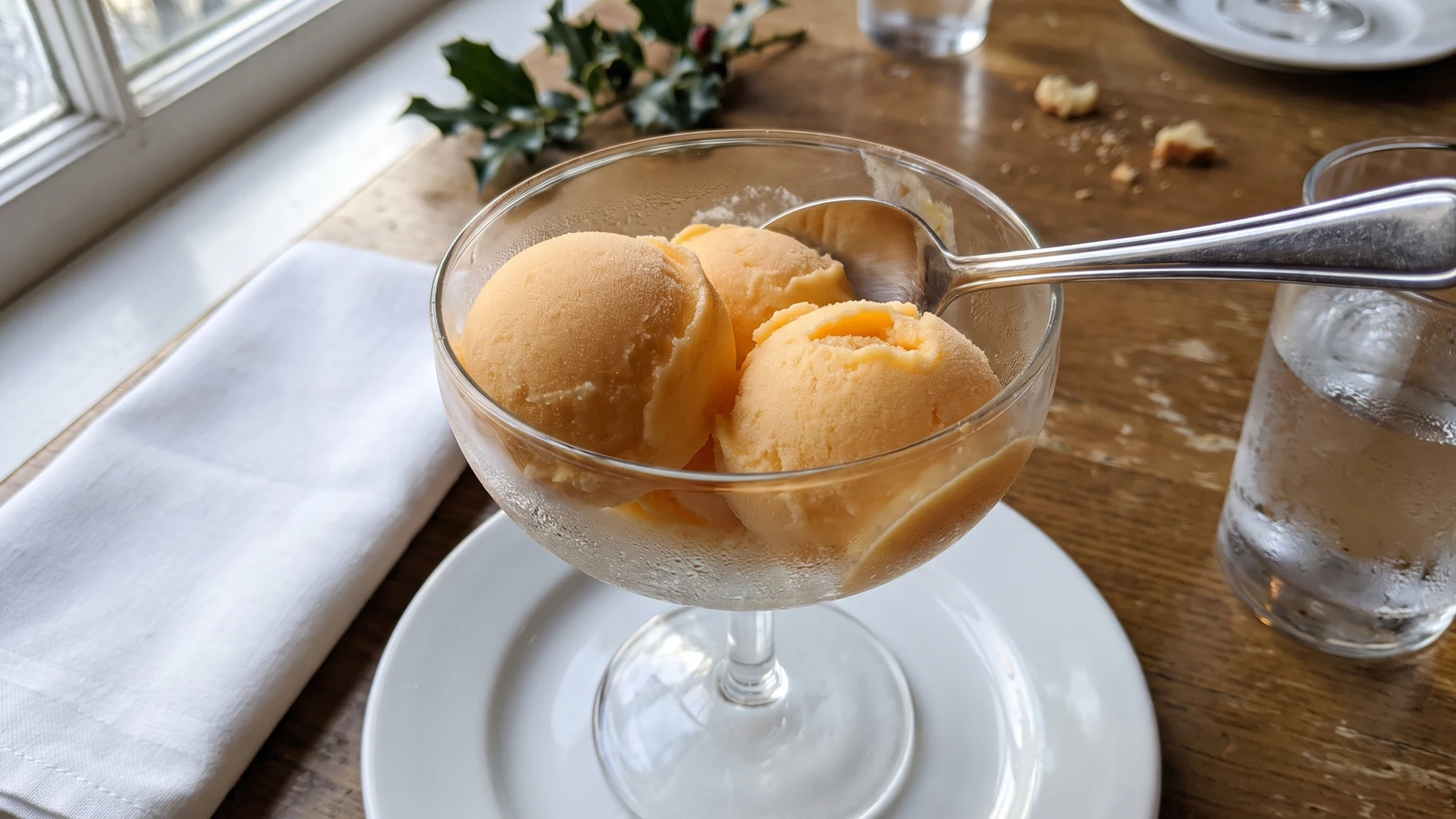
Hot syrup captures the perfume of tangerine zest, fresh citrus sharpens it, and a careful sugar balance keeps every spoonful bright, smooth, and clean on the palate.
Glace à la mandarine teaches one exact thing: zest belongs in boiling syrup. Heat draws out the fragrant oils that a cold infusion leaves clinging to the rind, then cooling fixes that perfume in the sugar before the fresh juices arrive. The finished ice tastes of tangerine first, with orange giving breadth and lemon cutting a clean edge.
The source assumed a boiler of syrup ready for service, a syrup gauge, and a freezing pot tended in salted ice. Your equivalents are a small saucepan, an optional refractometer, and a countertop ice cream machine. I have halved the brigade quantity to approximately 425 ml of syrup, zest from two tangerines, and juice from three tangerines, one orange, and half a lemon. No flavour ratio has changed. The syrup gauge itself is scaffolding, and a refractometer replaces it; the boiling zest infusion is the dish and stays untouched. One cook, one stove, one evening.
Take only the zest, the glossy coloured film of the rind, because white pith turns the clean citrus perfume bitter. Before you touch the pan, have that zest ready beside you. Adding it the instant the syrup boils is the step that decides the dish.
Glace à la mandarine belongs to the Parisian repertoire of entremets glacés, where citrus arriving through Mediterranean ports was translated into clear, perfumed ices for the dessert course. Its method is classical rather than tied to one citrus-growing region: hot syrup extracts the peel oils, while fresh mixed juices balance sweetness with acidity. The instruction to finish the preparation at 21° means degrees Baumé, a measure of syrup density rather than temperature, because sugar balance decides whether an ice scoops smoothly or freezes hard.
Quantity
1¼ cups plus 1 tablespoon (310 ml / 260 g)
Quantity
1 cup plus 1 tablespoon (260 ml / 260 g)
Quantity
3
2 finely zested and all juiced, yielding about ½ cup plus 1 tablespoon (135 ml / 140 g) juice
Quantity
1
juiced, yielding about ⅓ cup plus 1 tablespoon (95 ml / 98 g)
Quantity
½
juiced, yielding about 1½ tablespoons (22 ml / 23 g)
Quantity
Up to 2 tablespoons (30 ml / 25 g)
Quantity
Up to 2 tablespoons (30 ml / 30 g)
| Ingredient | Quantity |
|---|---|
| granulated sugar | 1¼ cups plus 1 tablespoon (310 ml / 260 g) |
| water | 1 cup plus 1 tablespoon (260 ml / 260 g) |
| medium tangerines2 finely zested and all juiced, yielding about ½ cup plus 1 tablespoon (135 ml / 140 g) juice | 3 |
| medium sweet orangejuiced, yielding about ⅓ cup plus 1 tablespoon (95 ml / 98 g) | 1 |
| medium lemonjuiced, yielding about 1½ tablespoons (22 ml / 23 g) | ½ |
| granulated sugar for density correction (optional) | Up to 2 tablespoons (30 ml / 25 g) |
| cold water for density correction (optional) | Up to 2 tablespoons (30 ml / 30 g) |
Scrub and dry the fruit. Remove the zest from two tangerines with a fine grater, taking only the coloured outer film and none of the white pith. Juice all three tangerines, the orange, and the half lemon separately, then strain the juices together and keep them cold. Use every drop produced by the stated fruit counts; the approximate measurements are a guide, while the source's ratio rests on whole fruits.
Combine the 260 g sugar and 260 g water in a small saucepan. Warm gently, stirring only until the sugar dissolves, then bring the syrup to a full boil. Scatter in the tangerine zest at once, let the syrup return just to the boil, and remove it from the heat. The hot extraction is the foundation of the ice; prolonged boiling is not, and risks pulling bitterness from the rind.
Leave the syrup and zest to cool completely, about 45 minutes. Pour it through a fine-mesh sieve, rubbing the softened zest firmly against the mesh with the back of a spoon before discarding the fibres. This follows the source closely: the pressure recovers the fragrant syrup held by the zest without leaving pieces that would interrupt the finished ice.
Stir the cold tangerine, orange, and lemon juices into the cooled syrup. If you have a refractometer, test a drop at room temperature and aim for 21° Baumé, approximately 38° Brix. If the reading is low, warm ¼ cup (60 ml / about 65 g) of the base and dissolve the correction sugar into it one teaspoon at a time, then cool, return, and recheck. If the reading is high, add cold water one teaspoon at a time. Without a refractometer, use the full measured syrup and all the juices; the proportions land close, though naturally sweet fruit will make a slightly softer ice.
Cover and chill the base for at least 4 hours, until thoroughly cold. Churn it in an ice cream machine according to the machine's directions, usually 20 to 25 minutes, until it holds clear tracks and mounds softly from the paddle. If it remains loose after 30 minutes, stop rather than warming it through with more churning. Ça se rattrape: transfer it to a shallow metal pan, freeze for 45 minutes, whisk hard from the edges toward the centre, and repeat twice.
Pack the churned glace à la mandarine into a chilled, shallow container, press parchment directly against the surface, and freeze for 3 to 4 hours to set. Let it stand in the refrigerator for 10 minutes before serving if it has become very firm; patience restores the scoop without melting the edges. Serve generous scoops in chilled coupes. À table!
1 serving (about 120g)
Culinary guides, cultural storytelling, and the editorial depth that makes cooking meaningful.
Discover Culinary ExplorerChef Juliette
Five almond preparations, one discipline: remove the skins cleanly, dry every kernel through, then cut, toast, or cloak it in pale caramel without letting its fragrant oils escape.

Chef Juliette
A pastry pantry lesson in one tray: filberts warmed only until their red skins release, rubbed clean, cooled, and chopped into a fragrant mise-en-place for cakes, creams, pralines, and petits fours.

Chef Juliette
The smallest pâtisserie discipline decides whether a cake leaves its mould intact: clarified butter in every corner, followed by the lightest veil of dry flour or fécule.

Chef Juliette
Four whites, one spotless bowl, and a patient change of speed: whisk gently until loosened, then briskly to glossy stiffness, with powdered sugar waiting if the foam begins to granulate.