Chef Juliette
The Making of Ices
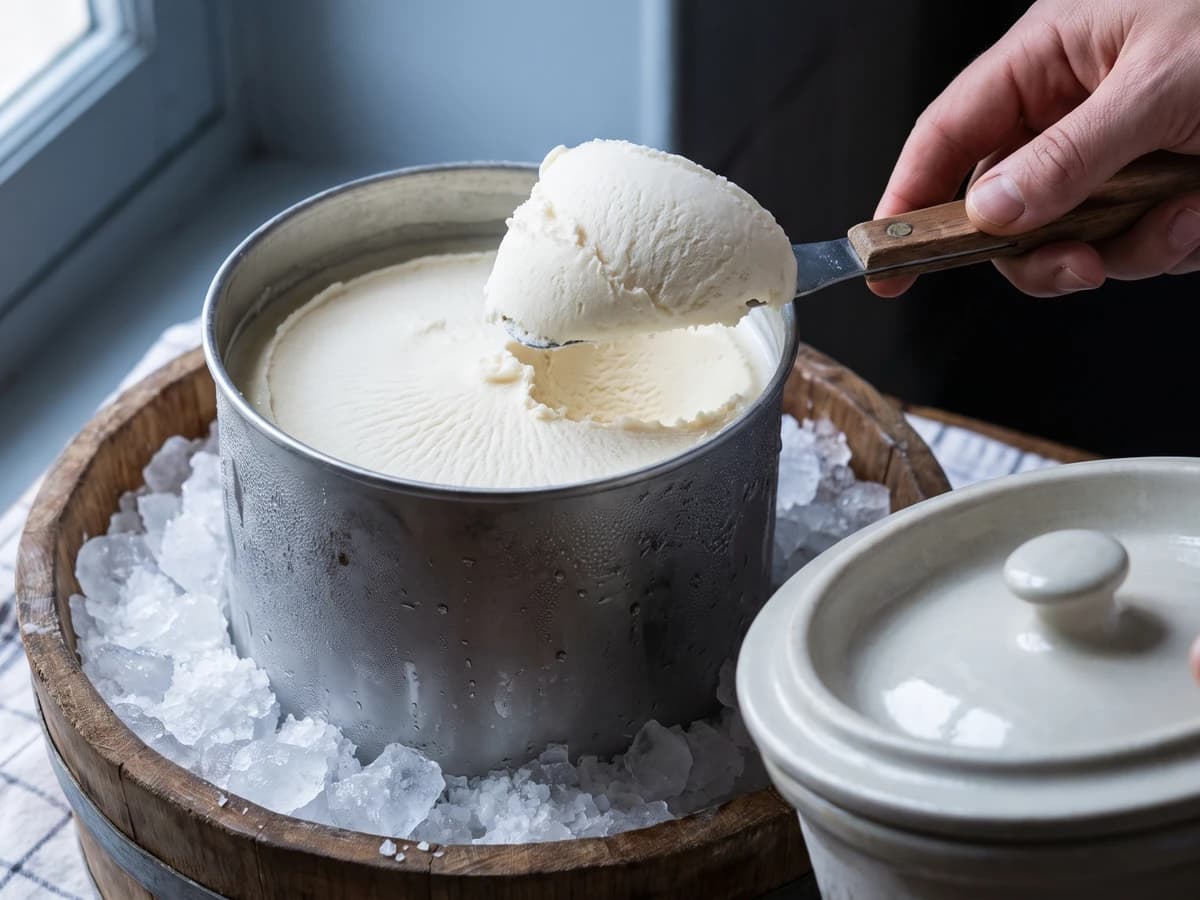
Freezing is the recipe: pack ice hard with salt, keep the canister moving, and scrape each frozen film into the base until the Glaces turn smooth, fine, and homogeneous.
A cooking platform built around craft, culture, and the stories behind what we eat.
Created by Chef Juliette
Based on No. 2751, Coffee Ice-cream, from Le Guide Culinaire (1907) by Auguste Escoffier
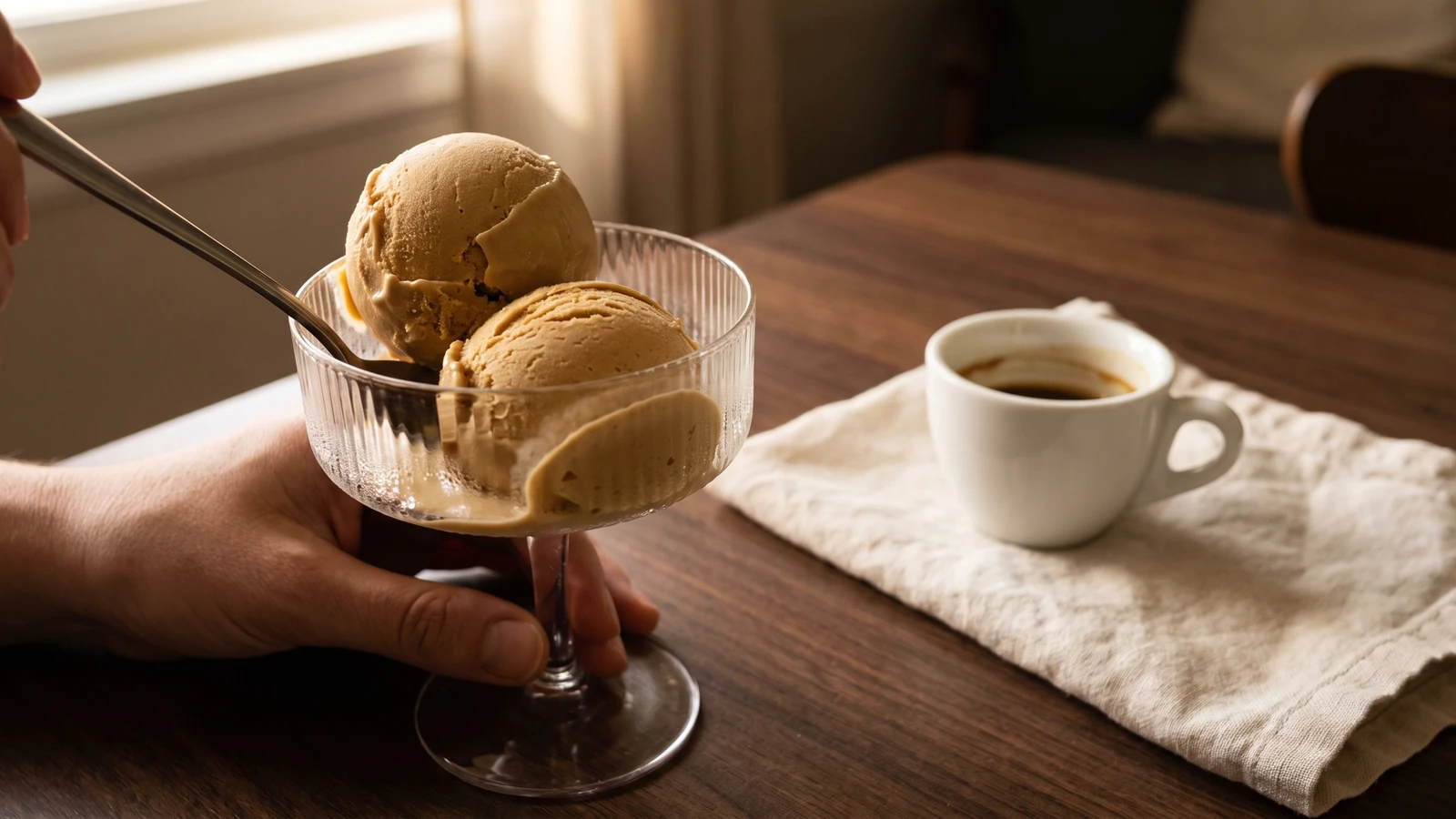
Freshly roasted beans surrender their perfume to hot milk for twenty minutes, then a silken crème anglaise turns beneath the paddle into coffee ice cream with depth, clarity, and no bitterness.
Glace au Café (Coffee Ice Cream) teaches the cleanest lesson in infusion: coffee needs heat to yield its perfume, but time turns perfume bitter. Crush freshly roasted beans at the last minute, cover them with milk just off the boil, and give them twenty minutes, no more. The finished glace should taste of coffee first and sugar second, with a silken finish from crème anglaise, the pourable egg custard that gives French ice cream its body.
The original kitchen roasted its own beans, crushed a brigade quantity, and froze the mixture in a sorbetière, the hand-cranked freezing pail packed with ice and salt, while someone kept the paddle moving. At home, beans from a good roaster, a mortar or rolling pin, and a countertop churner do the same honest work. I have halved the book's two-ounce coffee charge and two-pint liquid scale to one ounce against one pint of milk, enough for about a quart. On-premise roasting and the hand-cranked tub were brigade scaffolding; the ratio, the twenty-minute infusion, the egg-yolk emulsion, and the churning stay because they are the dish. One cook, one stove, one evening, provided the churn bowl is already frozen.
The decisive step comes before the custard: strain the beans the moment the twenty minutes are up, and don't press them. If the crème anglaise later catches at the pan's edge, ça se rattrape, and the method will show you how; coffee steeped into bitterness does not. Crush or grind it at the last minute, because its finest perfume is already leaving within the hour.
Glace au café belongs to the Parisian café, pâtisserie, and grand-kitchen repertoire, where imported coffee moved naturally from the cup into custards and frozen entremets. In classical kitchen language, “grilled coffee seeds” meant freshly roasted beans, crushed while fragrant and infused in hot milk; the book also permitted a concentrated brewed infusion when whole-bean steeping was impractical. The choice is not regional doctrine but a question of texture and perfume: crushed beans keep the base undiluted, while brewed coffee requires its water to be counted against the milk.
Quantity
1 ounce (28 g)
coarsely crushed at the last minute
Quantity
2⅓ cups (560 ml / 575 g), or 1¾ cups (420 ml / 433 g) for the brewed-coffee method
Quantity
¾ cup (180 ml / 150 g)
Quantity
8
Quantity
⅛ teaspoon (0.6 ml / 0.7 g)
Quantity
½ cup plus 1 tablespoon (140 ml / 140 g)
for the brewed-coffee method only
| Ingredient | Quantity |
|---|---|
| freshly roasted whole coffee beanscoarsely crushed at the last minute | 1 ounce (28 g) |
| whole milk | 2⅓ cups (560 ml / 575 g), or 1¾ cups (420 ml / 433 g) for the brewed-coffee method |
| granulated sugar | ¾ cup (180 ml / 150 g) |
| large egg yolks | 8 |
| fine sea salt | ⅛ teaspoon (0.6 ml / 0.7 g) |
| filtered water (optional)for the brewed-coffee method only | ½ cup plus 1 tablespoon (140 ml / 140 g) |
Crush the coffee beans at the last possible moment, aiming for rough fragments rather than powder. Bring the full 2⅓ cups (560 ml / 575 g) milk just to the boil in a heavy saucepan, remove it from the heat, and immediately stir in the coffee. Cover and infuse for exactly twenty minutes. Set a timer. A shorter infusion tastes timid; a longer one pulls bitterness from the roast and buries the perfume.
Set a fine sieve over a heatproof bowl and strain the infused milk as soon as the twenty minutes are up. Let it drain naturally and discard the beans without pressing them, since pressure extracts the bitter liquid trapped in the grounds. Return the milk to the rinsed saucepan and warm it until small bubbles gather at the edge.
Whisk the egg yolks, sugar, and salt in a bowl until smooth and slightly lightened. Don't leave sugar sitting unmixed on the yolks, because it draws out their moisture and forms stubborn little grains. Pour in one-third of the hot coffee milk in a thin stream while whisking, then whisk in the remainder. This gradual tempering raises the yolks' temperature without scrambling them.
Return the mixture to the saucepan and cook over low heat, stirring constantly with a flexible spatula and sweeping the corners of the pan. Stop when the crème anglaise reaches 79 to 82°C (174 to 180°F) and turns nappant, coating the back of a spoon so a finger drawn through it leaves a clean path. Never let it boil. If you see the first fine grains of cooked yolk, pull the pan from the heat at once, blend for fifteen seconds, and strain into a cold bowl. Ça se rattrape.
Set the bowl of custard into a larger bowl of ice water and stir until completely cool. Press reusable wrap or parchment directly against the surface, then refrigerate for at least three hours, until thoroughly cold. Rapid cooling stops the cooking and preserves the coffee's high fragrance; the cold rest also lets the custard settle into a smooth emulsion.
Pour the cold base into the prepared ice-cream machine and churn according to its instructions, usually twenty to thirty minutes, until it holds soft folds and looks like thick whipped custard. Churning is not brigade scaffolding to be discarded; it keeps the ice crystals small and gives the glace its fine body. If the base remains liquid after thirty minutes, the bowl was not cold enough. Refrigerate the base, freeze the clean bowl until solid, and churn again.
Transfer the glace to a shallow chilled container, smooth the surface, and cover it closely. Freeze for about three hours, until firm enough to scoop but not frozen into a block. Let it stand at room temperature for five to ten minutes before serving, then draw the scoop through slowly to make generous rounds. The first taste should be cold, creamy, and unmistakably coffee. À table!
1 serving (about 105g)
Culinary guides, cultural storytelling, and the editorial depth that makes cooking meaningful.
Discover Culinary ExplorerChef Juliette
Freezing is the recipe: pack ice hard with salt, keep the canister moving, and scrape each frozen film into the base until the Glaces turn smooth, fine, and homogeneous.

Chef Juliette
Pack a prepared glace until no air remains, harden it under salted ice, and turn it out with one quick tepid dip: clean fluting, a close surface, and no hollow pockets.
Chef Juliette
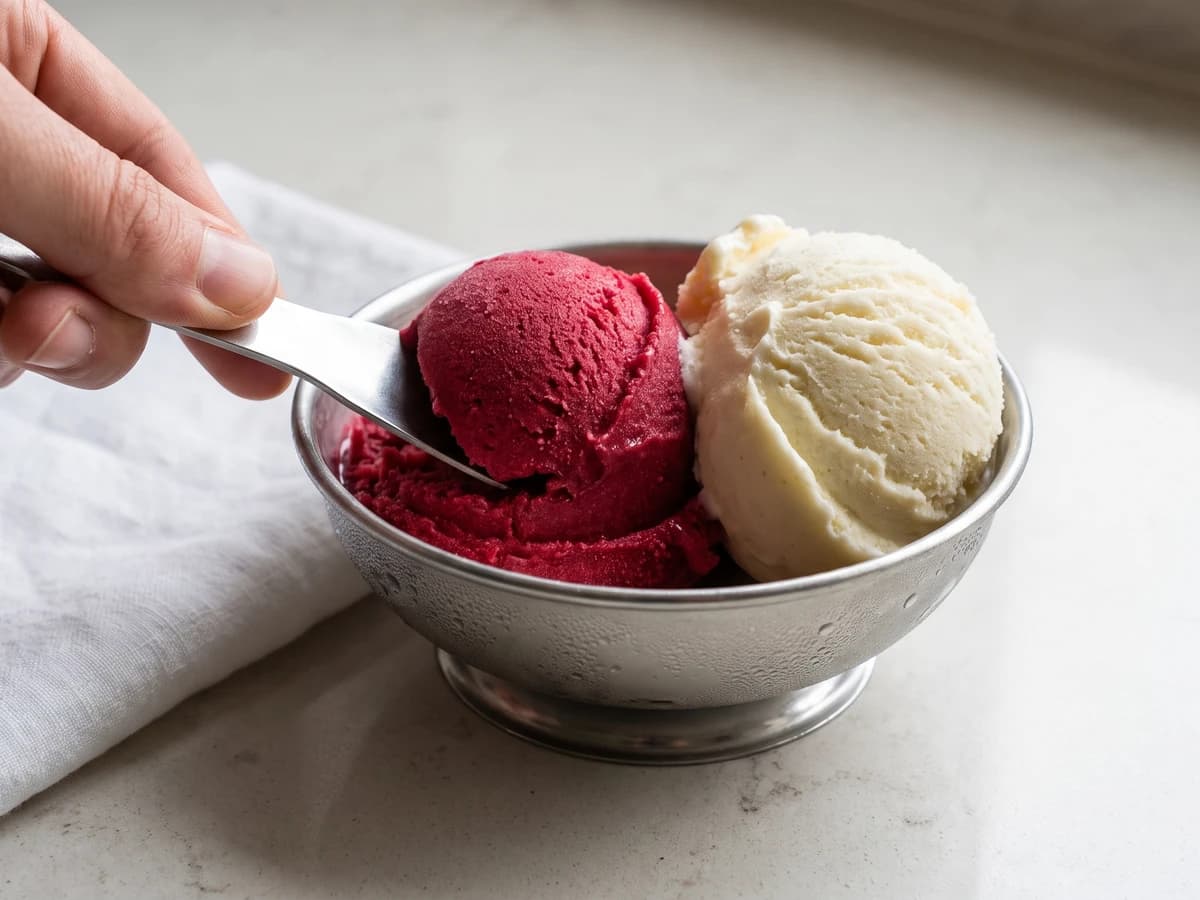
One cream base, one fruit-syrup base, and the classical rule beneath both: sugar and yolks set the texture before the freezer does, so measure first and churn only when the balance is right.
Chef Juliette
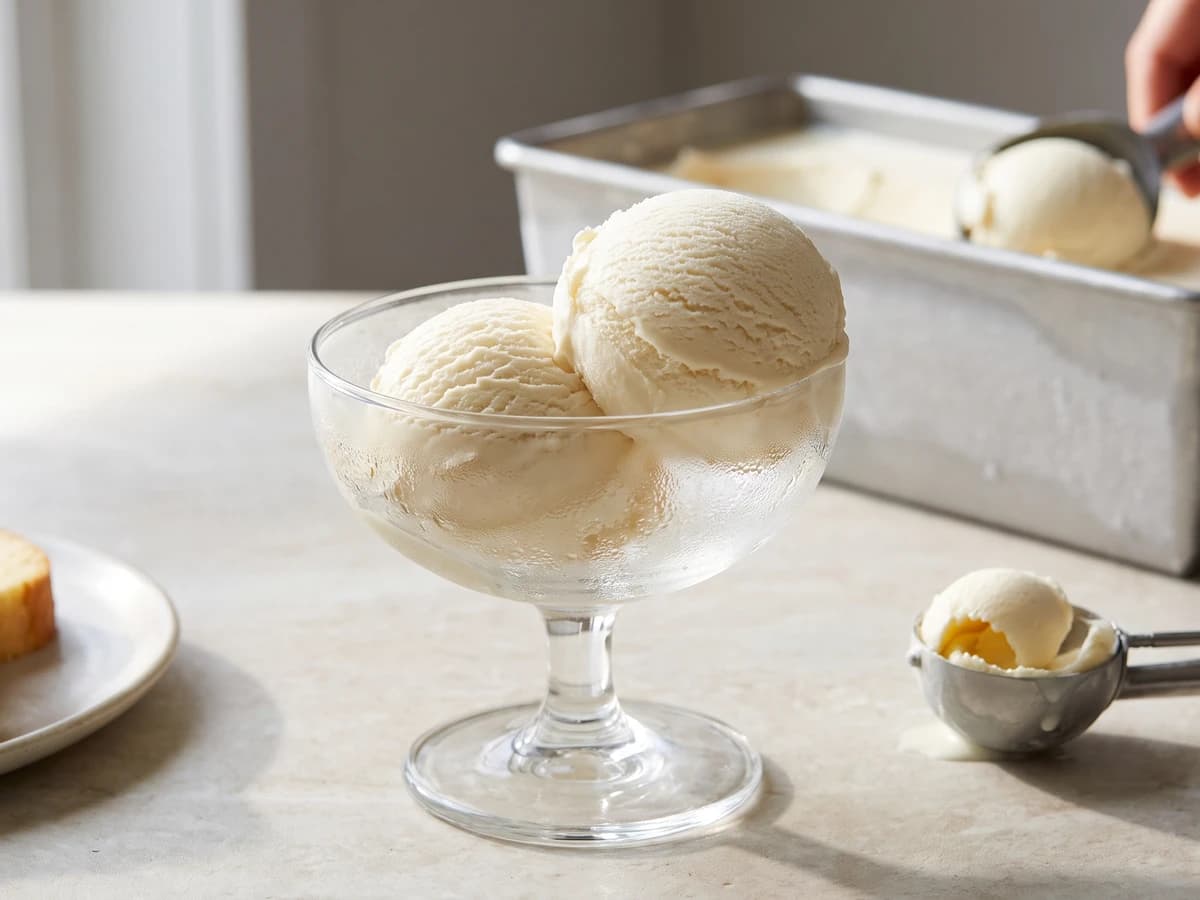
The custard beneath every French cream ice: yolks and sugar drawn to the ribbon, hot milk added slowly, then gentle heat until the spoon wears a satin veil and never a bubble.