
Chef Juliette
Aubergines à la Turque
Two tender aubergine slices hide a firm yolk-and-cheese heart beneath a crisp second coat, proving that careful binding, not fussy equipment, keeps this grand-kitchen fritter together.
Updated August 1, 2026
Escoffier's vegetable chapter opens on four thistles and a nightshade, and nearly every one of them turns on a single defence: cut surfaces darken, so the lemon, the acidulated water and the flour-and-lemon blanc are not fuss, they are the dish. Artichokes first, whole and boiled for a hollandaise, quartered and braised with white wine under sauce italienne, hulled and stuffed with duxelles for the Barigoule, bottoms cooked white and filled with spinach or asparagus tips under Mornay, sliced raw into hot butter, or sieved to a purée finished with beurre noisette. Then asparagus: Argenteuil, Lauris and the green Parisian sprew, tied into faggots and cooked in plenty of salted water, sent up plain with beurre fondu or gratinéed under Mornay, à la flamande with a hot half egg the eater crushes into butter, à la polonaise beneath nut-brown butter and crumbs. Then the egg-plant, the southern voice on the list, fried in roundels, hollowed and refilled with its own pulp, gratinéed with tomato and garlic in Provence's version, or lightened with stiff whites into a soufflé in its shell. Cardons close the chapter, the vegetable Lyon and Provence keep for Christmas, cooked long in a blanc under veal fat and then glazed with Parmesan, with Mornay, or under a marrow sauce. The original assumed a salamander standing over every dish for the glaze; a fierce oven or an overhead broiler does the same work in the same minute. À table!
A cooking platform built around craft, culture, and the stories behind what we eat.
Chef Juliette
Two tender aubergine slices hide a firm yolk-and-cheese heart beneath a crisp second coat, proving that careful binding, not fussy equipment, keeps this grand-kitchen fritter together.

Chef Juliette
One vegetable, a whole lesson in sauce families: tender asparagus takes butter and warm emulsions when hot, then vinaigrette or cool mayonnaise when cold, each chosen by temperature and texture.

Chef Juliette
Cardons teach the art of matching one vegetable to seven classical sauces: tender ribs, properly drained, dressed in a timbale or arranged on a silver-style drainer with sauce alongside.

Chef Juliette
Aubergines frites prove that frying is a matter of heat and timing: thin rounds, a dry veil of flour, bronze crusts, and a straight journey from oil to waiting plates.

Chef Juliette
Cardons à la Mornay turns the thistle’s pale ribs into a tender pyramid under ivory Mornay, then bronzes it in one swift movement before the sauce can split.

Chef Juliette
Firm, pale artichoke bottoms hold savory duxelles beneath a buttered crumb, then meet fierce heat just long enough to gratinée, with glossy Madeira sauce passed at the table.

Chef Juliette
Fried eggplant shells, equal parts silky pulp and dry duxelles, a crisp gratin cap, and a shining border of light demi-glace: classical economy made generous for four.

Chef Juliette
Asperges à la Milanaise turns four plain ingredients into a lesson in timing: tender asparagus, Parmesan, and beurre noisette, glazed only until the cheese catches and the butter gleams.

Chef Juliette
Asperges au Gratin turns one fierce burst of top heat into discipline: tender green stalks stay distinct while Mornay and Parmesan bronze over the tips, rich, savory, and ready before asparagus loses its bite.

Chef Juliette
Cardons au Parmesan makes winter cardoons grand through discipline, not fuss: a low pyramid of tender stalks glossed layer by layer with demi-glace and Parmesan, then bronzed beneath fierce heat.
Chef Juliette
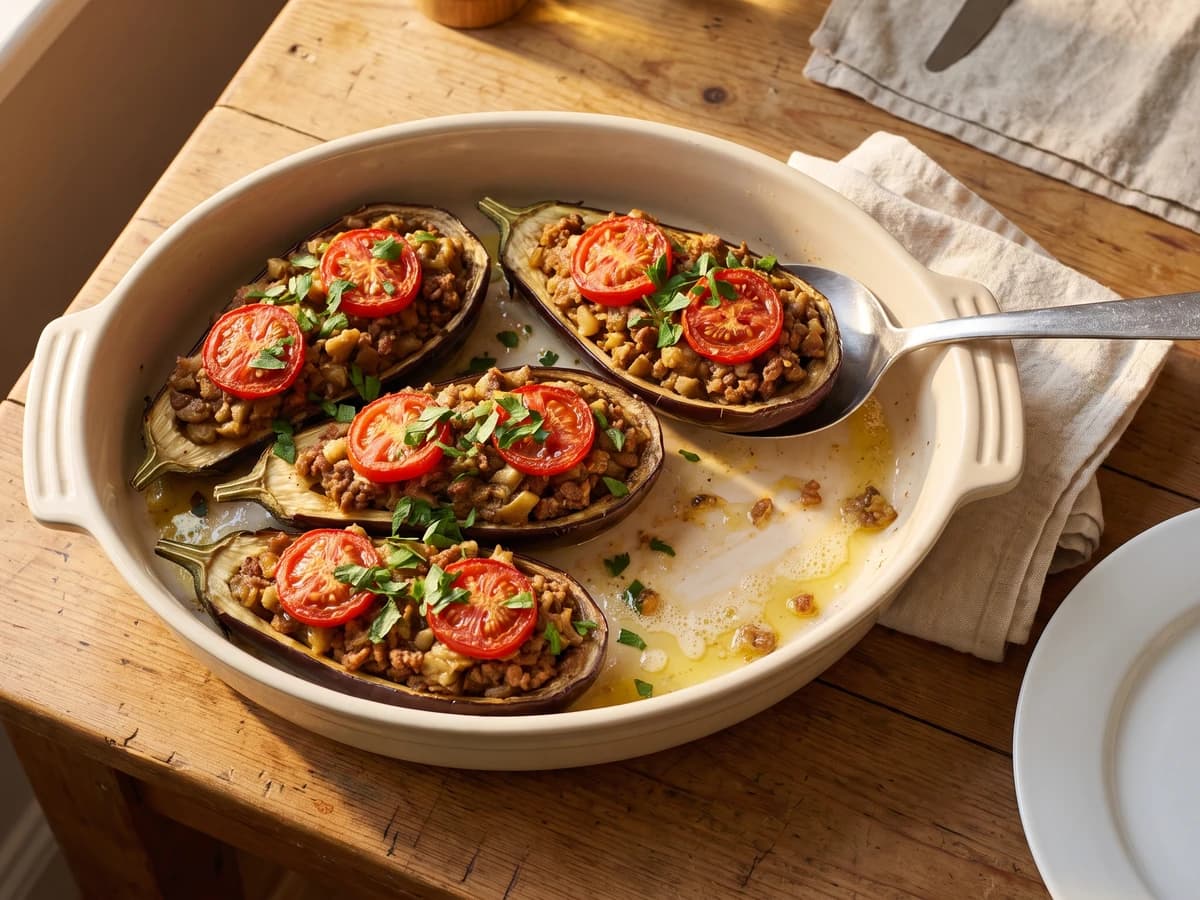
Aubergine shells carry equal measures of silky fried flesh and lean mutton, warmed as a light gratin and finished with glossy tomato roundels: thrift, proportion, and proper timing gathered into one generous dish.

Chef Juliette
Aubergine shells hold their own tender pulp with tomato, garlic, and olive oil, then a crisp gratin crowns them while smooth tomato sauce circles the dish. The lesson is simple: cook the tomato dry.

Chef Juliette
Eight tender artichoke bottoms carry green asparagus tips bound with cream, veiled in Mornay, and flashed under fierce heat until the sauce freckles gold without dulling the spring beneath.
Chef Juliette
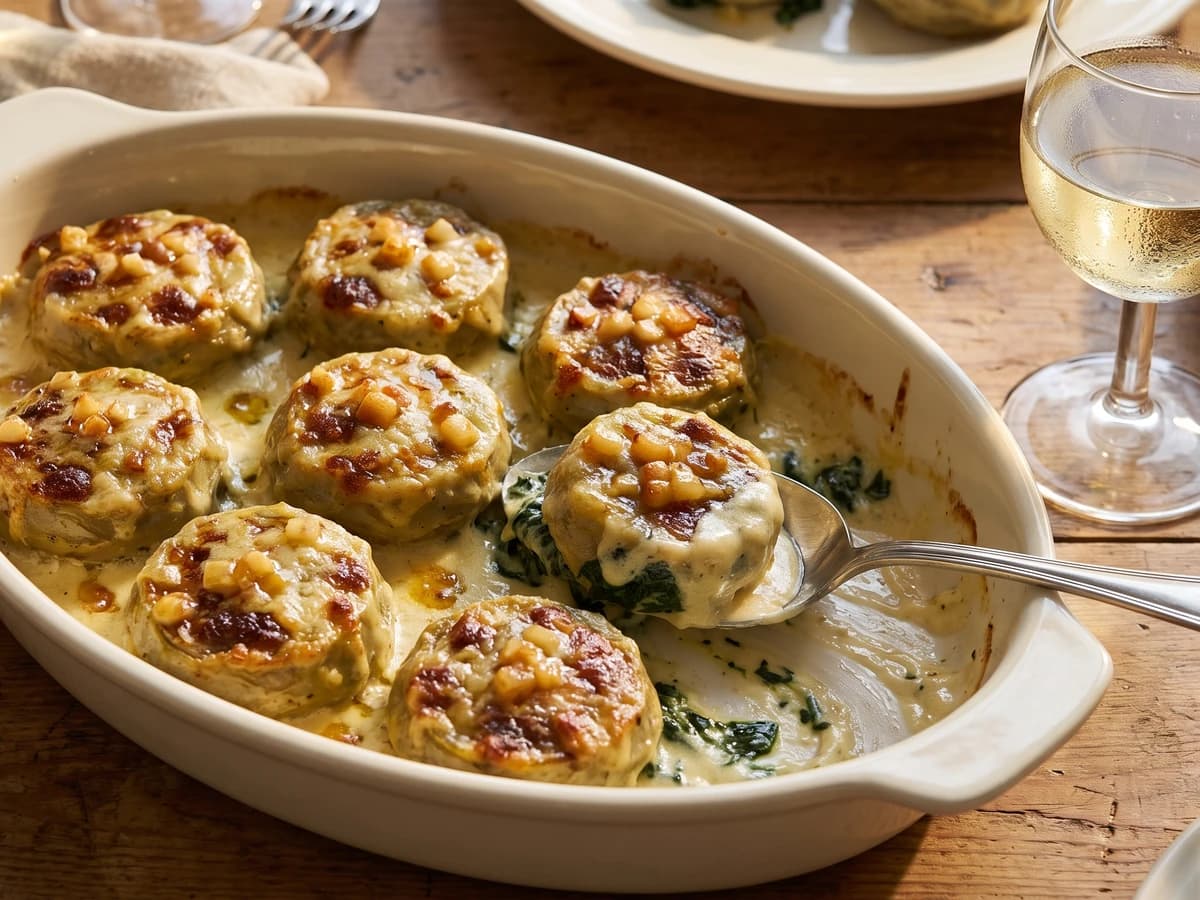
Tender artichoke bottoms cradle spinach cooked dry with onion, garlic, and anchovy, then disappear beneath ivory Mornay and tiny dice of Gruyère before a fierce final glaze.

Chef Juliette
Tender cardoons in overlapping rows, Parmesan caught between them, beurre noisette poured over at the last moment, then a quick glaze: a Lyon holiday vegetable finished with the discipline of the classical canon.

Chef Juliette
Aubergines soufflées turn fried aubergine, reduced béchamel, Parmesan, and egg whites into four bronzed, trembling shells. The lesson is simple: concentrate the base, fold with care, and serve the instant they rise.

Chef Juliette
Artichoke bottoms kept ivory, cooked through in butter, and passed fine with that butter, then steadied by half their bulk of silky potato and sharpened by beurre noisette.

Chef Juliette
Artichoke hearts, spring peas, and carrot settle into one buttered cocotte, cooking gently until tender before Manied Butter (No. 151) gives their clear vegetable liquor the lightest gloss.

Chef Juliette
Artichauts aux sauces diverses bring one generous lesson to the table: tie, boil, and drain the vegetables properly, then let one well-made sauce turn each leaf and heart into supper.

Chef Juliette
Artichoke quarters, lemoned before they can darken, are sweated over aromatics, braised in white wine and brown stock, then glossed with Sauce Italienne for a generous classical side dish.

Chef Juliette
Artichauts à la Provençale turns a tight lid into technique: small artichokes, sweet peas, and lettuce soften in olive oil and their own juices, emerging tender, green, and quietly glossy.

Chef Juliette
Tender cardoons rise beneath glossy sauce moelle, while crisp little puff-paste patties hold poached marrow dice. The lesson is gentle heat: poach the marrow barely, or richness becomes grease.

Chef Juliette
Cardoon heart, simmered tender, shaped into precise roundels, then rolled in a pale buttered meat glaze and fresh herbs: a small classical garnish that teaches the difference between cooking and finishing.

Chef Juliette
Raw young artichoke bottoms meet a hot buttered pan, bronze at the edges, and finish under fines herbes. The lesson is simple and exact: tenderness begins with youth, and browning begins with heat.

Chef Juliette
Artichauts à la Barigoule turns tender artichokes into little braising vessels, packed with mushrooms and fat bacon, wrapped, wine-braised, then dressed with only a spoonful of dark, concentrated sauce.

Chef Juliette
Asperges (asparagus) teach the master vegetable method: sort by thickness, tie gently, and cook in abundant salted water until the stalk yields but the tip still holds.

Chef Juliette
Asperges à la Polonaise turns tender green spears into a lesson in timing: sieved yolk and parsley first, then beurre noisette with fresh crumbs poured over the heads at the last possible moment.

Chef Juliette
Pointes d’Asperges à la Crème makes one promise: vivid green asparagus held by cream that clings rather than puddles. Reduce first, dry the vegetable well, and an old garnish becomes a generous home side.

Chef Juliette
Vivid green asparagus tips crown pea-sized stalk pieces, cooked in fiercely boiling salted water, dried in the pan, and bound with butter only after the flame is gone.

Chef Juliette
Asperges à la Flamande turns four plain elements into a table ritual: tender white asparagus, hot egg, melted butter, and the diner's fork making the sauce while the plate is still warm.

Chef Juliette
Cardons au blanc turn a thorny stalk into a pale, tender Christmas side: peel relentlessly, defend every cut from air, then simmer gently beneath veal fat until a knife slips through.
Culinary guides, cultural storytelling, and the editorial depth that makes cooking meaningful.
Discover Culinary Explorer