Culinary Explorer

A cooking platform built around craft, culture, and the stories behind what we eat.
Discover Culinary Explorer
Purée ou Crème d’Artichauts

Purée ou Crème d’Artichauts

Created by Chef Juliette

Based on No. 2037, Purée ou Crème d’Artichauts, from Le Guide Culinaire (1907) by Auguste Escoffier

Artichoke bottoms kept ivory, cooked through in butter, and passed fine with that butter, then steadied by half their bulk of silky potato and sharpened by beurre noisette.

Side Dishes
French
Dinner Party
Comfort Food
Make Ahead
45 min
Active Time
45 min cook1 hr 30 min total
Yield4 servings

Purée ou Crème d’Artichauts (silken artichoke purée) teaches proportion. Potato gives the purée body, but artichoke must remain unmistakably in command. Before you touch a pan, know this one thing: measure the artichoke only after it has been cooked and sieved, then add exactly half that bulk of smooth potato. Guess from the raw ingredients and the potato takes over.

The working classical kitchen assumed a commis turning a basin of artichoke bottoms, another cook holding perfect potato purée, and a tamis ready beside the stove. At home, eight artichokes, a paring knife, a ricer, and a fine sieve do the same work. The extra hands and holding pans were brigade scaffolding, so they go. The separate half-cooking, the gentle finish in butter, and the passage through the sieve are the dish, so they stay. One cook, one stove, one evening.

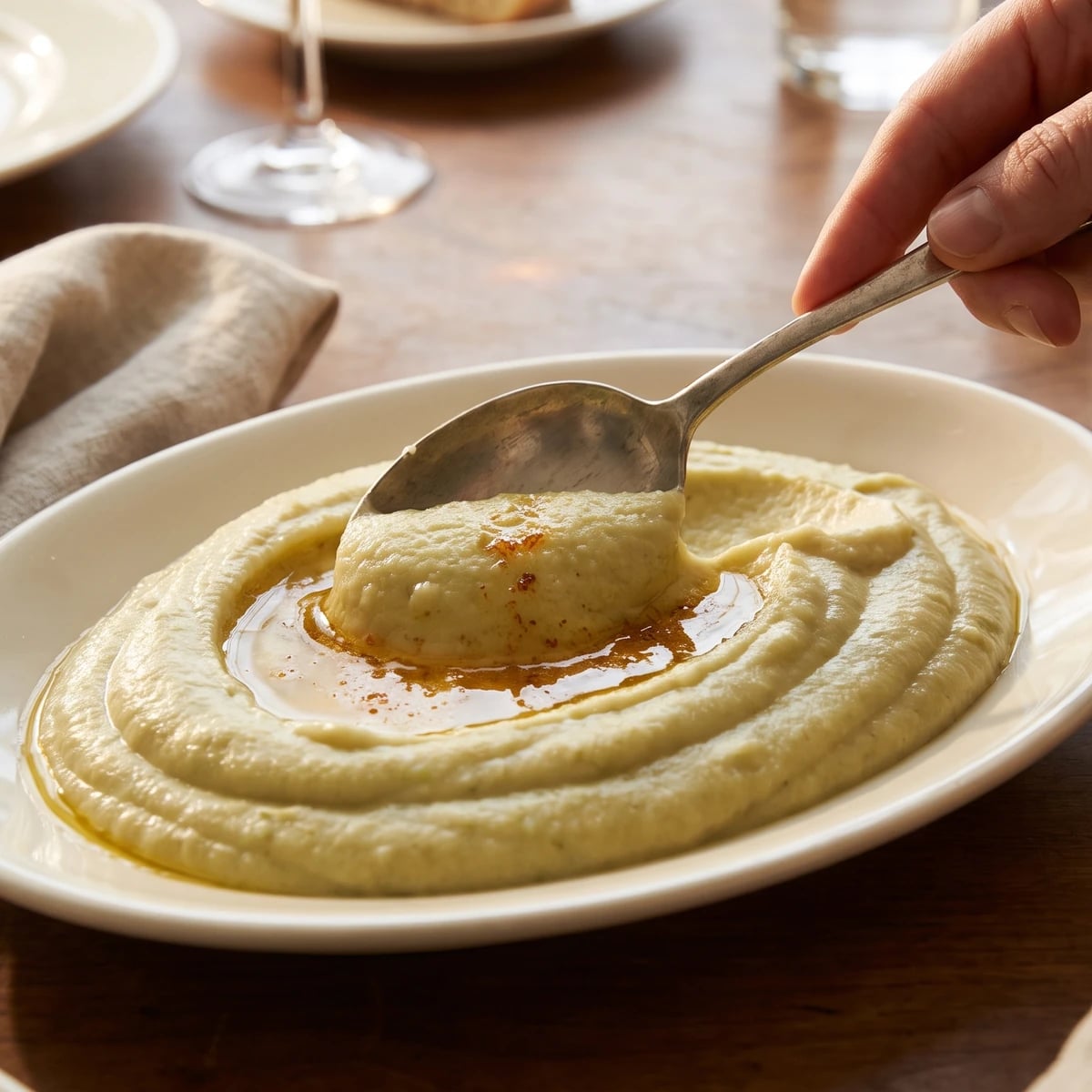
The finished purée should be ivory with the faintest green cast, glossy from butter and soft enough to take the sweep of a serving spoon without slumping into a puddle. Fresh butter rounds the flavor; beurre noisette (butter cooked until it smells of hazelnuts) brings forward the artichoke’s own nuttiness. Measure the sieved artichoke before folding in the potato. That is the step that decides the dish.

Purée d’artichauts belongs to the Parisian classical repertory of légumes and garnitures, where carefully turned artichoke bottoms became a pale, refined accompaniment to poultry, veal, and delicate offal. Generations of bourgeois cooks carried these purées from grand dining rooms to home tables, replacing brigade labor with patient knife work and a household sieve. Despite the title, this formula calls for no cream: crème describes its fine, supple finish, while fresh butter and beurre noisette provide the richness.

The technique, the tradition, and the story behind every dish.

Discover Culinary Explorer

Ingredients

very tender medium globe artichokes

Quantity

8 (about 4½ lb / 2 kg before trimming)

cold water for the artichokes

Quantity

8 cups (2 L / 2 kg)

fresh lemon juice

Quantity

¼ cup (60 ml / 60 g)

from about 2 lemons

fine sea salt

Quantity

1 tablespoon (15 ml / 18 g)

divided

unsalted butter for cooking the artichokes

Quantity

6 tablespoons (90 ml / 85 g)

cut into pieces

peeled Yukon Gold potato chunks

Quantity

1½ cups (375 ml / 260 g)

cut into 1-inch pieces

cold water for the potatoes

Quantity

6 cups (1.5 L / 1.5 kg)

cold unsalted butter for finishing

Quantity

2 tablespoons (30 ml / 28 g)

diced

unsalted butter for the beurre noisette

Quantity

2 tablespoons (30 ml / 28 g)

Equipment Needed

  • 4-quart stainless-steel saucepan
  • 10-inch sauté pan with a close-fitting lid
  • Small light-colored saucepan for beurre noisette
  • Small sharp paring knife
  • Melon baller or sturdy teaspoon
  • Fine-mesh sieve or tamis
  • Potato ricer or food mill
  • Flexible bowl scraper or firm silicone spatula

Instructions

  1. 1

    Turn the artichokes

    Combine the 8 cups cold water, lemon juice, and 2 teaspoons of the salt in a wide stainless-steel saucepan. Break the stem from each artichoke so it pulls away its tough fibers, strip off every leaf, and cut away the cone of pale inner leaves. Trim the sides and base with a small sharp knife until each bottom is a neat, fleshy disk, then scoop out every thread of choke with a melon baller or teaspoon. Drop each bottom into the acidulated water the moment it is finished. Exposed artichoke darkens quickly; if a cut surface begins to gray, rub it with a little of the lemon water and shave away the thinnest surface layer. Ça se rattrape.

    Turn the bottoms generously. Tough green fibers will not soften into elegance later, and saving one more millimeter now only leaves strings in the sieve.
  2. 2

    Half-cook them white

    Bring the artichokes up to a bare simmer in their lemon water. Keep them submerged with a small lid or a round of parchment and cook for 8 to 10 minutes, until the outer rim yields to a knife but the center remains distinctly firm. This first cooking sets their pale color without taking them all the way to softness. Lift them out, drain well, and pat them dry so water does not dilute the butter.

  3. 3

    Prepare the potato

    Put the potato chunks in a second saucepan with the 6 cups cold water and 1 teaspoon of the remaining salt. Bring gently to a simmer and cook for 15 to 18 minutes, until a knife enters without resistance. Reserve ½ cup of the cooking water, drain the potatoes, and return them to the dry pan over low heat for a minute to remove surface moisture. Pass them through a ricer or food mill while hot, then stir in just enough reserved water, a tablespoon at a time, to make a very smooth, supple mash. If it feels stiff or a few lumps remain, add another spoonful of hot water and pass it once more. Do not use a food processor; it turns potato gluey.

  4. 4

    Finish in butter

    Arrange the half-cooked artichoke bottoms in a 10-inch sauté pan with the 6 tablespoons of cooking butter. Cover them directly with a cartouche (a round of parchment pressed close to the food), add the pan lid, and cook over the gentlest heat for 12 to 18 minutes. Turn them once or twice without letting them take color. They are ready when a small knife passes through the thickest part without resistance. If the butter begins to beige before the bottoms are tender, pull the pan from the heat, add 1 tablespoon of the reserved potato water, and return it over lower heat. The added water checks the browning and buys the artichokes time.

  5. 5

    Pass them fine

    While the artichokes are still warm, chop them roughly and press them through a fine-mesh sieve with a flexible scraper, sending the butter from their pan through with them. Scrape the underside of the sieve carefully, because that smooth paste is the best part. Discard the stubborn fibers left above. A machine may make the artichokes smaller, but only the sieve removes the strings; this passage is the dish, not ceremony.

  6. 6

    Keep the exact ratio

    Measure the sieved artichoke purée by volume. For every 1 cup (240 ml) of artichoke, measure exactly ½ cup (120 ml) of the smooth potato, using only as much potato as the ratio requires. Fold them together in a clean saucepan over very low heat. The potato should steady the artichoke without announcing itself. C’est la même grammaire as any classical purée: the supporting element gives structure, while the named ingredient keeps the voice.

  7. 7

    Make beurre noisette

    Melt the remaining 2 tablespoons of butter in a small, light-colored saucepan over medium heat. Let it foam, then watch the milk solids beneath the foam turn amber and smell distinctly of toasted hazelnuts. Pour it into a cool bowl at once. If the color races too quickly, add one piece of the cold finishing butter and swirl off the heat; this arrests the cooking before bitterness sets in. Once the solids are black or the aroma is acrid, begin again. Burnt butter has no place to hide here.

  8. 8

    Finish to a sheen

    Warm the purée gently, stirring from the bottom, then take it off the heat and beat in the cold finishing butter piece by piece. Fold in all but 1 teaspoon of the beurre noisette and taste for salt. The purée should hold a soft spoon trail; if it is too tight, loosen it with hot reserved potato water, 1 tablespoon at a time. If it is loose, stir it over low heat until the trail holds. Spoon it into a warmed serving dish, gloss the surface with the reserved beurre noisette, and serve at once. À table!

Chef Tips

  • Choose artichokes that feel heavy, with tightly closed leaves and stems that look freshly cut. Very large, open artichokes often give broad bottoms, but they also carry more coarse fiber; tenderness matters more than size.
  • Outside the good artichoke season, use 1 lb (450 g) plain frozen artichoke bottoms, never marinated hearts. Thaw and dry them, simmer for 4 minutes in the lemon water, then continue with the butter cooking. An honest preserved artichoke is better than a tired fresh one.
  • Measure the ratio by volume after sieving, exactly as the source directs. The cooking butter changes the bulk of the artichoke purée, so weighing raw bottoms against raw potatoes does not preserve the formula.
  • Serve this beside roast chicken, veal, lamb, or sautéed sweetbreads. Artichokes can make wine taste oddly sweet, so choose a dry, high-acid Loire white and keep the glass simple.

Advance Preparation

  • The artichoke and potato purées may be combined up to 1 day ahead, before the final fresh butter and beurre noisette are added. Press parchment directly against the surface, refrigerate promptly, and bring it back gently in a bain-marie (a warm water bath).
  • If the chilled base has tightened, loosen it during reheating with reserved potato water or fresh hot water, 1 tablespoon at a time. Add the cold finishing butter and freshly warmed beurre noisette only when the purée is ready to serve.
  • The artichoke bottoms can be turned up to 2 hours ahead if they remain completely submerged in the lemon water. Longer soaking begins to wash away their character, so for an overnight preparation, cook and sieve them instead.

Frequently Asked Questions

Nutrition Information

1 serving (about 210g)

Calories
365 calories
Total Fat
29 g
Saturated Fat
18 g
Trans Fat
1 g
Unsaturated Fat
9 g
Cholesterol
75 mg
Sodium
350 mg
Total Carbohydrates
26 g
Dietary Fiber
8 g
Sugars
2 g
Protein
5 g

Note: Chef personas and recipes are created with AI assistance. Cook with care: follow safe food-handling practices, check doneness with a thermometer when needed, and adapt for allergies and your kitchen.

Where cooking meets culture.

Culinary guides, cultural storytelling, and the editorial depth that makes cooking meaningful.

Discover Culinary Explorer

More from Vegetables and Farinaceous Products - Artichokes and Egg-Plant

Browse the full collection