Chef Juliette
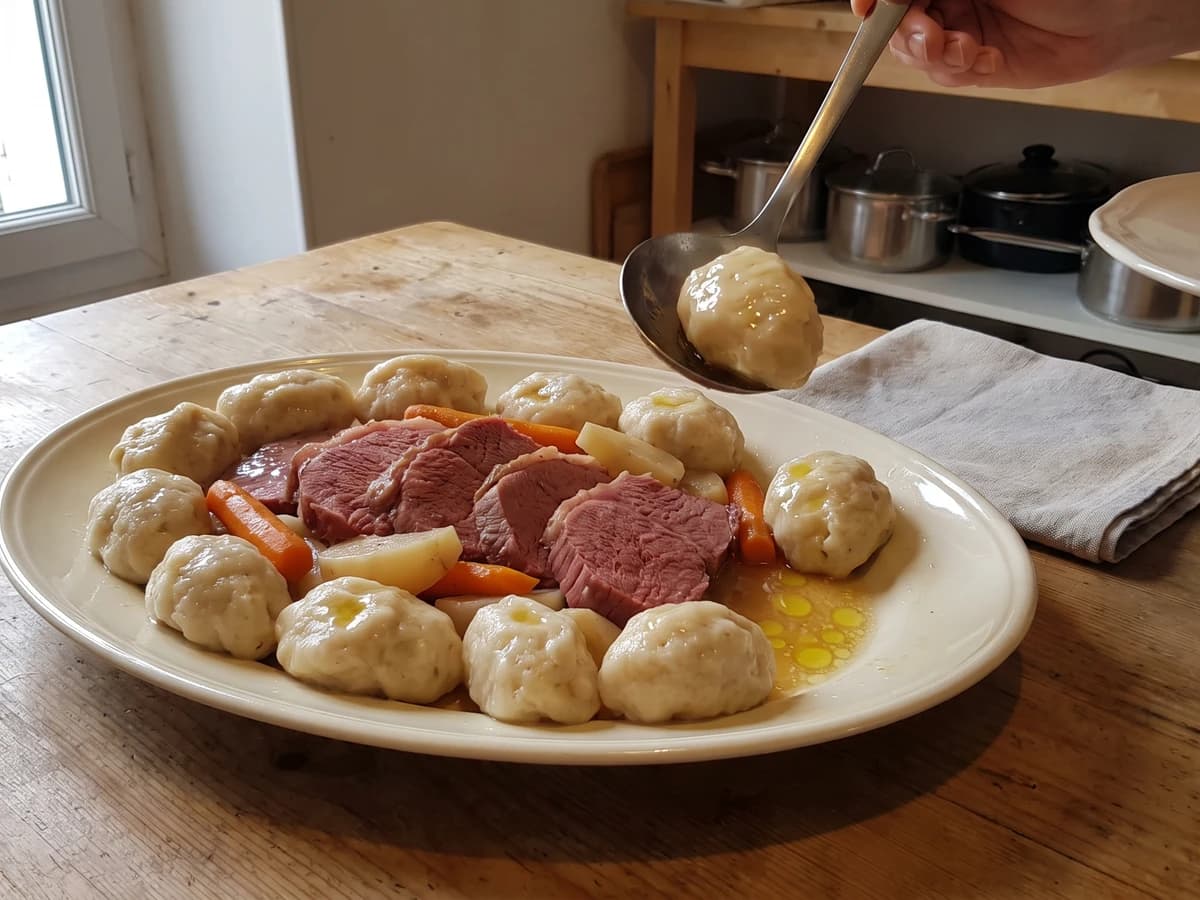
Suet Dumpling
Boulettes au suif, poached beside salt beef, turn equal weights of flour and finely chopped suet into tender, rich dumplings. Keep the beef liquor at a bare tremble and the old garnish works beautifully at home.
A cooking platform built around craft, culture, and the stories behind what we eat.
Created by Chef Juliette
Based on No. 190, A. Bread Panada, from Le Guide Culinaire (1907) by Auguste Escoffier
Panade au pain is bread, milk, salt, heat, and attention: stir until the paste releases cleanly, butter it against a skin, and you have the quiet binder behind tender French farces.
Panade au pain (bread panada) teaches the quiet discipline behind a tender farce, the seasoned stuffing or forcemeat of the classical kitchen. Absorption is only the beginning. The panade is ready when brisk heat and steady stirring make it leave the spatula clean. Stop while it still clings and it remains wet ballast; cook until it gathers, and it binds without announcing itself.
The source's half-pound bread batch belonged to a kitchen feeding more people and assumed a brisk range, a sturdy spatula, and a buttered platter waiting the instant the paste was done. Here the batch is halved exactly for one home preparation, with a heavy saucepan and responsive burner doing the work. There is no need to invent a stockpot kept hot, a saucier at the elbow, or a salamander, because this entry calls on none of them. The large platter is brigade scaffolding and may shrink. The original ratio, brisk cooking, and buttered surface are the dish, and they stay.
Once cooled, the panade should be pale, dense, and supple, with no leathery skin and no loose milk. Watch the spatula, not the clock: its clean release decides the panade.
Panade au pain belongs to the French classical garde-manger, particularly the Parisian grand-kitchen tradition that organized farces and their binders into precise families. Household cooks had long softened bread with liquid rather than waste it, but the professional canon turned that thrift into measured structure for stuffings, quenelles, and forcemeats. Despite its modest appearance, this panade was never intended as a side dish by itself; it is a finished component whose purpose is tenderness and moisture.
Quantity
About 2 lightly packed cups (475 ml / 113 g)
crusts removed and torn into fine crumbs
Quantity
1/2 cup plus 1 1/2 tablespoons (142 ml / 146 g)
Quantity
1 1/4 teaspoons (6 ml / 7 g)
Quantity
2 teaspoons (10 ml / 9 g)
very soft, divided
| Ingredient | Quantity |
|---|---|
| soft white bread crumbcrusts removed and torn into fine crumbs | About 2 lightly packed cups (475 ml / 113 g) |
| whole milk | 1/2 cup plus 1 1/2 tablespoons (142 ml / 146 g) |
| fine salt | 1 1/4 teaspoons (6 ml / 7 g) |
| unsalted buttervery soft, divided | 2 teaspoons (10 ml / 9 g) |
Rub half the softened butter in a thin, complete film over an 8-inch (20 cm) shallow plate or small platter. Keep the remaining butter soft for the surface of the panade. Have the plate beside the stove before you begin, because the finished paste waits for no one.
Bring the whole milk to a full boil in a heavy 1 1/2-quart (1.5 L) saucepan. Mix the bread crumb and salt together, then add them to the boiling milk all at once. Pull the pan from the burner briefly and press, fold, and turn the crumb until every drop of milk has been absorbed and no dry pocket remains, about 30 to 60 seconds. Crush any stubborn lump against the side of the pan rather than adding more liquid.
Return the saucepan to medium-high heat, the honest home equivalent of the source's brisk fire. Stir firmly and without pause, scraping the base and corners, until the paste becomes very thick, gathers into one mass, and no longer clings to the working end of the spatula, about 4 to 6 minutes. Draw the spatula through the centre and lift it: the channel should remain open for a moment and the end should emerge almost clean. This is the principle that decides the dish. If the paste still smears heavily, don't add extra bread. Lower the heat one notch and continue stirring so the excess moisture can cook away evenly. If a tan patch begins catching on the base, lift the pan from the burner for several strokes; if it has burned, transfer only the pale paste to a clean saucepan and leave the dark film behind. Ça se rattrape, provided the burnt layer isn't stirred through.
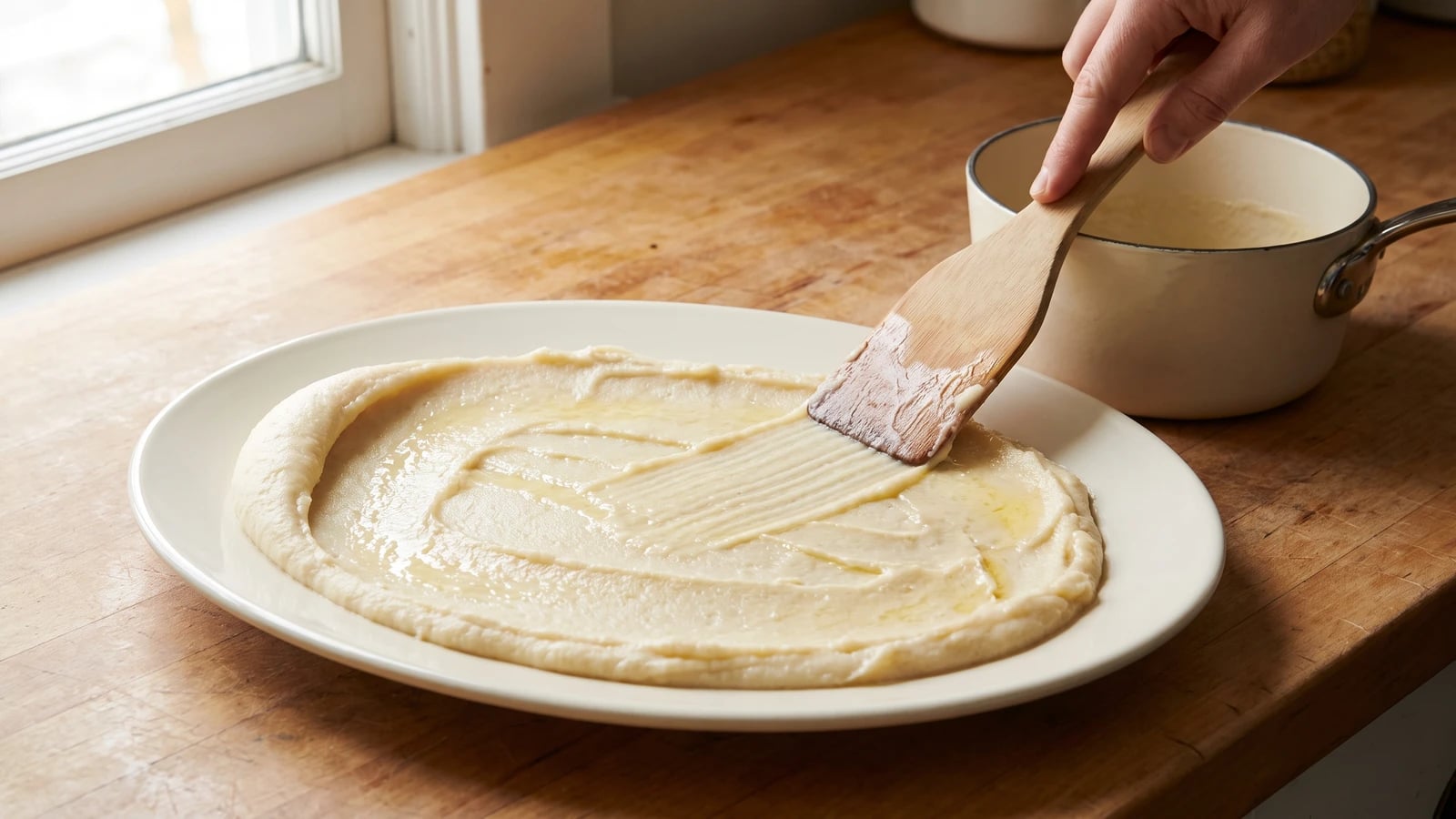
Turn the panade immediately onto the buttered plate and spread it about 1/2 inch (1.25 cm) thick. Rub the remaining softened butter lightly over the entire exposed surface, right to the edges. The butter forms an unbroken barrier against the air, which is what prevents a dry skin. If a small patch does harden, peel it away after cooling rather than beating the leathery piece back into the farce; the soft panade underneath remains perfectly usable.
Let the panade cool until completely cold and firm, about 30 minutes. It should remain pale and supple, holding together when lifted without feeling wet or crumbly. Use it in the quantity called for by the farce you are making, or cover and refrigerate promptly. Don't seal the plate while the panade is warm, because trapped condensation loosens the paste.
1 serving (about 250g)
Culinary guides, cultural storytelling, and the editorial depth that makes cooking meaningful.
Discover Culinary ExplorerChef Juliette
Boulettes au suif, poached beside salt beef, turn equal weights of flour and finely chopped suet into tender, rich dumplings. Keep the beef liquor at a bare tremble and the old garnish works beautifully at home.

Chef Juliette
Bread, flour, frangipane, and rice become four cool, supple panades for binding forcemeats, each changing body and flavor while preserving tenderness. The finest Mousselines need none, and knowing that distinction is the lesson.

Chef Juliette
Panade de farine teaches the drying stroke behind pâte à choux: flour meets boiling buttered water, then stays over the fire until the paste gathers, smooths, and quits the pan cleanly.

Chef Juliette
Panade frangipane turns flour, yolks, butter, and milk into a silken classical binder. Strain before heat, whisk through five gentle minutes, then cover the surface closely as it cools.