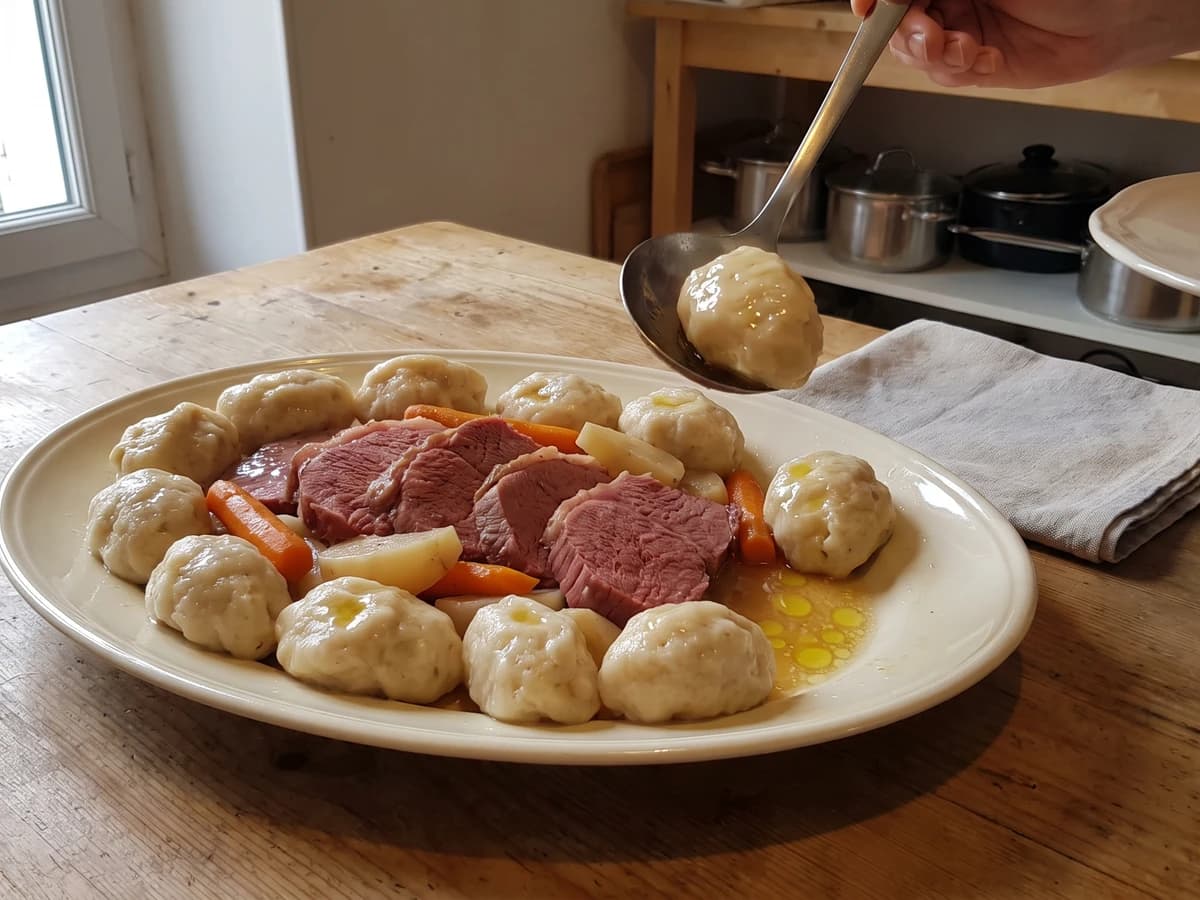
Chef Juliette
Suet Dumpling
Boulettes au suif, poached beside salt beef, turn equal weights of flour and finely chopped suet into tender, rich dumplings. Keep the beef liquor at a bare tremble and the old garnish works beautifully at home.
A cooking platform built around craft, culture, and the stories behind what we eat.
Created by Chef Juliette
Based on No. 192, C. Frangipan Panada, from Le Guide Culinaire (1907) by Auguste Escoffier
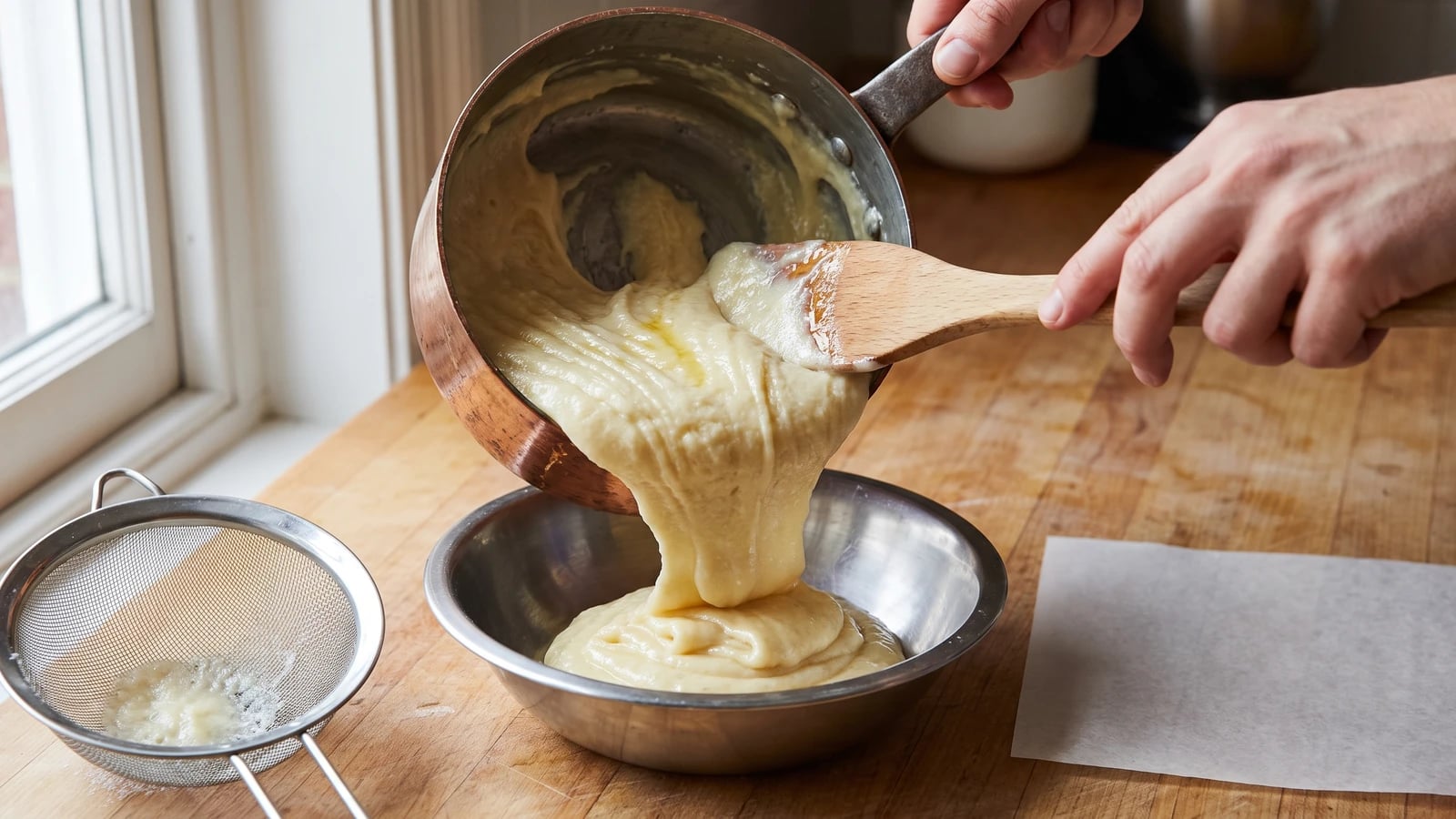
Panade frangipane turns flour, yolks, butter, and milk into a silken classical binder. Strain before heat, whisk through five gentle minutes, then cover the surface closely as it cools.
Panade frangipane (a rich flour, yolk, butter, and milk binder) teaches a rule that runs through the classical kitchen: a binder must disappear into the mixture it supports. It should be smooth, concentrated, and fully cold, holding a stuffing or forcemeat together without announcing flour. The one true thing to know before touching the pan is simple: strain the mixture while it is still fluid, before heat can set a single lump.
The original formula assumed a saucier could stand over a small stewpan with undivided attention and that several preparations waited to receive the full batch. A home kitchen needs the same attention, not the same quantity. This version halves the flour, yolks, butter, and milk exactly, then measures the book's little salt, pepper, and nutmeg so one cook can season with confidence. No stockpot or salamander belongs to this entry; a fine sieve, a small heavy saucepan, and a steady whisk are the honest equivalents.
Gradual mixing, straining, and the full five-minute cooking are the dish itself. They stay. A separate cook tending the fire is brigade scaffolding, so that goes. Keep the heat controlled, protect the surface as the panade cools, and above all, strain before the saucepan meets the flame.
Panades belong to the French classical brigade's forcemeat bench rather than to one regional larder, where bread or flour preparations were used to bind quenelles, croquettes, and stuffings without making them heavy. The frangipane name can mislead a pastry cook: this preparation contains no almonds and is not crème frangipane, but a yolk-, butter-, and milk-enriched flour panade. From the grand kitchen it passed naturally into cuisine bourgeoise, where the same binder brought cohesion and tenderness to home stuffings.
Quantity
1/2 cup (120 ml / 57 g)
Quantity
2 (about 2 tablespoons / 36 g)
Quantity
3 tablespoons (45 ml / 43 g)
melted and kept warm
Quantity
9 1/2 tablespoons (140 ml / 145 g), plus up to 1 tablespoon (15 ml / 15 g) only if needed for rescue
Quantity
1/4 teaspoon (1.25 ml / 1.5 g)
Quantity
1/16 teaspoon (0.3 ml / 0.15 g)
Quantity
1/16 teaspoon (0.3 ml / 0.1 g)
| Ingredient | Quantity |
|---|---|
| sifted all-purpose flour | 1/2 cup (120 ml / 57 g) |
| large egg yolks | 2 (about 2 tablespoons / 36 g) |
| unsalted buttermelted and kept warm | 3 tablespoons (45 ml / 43 g) |
| whole milk | 9 1/2 tablespoons (140 ml / 145 g), plus up to 1 tablespoon (15 ml / 15 g) only if needed for rescue |
| fine salt | 1/4 teaspoon (1.25 ml / 1.5 g) |
| finely ground pepper | 1/16 teaspoon (0.3 ml / 0.15 g) |
| freshly grated nutmeg | 1/16 teaspoon (0.3 ml / 0.1 g) |
Bring the measured milk just to the boil in a small pan, then take it off the heat and keep it close. Melt the butter separately and let it settle until warm and liquid, not fiercely hot. Hot milk dilutes the flour paste cleanly, while butter that is merely warm joins the yolks instead of cooking them.
Put the sifted flour into a medium heatproof bowl. Add the yolks, salt, pepper, and nutmeg, then work them together with a sturdy whisk until no pockets of dry flour remain. The mixture will be thick and rather unpromising. It is exactly right.
Whisk in the melted butter by degrees, fully incorporating each addition before adding more. Once the paste is glossy, pour in the boiled milk slowly, whisking without pause; begin with a thin trickle to loosen the base, then add the rest more freely. This sequence matters: butter first builds the rich foundation, while gradual milk keeps the yolks and flour smooth.
Pass the fluid mixture through a fine-mesh sieve into a clean 1-quart saucepan, pressing it through with a flexible spatula. Scrape the underside of the sieve into the pan. Do this before applying heat, because the sieve can remove a raw flour knot but cannot politely undo one after it cooks.
Set the saucepan over medium-low heat and whisk gently across the bottom and into every corner. The mixture will thicken quickly, turn glossy, and begin leaving clear tracks behind the whisk. When the first slow bubbles break the surface, lower the heat and cook for five full minutes, whisking steadily; that time cooks out the raw flour and gives the panade its binding strength. If it knots into lumps, lift it from the heat and whisk firmly. Ça se rattrape: if the lumps persist, work in the extra warm milk one teaspoon at a time, press the panade through the cleaned sieve, then return it to gentle heat to complete the five minutes. If the bottom catches, stop scraping immediately and transfer the unscorched portion to a clean pan.
Scrape the finished panade into a shallow bowl and smooth the surface. Press parchment paper directly against it from edge to edge, leaving no pocket of air where a skin can form. Let it lose its fierce heat for no more than twenty minutes, then refrigerate until completely cold. Use it only when cold, because a warm panade softens the fat in a stuffing or forcemeat and defeats the texture it was made to protect.
1 serving (about 63g)
Culinary guides, cultural storytelling, and the editorial depth that makes cooking meaningful.
Discover Culinary ExplorerChef Juliette
Boulettes au suif, poached beside salt beef, turn equal weights of flour and finely chopped suet into tender, rich dumplings. Keep the beef liquor at a bare tremble and the old garnish works beautifully at home.

Chef Juliette
Bread, flour, frangipane, and rice become four cool, supple panades for binding forcemeats, each changing body and flavor while preserving tenderness. The finest Mousselines need none, and knowing that distinction is the lesson.

Chef Juliette
Panade au pain is bread, milk, salt, heat, and attention: stir until the paste releases cleanly, butter it against a skin, and you have the quiet binder behind tender French farces.

Chef Juliette
Panade de farine teaches the drying stroke behind pâte à choux: flour meets boiling buttered water, then stays over the fire until the paste gathers, smooths, and quits the pan cleanly.