Chef Juliette
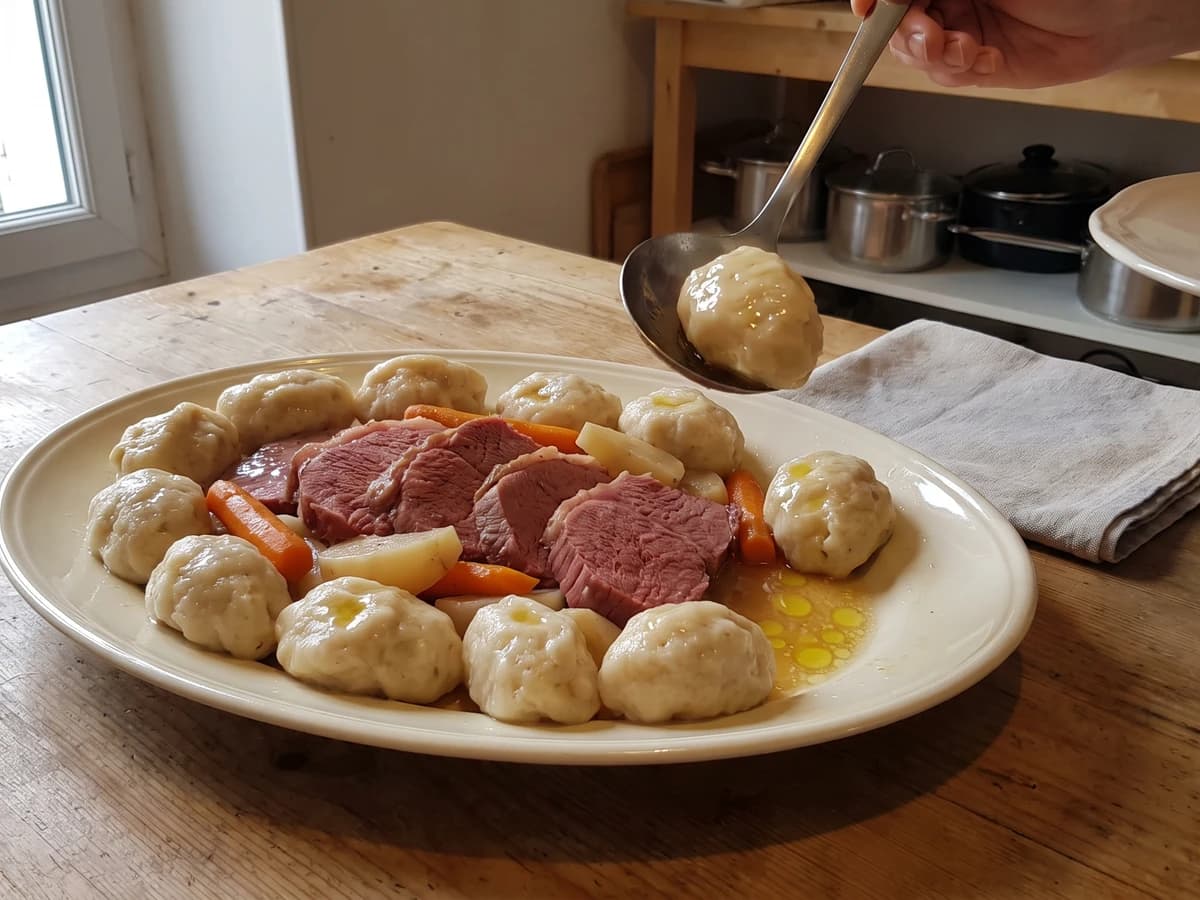
Suet Dumpling
Boulettes au suif, poached beside salt beef, turn equal weights of flour and finely chopped suet into tender, rich dumplings. Keep the beef liquor at a bare tremble and the old garnish works beautifully at home.
A cooking platform built around craft, culture, and the stories behind what we eat.

Created by Chef Juliette
Based on No. 2040, Asperges au Gratin, from Le Guide Culinaire (1907) by Auguste Escoffier
Asperges au Gratin turns one fierce burst of top heat into discipline: tender green stalks stay distinct while Mornay and Parmesan bronze over the tips, rich, savory, and ready before asparagus loses its bite.
Asperges au Gratin (asparagus glazed with Mornay and Parmesan) teaches one true thing: a gratin is not always a bake. Here the asparagus is already tender before it meets the heat, so the sauce must bronze in moments or the stalks go soft and stringy.
The original entry begins at the pass. It assumed cooked asparagus from the vegetable station, a saucier holding Mornay ready, stock never off the fire for the kitchen's sauce work, brigade portions to arrange, and a salamander fierce enough to color cheese almost on contact. At home, blanch one four-serving bunch, warm the finished Mornay gently, and preheat the broiler until it means business. A buttered foil band replaces the buttered paper because parchment can scorch beneath a domestic broiler. The staff and holding pots were scaffolding and can go; the ordered rows, two coatings of sauce, protective band, and swift glaze are the dish and must stay. One cook, one stove, one evening.
Done properly, the heads emerge beneath an ivory-gold cap freckled with Parmesan, while the uncovered stalks remain green, distinct, and tender beneath the knife. The one step that decides everything is the final glaze: broiler fully hot, platter close, and your eyes on the cheese.
Asperges au Gratin belongs to the Parisian classical dining room rather than to one provincial larder: whole spears were cooked by the vegetable station, sauced at the pass, and colored only as the plate went out. The method traveled easily into cuisine bourgeoise and spring celebration tables, where asparagus remained visibly whole while Mornay supplied the richness expected of a company dish. Its name is often misunderstood, because this gratin is not a casserole baked through; it is a last-minute glaze under fierce top heat.
Quantity
About 24 spears, 2 pounds (900 g)
woody ends removed and lower stalks peeled
Quantity
2 quarts (1.9 liters / 1.9 kg)
Quantity
1 tablespoon (15 ml / 18 g)
Quantity
1 cup (240 ml / 250 g)
finished and warm
Quantity
1/4 cup (60 ml / 22 g)
finely grated
Quantity
1 tablespoon (15 ml / 14 g)
melted, for the foil shield
Quantity
Up to 2 tablespoons (30 ml / 31 g)
warmed, only if needed to loosen the Mornay sauce
| Ingredient | Quantity |
|---|---|
| medium-thick fresh asparagus spearswoody ends removed and lower stalks peeled | About 24 spears, 2 pounds (900 g) |
| water | 2 quarts (1.9 liters / 1.9 kg) |
| fine sea salt | 1 tablespoon (15 ml / 18 g) |
| Mornay saucefinished and warm | 1 cup (240 ml / 250 g) |
| Parmesanfinely grated | 1/4 cup (60 ml / 22 g) |
| unsalted buttermelted, for the foil shield | 1 tablespoon (15 ml / 14 g) |
| whole milk (optional)warmed, only if needed to loosen the Mornay sauce | Up to 2 tablespoons (30 ml / 31 g) |
Set a broiler rack about 5 inches (13 cm) below the heat and preheat the broiler on its highest setting for at least 10 minutes. Cut a band of heavy-duty foil wide enough to cover the lower two-thirds of the asparagus once arranged, then brush one side with the melted butter. Use a shallow broiler-safe platter, not ordinary tableware; the final heat is fierce and there is no time to discover that a favorite dish dislikes it.
Trim away the woody ends so the asparagus fits the platter neatly. Peel the fibrous skin from the lower third of each medium or thick stalk with a vegetable peeler, leaving the tender tips untouched. Keep the spears close in length, because orderly rows expose the heads evenly to the broiler and prevent one end from coloring while another waits.
Bring the water and salt to a full boil in a wide pan. Add the asparagus and cook for 3 to 5 minutes, depending on thickness, until a knife enters the thickest part with slight resistance. Stop just short of fully tender because the broiler supplies the final minute of cooking. Lift the spears onto clean towels and dry them thoroughly, especially around the tips; water trapped there thins the Mornay and spoils its hold.
Warm the finished Mornay sauce over very gentle heat, stirring until it falls from the spoon in a thick, smooth ribbon. It must coat the asparagus without sitting in a stiff mound. If it is too tight, whisk in the warm milk one teaspoon at a time. If overheating makes it greasy or grainy, take it off the heat, put a tablespoon of warm milk in a clean saucepan, and whisk the sauce into it gradually. Ça se rattrape. Do not let it boil.
Arrange the hot, dry asparagus in four tidy, slightly overlapping rows on the platter, with every head pointing in the same direction. As each row goes down, spoon a little Mornay over just its heads, using about one-quarter of the sauce in all. This first coating follows the source's sequence and ensures that every row receives sauce before the final covering goes on.
Lay the prepared foil band buttered-side down over the lower two-thirds of the arranged asparagus, leaving the heads and upper stalks exposed. Coat that uncovered portion evenly with the remaining Mornay, taking the sauce to the edge of the shield without flooding the platter. Sprinkle the Parmesan in a fine, even layer. Heavy patches brown before the sauce beneath them heats, so distribute it with your fingers rather than tipping it on in one heap.
Slide the platter beneath the fully heated broiler and glaze for 1 to 2 minutes, rotating once if necessary, until the Parmesan blisters and the Mornay turns mottled ivory and gold. Do not walk away. If little color appears after 90 seconds, remove the platter, let the broiler heat harder, then return it rather than slowly cooking the asparagus beneath weak heat. Ça se rattrape. Lift away the foil with tongs and serve immediately, while the sauce is glossy and the stalks remain distinct. À table!
1 serving (about 290g)
Culinary guides, cultural storytelling, and the editorial depth that makes cooking meaningful.
Discover Culinary ExplorerChef Juliette
Boulettes au suif, poached beside salt beef, turn equal weights of flour and finely chopped suet into tender, rich dumplings. Keep the beef liquor at a bare tremble and the old garnish works beautifully at home.

Chef Juliette
Bread, flour, frangipane, and rice become four cool, supple panades for binding forcemeats, each changing body and flavor while preserving tenderness. The finest Mousselines need none, and knowing that distinction is the lesson.

Chef Juliette
Panade au pain is bread, milk, salt, heat, and attention: stir until the paste releases cleanly, butter it against a skin, and you have the quiet binder behind tender French farces.

Chef Juliette
Panade de farine teaches the drying stroke behind pâte à choux: flour meets boiling buttered water, then stays over the fire until the paste gathers, smooths, and quits the pan cleanly.