Chef Juliette
Suet Dumpling
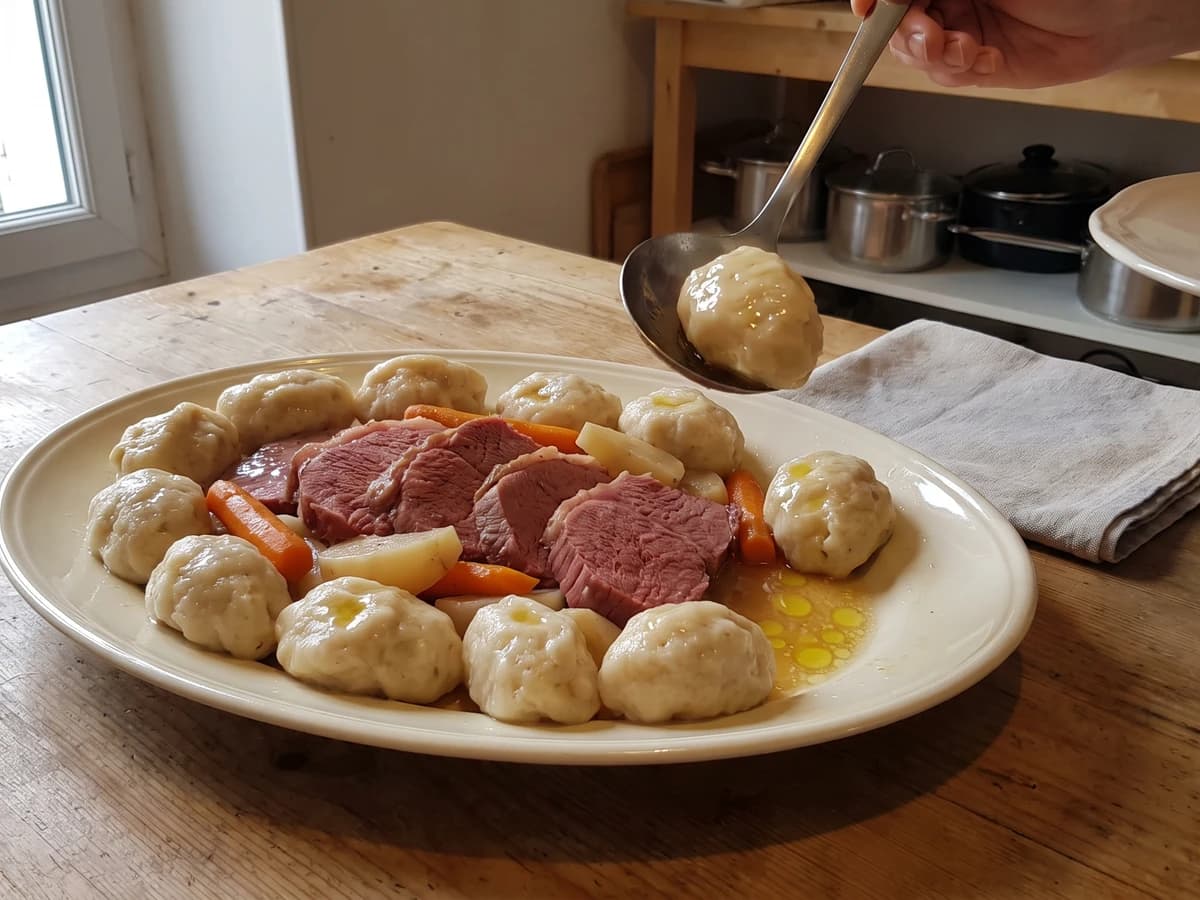
Boulettes au suif, poached beside salt beef, turn equal weights of flour and finely chopped suet into tender, rich dumplings. Keep the beef liquor at a bare tremble and the old garnish works beautifully at home.
A cooking platform built around craft, culture, and the stories behind what we eat.
Created by Chef Juliette
Based on No. 2054, Cardons à la Mornay, from Le Guide Culinaire (1907) by Auguste Escoffier
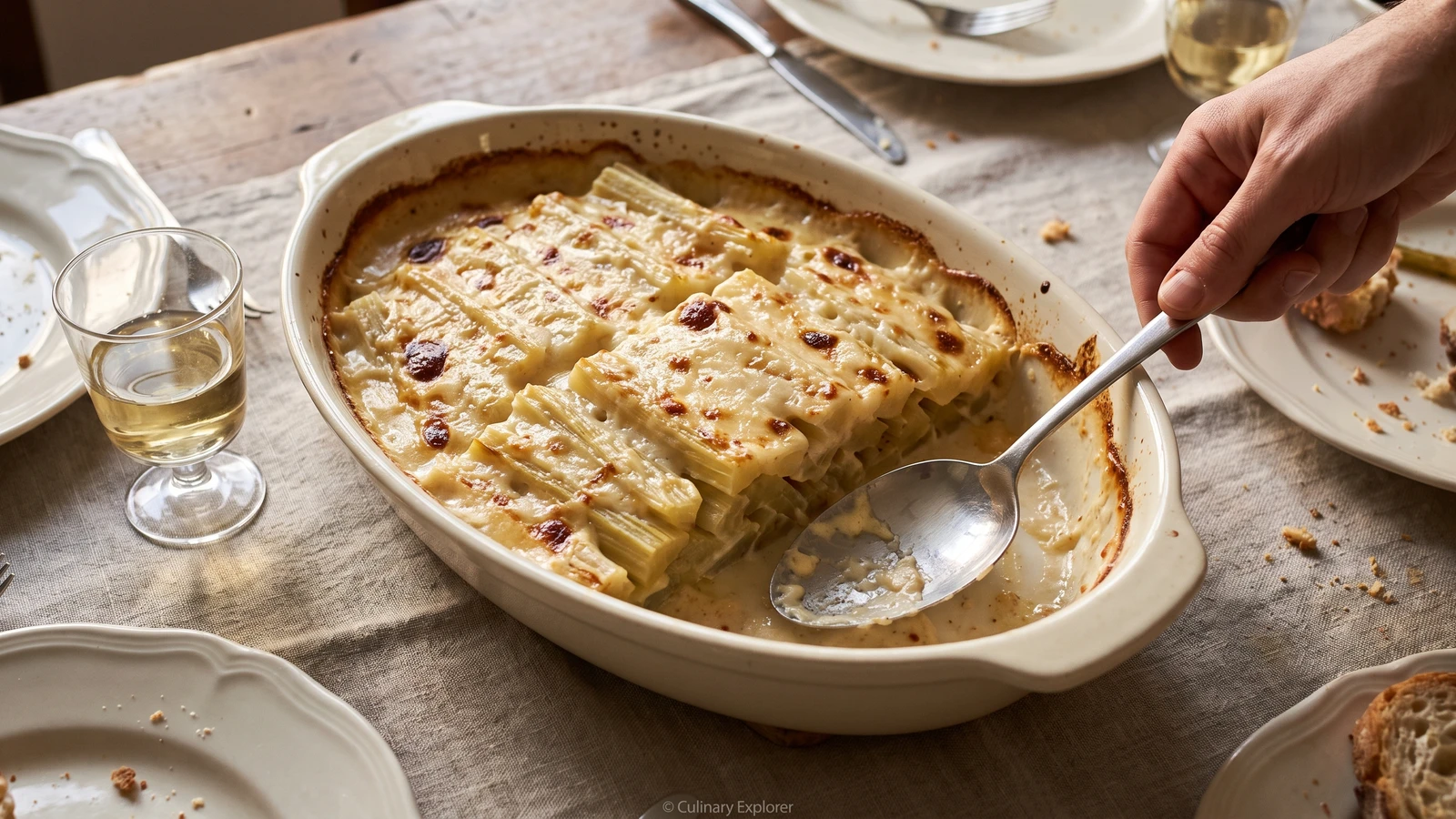
Cardons à la Mornay turns the thistle’s pale ribs into a tender pyramid under ivory Mornay, then bronzes it in one swift movement before the sauce can split.
Cardons à la Mornay (cardoons glazed with cheese-enriched béchamel) teaches the difference between cooking and glazing. The cardoon must be completely tender, well drained, and still hot before the sauce touches it; the broiler will bronze the Mornay, but it won't soften a stubborn rib. That is the one true thing to carry to the stove.
The source is brigade shorthand: keep the same pyramid, replace the demi-glace (half-glaze sauce) with Mornay Sauce, glaze quickly, and send it. It assumed a vegetable station with cooked cardoons ready, a saucier on staff, a stockpot and demi-glace never far from the fire for related preparations, and a salamander fierce enough to color sauce in moments. Here, one bunch feeds four, the stock and demi-glace leave because this entry expressly replaces them, the saucier's finished Mornay Sauce is warmed in one small pan, and a fully heated household broiler stands in for the salamander. Bundling brigade quantities and holding them for service was scaffolding, so it goes. The tender simmer, low pyramid, Mornay coat, and immediate glaze are the dish, so they stay. One cook, one stove, one evening.
When it lands, pale cardoon ribs sit beneath an ivory sauce mottled butter-gold at the crown, with a faint artichoke bitterness against the cheese. Mornay left under heat can split, so the final relay must be continuous: sauce, coat, broiler, table. Have the broiler fully hot before you warm the sauce; that is the step that decides the gratin.
Cardoons belong especially to winter tables around Lyon and through neighboring Dauphiné, where generations have peeled and simmered the cultivated thistle for generous holiday dishes. Lyon's best-known family gratin often uses marrow, while cardons à la Mornay follows the grand-kitchen branch: the vegetable is built into a formal pyramid, coated with Mornay, and glazed at the last moment. Its celery-like appearance misleads; cardoon is a thistle, and patient cooking is what turns the stringy, bitter ribs tender and faintly artichoke-sweet.
Quantity
1 large head, about 2½ pounds (1.1 kg)
leaves and tough base removed
Quantity
3 quarts (2.8 L / 2.8 kg)
plus more as needed
Quantity
1, yielding about 3 tablespoons (45 ml / 45 g) juice
halved and squeezed, halves reserved
Quantity
3 tablespoons (45 ml / 24 g)
Quantity
1 tablespoon (15 ml / 18 g)
Quantity
1 tablespoon (15 ml / 14 g)
softened
Quantity
2 cups (480 ml / about 500 g)
hot
Quantity
2 tablespoons (30 ml / 30 g)
for rescuing or loosening the sauce
| Ingredient | Quantity |
|---|---|
| fresh cardoonleaves and tough base removed | 1 large head, about 2½ pounds (1.1 kg) |
| cold waterplus more as needed | 3 quarts (2.8 L / 2.8 kg) |
| large lemonhalved and squeezed, halves reserved | 1, yielding about 3 tablespoons (45 ml / 45 g) juice |
| all-purpose flour | 3 tablespoons (45 ml / 24 g) |
| fine sea salt | 1 tablespoon (15 ml / 18 g) |
| unsalted buttersoftened | 1 tablespoon (15 ml / 14 g) |
| finished Mornay Saucehot | 2 cups (480 ml / about 500 g) |
| cold heavy cream (optional)for rescuing or loosening the sauce | 2 tablespoons (30 ml / 30 g) |
Make a blanc (a flour-and-lemon cooking liquor): whisk the flour with about 1 cup (240 ml) of the measured cold water until perfectly smooth. Pour it into a wide pot with the remaining water, lemon juice, squeezed lemon halves, and salt. Keep the blanc cold while you trim the cardoons so every cut piece can go straight into it; exposed cardoon darkens quickly.
Wear gloves if the ribs are prickly. Separate the stalks, discard the leaves and hollow or bruised ends, then pull away every tough string with a peeler or paring knife, working along both faces and the edges. Cut the cleaned ribs into pieces about 4 inches (10 cm) long and place each one immediately in the blanc. Lay a round of parchment directly over the surface to keep them submerged.
Bring the cardoons and blanc slowly to a bare simmer, then cook gently for 35 to 50 minutes. They are ready when a knife enters the thickest piece without a fibrous tug; the broiler supplies color, not further cooking, so don't leave the ribs firm at the center. If the knife still catches, return them to the liquor and keep simmering. Ça se rattrape now, before the sauce goes on.
Set an oven rack 5 to 6 inches (13 to 15 cm) below the broiler and heat the broiler on high for at least 10 minutes. While the cardoons remain hot in their liquor, reach for the finished Mornay Sauce and warm it over the lowest heat, stirring continuously, just until it falls from the spoon in a broad ribbon. Never let it boil. If it becomes grainy or beads with butter, stop: put 1 tablespoon of cold cream in a clean saucepan and whisk the sauce into it one spoonful at a time off the heat, returning it to the faintest heat only after it smooths. Use the remaining cream only if needed.
Drain the cardoons thoroughly, discard the lemon halves, and blot each rib dry; trapped cooking liquor would thin the Mornay and delay the glaze. Butter a shallow broiler-safe gratin dish. Arrange the longest pieces side by side, center a shorter layer above them, then finish with a final narrow row to make the source's low pyramid. Coat the cardoons immediately with all the hot Mornay Sauce, covering the crown and sides without stirring.
Set the dish on a rimmed sheet pan and place it beneath the fully heated broiler. Glaze for 2 to 4 minutes, watching without interruption, until the Mornay bubbles at the rim and takes irregular butter-gold and deep bronze spots across the crown. If one side colors first, turn the dish once. At the first sign of butter beading around the edge, pull it out and blot only the free fat with the corner of a paper towel; never broil longer in an attempt to dry it. Bring the gratin directly to the table while the sauce is still glossy. À table!
1 serving (about 305g)
Culinary guides, cultural storytelling, and the editorial depth that makes cooking meaningful.
Discover Culinary ExplorerChef Juliette
Boulettes au suif, poached beside salt beef, turn equal weights of flour and finely chopped suet into tender, rich dumplings. Keep the beef liquor at a bare tremble and the old garnish works beautifully at home.

Chef Juliette
Bread, flour, frangipane, and rice become four cool, supple panades for binding forcemeats, each changing body and flavor while preserving tenderness. The finest Mousselines need none, and knowing that distinction is the lesson.

Chef Juliette
Panade au pain is bread, milk, salt, heat, and attention: stir until the paste releases cleanly, butter it against a skin, and you have the quiet binder behind tender French farces.

Chef Juliette
Panade de farine teaches the drying stroke behind pâte à choux: flour meets boiling buttered water, then stays over the fire until the paste gathers, smooths, and quits the pan cleanly.