Chef Juliette
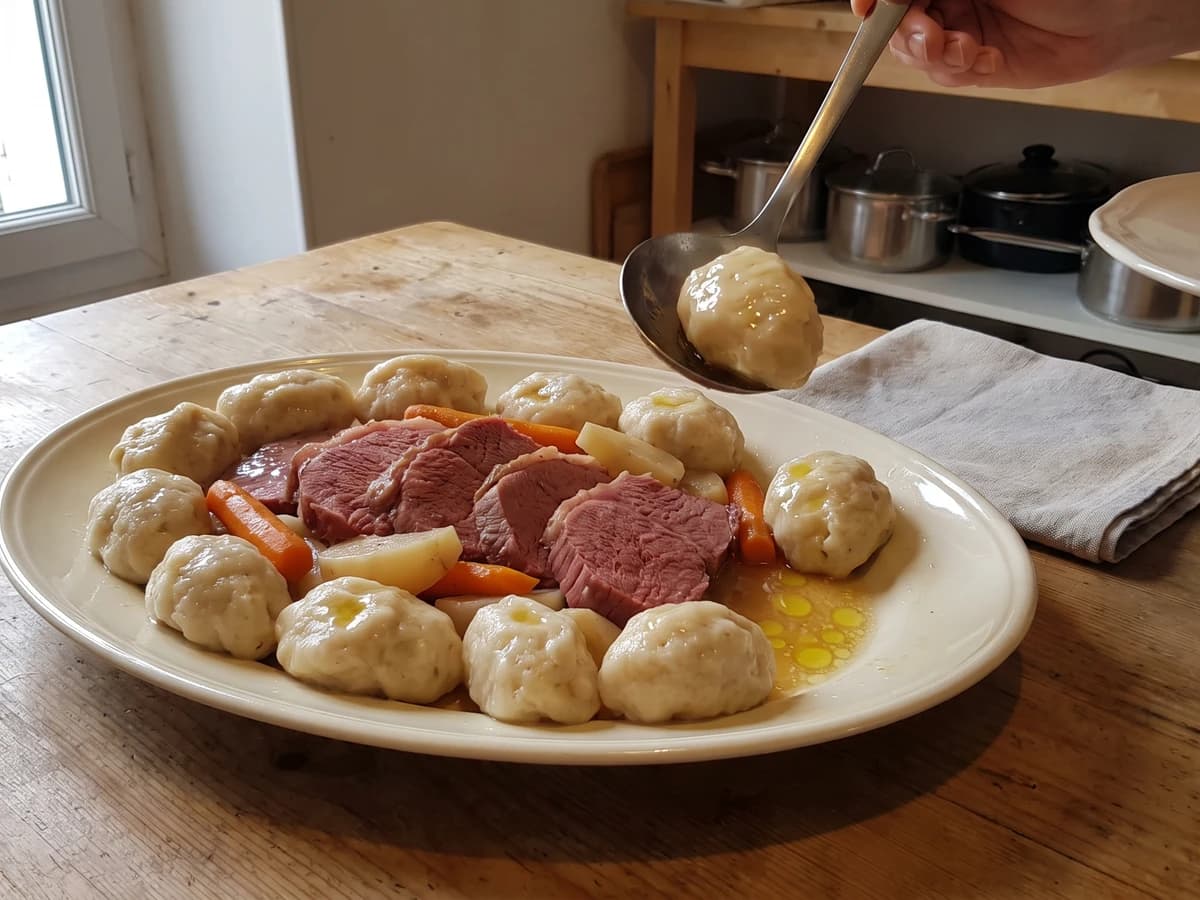
Suet Dumpling
Boulettes au suif, poached beside salt beef, turn equal weights of flour and finely chopped suet into tender, rich dumplings. Keep the beef liquor at a bare tremble and the old garnish works beautifully at home.
A cooking platform built around craft, culture, and the stories behind what we eat.
Created by Chef Juliette
Based on No. 2053, Cardons au Parmesan, from Le Guide Culinaire (1907) by Auguste Escoffier
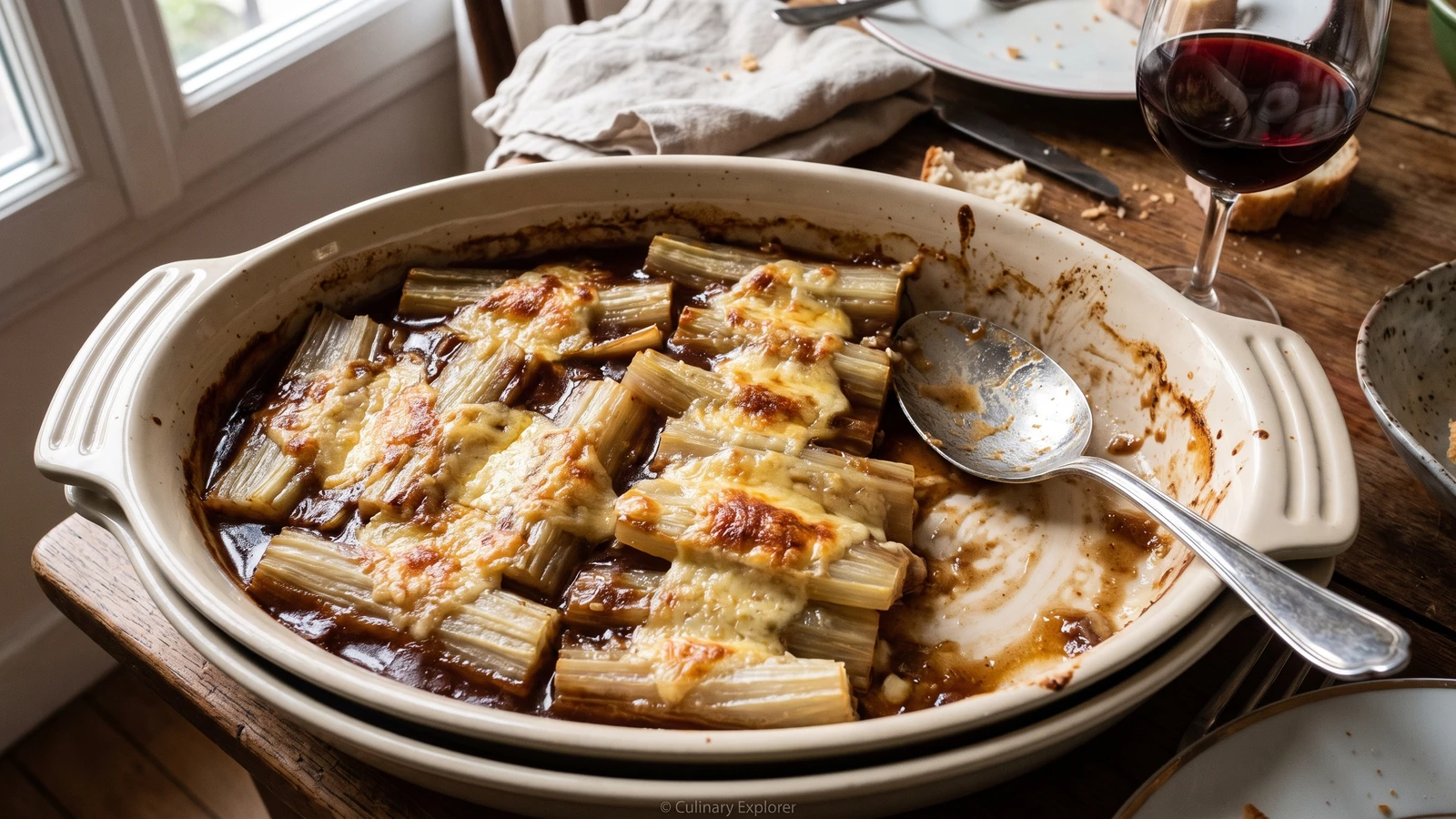
Cardons au Parmesan makes winter cardoons grand through discipline, not fuss: a low pyramid of tender stalks glossed layer by layer with demi-glace and Parmesan, then bronzed beneath fierce heat.
Cardons au Parmesan (cardoons glazed with demi-glace and Parmesan) teaches a severe little lesson: water is the enemy of a built sauce. The stalks come from a blanc, a flour-and-lemon cooking liquid that keeps them pale and tender, and they carry that liquid inside every groove. Drain them hard before they meet the demi-glace. If you remember one thing before touching a pan, remember that.
The original entry assumed cardoons already cooked, a saucier beside a pot of demi-glace, a salamander hot enough to glaze on command, and a pyramid large enough for service. At home, use prepared veal demi-glace, a broiler, and a low four-person pyramid the heat can reach evenly. Those are the honest equivalents. The separate sauce station and banquet height are brigade scaffolding, so they go. The successive layers of cardoon, a few drops of demi-glace, Parmesan, and the fast final glaze are the dish, so they stay.
Done properly, the cardoons remain ivory and faintly bitter beneath a glossy mahogany film and bronze Parmesan. Cooking well is not cooking fancy. Your decisive step comes before assembly: dry the cooked sections until no blanc weeps when you press them.
Cardoons belong especially to the winter and Christmas tables around Lyon, including the market gardens of Vaulx-en-Velin, where the pale ribbed stalks are prized for their delicate bitterness. Cardons au Parmesan marks the vegetable's passage into the classical grand kitchen: the stalks were arranged formally, moistened with demi-glace, and glazed under fierce heat, a French service method despite the Parmesan finish.
Quantity
1 large head, about 2 lb (900 g)
Quantity
12 cups (2.8 L / 2.8 kg), divided, plus more as needed
Quantity
2
halved
Quantity
¼ cup (60 ml / 30 g)
Quantity
1 tablespoon (15 ml / 18 g)
Quantity
1 cup (240 ml / about 250 g)
Quantity
¾ cup (180 ml / 70 g)
finely grated
| Ingredient | Quantity |
|---|---|
| fresh cardoon | 1 large head, about 2 lb (900 g) |
| cold water | 12 cups (2.8 L / 2.8 kg), divided, plus more as needed |
| lemonshalved | 2 |
| all-purpose flour | ¼ cup (60 ml / 30 g) |
| fine salt | 1 tablespoon (15 ml / 18 g) |
| prepared veal demi-glace | 1 cup (240 ml / about 250 g) |
| Parmesanfinely grated | ¾ cup (180 ml / 70 g) |
Fill a large bowl with 4 cups of the cold water and squeeze in one lemon. Separate the cardoon stalks, discard the leaves and hollow or badly bruised ribs, then pare away the prickly edges. Peel off the coarse strings as you would from celery, cut the stalks into even 3-inch (7.5 cm) sections, and drop each piece immediately into the lemon water. Cardoon darkens quickly, but the acid keeps it pale while you work.
Whisk the flour into the remaining 8 cups cold water in a wide nonreactive pot, working out every lump before the heat goes on. Add the salt and juice of the second lemon, then bring the blanc to a gentle simmer. Drain the cardoons from their holding water and add them to the pot. Lay a cartouche, a round of baking paper, directly on the surface to keep every piece submerged. Simmer gently for 35 to 45 minutes, until a small knife enters the thickest section without resistance but the stalk still holds its shape.
Heat the oven to 250°F (120°C). Lift the cardoons into a colander and leave them for 10 minutes, turning them once. Spread them over a clean towel, blot every groove, then transfer them to a bare baking sheet and dry them in the oven for 8 to 10 minutes without letting them colour. Press one piece with the towel: no milky blanc should appear. If it still weeps, return the pieces to the oven for another 5 minutes. Ça se rattrape. This drying is the step that decides whether the demi-glace clings or collapses into broth.
Warm the demi-glace in a small saucepan until it reaches nappé, the consistency that coats the back of a spoon and holds a clean line when you draw a finger through it. If it runs like stock, reduce it briskly for a few minutes. If it is as stiff as paste, whisk in hot water one teaspoon at a time. The sauce must be fluid enough to fall in drops yet concentrated enough to stay on the stalks.
Heat the broiler and place a rack 5 to 6 inches (13 to 15 cm) below it. Arrange one-third of the cardoon sections parallel to one another in a shallow ovenproof gratin dish. Wet the row sparingly with demi-glace and scatter it with Parmesan. Lay the next row crosswise, then repeat the sauce and cheese; finish with the remaining cardoons as a low, stable pyramid. Cover the whole with the remaining demi-glace and Parmesan. If pale liquid gathers around the base, pour it into the saucepan, reduce it back to nappé, and spoon it over again. Never apologize at your own table. Fix the sauce and carry on.
Set the dish beneath the broiler and glaze it quickly for 2 to 4 minutes, rotating once if your broiler colours unevenly. The Parmesan should melt into bronze patches while the demi-glace bubbles thickly around the edges. Don't walk away. If the cheese colours before the sauce bubbles, lower the dish by one rack and give it another minute. Bring the gratin straight to the table in its dish. À table!
1 serving (about 230g)
Culinary guides, cultural storytelling, and the editorial depth that makes cooking meaningful.
Discover Culinary ExplorerChef Juliette
Boulettes au suif, poached beside salt beef, turn equal weights of flour and finely chopped suet into tender, rich dumplings. Keep the beef liquor at a bare tremble and the old garnish works beautifully at home.

Chef Juliette
Bread, flour, frangipane, and rice become four cool, supple panades for binding forcemeats, each changing body and flavor while preserving tenderness. The finest Mousselines need none, and knowing that distinction is the lesson.

Chef Juliette
Panade au pain is bread, milk, salt, heat, and attention: stir until the paste releases cleanly, butter it against a skin, and you have the quiet binder behind tender French farces.

Chef Juliette
Panade de farine teaches the drying stroke behind pâte à choux: flour meets boiling buttered water, then stays over the fire until the paste gathers, smooths, and quits the pan cleanly.