Chef Juliette
Suet Dumpling
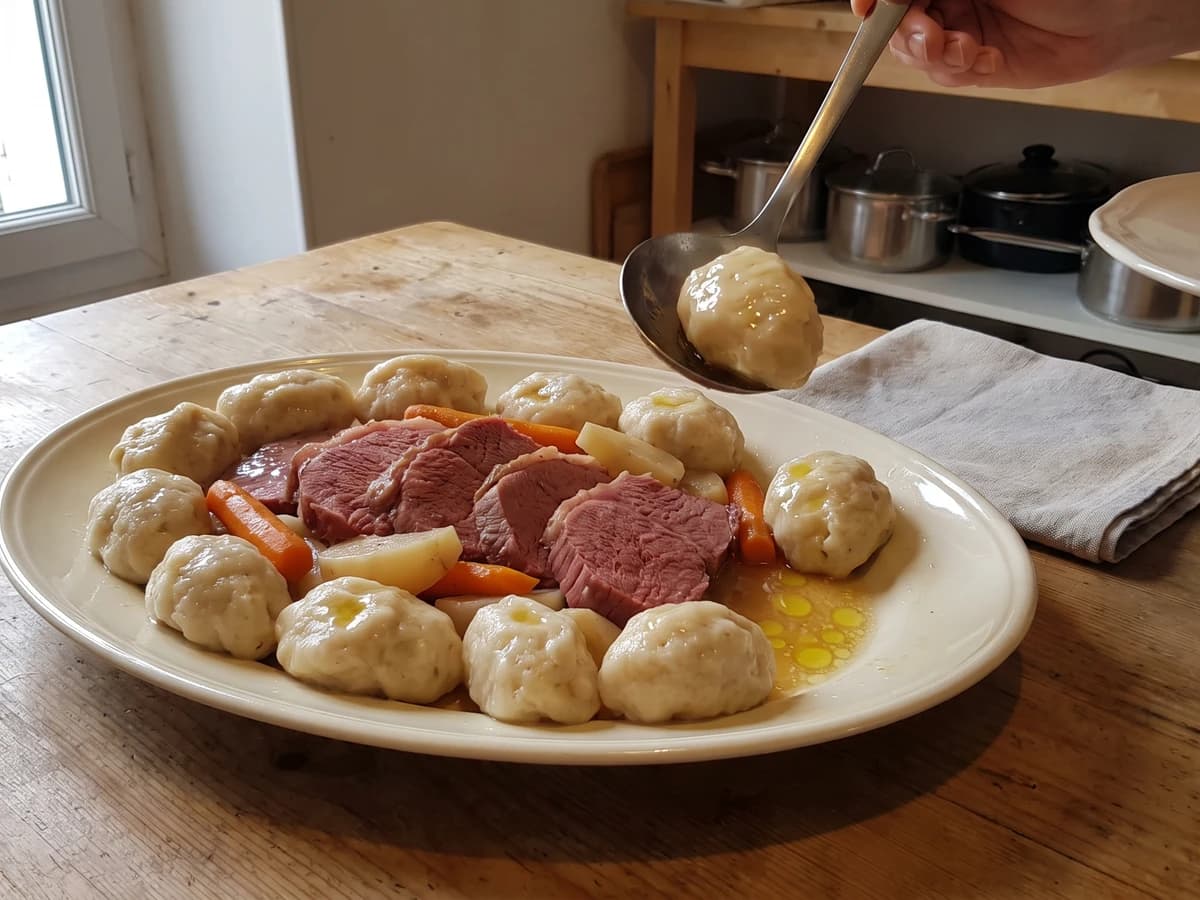
Boulettes au suif, poached beside salt beef, turn equal weights of flour and finely chopped suet into tender, rich dumplings. Keep the beef liquor at a bare tremble and the old garnish works beautifully at home.
A cooking platform built around craft, culture, and the stories behind what we eat.
Created by Chef Juliette
Based on No. 2044, Sprew with Butter (Pointes d’Asperges), from Le Guide Culinaire (1907) by Auguste Escoffier
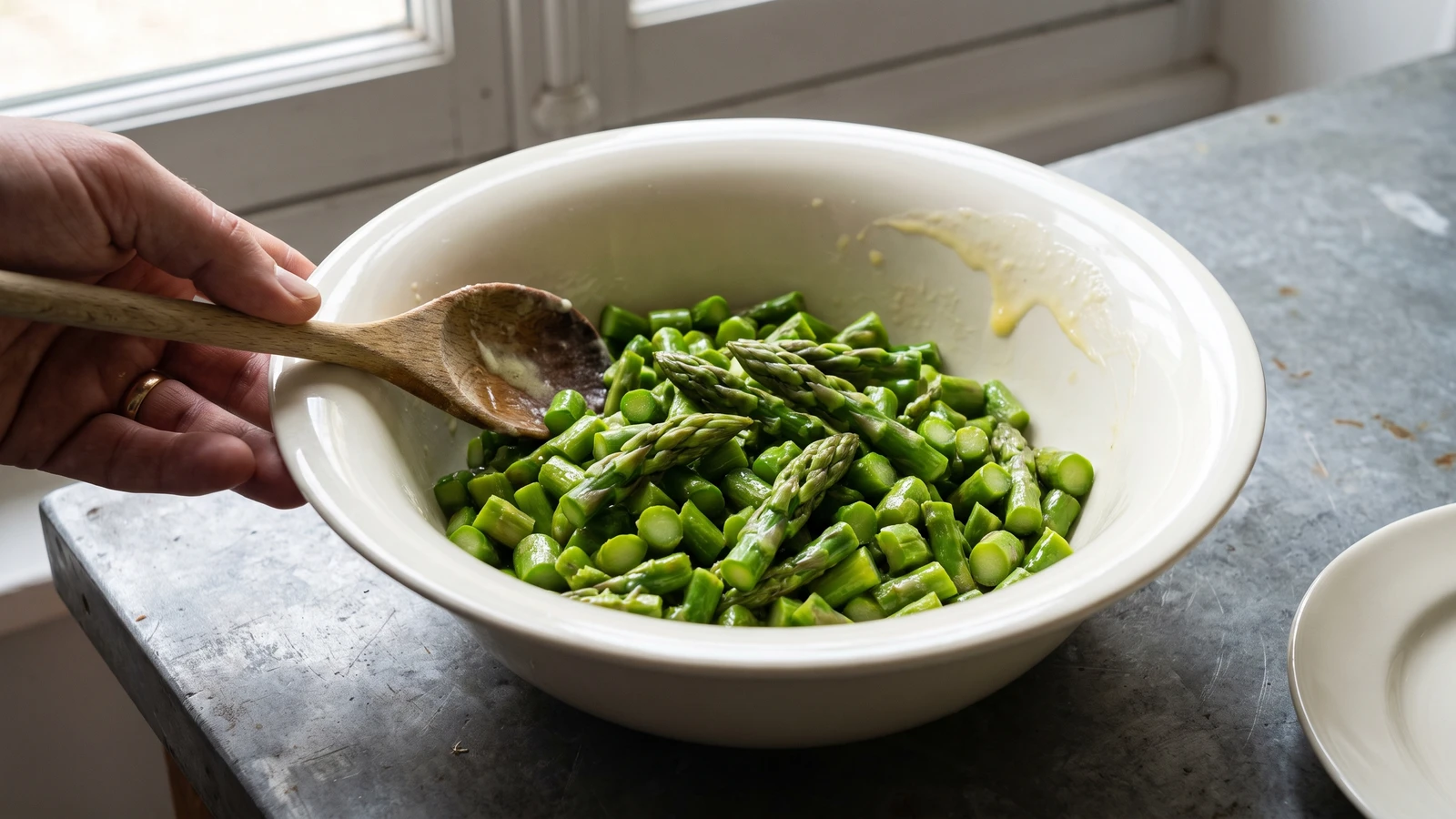
Vivid green asparagus tips crown pea-sized stalk pieces, cooked in fiercely boiling salted water, dried in the pan, and bound with butter only after the flame is gone.
Pointes d’Asperges (sprew, or green asparagus tips with butter) teaches a small but exact lesson: lier au beurre, binding with butter, happens away from the flame. The salted water must boil hard enough to cook the cut stalks before their green dulls, but once they are dry, the heat has finished its work. Add butter over the flame and it slips into grease; add it off the flame and it clings in a bright, soft glaze.
The source assumes a brigade’s choreography: boiling water ready, a cook at the colander, a warmed timbale waiting, and little pastry crusts available for service. It calls for no saucier, no stock kept on the fire, and no salamander, because none belongs in this preparation. One large saucepan, one wide skillet, and a warmed deep bowl are the honest home equivalents. Only the scale has changed, four servings instead of a service batch, and the pastry cases have become optional.
The small tied bundles of two-inch tips stay because their shape is part of the dish; the pastry cases are service scaffolding and may go. What cannot go is the fierce boil, the thorough draining, and the butter added with the pan fully off the fire. One cook, one stove, one evening, and that last movement decides the result.
Pointes d’asperges belongs to the classical Parisian service table, where asparagus tips appeared both as a vegetable and as a garniture for tartlets and small pastry cases. “Sprew” is the source’s rendering of sprue, an English market term for slender green asparagus shoots, while the French title simply names the tips. Its passage from garnish to proper side dish is written into the preparation itself: the diced tender stalks form the base, and the carefully aligned tips announce the ingredient on top.
Quantity
2 bunches, about 1½ pounds (680 g)
preferably medium-thick spears
Quantity
3 quarts (2.8 L / 2.8 kg)
Quantity
1 tablespoon plus 1 teaspoon (20 ml / 24 g)
Quantity
3 tablespoons (45 ml / 43 g)
cool and cut into 6 pieces
Quantity
1 teaspoon (5 ml / 5 g)
only if needed to rescue the butter
Quantity
8
| Ingredient | Quantity |
|---|---|
| green asparaguspreferably medium-thick spears | 2 bunches, about 1½ pounds (680 g) |
| water | 3 quarts (2.8 L / 2.8 kg) |
| fine sea salt | 1 tablespoon plus 1 teaspoon (20 ml / 24 g) |
| unsalted buttercool and cut into 6 pieces | 3 tablespoons (45 ml / 43 g) |
| cold water (optional)only if needed to rescue the butter | 1 teaspoon (5 ml / 5 g) |
| small baked unsweetened patty crusts or tartlet shells (optional) | 8 |
Rinse the asparagus and cut away only the woody bases. Cut the upper 2 inches (5 cm) from every spear, align the tips in four equal bundles, and tie each bundle loosely around the middle with kitchen string. Dice the remaining tender green stalks into pea-sized pieces, about ¼ inch (6 mm), discarding anything fibrous. Wash the diced pieces once more, as the source directs, and drain them.
Bring the water and salt to a full rolling boil in a large saucepan. Lower in the tied tip bundles and keep the water boiling hard, adjusting the heat only if it threatens to spill over. Cook for 2 to 3 minutes, until the cut ends yield to a knife point with faint resistance and the heads remain upright. Lift the bundles out with a skimmer and drain them on a clean towel. Do not chill them in water; this dish is served at once, and added moisture works against the butter.
Let the water return to a vigorous boil, then plunge in the diced stalks. Cook them quickly, 1 to 2 minutes depending on their thickness, until tender but still distinct under the teeth. The large volume of boiling water is what holds their colour; a small pot that loses its boil leaves them simmering toward olive green. Drain immediately and shake the colander firmly for several seconds.
Tip the diced asparagus into a completely dry wide skillet over medium-high heat. Toss continuously for 30 to 60 seconds, just until the visible droplets disappear and the sound changes from a wet sputter to a dry whisper. Do not let the pieces brown. If water pools, drain them once more and return them to the pan; if a piece begins to colour, lift the pan from the heat immediately. Dry, bright, and tender is the mark.
Take the skillet fully off the flame and set it on a cold burner. Hold back one piece of butter, then add the other five pieces one at a time, tossing after each addition until the diced asparagus wears a thin, creamy glaze. If the butter turns clear and gathers in a greasy puddle, the pan was still too hot. Ça se rattrape. Transfer the asparagus to a cool bowl, add the cold water and reserved butter, and toss briskly until the coating comes together; work any loose butter back in a teaspoon at a time. If the glaze forms properly, add the reserved piece normally. Roll the tied tip bundles gently through the finished butter, then lift them out and remove the string.
Spoon the diced asparagus into a warmed, thoroughly dried timbale or deep serving bowl. Arrange the four loose bundles of aligned tips on top and pour over any butter glaze remaining in the skillet. For the source’s small-pastry service, divide the diced asparagus among eight warmed patty crusts or tartlet shells and place a few tips on each. Serve immediately, while the green is vivid and the butter still clings. À table!
1 serving (about 135g)
Culinary guides, cultural storytelling, and the editorial depth that makes cooking meaningful.
Discover Culinary ExplorerChef Juliette
Boulettes au suif, poached beside salt beef, turn equal weights of flour and finely chopped suet into tender, rich dumplings. Keep the beef liquor at a bare tremble and the old garnish works beautifully at home.

Chef Juliette
Bread, flour, frangipane, and rice become four cool, supple panades for binding forcemeats, each changing body and flavor while preserving tenderness. The finest Mousselines need none, and knowing that distinction is the lesson.

Chef Juliette
Panade au pain is bread, milk, salt, heat, and attention: stir until the paste releases cleanly, butter it against a skin, and you have the quiet binder behind tender French farces.

Chef Juliette
Panade de farine teaches the drying stroke behind pâte à choux: flour meets boiling buttered water, then stays over the fire until the paste gathers, smooths, and quits the pan cleanly.