
Chef Juliette
Artichauts à la Barigoule
Artichauts à la Barigoule turns tender artichokes into little braising vessels, packed with mushrooms and fat bacon, wrapped, wine-braised, then dressed with only a spoonful of dark, concentrated sauce.
A cooking platform built around craft, culture, and the stories behind what we eat.
Created by Chef Juliette
Based on No. 2049, Aubergines à la Provençale, from Le Guide Culinaire (1907) by Auguste Escoffier
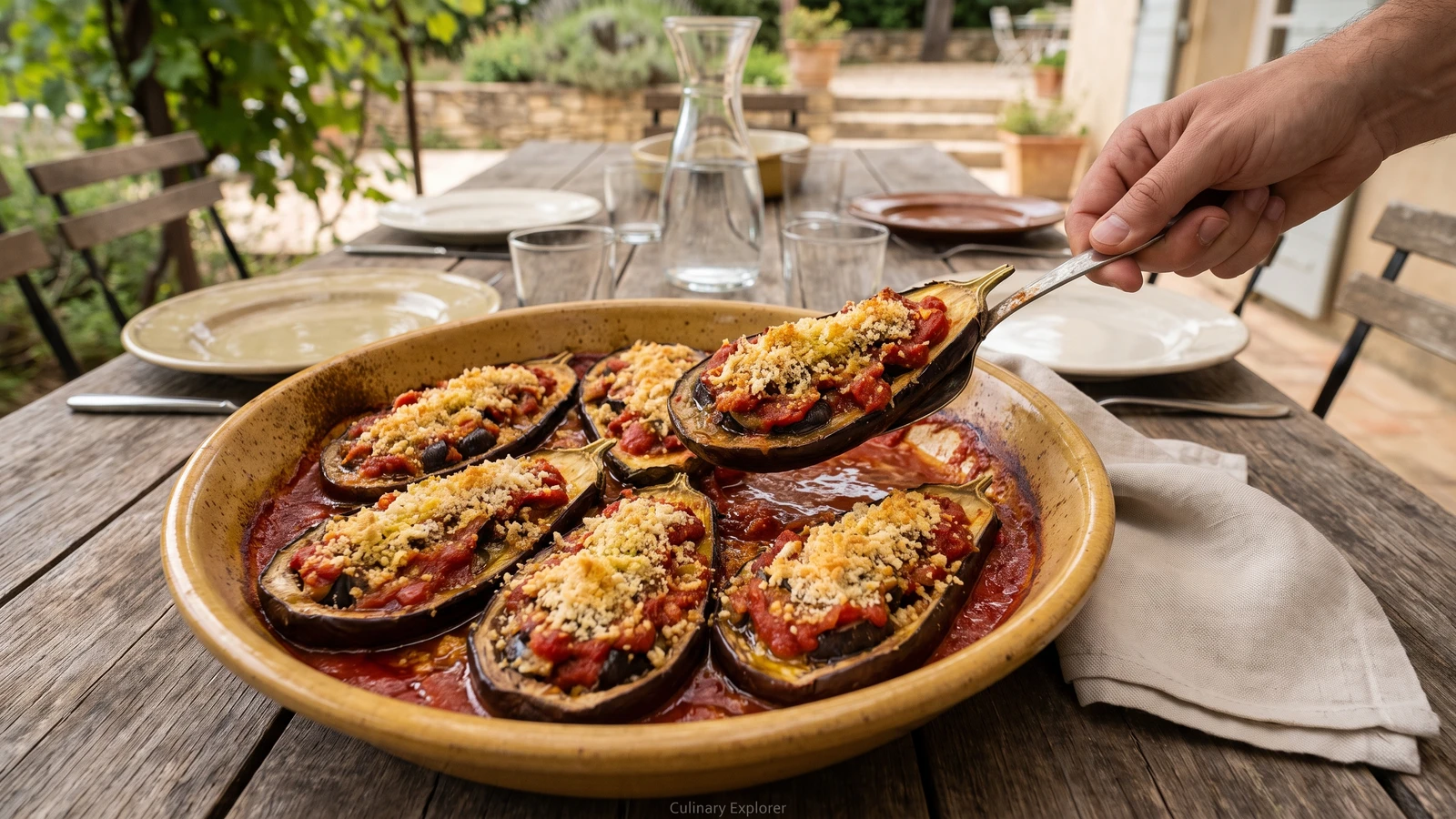
Aubergine shells hold their own tender pulp with tomato, garlic, and olive oil, then a crisp gratin crowns them while smooth tomato sauce circles the dish. The lesson is simple: cook the tomato dry.
Aubergines à la Provençale (Provençal-style eggplants) teaches one discipline: water is the enemy of a gratin. The aubergine is already tender and generous; the tomato must be cooked until concentrated, or it will flood the shells, soften the crumbs, and turn a bright southern dish into a puddle.
The book's formula assumed that the fried shell-and-pulp base was already understood, a saucier had smooth tomato sauce waiting, and a salamander stood ready to bronze the top. At home, one wide pan cooks the filling, one cup of prepared tomato sauce replaces the constantly tended sauce pot, and the broiler does the salamander's work. The quantities here are scaled to four small aubergines, while the intended sequence remains intact: tomato replaces dry Duxelles, garlic and olive oil season the filling, breadcrumbs form the gratin, and tomato sauce surrounds it. The extra hands are scaffolding; that sequence is the dish. One cook, one stove, one evening.
When it is right, the aubergine shells slump tenderly beneath a compact red filling, the crumbs are crisp and golden, and the surrounding sauce gleams without touching the crust. Cook the tomato-pulp mixture until a spoon drawn through it leaves a clean path that stays open. That dryness is the one step that decides the whole gratin.
Aubergines à la Provençale belongs to Provence and the olive-oil South, where aubergine meets the region's defining kitchen trio of tomato, garlic, and oil. Classical kitchens gave that household combination a formal shell-and-pulp treatment, substituting tomatoes for Duxelles and tomato sauce for the light half-glaze of aubergines au gratin. Provençale here does not mean lavender, cheese, or a fistful of mixed herbs: the formula is exact, tomatoes tossed in oil with a little garlic, crumbs browned above, and tomato sauce around.
Quantity
1 home-scale preparation using 4 small aubergines (about 2 lb / 900 g) of Aubergines au Gratin (No. 2047)
stopped after frying, emptying the shells, and chopping the pulp, before adding Duxelles
Quantity
the same weight as the scooped aubergine pulp, about 3 cups (720 ml / 500 g)
peeled, seeded, and diced
Quantity
3 tablespoons (45 ml / 41 g)
divided
Quantity
1 small clove (about 1 teaspoon / 5 ml / 3 g)
finely minced
Quantity
1 teaspoon (5 ml / 6 g)
divided
Quantity
1/4 teaspoon (1.25 ml / 0.6 g)
Quantity
1 home-scale application of Gratins (No. 268), using 1/3 cup (80 ml / 30 g)
Quantity
1 cup (240 ml / 240 g)
warmed
| Ingredient | Quantity |
|---|---|
| fried aubergine shell-and-pulp basestopped after frying, emptying the shells, and chopping the pulp, before adding Duxelles | 1 home-scale preparation using 4 small aubergines (about 2 lb / 900 g) of Aubergines au Gratin (No. 2047) |
| ripe plum tomatoespeeled, seeded, and diced | the same weight as the scooped aubergine pulp, about 3 cups (720 ml / 500 g) |
| extra-virgin olive oildivided | 3 tablespoons (45 ml / 41 g) |
| garlicfinely minced | 1 small clove (about 1 teaspoon / 5 ml / 3 g) |
| fine saltdivided | 1 teaspoon (5 ml / 6 g) |
| freshly ground black pepper | 1/4 teaspoon (1.25 ml / 0.6 g) |
| fine fresh breadcrumbs | 1 home-scale application of Gratins (No. 268), using 1/3 cup (80 ml / 30 g) |
| smooth prepared tomato saucewarmed | 1 cup (240 ml / 240 g) |
Prepare the shell-and-pulp base from Aubergines au Gratin (No. 2047) at the four-aubergine scale. Stop once the aubergines have been fried, the shells emptied, and the tender pulp chopped. Keep the eight half-shells intact and set the pulp aside; do not carry over the Duxelles, breadcrumb finish, or light half-glaze, because this entry replaces each of those elements. If a shell tears while being emptied, overlap the torn edges and place it snugly against its neighbours in the gratin dish. Ça se rattrape.
Weigh the chopped aubergine pulp, then use the same weight of prepared tomato. Heat 2 tablespoons of the olive oil in a wide frying pan over medium heat. Add the garlic and stir for twenty seconds, just until fragrant, then immediately add the diced tomatoes and half the salt. Cook briskly for 12 to 15 minutes, stirring often, until the tomatoes collapse and their loose liquid disappears. Fold in the chopped aubergine pulp, season with the pepper, and cook for another 6 to 8 minutes. The filling is ready when it gathers around the spoon and a path scraped across the pan stays open.
Heat the oven to 400°F (200°C). Taste the filling and add the remaining salt if needed; it should be savoury enough to carry both the mild aubergine and the unsalted crumbs. Brush a shallow broiler-safe gratin dish with a little of the remaining oil, arrange the shells snugly inside, and divide the tomato-pulp mixture among them. Mound it gently without packing it hard, keeping the filling inside the rims so its moisture cannot run beneath the shells.
Apply the rapid finishing principle of Gratins (No. 268): scatter the fine breadcrumbs evenly over the filled shells and drip the remaining olive oil across the crumbs. Bake for 12 to 15 minutes, until the aubergines are hot through and the sauce at their edges begins to bubble. Switch the oven to its broiler and brown the top for 2 to 4 minutes, watching without wandering away. The broiler is the honest home equivalent of the salamander. If the crumbs darken before the centres are hot, move the dish to a lower rack, turn off the broiler, and give it another 5 minutes in the oven.
While the gratin browns, warm the tomato sauce gently. If it pours like water, reduce it until it lightly coats a spoon; if it has tightened into paste, loosen it with a tablespoon of water. Spoon the sauce around the aubergines as a generous border, never across the crisp tops. Bring the gratin dish straight to the table while the crumbs are golden and the sauce still gleams. À table!
1 serving (about 335g)
Culinary guides, cultural storytelling, and the editorial depth that makes cooking meaningful.
Discover Culinary ExplorerChef Juliette
Artichauts à la Barigoule turns tender artichokes into little braising vessels, packed with mushrooms and fat bacon, wrapped, wine-braised, then dressed with only a spoonful of dark, concentrated sauce.

Chef Juliette
Artichoke hearts, spring peas, and carrot settle into one buttered cocotte, cooking gently until tender before Manied Butter (No. 151) gives their clear vegetable liquor the lightest gloss.

Chef Juliette
Artichauts aux sauces diverses bring one generous lesson to the table: tie, boil, and drain the vegetables properly, then let one well-made sauce turn each leaf and heart into supper.

Chef Juliette
Artichauts à la Provençale turns a tight lid into technique: small artichokes, sweet peas, and lettuce soften in olive oil and their own juices, emerging tender, green, and quietly glossy.