Chef Juliette
Suet Dumpling
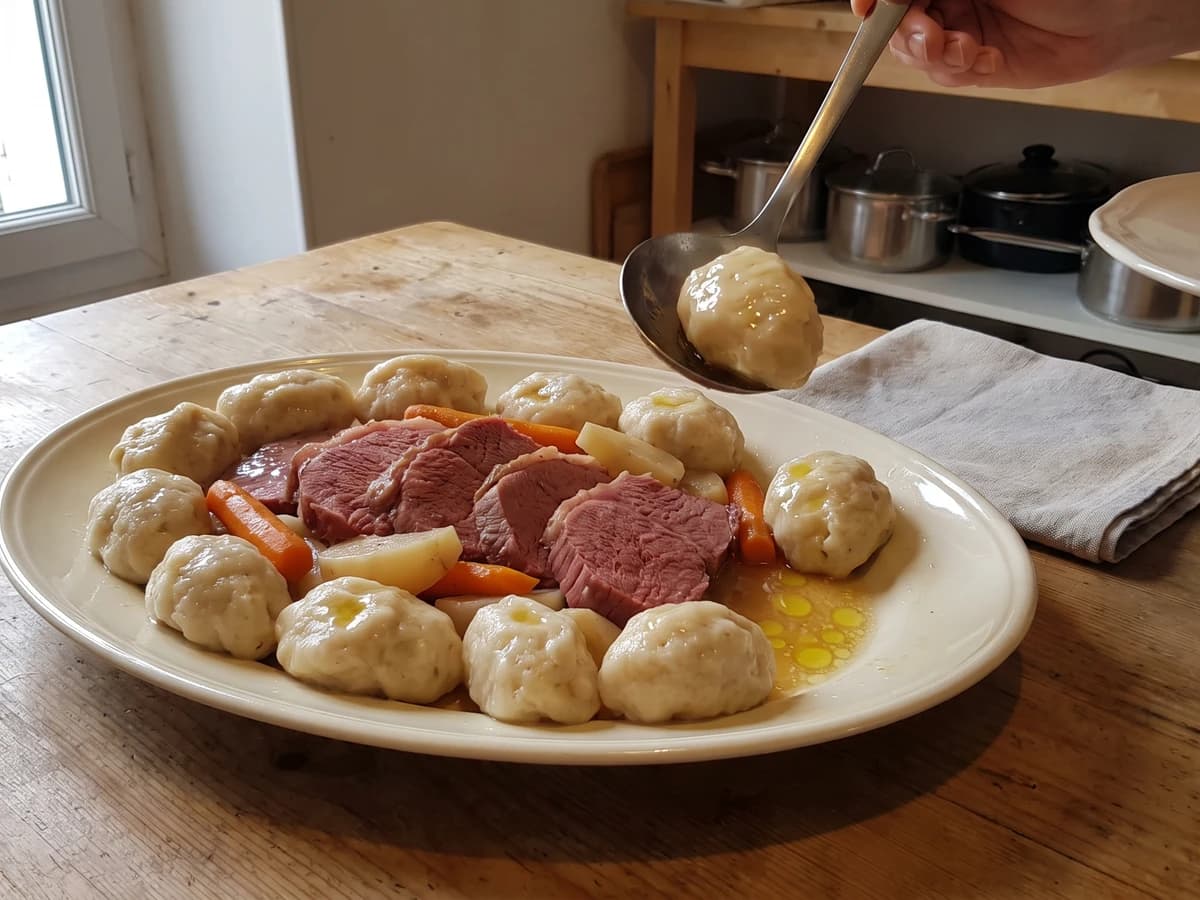
Boulettes au suif, poached beside salt beef, turn equal weights of flour and finely chopped suet into tender, rich dumplings. Keep the beef liquor at a bare tremble and the old garnish works beautifully at home.
A cooking platform built around craft, culture, and the stories behind what we eat.
Created by Chef Juliette
Based on No. 268, Gratins, from Le Guide Culinaire (1907) by Auguste Escoffier
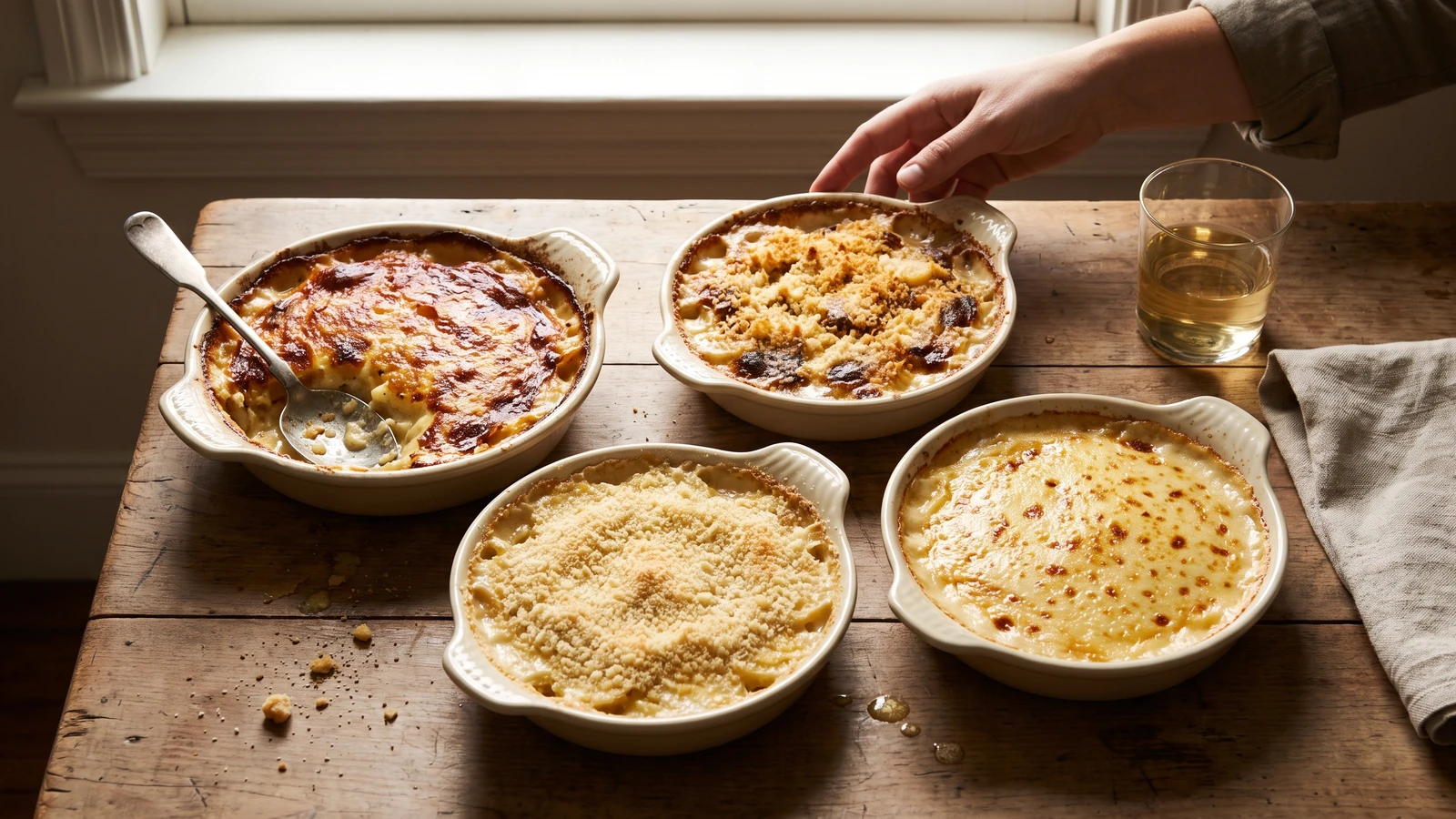
One potato, four classical gratin forms, and one lesson: the food beneath must be ready when the top heat strikes, because a fine crust cannot rescue a cold or undercooked centre.
Les gratins (dishes finished beneath a browned crust) teach one true thing: the food below and the heat above must finish together. A bronze surface means nothing if the centre is cold, raw, or swimming in thin sauce. The classical forms simply organize that relationship: gratin complet (Complete Gratin), gratin rapide (Rapid Gratin), gratin léger (Light Gratin), and glaçage (Glazing), itself a form of rapid gratin.
The classical working kitchen could call for hot cooked ingredients, a finished sauce held by a saucier, and a salamander fierce enough to colour the surface in moments. Your honest equivalents are one saucepan, four shallow dishes, and the broiler already built into the oven. The source is a map of the operation rather than a fixed formula, so potatoes become the neutral teaching base and the batch is scaled to four servings. One cook, one stove, one evening.
The gratin complet cooks raw potato beneath its crust. The other three begin with potato already cooked and hot, because their brief top heat is meant to finish, not to cook. Matching the readiness of the centre to that final burst of heat is the step that matters most, and once the broiler is on, you stay beside it.
Gratin has no single provincial birthplace; it belongs to the French household and bourgeois table, while Dauphiné's gratin dauphinois gave the word its strongest regional attachment. The name is tied to gratter, to scrape, recalling the coveted browned layer clinging to the baking dish, and Parisian classical kitchens organized the operation into complete, rapid, light, and glazing forms according to how much cooking occurred beneath the top heat. Cheese is common but never compulsory; sauce, crumbs, butter, or an enriched glaze can each make the defining crust.
Quantity
6 medium (about 2 lb / 900 g)
peeled and sliced 1/8 inch (3 mm) thick
Quantity
5 tablespoons (75 ml / 70 g)
divided
Quantity
3 tablespoons (45 ml / 24 g)
Quantity
1 1/2 cups (360 ml / 370 g)
Quantity
1/2 cup (120 ml / 120 g)
Quantity
1/2 cup (120 ml / 30 g)
Quantity
1
Quantity
1 tablespoon (15 ml / 18 g)
divided
Quantity
1/4 teaspoon (1.25 ml / 0.6 g)
Quantity
1/8 teaspoon (0.6 ml / 0.25 g)
| Ingredient | Quantity |
|---|---|
| Yukon Gold potatoespeeled and sliced 1/8 inch (3 mm) thick | 6 medium (about 2 lb / 900 g) |
| unsalted butterdivided | 5 tablespoons (75 ml / 70 g) |
| all-purpose flour | 3 tablespoons (45 ml / 24 g) |
| whole milk | 1 1/2 cups (360 ml / 370 g) |
| heavy cream | 1/2 cup (120 ml / 120 g) |
| fine dry breadcrumbs | 1/2 cup (120 ml / 30 g) |
| large egg yolk | 1 |
| fine sea saltdivided | 1 tablespoon (15 ml / 18 g) |
| ground white pepper | 1/4 teaspoon (1.25 ml / 0.6 g) |
| freshly grated nutmeg | 1/8 teaspoon (0.6 ml / 0.25 g) |
Heat the oven to 375°F (190°C) with a rack in the upper third. Butter four shallow 5- to 6-inch (13 to 15 cm) broiler-safe gratin dishes with 1 tablespoon (15 ml / 14 g) of the butter and place them on a rimmed baking sheet. Mark one dish for each form. Reserve one-quarter of the sliced potatoes, about 8 oz (225 g), raw for the gratin complet; the remaining potatoes will be cooked before receiving the faster finishes.
Reserve 2 tablespoons (30 ml / 31 g) of the milk for adjusting the sauce. Melt 2 tablespoons (30 ml / 28 g) butter in a saucepan over medium-low heat, stir in the flour, and cook for 2 minutes without letting the roux colour. Whisk in the remaining milk gradually, then add the cream, 1 teaspoon (5 ml / 6 g) salt, the white pepper, and nutmeg. Simmer gently for 5 minutes, whisking, until the sauce is smooth and nappé, meaning it coats the back of a spoon. If lumps form, take the pan off the heat and whisk firmly; strain it if necessary. Ça se rattrape. If it becomes too thick to flow, loosen it with the reserved milk. Cover and keep warm.
Arrange the reserved raw potatoes in overlapping layers in the first dish. Pour over 3/4 cup (180 ml) of the warm sauce, pressing gently so it reaches between the slices. Mix 3 tablespoons (45 ml / 11 g) breadcrumbs with 2 teaspoons (10 ml / 9 g) melted butter and scatter them evenly over the surface. Bake for 35 to 45 minutes, until a knife passes through the centre without resistance and the crust is deep bronze. This simultaneous cooking of the raw ingredient and its crust is the gratin complet. If the top colours before the potato softens, cover it loosely with foil and continue; shielding the crust is a rescue, not a shortcut.
When the gratin complet has about 15 minutes left, bring a wide saucepan of water to a simmer with 2 teaspoons (10 ml / 12 g) of the salt. Add the remaining potatoes and simmer for 7 to 9 minutes, until tender all the way through but still holding their shape. Drain them thoroughly and let their surface moisture evaporate for a minute in the warm pan. Divide them among the three remaining dishes and keep them covered so they stay hot. The rapid, light, and glazed forms depend on this readiness; the broiler colours a surface, it does not cook a cold centre.
Fold 1/2 cup (120 ml) warm sauce through the potatoes in the second dish. Mix 3 tablespoons (45 ml / 11 g) breadcrumbs with 2 teaspoons (10 ml / 9 g) melted butter and spread them over the top. Remove the gratin complet from the oven, cover it loosely, and turn the broiler to high. Set the gratin rapide about 6 inches (15 cm) below the heat for 2 to 4 minutes, rotating once if needed, until the surface bubbles at the rim and takes a mottled bronze crust. If the centre has cooled, stop and warm the dish for 8 minutes at 375°F (190°C), then broil again; prolonged broiling would burn the crumbs before warming the potatoes.
Spread the hot potatoes in the third dish in a single shallow layer. Mix the remaining 2 tablespoons (30 ml / 8 g) breadcrumbs with 2 teaspoons (10 ml / 9 g) melted butter and scatter this light veil over the top. Broil for 1 to 3 minutes, just until the crumbs turn pale gold and crisp. Gratin léger describes the lighter degree of coating and colour, not an invitation to omit the butter. Watch closely, because a thin covering goes from blond to burnt quickly.
Put 1/2 cup (120 ml) of the warm sauce in a bowl and let it stand for 2 minutes, then whisk in the egg yolk. The sauce should be warm enough to remain fluid but not so hot that the yolk scrambles. If it tightens or turns grainy, whisk in a spoonful of the reserved cool milk and strain it. Coat the potatoes in the fourth dish with a thin, even layer and use no crumbs. Broil for 30 seconds to 2 minutes, until the glaçage swells slightly and develops smooth golden freckles. This is a form of gratin rapide, distinguished by its enriched glazed surface.
Bring the four dishes to the table together. The gratin complet should be tender and deeply set beneath its crust; the gratin rapide should carry the firmest contrast between creamy potato and crisp crumbs; the gratin léger should wear only a delicate buttered veil; and the glaçage should be smooth, golden, and free of crumbs. Spoon a little of each onto every plate while the edges still gleam. Cooking well is not cooking fancy. À table!
1 serving (about 340g)
Culinary guides, cultural storytelling, and the editorial depth that makes cooking meaningful.
Discover Culinary ExplorerChef Juliette
Boulettes au suif, poached beside salt beef, turn equal weights of flour and finely chopped suet into tender, rich dumplings. Keep the beef liquor at a bare tremble and the old garnish works beautifully at home.

Chef Juliette
Bread, flour, frangipane, and rice become four cool, supple panades for binding forcemeats, each changing body and flavor while preserving tenderness. The finest Mousselines need none, and knowing that distinction is the lesson.

Chef Juliette
Panade au pain is bread, milk, salt, heat, and attention: stir until the paste releases cleanly, butter it against a skin, and you have the quiet binder behind tender French farces.

Chef Juliette
Panade de farine teaches the drying stroke behind pâte à choux: flour meets boiling buttered water, then stays over the fire until the paste gathers, smooths, and quits the pan cleanly.