Chef Juliette
Suet Dumpling
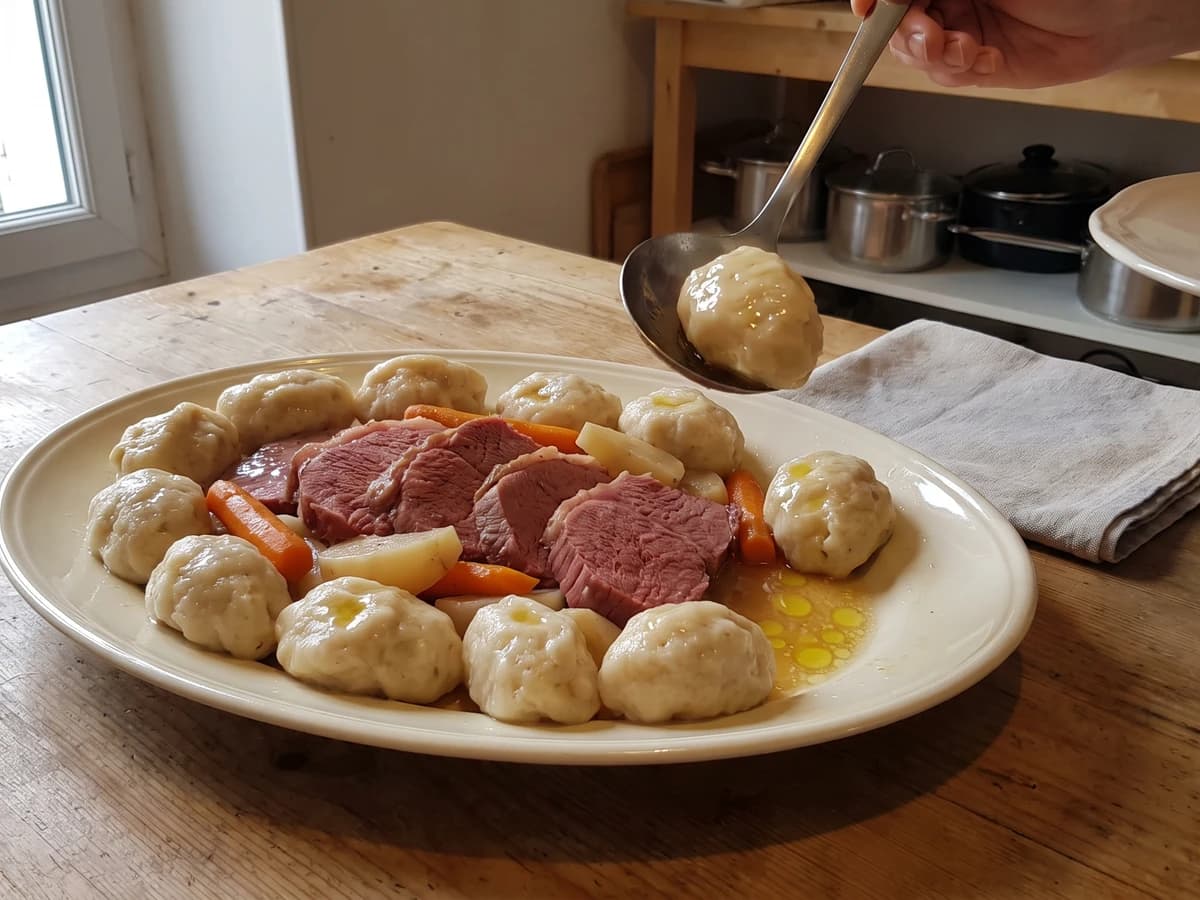
Boulettes au suif, poached beside salt beef, turn equal weights of flour and finely chopped suet into tender, rich dumplings. Keep the beef liquor at a bare tremble and the old garnish works beautifully at home.
A cooking platform built around craft, culture, and the stories behind what we eat.
Created by Chef Juliette
Based on No. 2047, Aubergines au Gratin, from Le Guide Culinaire (1907) by Auguste Escoffier
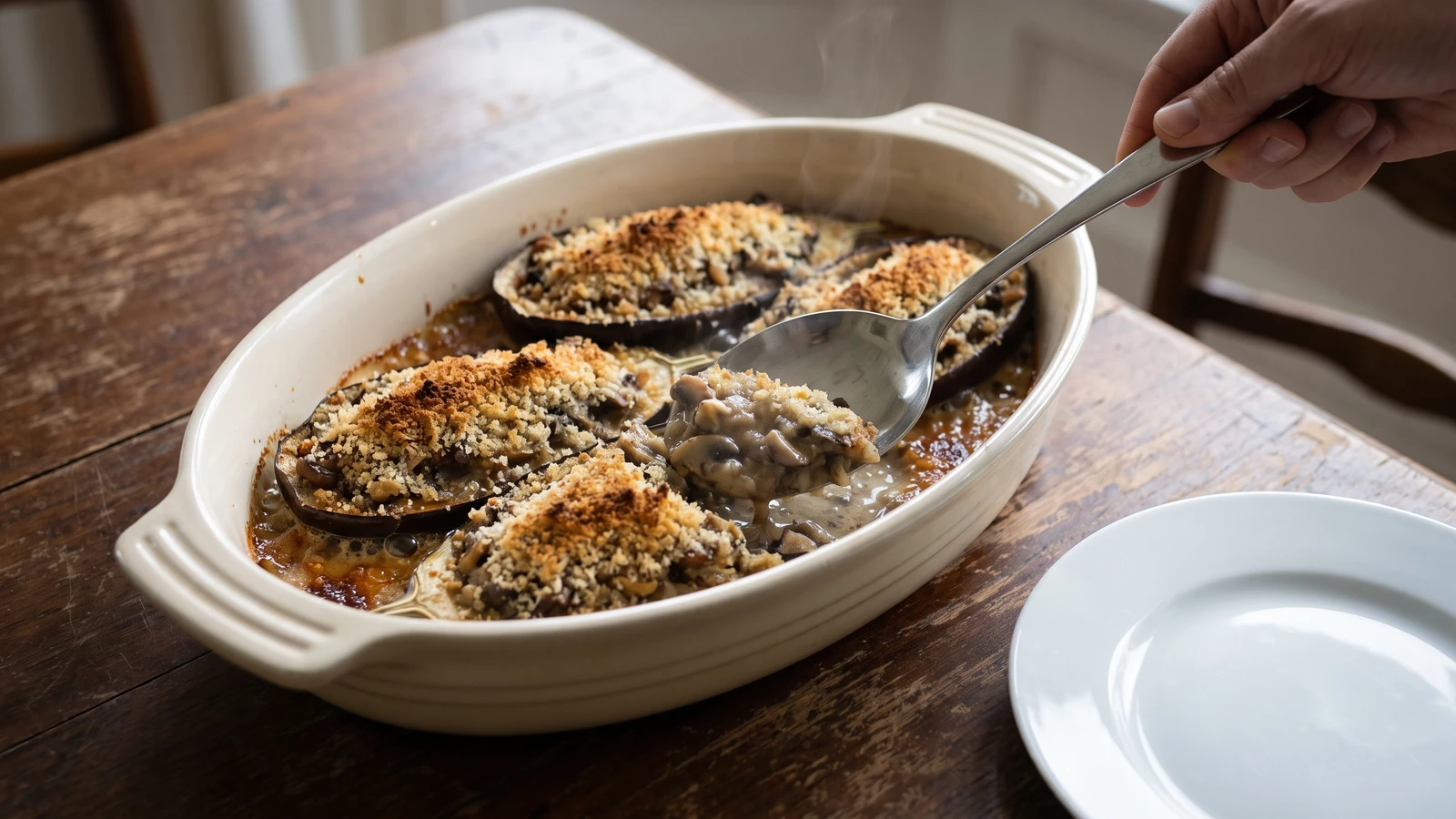
Fried eggplant shells, equal parts silky pulp and dry duxelles, a crisp gratin cap, and a shining border of light demi-glace: classical economy made generous for four.
Aubergines au Gratin (eggplant halves with a browned crumb crust) teach the difference between richness and wetness. The filling is equal weights of tender eggplant pulp and Ordinary or Dry Duxelle (No. 223), a concentrated mushroom preparation, and it must hold a spooned mound before it returns to the shell. If the mixture is loose, no amount of fierce top heat will give you the crisp cap this dish promises.
The original formula assumed a saucier beside you, a stockpot never off the fire for the light demi-glace (half-glaze sauce), a salamander glowing overhead, and enough aubergines for a full service. At home, you need four halves, a modest saucepan of prepared demi-glace, and an ordinary broiler for the light form of Gratins (No. 268). The station choreography is brigade scaffolding and can go. The equal-weight filling, the frying, and the final crust are the dish, so they stay. One cook, one stove, one evening.
Fry the aubergines until their flesh yields but their skins still hold, then drive any loose moisture from the chopped filling before you pack the shells. That drying is the step that decides everything: get it right and the crumb top bronzes while the filling remains soft, savory, and generous beneath it.
Aubergine belongs naturally to the Mediterranean larders of Provence and Languedoc, where cooks have long paired it with olive oil and decisive heat. This filled-shell form belongs to the classical grand-kitchen repertoire, which joined southern produce to concentrated mushrooms and a border of light demi-glace before sending the dish into bourgeois dining rooms. Gratin does not necessarily mean cheese: in the French canon, the word names the browned crust, made here from fine bread raspings and oil.
Quantity
2 (about 1½ lb / 680 g)
Quantity
1 teaspoon (5 ml / 6 g)
divided
Quantity
¾ cup (180 ml / 165 g)
divided
Quantity
About 1½ cups (360 ml / 300 g) Ordinary or Dry Duxelle (No. 223)
final amount matched exactly to the cooked eggplant pulp by weight
Quantity
⅓ cup (80 ml / 30 g)
Quantity
1 light-gratin application from Gratins (No. 268)
Quantity
¾ cup (180 ml / 180 g)
warmed
Quantity
2 tablespoons (30 ml / 30 g)
for loosening the demi-glace only if needed
| Ingredient | Quantity |
|---|---|
| medium eggplants | 2 (about 1½ lb / 680 g) |
| fine sea saltdivided | 1 teaspoon (5 ml / 6 g) |
| olive oildivided | ¾ cup (180 ml / 165 g) |
| Ordinary or Dry Duxellefinal amount matched exactly to the cooked eggplant pulp by weight | About 1½ cups (360 ml / 300 g) Ordinary or Dry Duxelle (No. 223) |
| fine dry breadcrumbs or bread raspings | ⅓ cup (80 ml / 30 g) |
| Gratins, light-gratin form | 1 light-gratin application from Gratins (No. 268) |
| light demi-glacewarmed | ¾ cup (180 ml / 180 g) |
| hot water (optional)for loosening the demi-glace only if needed | 2 tablespoons (30 ml / 30 g) |
Halve the eggplants lengthwise and trim away the leafy caps without cutting into the flesh. Score each cut face in a shallow diamond pattern, stopping well before the skin, then season with half the salt. Leave them cut-side up for 10 minutes and blot away the moisture that rises. A dry surface browns cleanly and spatters less when it meets the oil.
Heat all but 2 teaspoons of the olive oil in a 12-inch heavy skillet over medium-high heat. When the surface glimmers, lower in the eggplant halves cut-side down and fry in batches for 5 to 7 minutes, until deeply golden. Turn them and cook the skin sides for another 3 to 4 minutes, until the flesh yields under a spoon but the shells remain firm enough to lift. If the faces color before the centers soften, lower the heat and continue gently. Drain cut-side down on a rack or absorbent paper.
When the halves are cool enough to handle, scoop out the flesh with a spoon, leaving a wall about ¼ inch thick so each shell keeps its shape. Chop the pulp, then weigh it. Fold in exactly the same weight of Ordinary or Dry Duxelle (No. 223), reducing either component if necessary to preserve the equal-weight ratio. Warm the mixture in a dry skillet over medium-high heat, stirring, until it holds a mound and no liquid gathers beneath it. If it slumps or beads water, don't bury the problem under extra crumbs. Return it to brisk heat and evaporate the moisture. Ça se rattrape.
Taste the filling and add the remaining salt only if it needs it, since both the Duxelle and demi-glace are already seasoned. Pack the mixture into the four shells, pressing it into the corners and mounding the tops slightly. Arrange them snugly in a shallow gratin dish. Snug is useful here: the dish supports any shell that softened a little too enthusiastically in the frying pan.
Set an oven rack about 6 inches below the broiler and heat it fully. Sprinkle the filled shells evenly with the fine breadcrumbs, then dot and drizzle them with the reserved 2 teaspoons of olive oil. Apply the light form of Gratins (No. 268), using the broiler as the home equivalent of the salamander, until the crumbs are crisp and deep gold, about 3 to 5 minutes. Watch continuously. If one edge darkens first, rotate the dish rather than adding more oil.
While the gratin forms, warm the light demi-glace in a small saucepan until glossy and fluid enough to coat a spoon lightly. If it is too thick, whisk in hot water a teaspoon at a time; if it is thin, reduce it briefly over lively heat. Spoon the sauce around the aubergines in a narrow border, never over the crisp tops. Bring the gratin dish directly to the table. À table!
1 serving (about 275g)
Culinary guides, cultural storytelling, and the editorial depth that makes cooking meaningful.
Discover Culinary ExplorerChef Juliette
Boulettes au suif, poached beside salt beef, turn equal weights of flour and finely chopped suet into tender, rich dumplings. Keep the beef liquor at a bare tremble and the old garnish works beautifully at home.

Chef Juliette
Bread, flour, frangipane, and rice become four cool, supple panades for binding forcemeats, each changing body and flavor while preserving tenderness. The finest Mousselines need none, and knowing that distinction is the lesson.

Chef Juliette
Panade au pain is bread, milk, salt, heat, and attention: stir until the paste releases cleanly, butter it against a skin, and you have the quiet binder behind tender French farces.

Chef Juliette
Panade de farine teaches the drying stroke behind pâte à choux: flour meets boiling buttered water, then stays over the fire until the paste gathers, smooths, and quits the pan cleanly.