Chef Juliette
Ordinary or White Consommé
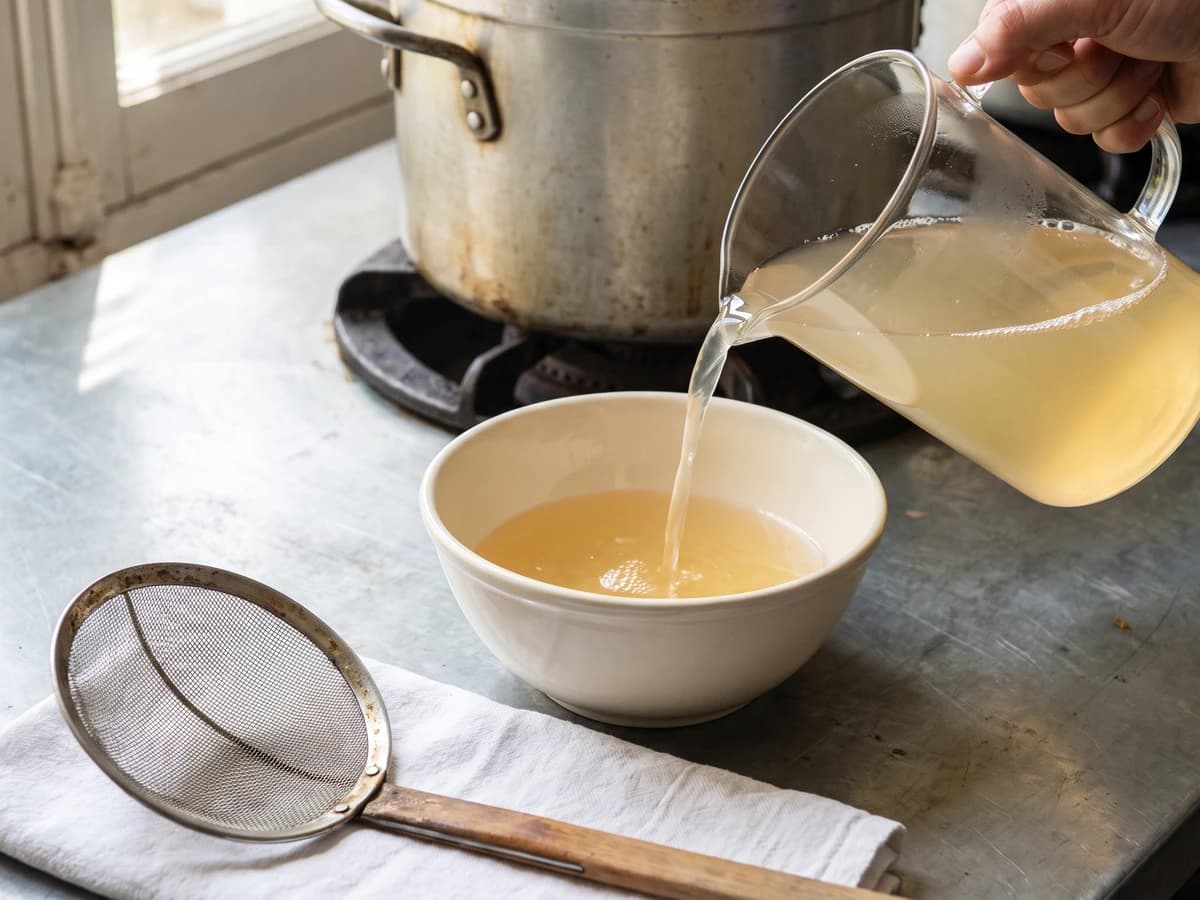
Beef shin, lean beef, and fowl begin in cold water and rise slowly toward a tremble. Skim before the boil, and you learn the quiet discipline that gives every clear French broth its backbone.
A cooking platform built around craft, culture, and the stories behind what we eat.
Created by Chef Juliette
Based on No. 223, Ordinary or Dry Duxelle, from Le Guide Culinaire (1907) by Auguste Escoffier
Duxelles ordinaire turns mushroom stalks and parings into a concentrated classical base through one uncompromising act: press them dry, then cook until every drop is gone and only butter-glossed mushroom remains.
Duxelles ordinaire ou sèche (ordinary or dry mushroom base) teaches moisture control. The one true thing to know before touching the pan is this: mushrooms that merely look cooked are not yet Duxelles. Press them firmly, fry them briskly, and continue until every drop of vegetable moisture is gone. Leave the mixture damp and it turns watery in pastry, thins whatever sauce receives it, and sours quickly in storage.
The classical kitchen assumed a saucier on staff, a steady supply of stalks and parings, and the freedom to prepare a few spoonfuls whenever service required them. This entry needs neither the stock never off the fire nor a salamander. Your honest equivalent is a wide skillet and a clean kitchen towel. The source formula is already written in small spoon measures, so this home batch multiplies it eightfold without changing its ratios or sequence; its coffeespoon becomes a modern teaspoon, and buttered white paper becomes buttered baking parchment over a shallow container. One cook, one stove, one evening.
The food processor and parchment are useful scaffolding. The pressing and complete evaporation are the dish, and they stay. Listen as the wet hiss gives way to the quiet sound of mushrooms frying in fat, then drag the spoon across the pan. The clean, dry track it leaves is the moment that matters.
Duxelles belongs to the French classical sauce kitchen, with Parisian kitchens codifying it as a standard mise en place rather than a regional table dish; its name is traditionally linked to the house of d’Uxelles. Its enduring logic is kitchen economy: mushroom stalks and sound parings are minced and concentrated for stuffings, forcemeats, eggs, sauces, and pastry cases. The ordinary or dry form is the foundation, not a finished pourable sauce; cream, stock, and other enrichments belong to later preparations.
Quantity
2 packed cups (480 ml / 350 g)
measured after finely chopping and before pressing
Quantity
2 tablespoons plus 2 teaspoons (40 ml / 25 g)
very finely chopped
Quantity
¼ cup plus 1 teaspoon (65 ml / 62 g)
divided
Quantity
¼ cup (60 ml / 55 g)
Quantity
¾ teaspoon (4 ml / 4 g), plus more to taste
Quantity
¼ teaspoon (1 ml / 0.6 g)
Quantity
⅛ teaspoon (0.5 ml / 0.25 g)
Quantity
2 tablespoons plus 2 teaspoons (40 ml / 12 g)
very finely chopped
| Ingredient | Quantity |
|---|---|
| mushroom stalks and sound paringsmeasured after finely chopping and before pressing | 2 packed cups (480 ml / 350 g) |
| yellow onionvery finely chopped | 2 tablespoons plus 2 teaspoons (40 ml / 25 g) |
| unsalted butterdivided | ¼ cup plus 1 teaspoon (65 ml / 62 g) |
| neutral oil | ¼ cup (60 ml / 55 g) |
| fine salt | ¾ teaspoon (4 ml / 4 g), plus more to taste |
| freshly ground black pepper | ¼ teaspoon (1 ml / 0.6 g) |
| freshly grated nutmeg | ⅛ teaspoon (0.5 ml / 0.25 g) |
| flat-leaf parsleyvery finely chopped | 2 tablespoons plus 2 teaspoons (40 ml / 12 g) |
Discard any woody, bruised, or dirty pieces, then wipe the usable mushroom stalks and parings clean. Chop them with a knife, or pulse briefly in a food processor, until the pieces resemble coarse grains and no large slices remain. Stop before they become a paste. Measure or weigh them now, after chopping but before pressing, so the source formula keeps its proper proportions.
Pile the chopped mushrooms into the center of a large clean kitchen towel. Gather the corners, twist the bundle tightly over the sink, and squeeze with both hands until liquid stops running. Open the towel, loosen the mushrooms, then wrap and press them once more. They should feel crumbly and merely damp, not wet. This pressing is part of the reduction, not an optional tidying step.
Set a wide 30 cm skillet over medium heat. Add ¼ cup (60 ml / 57 g) of the butter and all the oil. When the butter has melted and its foam begins to settle, add the onion and fry gently for 2 to 3 minutes, stirring, until translucent but not browned. The source asks for the onion only slightly fried; color would make it sweeter and pull attention from the mushrooms.
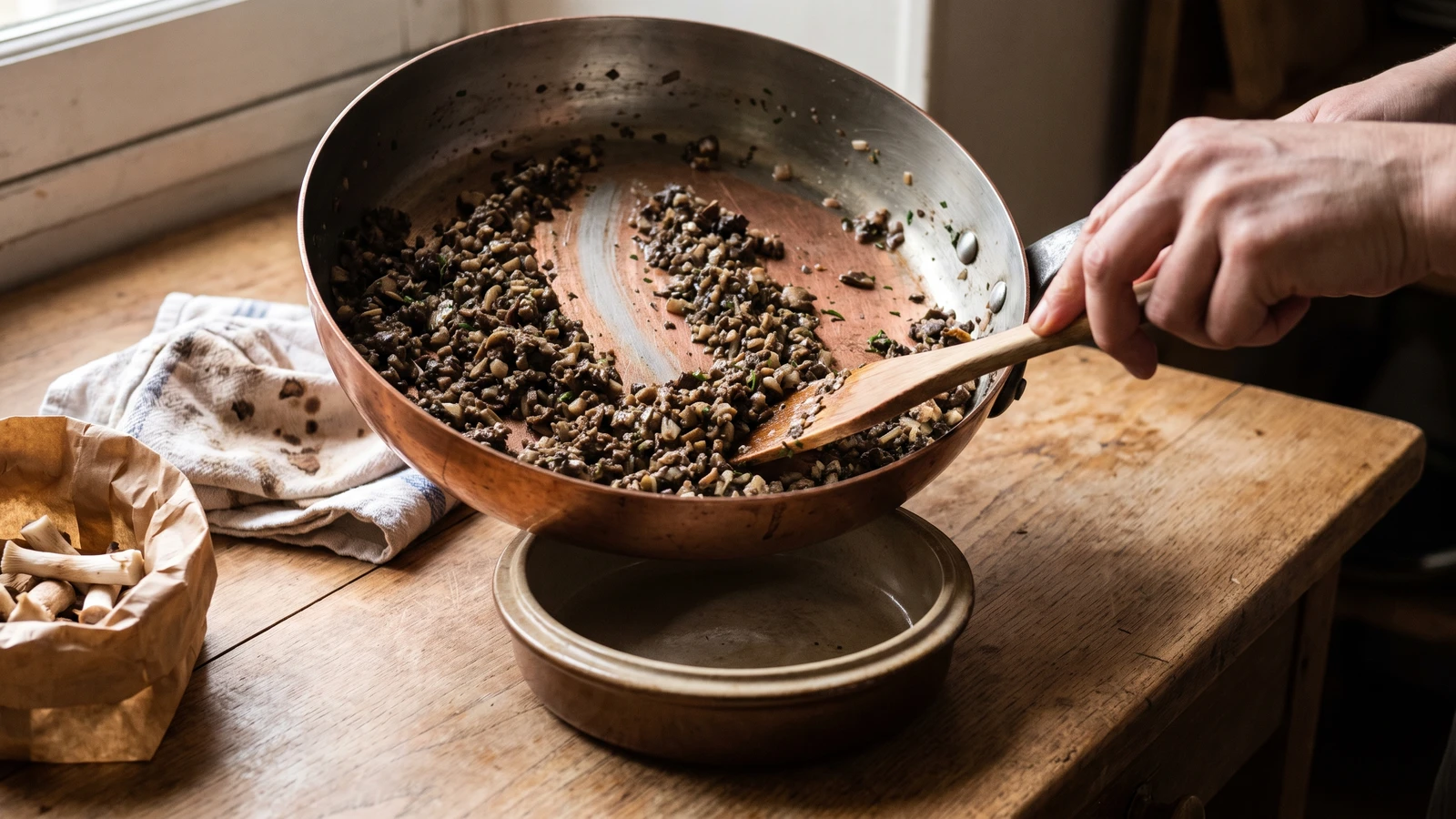
Add the pressed mushrooms and raise the heat to medium-high. Stir and scrape continuously, spreading the mince across the widest part of the pan. It will first loosen and hiss wetly, then begin frying more quietly as its moisture disappears. Continue until no liquid gathers when the mixture is pushed aside and a spoon drawn across the pan leaves a clean, dry track. If the mushrooms flood the pan and stew in grey liquid, they are crowded, not ruined. Ça se rattrape: remove half to a bowl, dry the first half completely, repeat with the second, then combine them.
Only when the mushrooms are dry, add the salt, pepper, nutmeg, and parsley. Stir briskly for 1 to 2 minutes, mixing the seasoning through every spoonful and evaporating any moisture released by the parsley or salt. Taste and correct the seasoning. The finished Duxelles should be fine, loose, and evenly butter-glossed, with neither water nor a free puddle of fat at the edge. If moisture reappears, keep stirring over brisk heat until the spoon track stays dry.
Transfer the Duxelles immediately to a shallow heatproof container and spread it no deeper than 2 cm. Smear the remaining teaspoon of butter over one face of a piece of baking parchment, then lay that buttered face directly against the surface. Cool on a rack for no longer than 1 hour, cover the container, and refrigerate unless using it at once. It is now ready for omelets, stuffings, pastry work, forcemeats, or the sauce that calls for it. À table!
1 serving (about 25g)
Culinary guides, cultural storytelling, and the editorial depth that makes cooking meaningful.
Discover Culinary ExplorerChef Juliette
Beef shin, lean beef, and fowl begin in cold water and rise slowly toward a tremble. Skim before the boil, and you learn the quiet discipline that gives every clear French broth its backbone.
Chef Juliette
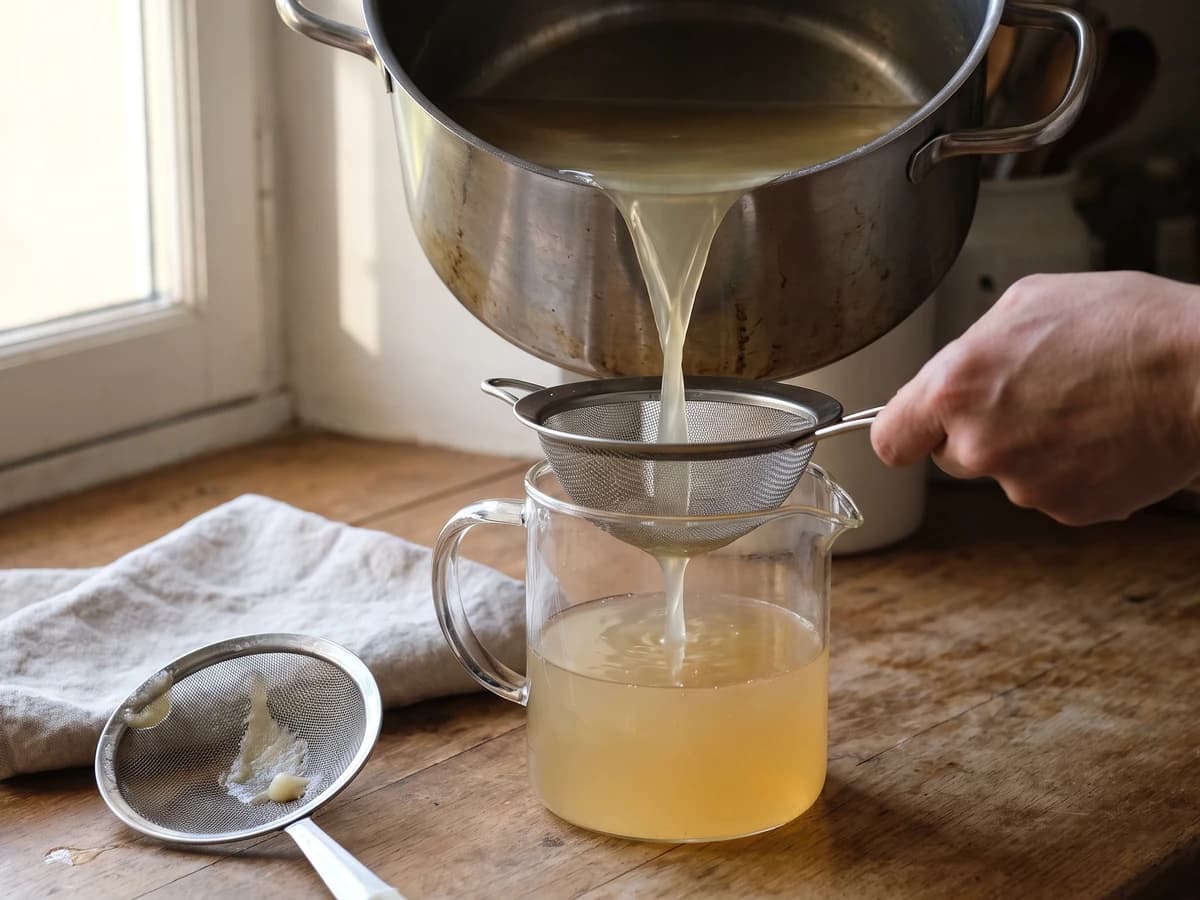
Break the veal bones small, then give them eight hours at a bare tremble. This pale, gelatinous fond becomes the quiet foundation beneath velouté, blanquette, and every sauce that must stay light.
Chef Juliette
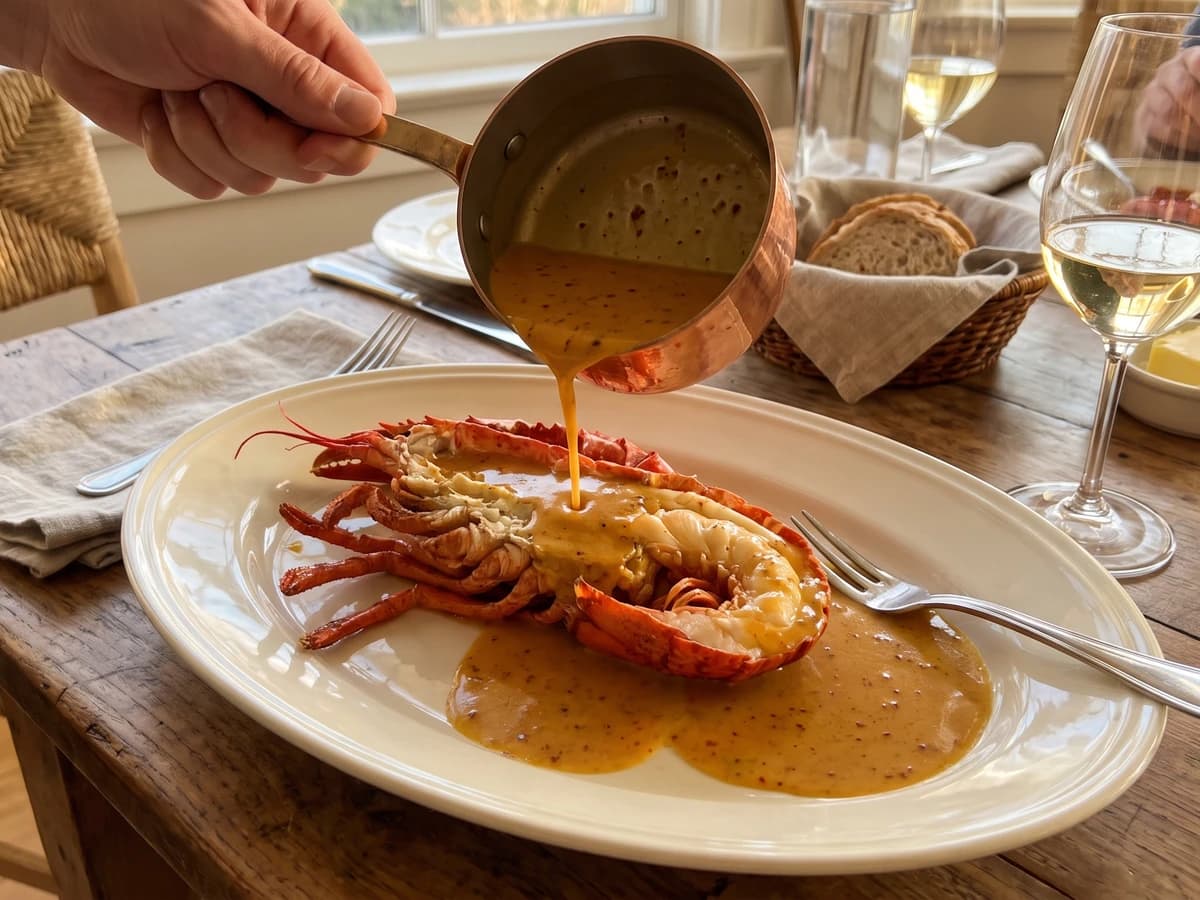
Sauce Orientale concentrates lobster-rich American Sauce with curry, then folds in cream away from the fire: a glossy, gently spiced derivative made for lobster, crayfish, and firm fish.
Chef Juliette
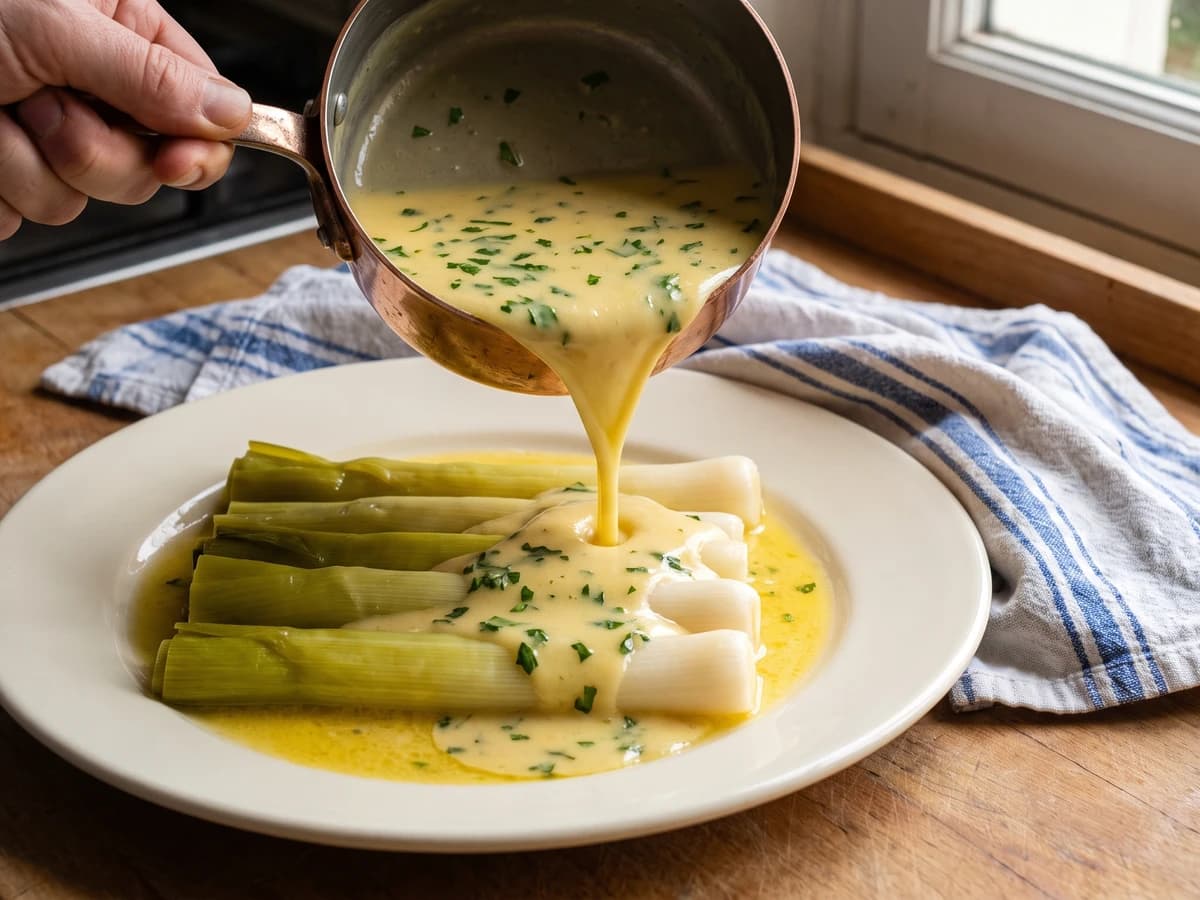
An old lesson in sauce families: Sauce Allemande takes mushroom liquor, then butter, lemon, and parsley, becoming a glossy Poulette for sheep's trotters, leeks, cauliflower, and anything needing gentle richness with a bright edge.