Chef Juliette
White Veal Stock, and Poultry Stock
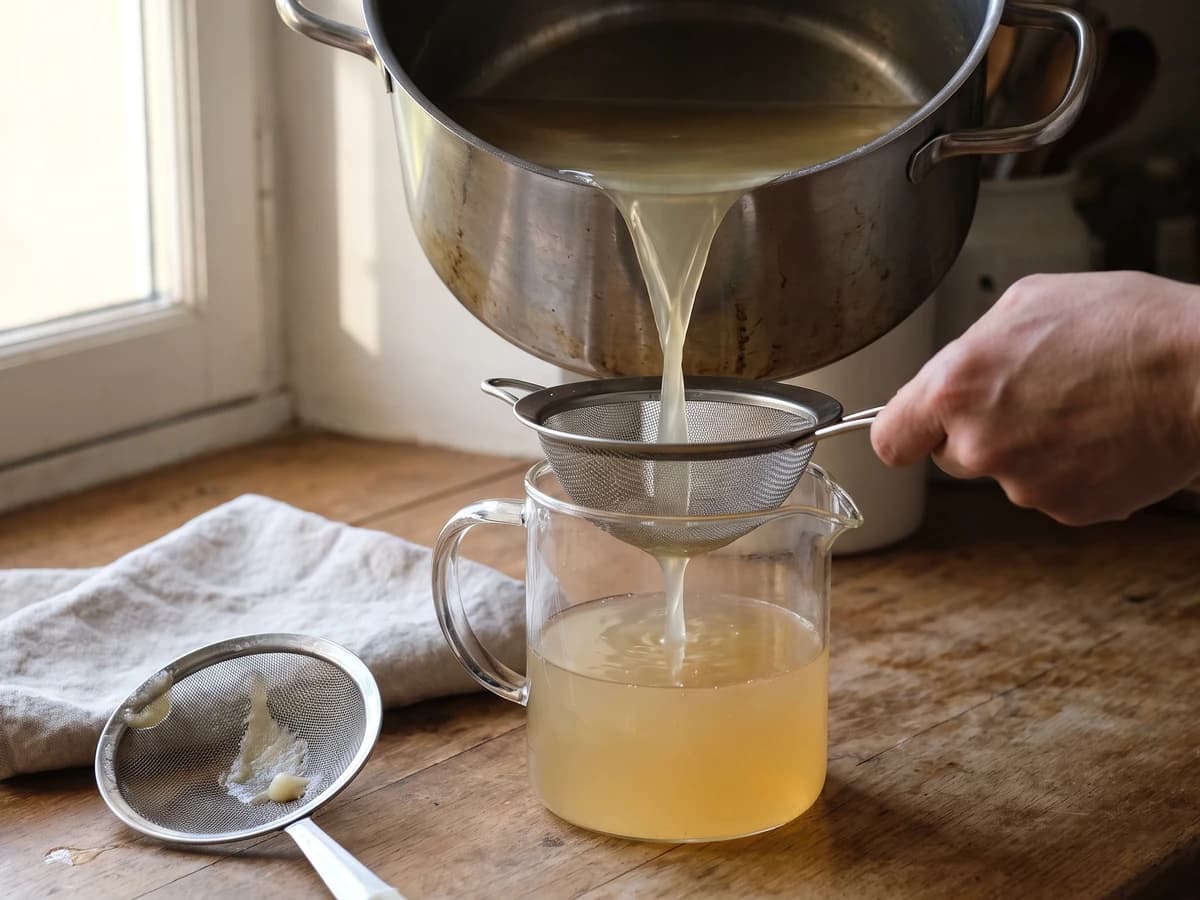
Break the veal bones small, then give them eight hours at a bare tremble. This pale, gelatinous fond becomes the quiet foundation beneath velouté, blanquette, and every sauce that must stay light.
A cooking platform built around craft, culture, and the stories behind what we eat.
Created by Chef Juliette
Based on No. 1, Ordinary or White Consommé, from Le Guide Culinaire (1907) by Auguste Escoffier
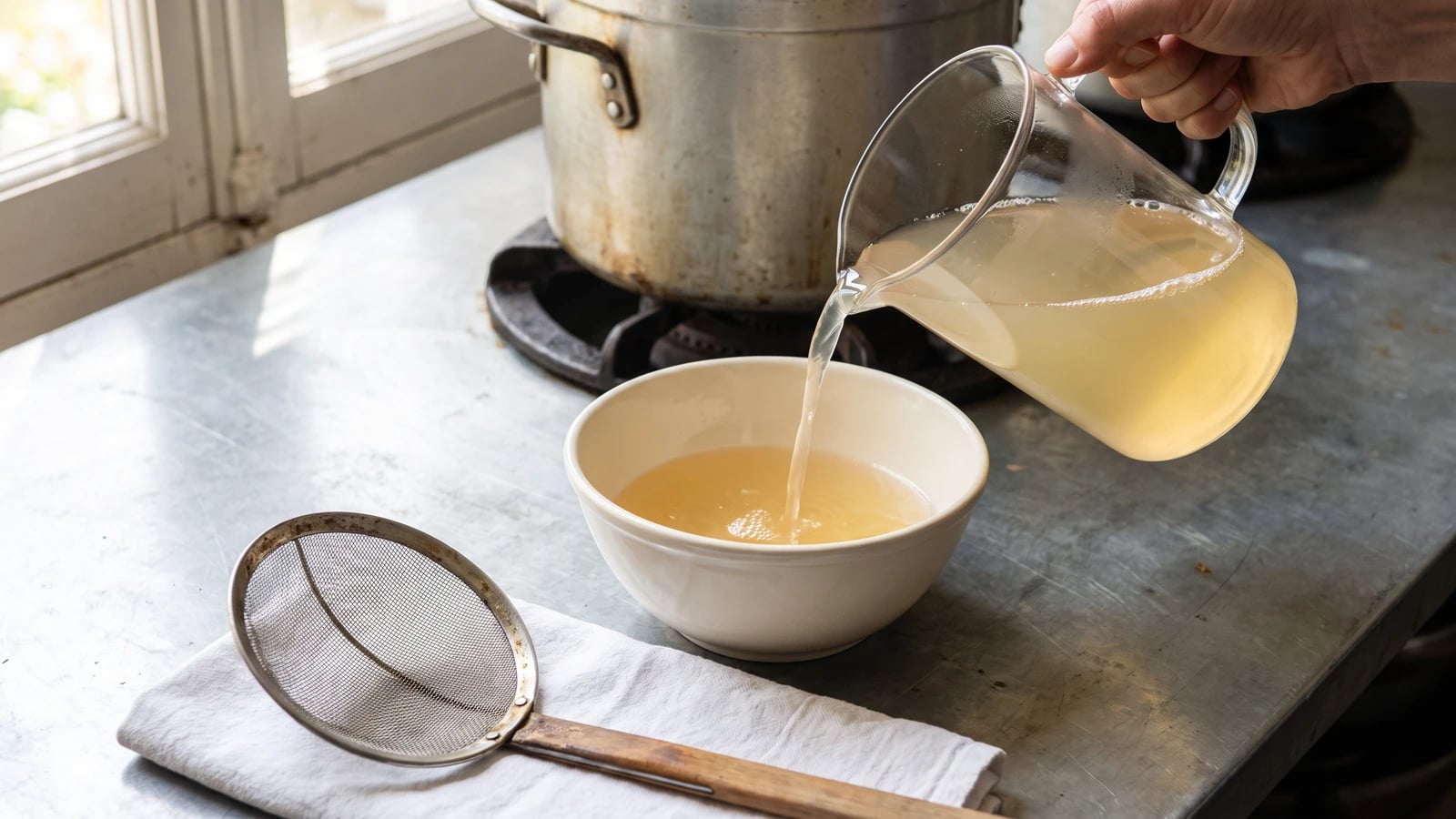
Beef shin, lean beef, and fowl begin in cold water and rise slowly toward a tremble. Skim before the boil, and you learn the quiet discipline that gives every clear French broth its backbone.
Consommé Ordinaire ou Blanc (ordinary or white consommé) teaches the first law of every clear stock: clarity is decided before the pot boils. Cold water draws soluble proteins from the beef and fowl; as the heat rises, those proteins gather into scum, and your skimmer must take them before boiling beats them back into the liquid. That patient first hour is not fuss. It is the dish.
The original formula assumed a stockpot could occupy the corner of the range all afternoon, a saucier could watch it while other work went on, and a draughty cooling place waited nearby. At home, the formula is halved to about two quarts, one tall pot sits on your smallest burner, and the strained broth cools safely in an ice bath. Trussing every scrap into a rigid bundle is brigade scaffolding and can go; two loose loops of twine simply keep the beef manageable. The cold start, careful skimming, and four-to-five-hour tremble must stay. One cook, one stove, one evening.
Done well, the consommé is pale gold, beef-deep but never brown, with enough gelatin to feel round on the tongue rather than heavy. Don't brown the meat, add uncalled-for herbs, or chase a rolling simmer. Before you touch the pot, clear the next hour: skimming before the first boil is the one step that decides everything.
Consommé ordinaire ou blanc belongs to the working stockpots of Parisian classical kitchens, where it served as a daily foundation rather than a showpiece. It carried household broth-making into the brigade: beef shin for body, lean beef for flavour, fowl for roundness, and roots for sweetness, all extracted without browning. Modern usage often reserves consommé for broth clarified with an egg-white raft, but this preparation is not raft-clarified; its clearness is earned during the first heating through cold extraction and patient skimming.
Quantity
1½ pounds (680 g)
cut into 2 large pieces
Quantity
1½ pounds (680 g)
cut into 2 large pieces
Quantity
1 small carcass, about 12 ounces (340 g)
broken into 2 or 3 pieces
Quantity
10 cups (2.4 L / 2.4 kg)
very cold
Quantity
1¼ teaspoons (6 ml / 7 g)
finely crushed
Quantity
about 2 cups (475 ml / 225 g)
cut into thick pieces
Quantity
¾ cup (180 ml / 115 g)
cut into large pieces
Quantity
about 2 cups (475 ml / 170 g)
split, thoroughly washed, and cut into short lengths
Quantity
½ large stalk, about ¼ cup (60 ml / 30 g)
cut into 2 pieces
Quantity
½ cup (120 ml / 55 g)
cut into large pieces
Quantity
½ medium onion, about ⅓ cup (80 ml / 55 g)
peeled
Quantity
1
Quantity
1 cup (240 ml / 240 g)
divided
| Ingredient | Quantity |
|---|---|
| bone-in beef shincut into 2 large pieces | 1½ pounds (680 g) |
| lean beefcut into 2 large pieces | 1½ pounds (680 g) |
| raw, unroasted chicken carcassbroken into 2 or 3 pieces | 1 small carcass, about 12 ounces (340 g) |
| cold watervery cold | 10 cups (2.4 L / 2.4 kg) |
| grey sea saltfinely crushed | 1¼ teaspoons (6 ml / 7 g) |
| carrotscut into thick pieces | about 2 cups (475 ml / 225 g) |
| turnipcut into large pieces | ¾ cup (180 ml / 115 g) |
| leekssplit, thoroughly washed, and cut into short lengths | about 2 cups (475 ml / 170 g) |
| celerycut into 2 pieces | ½ large stalk, about ¼ cup (60 ml / 30 g) |
| parsnipcut into large pieces | ½ cup (120 ml / 55 g) |
| onionpeeled | ½ medium onion, about ⅓ cup (80 ml / 55 g) |
| whole clove | 1 |
| additional cold waterdivided | 1 cup (240 ml / 240 g) |
Tie loose pieces of shin together with one loop of kitchen twine and do the same with the lean beef; if either is already a single compact piece, leave it alone. This is simply to keep the pot orderly, not to bind the meat tightly. Put the beef and chicken carcass into a tall 8-quart stockpot, pour in the 10 cups of very cold water, and add the grey salt. Set the uncovered pot over medium-low heat. Turn the meat gently once or twice from the bottom as the water warms, then stop disturbing it as soon as foam begins to gather. Allow 45 to 60 minutes for the water to approach a simmer.
Keep ½ cup of the additional cold water untouched for the finish. As grey foam and coagulated protein rise, remove them patiently with a fine skimmer, passing over the surface without stirring below it. Whenever the liquid threatens to boil before the scum is exhausted, add 1 or 2 tablespoons of the remaining cold water around the edge; the brief cooling gives more protein time to rise. If the pot breaks into a boil and the scum disperses, don't throw it away. Ça se rattrape: pull the pot off the burner, add the remaining pre-boil water, let it settle for 5 minutes, then return it over gentler heat and skim again. The broth may be less brilliant, but a second careful straining will still give you a sound stock.
When the heavy meat scum has nearly stopped rising, stick the clove into the onion and add it with the carrots, turnip, leeks, celery, and parsnip. Let the heat rise only until the surface begins to tremble, skimming the lighter foam released by the vegetables as it appears. Carefully wipe the inside of the pot above the liquid line with a clean damp cloth held in tongs; the brown deposit on that rim must not wash back into the consommé.
Move the pot to the smallest burner and adjust the heat until an occasional lazy bubble appears at the edge, with only a slight movement across the surface. This is the home equivalent of the old corner of the fire. Cook uncovered for 4 hours, or as long as 5, without stirring. Halving the quantity does not halve the extraction time; the shin still needs patience to surrender its gelatin, and active boiling would emulsify the fat back into the broth and cloud it.
Take the pot completely off the heat and pour the reserved ½ cup of cold water gently down the inside edge. Leave it undisturbed for 10 minutes. The cooling quiets the liquid and encourages the fat to gather at the surface, where you can remove it with the skimmer or a broad spoon. Don't chase every tiny bead and disturb the sediment; any remaining fat will lift cleanly after chilling.
Set a very fine sieve lined with rinsed, damp cheesecloth over a clean, wide metal bowl. Lift out the largest solids, then ladle the consommé through the sieve, working gently so sediment stays at the bottom of the stockpot. Stop before the final cloudy spoonful and never press the meat or vegetables against the cloth. Pressing may recover more liquid, but it also pushes spent particles into the broth, trading clarity for a few mean spoonfuls.
Set the bowl into a larger bowl or sink filled with ice water and stir the strained consommé gently until it is cool, about 20 to 30 minutes. The original draught is replaced by an ice bath because controlled, rapid cooling is both safer and more dependable. Refrigerate promptly and cover once cold. If a firm cap of fat forms, lift it away in one piece. The finished consommé should be clear, pale gold, and lightly gelatinous when chilled, ready to support the sauces, soups, and braises built upon it.
1 serving (about 240g)
Culinary guides, cultural storytelling, and the editorial depth that makes cooking meaningful.
Discover Culinary ExplorerChef Juliette
Break the veal bones small, then give them eight hours at a bare tremble. This pale, gelatinous fond becomes the quiet foundation beneath velouté, blanquette, and every sauce that must stay light.
Chef Juliette
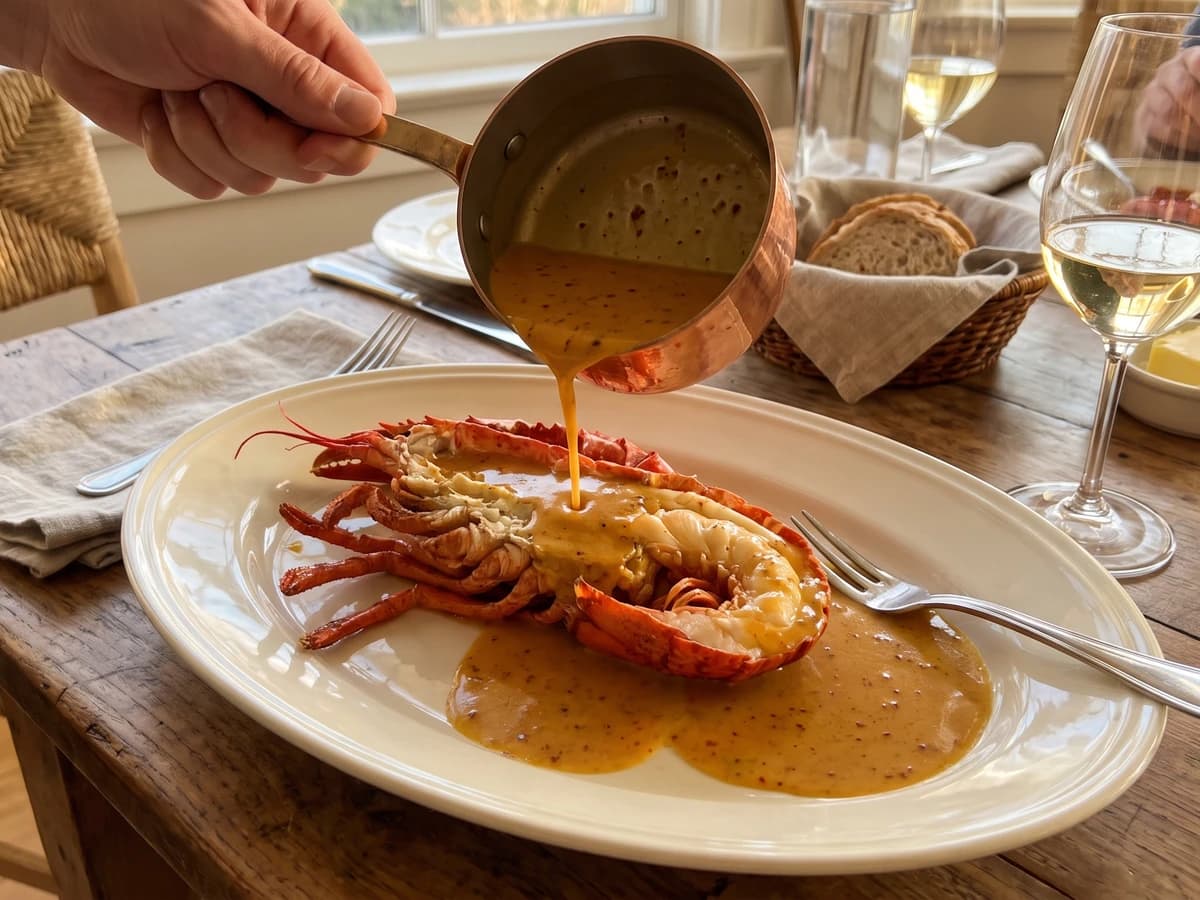
Sauce Orientale concentrates lobster-rich American Sauce with curry, then folds in cream away from the fire: a glossy, gently spiced derivative made for lobster, crayfish, and firm fish.
Chef Juliette
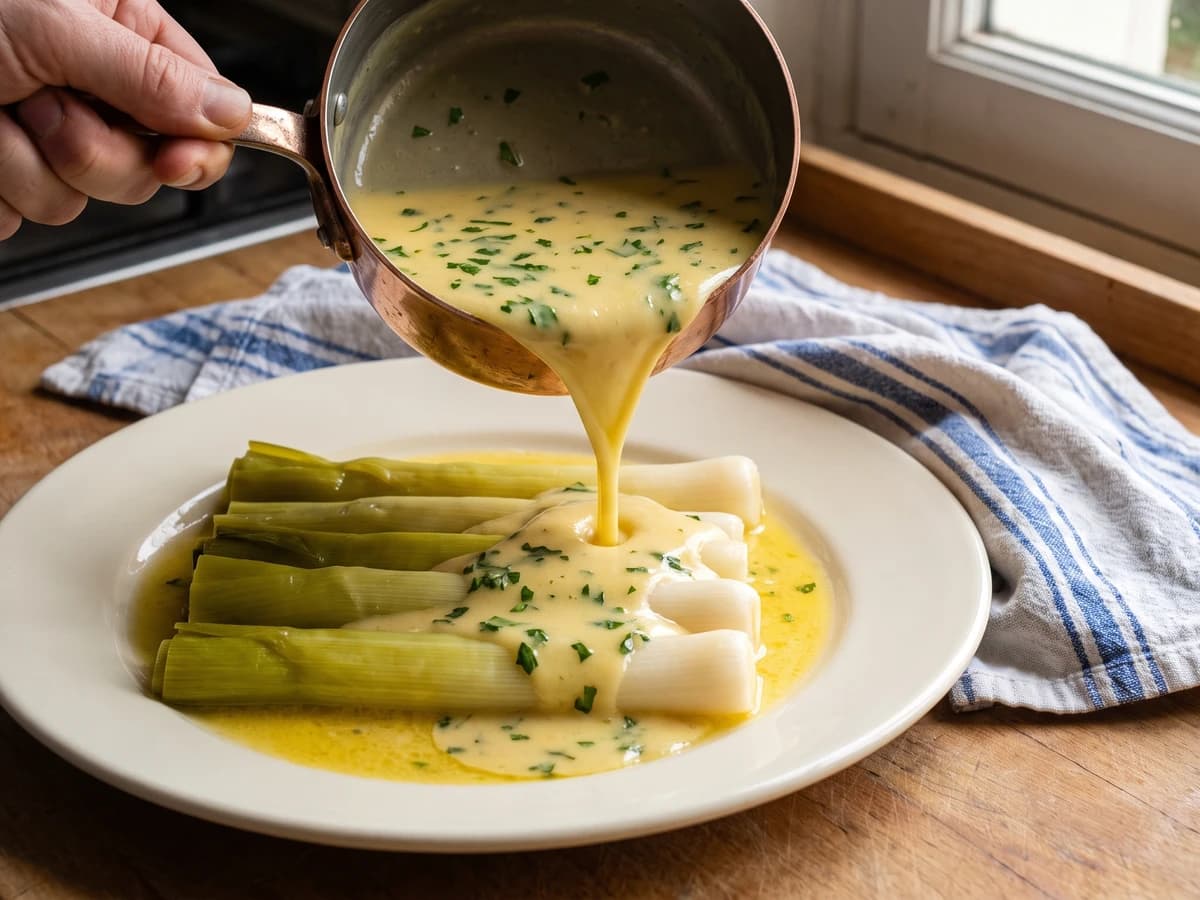
An old lesson in sauce families: Sauce Allemande takes mushroom liquor, then butter, lemon, and parsley, becoming a glossy Poulette for sheep's trotters, leeks, cauliflower, and anything needing gentle richness with a bright edge.
Chef Juliette
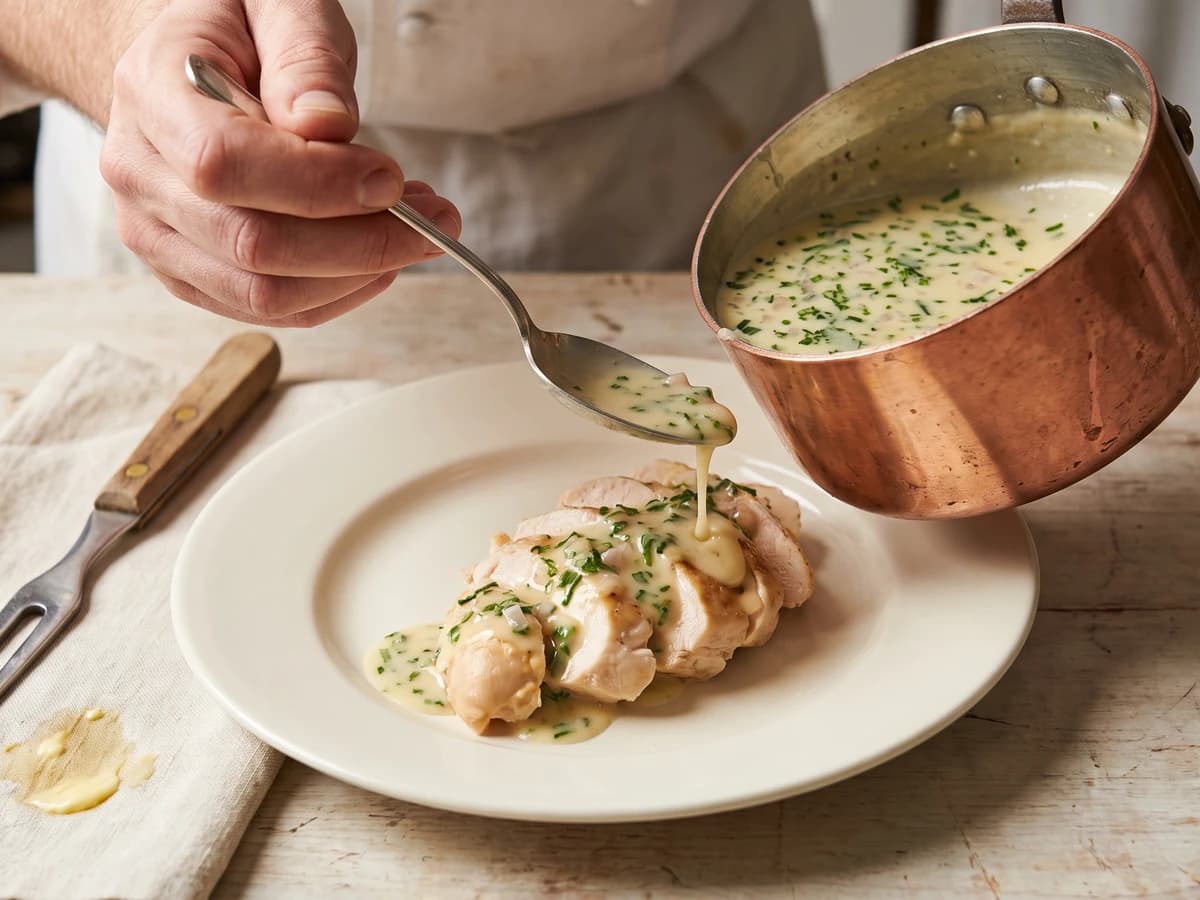
Sauce ravigote turns a calm velouté lively with white wine, vinegar, shallot butter, and three fresh herbs, a sharp green finish made for boiled poultry and the pale richness of white abats.