Chef Juliette
Ordinary or White Consommé
Beef shin, lean beef, and fowl begin in cold water and rise slowly toward a tremble. Skim before the boil, and you learn the quiet discipline that gives every clear French broth its backbone.
A cooking platform built around craft, culture, and the stories behind what we eat.
Created by Chef Juliette
Based on No. 10, White Veal Stock, and Poultry Stock, from Le Guide Culinaire (1907) by Auguste Escoffier
Break the veal bones small, then give them eight hours at a bare tremble. This pale, gelatinous fond becomes the quiet foundation beneath velouté, blanquette, and every sauce that must stay light.
Fond blanc de veau et fond de volaille teach the discipline behind the pale sauces of the French canon. Break the veal bones small before they see water. That is the one true thing to know: the cut surfaces expose the collagen and marrow that give a finished fond its body, while a hard boil merely clouds what careful work has drawn out.
The original preparation assumed a stock never off the fire, hands nearby to skim it, two large stewpan loads, and four quarts needed for service. This version keeps the same proportions and makes about two quarts in an eight-quart home stockpot. The brigade volume and constant hovering were scaffolding, so they can go. The butcher-sawed bones and two-stage, eight-hour extraction are the dish, and they stay exactly where they belong.
For fond de volaille, one mature stewing hen joins the veal meat for the final three hours. Nothing is roasted, because blanc names the method as well as the color: pale, clean, and gently extracted. Before you begin, have the butcher separate the shin meat and saw every bone into pieces no larger than two inches. Everything that follows depends on it.
Fond blanc belongs to the working grammar of the grand kitchens of Paris, where pale veal stock supplied the neutral, gelatinous body for veloutés, blanquettes, and white braises before passing into bourgeois home cooking in smaller pots. Blanc describes the absence of roasting and browning, not a milky appearance; a well-made fond remains pale and reasonably clear. For fond de volaille, a mature fowl joins the veal foundation because its worked meat and joints yield a deeper poultry character than a young roasting bird.
Quantity
4 pounds (1.8 kg)
meat removed and tied into a compact bundle, bones sawed into 1- to 2-inch pieces
Quantity
1, about 12 to 16 ounces (340 to 450 g)
broken into pieces
Quantity
2¾ quarts (11 cups / 2.6 L / 2.6 kg)
plus a little boiling water only if needed after the first simmer
Quantity
1⅓ cups (315 ml / 170 g)
cut into large pieces
Quantity
1, about ½ cup (120 ml / 85 g)
peeled
Quantity
1
Quantity
⅔ cup loosely packed (160 ml / 57 g)
washed and kept in long pieces
Quantity
½ stalk, about ¾ ounce (20 g)
Quantity
1, containing ½ cup loosely packed (120 ml / 14 g) parsley stems, ½ bay leaf, and 1 tiny thyme sprig
tied together
Quantity
1, about 3 to 4 pounds (1.4 to 1.8 kg)
quartered
| Ingredient | Quantity |
|---|---|
| bone-in veal shinmeat removed and tied into a compact bundle, bones sawed into 1- to 2-inch pieces | 4 pounds (1.8 kg) |
| raw chicken carcass (optional)broken into pieces | 1, about 12 to 16 ounces (340 to 450 g) |
| cold waterplus a little boiling water only if needed after the first simmer | 2¾ quarts (11 cups / 2.6 L / 2.6 kg) |
| carrotscut into large pieces | 1⅓ cups (315 ml / 170 g) |
| small onionpeeled | 1, about ½ cup (120 ml / 85 g) |
| whole clove | 1 |
| leekwashed and kept in long pieces | ⅔ cup loosely packed (160 ml / 57 g) |
| celery stalk | ½ stalk, about ¾ ounce (20 g) |
| bouquet garni of parsley stems, bay leaf, and thymetied together | 1, containing ½ cup loosely packed (120 ml / 14 g) parsley stems, ½ bay leaf, and 1 tiny thyme sprig |
| mature stewing hen, for fond de volaille only (optional)quartered | 1, about 3 to 4 pounds (1.4 to 1.8 kg) |
Ask the butcher to remove the veal meat from the shin and saw the bones into 1- to 2-inch pieces. A kitchen knife is not a bone saw, and this is no place for heroics. Tie the meat into a compact bundle with kitchen twine and keep it refrigerated while the bones complete their first simmer. Tie the leek and celery together, push the clove into the onion, and prepare the bouquet garni.
Put the broken veal bones and the raw chicken carcass, if using, into an eight-quart stockpot. Add the 11 cups of cold water and bring it slowly toward the boil over medium heat. Starting cold allows the soluble proteins to rise gradually as foam rather than being churned back into the liquid. As the first boil approaches, skim the gray froth carefully without stirring the pot.
Move the pot to the smallest burner and hold the liquid at a bare tremble for five hours, roughly 185 to 195°F (85 to 90°C). A bubble should break the surface only now and then. Skim during the first hour whenever fresh foam or fat gathers, then check the pot every thirty to forty-five minutes. Do not stir, cover tightly, or let the bones rattle in a boil; agitation turns a pale fond turbid.
Strain the first stock through a colander into a clean second pot, leaving the spent bones and carcass behind. Do not press them. Measure the liquid and add only enough boiling water to bring it to 2½ quarts (10 cups / 2.4 L); this restores the proportion the long first simmer was meant to reach.
Lower the tied raw veal meat into the strained stock with the carrots, clove-studded onion, leek and celery bundle, and bouquet garni. For fond de volaille, add the quartered stewing hen at the same moment. Bring the liquid just to the boil, skim the fresh foam carefully, then lower the heat immediately. The old preparation separated bones from meat because each gives its best at a different pace; that sequence is technique, not ceremony.
Cook for three more hours at the same bare tremble. Keep the ingredients just submerged, adding a small amount of boiling water only if the pot is evaporating unusually fast. Do not salt the fond. It is a foundation meant to be reduced and seasoned inside another preparation, and salt added now can become harsh later.
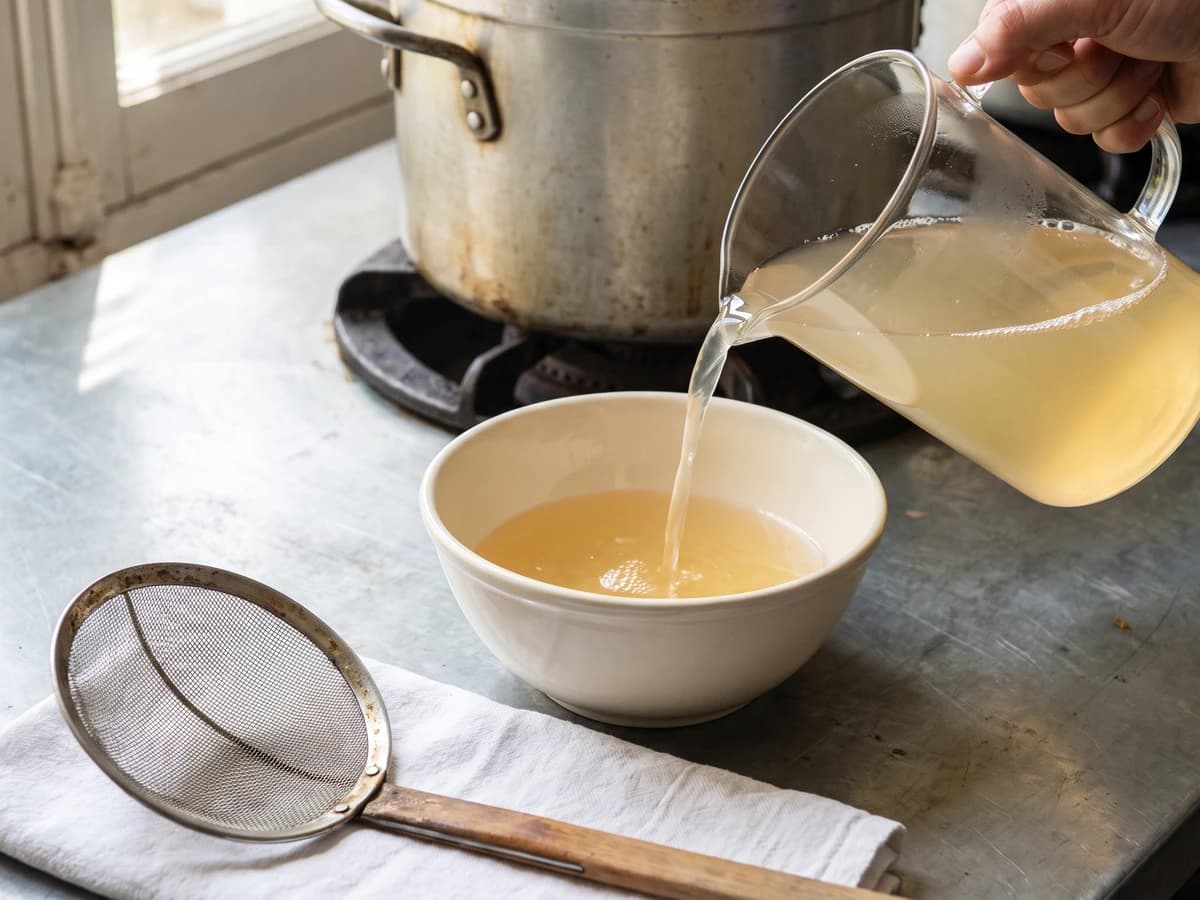
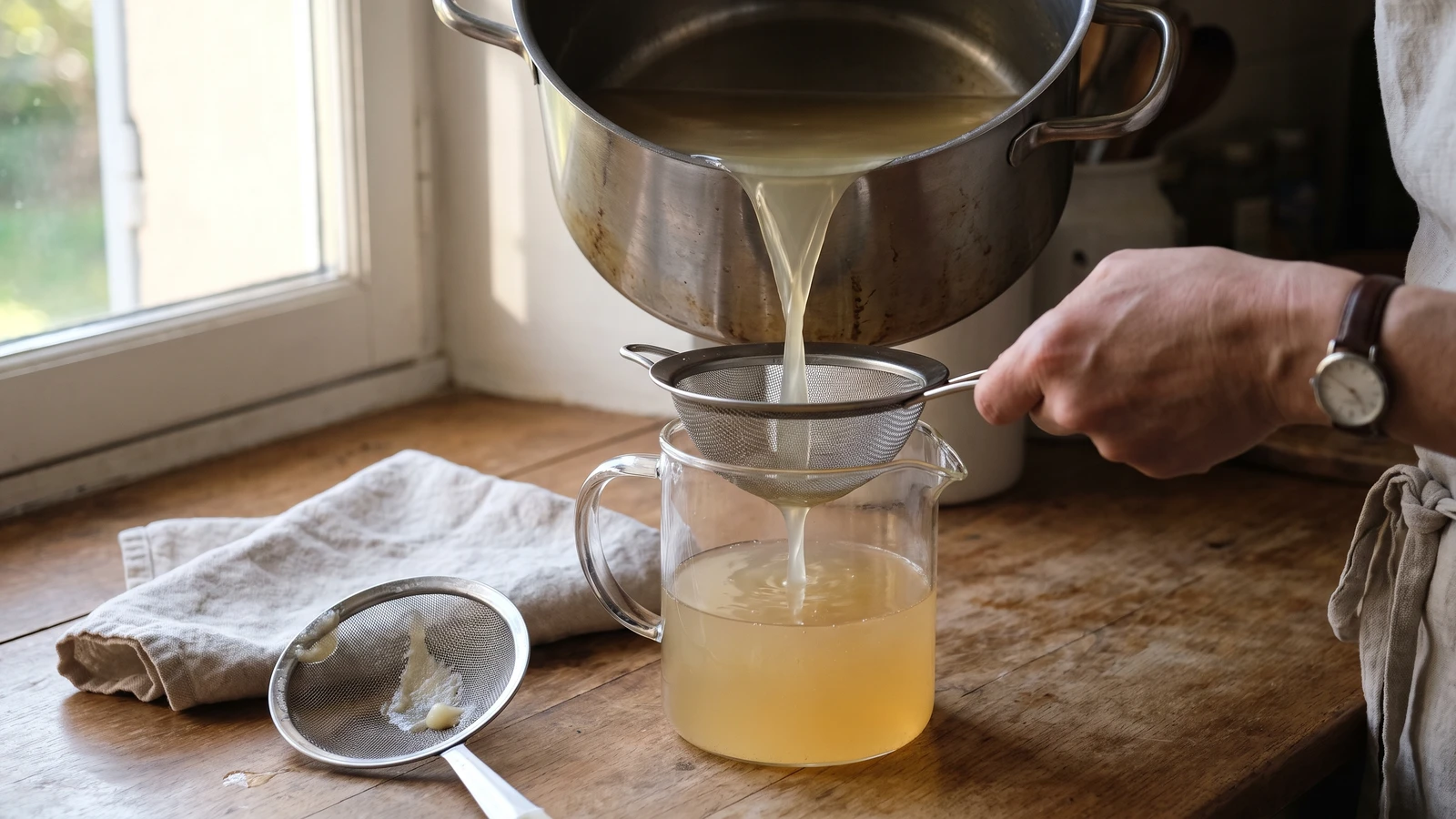
Lift out the meat, hen, and vegetables, then skim every visible pool of fat from the surface. Pass the fond through a fine sieve lined with rinsed, damp cheesecloth into a clean container, pouring gently and never squeezing the solids. Cool it promptly in an ice-water bath, divide it into shallow containers, and refrigerate within two hours. Once cold, lift away the firm cap of remaining fat. The fond should tremble like a loose jelly; if it remains watery, return it to a clean pot and reduce it gently until it gains body, then cool it again. Ça se rattrape.
1 serving (about 240g)
Culinary guides, cultural storytelling, and the editorial depth that makes cooking meaningful.
Discover Culinary ExplorerChef Juliette
Beef shin, lean beef, and fowl begin in cold water and rise slowly toward a tremble. Skim before the boil, and you learn the quiet discipline that gives every clear French broth its backbone.
Chef Juliette
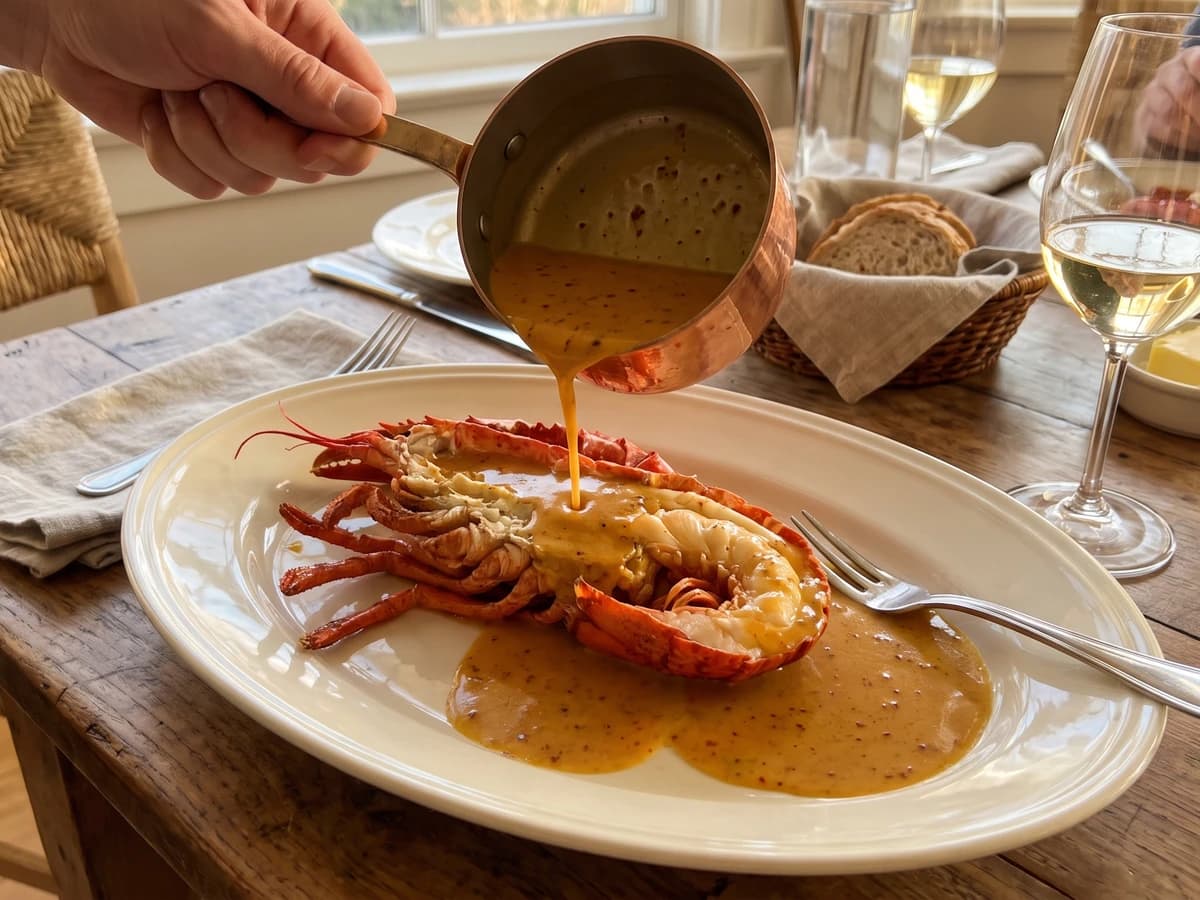
Sauce Orientale concentrates lobster-rich American Sauce with curry, then folds in cream away from the fire: a glossy, gently spiced derivative made for lobster, crayfish, and firm fish.
Chef Juliette
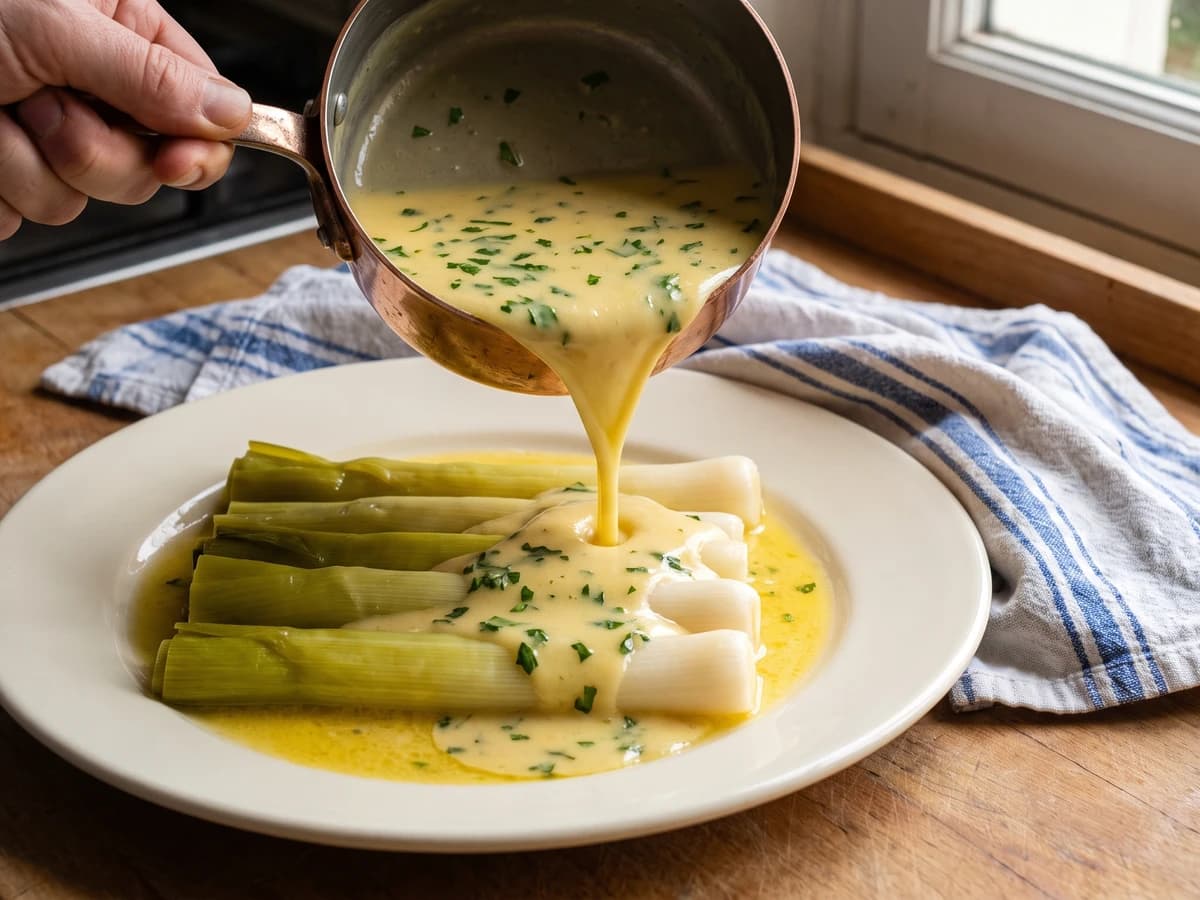
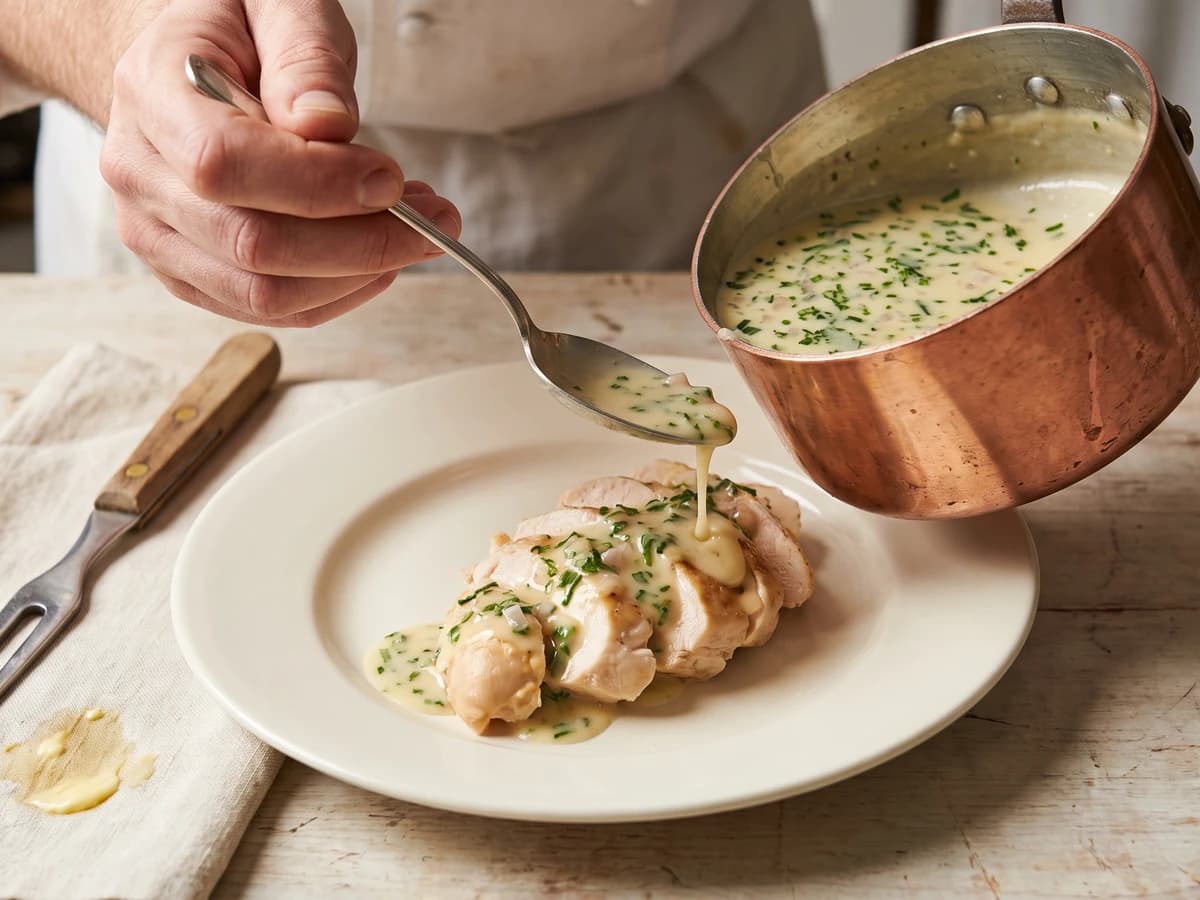
An old lesson in sauce families: Sauce Allemande takes mushroom liquor, then butter, lemon, and parsley, becoming a glossy Poulette for sheep's trotters, leeks, cauliflower, and anything needing gentle richness with a bright edge.
Chef Juliette
Sauce ravigote turns a calm velouté lively with white wine, vinegar, shallot butter, and three fresh herbs, a sharp green finish made for boiled poultry and the pale richness of white abats.