Chef Juliette
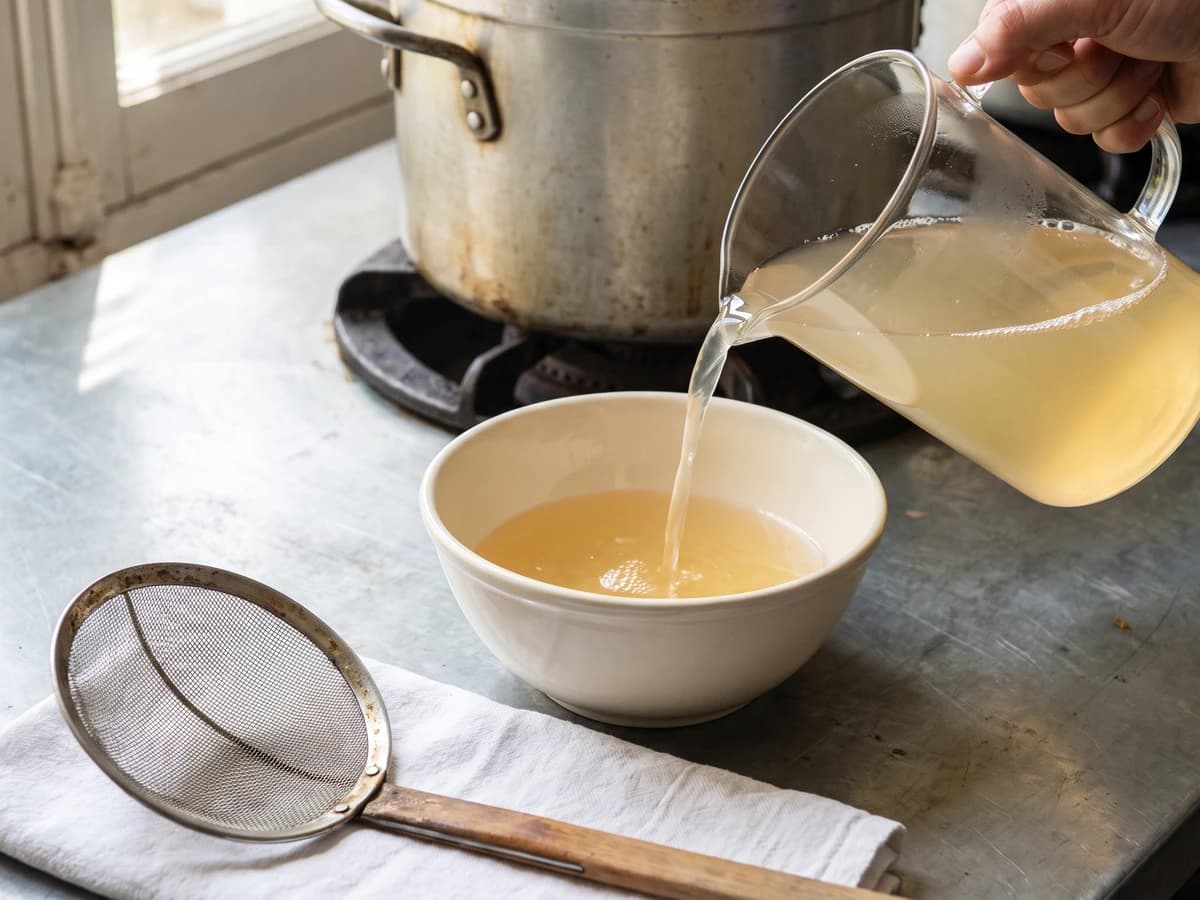
Ordinary or White Consommé
Beef shin, lean beef, and fowl begin in cold water and rise slowly toward a tremble. Skim before the boil, and you learn the quiet discipline that gives every clear French broth its backbone.
A cooking platform built around craft, culture, and the stories behind what we eat.
Created by Chef Juliette
Based on No. 101, Poulette Sauce, from Le Guide Culinaire (1907) by Auguste Escoffier
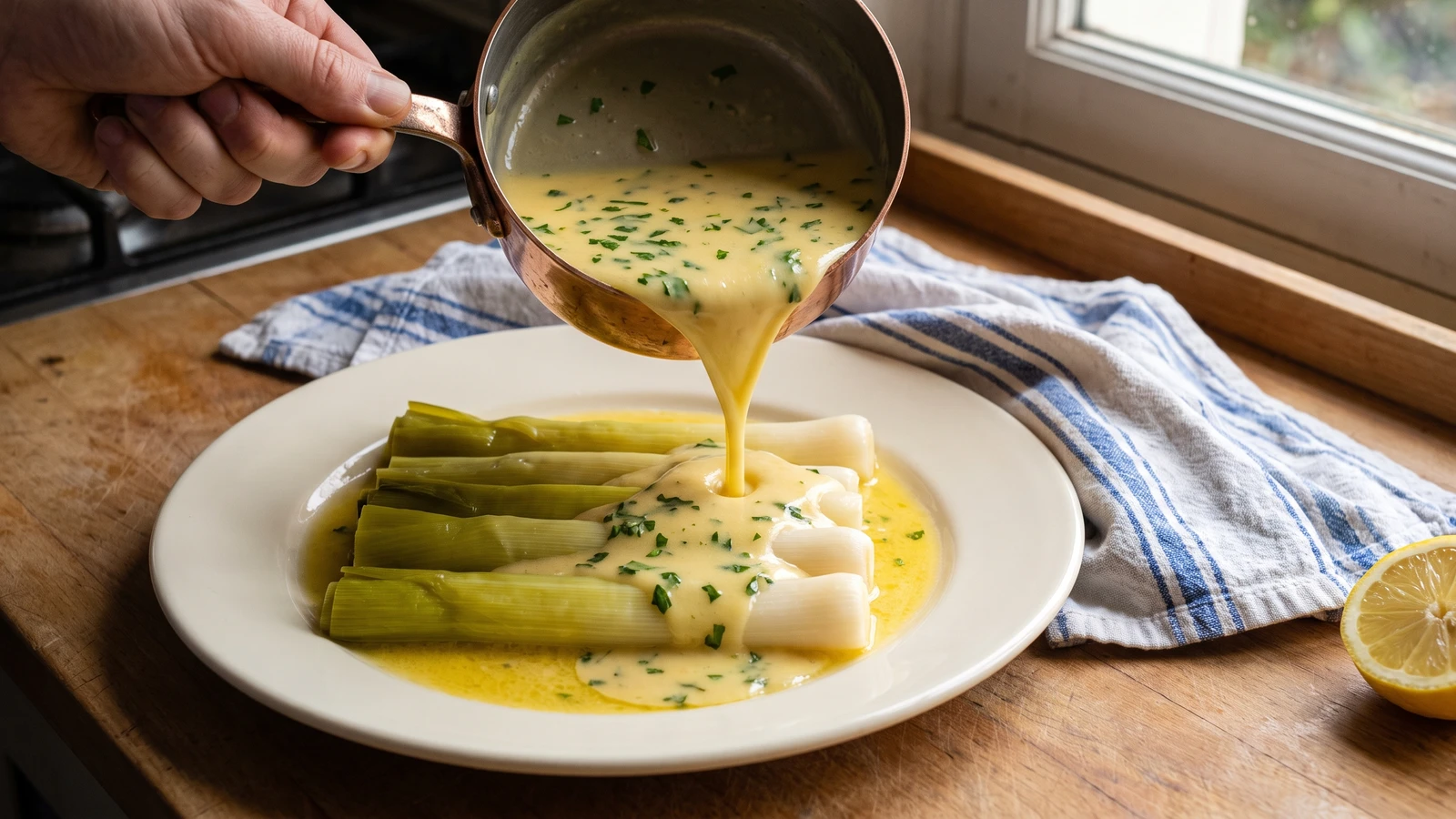
An old lesson in sauce families: Sauce Allemande takes mushroom liquor, then butter, lemon, and parsley, becoming a glossy Poulette for sheep's trotters, leeks, cauliflower, and anything needing gentle richness with a bright edge.
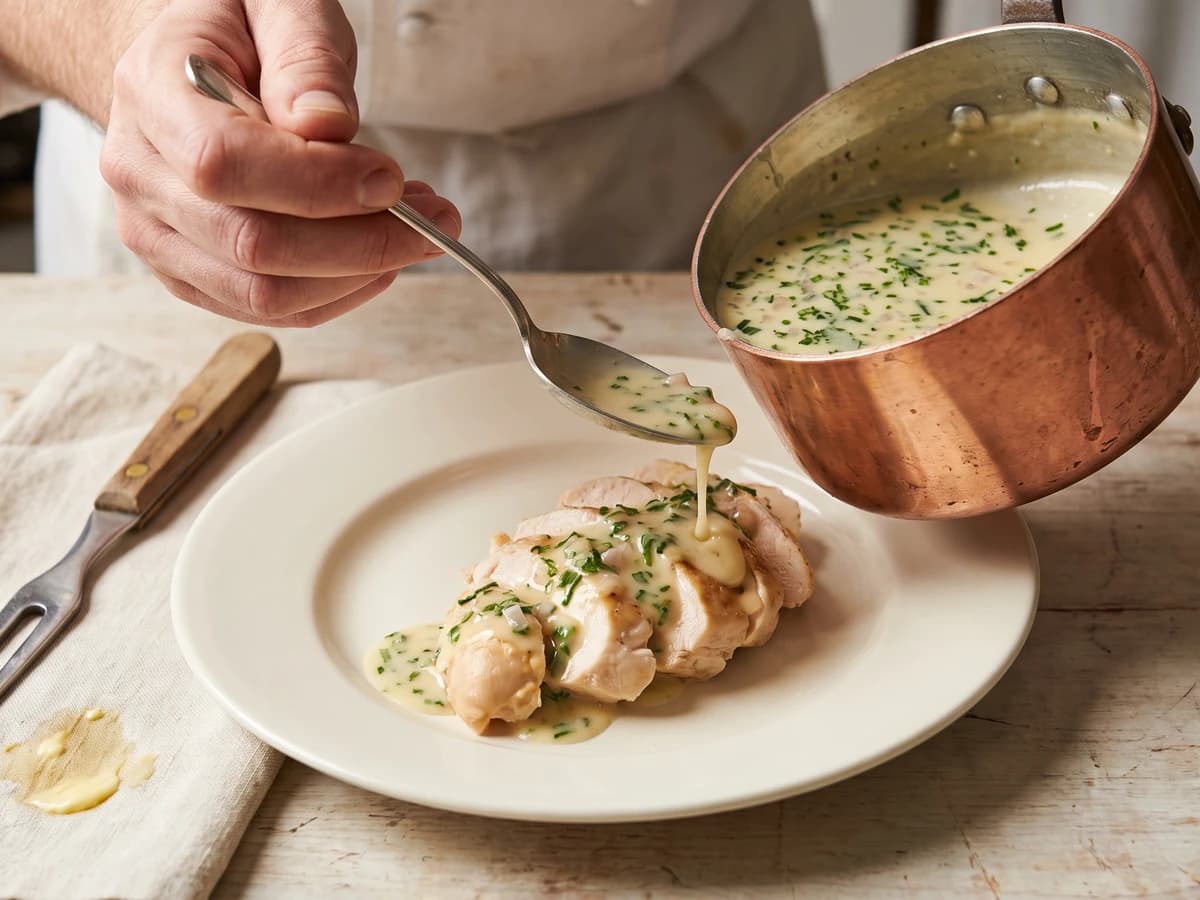
Sauce Poulette (a mushroom-brightened Allemande finished with butter, lemon, and parsley) teaches how one finished sauce becomes another without losing its character. The one true thing to know before touching the pan is this: restore the sauce to its proper thickness after adding the mushroom liquor, then add the butter away from the heat. Butter gives gloss and roundness. It cannot rescue a watery foundation.
The classical formula assumed a saucier on staff, Sauce Allemande ready beside the stove, and stock never off the fire. Your honest equivalent is a finished batch of Allemande prepared separately, one wide saucepan, and a whisk. Holding several sauces hot through service was brigade scaffolding and can go; boiling the Allemande briefly, adding the mushroom liquor in sequence, and finishing off heat are the dish itself and must stay. No salamander, no specialized equipment, no theater. One cook, one stove, one evening.
The source formula begins with one pint of Allemande. To provide the required two-quart sauce yield, every quantity is multiplied threefold while its ratios and order remain intact. The decisive moment comes before the butter: reduce until the sauce once again coats a spoon in a smooth ivory veil. If the butter later oils out, don't pour it away. Ça se rattrape, and the reserved spoonful of unmounted sauce will bring it home.
Sauce Poulette belongs to the Parisian classical sauce repertory, where sauces were understood as families and Sauce Allemande became a distinct derivative through mushroom liquor, lemon, butter, and parsley. It traveled readily from grand kitchens to the bourgeois table because its customary partners were modest ones, especially sheep's trotters, artichoke bottoms, cauliflower, and other boiled vegetables. Despite the name, Poulette is not confined to chicken; generations of cooks have known it chiefly as a pale, lively sauce for offal and vegetables.
Quantity
3 pints (6 cups / 1.42 L / 1,450 g)
Quantity
18 tablespoons (1⅛ cups / 270 ml / 270 g)
well strained
Quantity
¾ cup (180 ml / 170 g)
cut into small cubes
Quantity
¼ teaspoon (1 ml / 1 g), plus a few drops if needed
Quantity
1 tablespoon (15 ml / 4 g)
finely chopped
| Ingredient | Quantity |
|---|---|
| finished Sauce Allemande | 3 pints (6 cups / 1.42 L / 1,450 g) |
| mushroom liquorwell strained | 18 tablespoons (1⅛ cups / 270 ml / 270 g) |
| cold unsalted buttercut into small cubes | ¾ cup (180 ml / 170 g) |
| freshly squeezed lemon juice | ¼ teaspoon (1 ml / 1 g), plus a few drops if needed |
| flat-leaf parsleyfinely chopped | 1 tablespoon (15 ml / 4 g) |
Measure the mushroom liquor and strain it until no grit remains. Keep the butter cold, chop the parsley finely, and squeeze the lemon just before cooking. Set a clean heatproof bowl and ladle beside the stove for the reserved sauce. Once the butter finish begins, the sauce should not wait while you search for a knife.
Put the finished Sauce Allemande into a wide, heavy saucepan and bring it to a controlled boil over medium heat, whisking across the bottom and into the corners. Let it boil for 3 minutes, as the source directs, but never let it catch. If the sauce begins to look grainy, lower the heat immediately and whisk off the fire; pass it through a fine sieve if small curds remain. Ça se rattrape.
Pour in the strained mushroom liquor and whisk until completely blended. Return the sauce to a controlled boil and reduce it for 2 to 4 minutes, stirring continuously, until it is nappé, coating the back of a spoon in an even layer that holds a clean line when you draw through it with a finger. This concentration is the step that decides the sauce. Ladle ½ cup of the unmounted sauce into the clean bowl and keep it warm for the butter rescue.
Take the saucepan completely off the heat. For the monter au beurre (off-heat butter finish), whisk in the cold butter a few cubes at a time, adding more only after the previous pieces have disappeared. The sauce should become supple, glossy, and slightly fuller without feeling greasy. If the pan cools before all the butter is incorporated, set it over the lowest heat for 5 seconds, then remove it again. If yellow butter beads collect on the surface, pour the reserved warm sauce into a clean bowl and whisk the broken sauce into it one ladle at a time. It will come back together. If the emulsion remains smooth, whisk the reserved sauce back into the pan.
Still away from the heat, whisk in the lemon juice and fold through the chopped parsley. Taste for balance; if the sauce feels heavy rather than gently bright, add lemon a few drops at a time. Do not boil it again, because direct heat can split the mounted butter and dull the parsley. Serve at once over sheep's trotters or boiled vegetables, letting the sauce pool generously rather than painting the plate. À table!
1 serving (about 60g)
Culinary guides, cultural storytelling, and the editorial depth that makes cooking meaningful.
Discover Culinary ExplorerChef Juliette
Beef shin, lean beef, and fowl begin in cold water and rise slowly toward a tremble. Skim before the boil, and you learn the quiet discipline that gives every clear French broth its backbone.
Chef Juliette
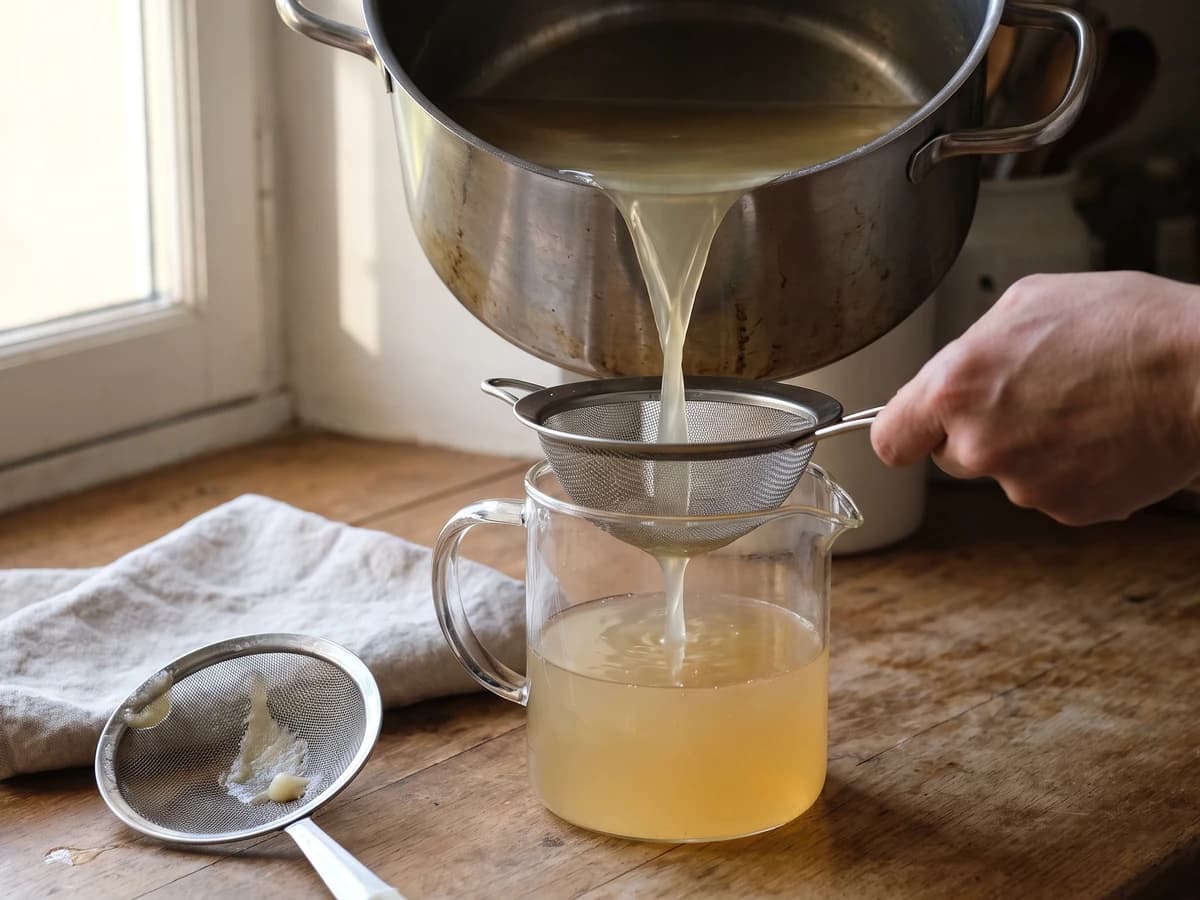
Break the veal bones small, then give them eight hours at a bare tremble. This pale, gelatinous fond becomes the quiet foundation beneath velouté, blanquette, and every sauce that must stay light.
Chef Juliette
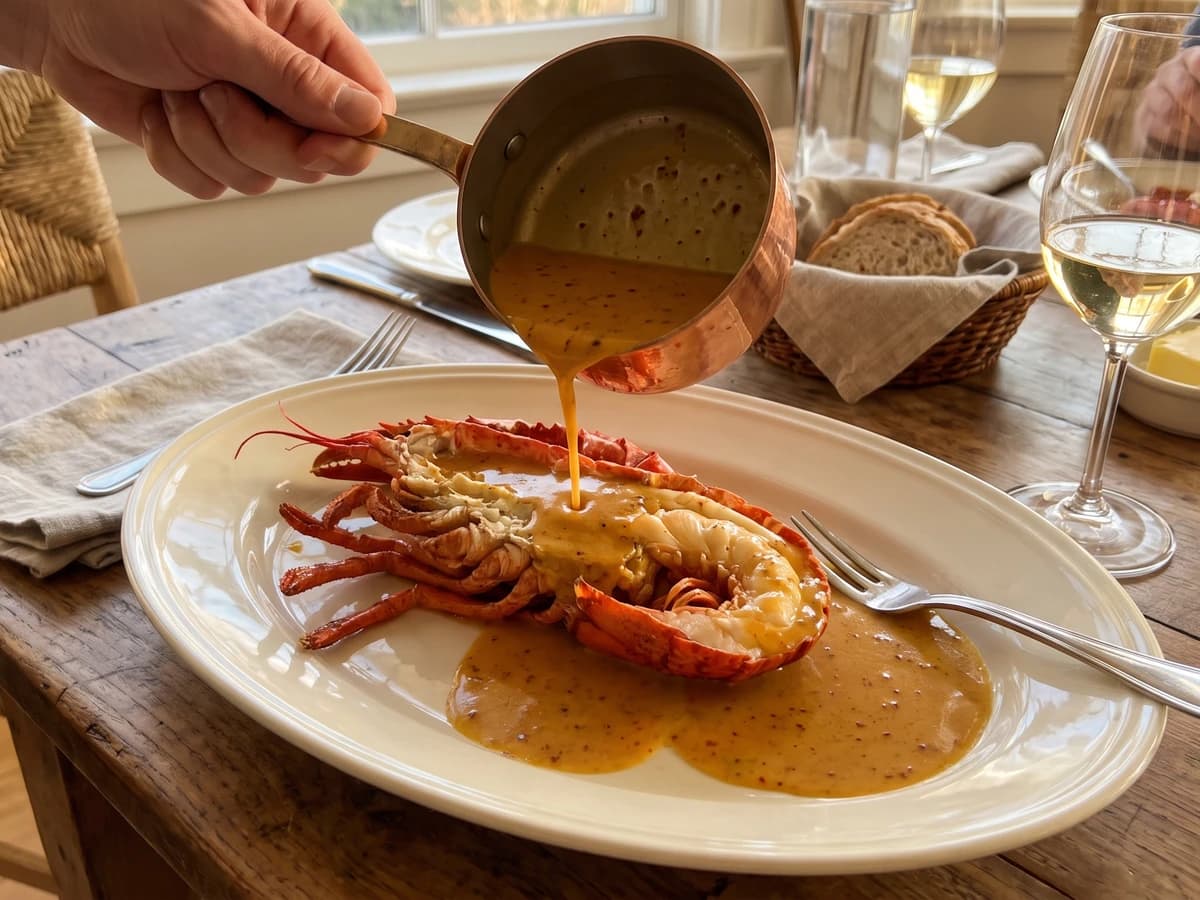
Sauce Orientale concentrates lobster-rich American Sauce with curry, then folds in cream away from the fire: a glossy, gently spiced derivative made for lobster, crayfish, and firm fish.
Chef Juliette
Sauce ravigote turns a calm velouté lively with white wine, vinegar, shallot butter, and three fresh herbs, a sharp green finish made for boiled poultry and the pale richness of white abats.