Chef Juliette
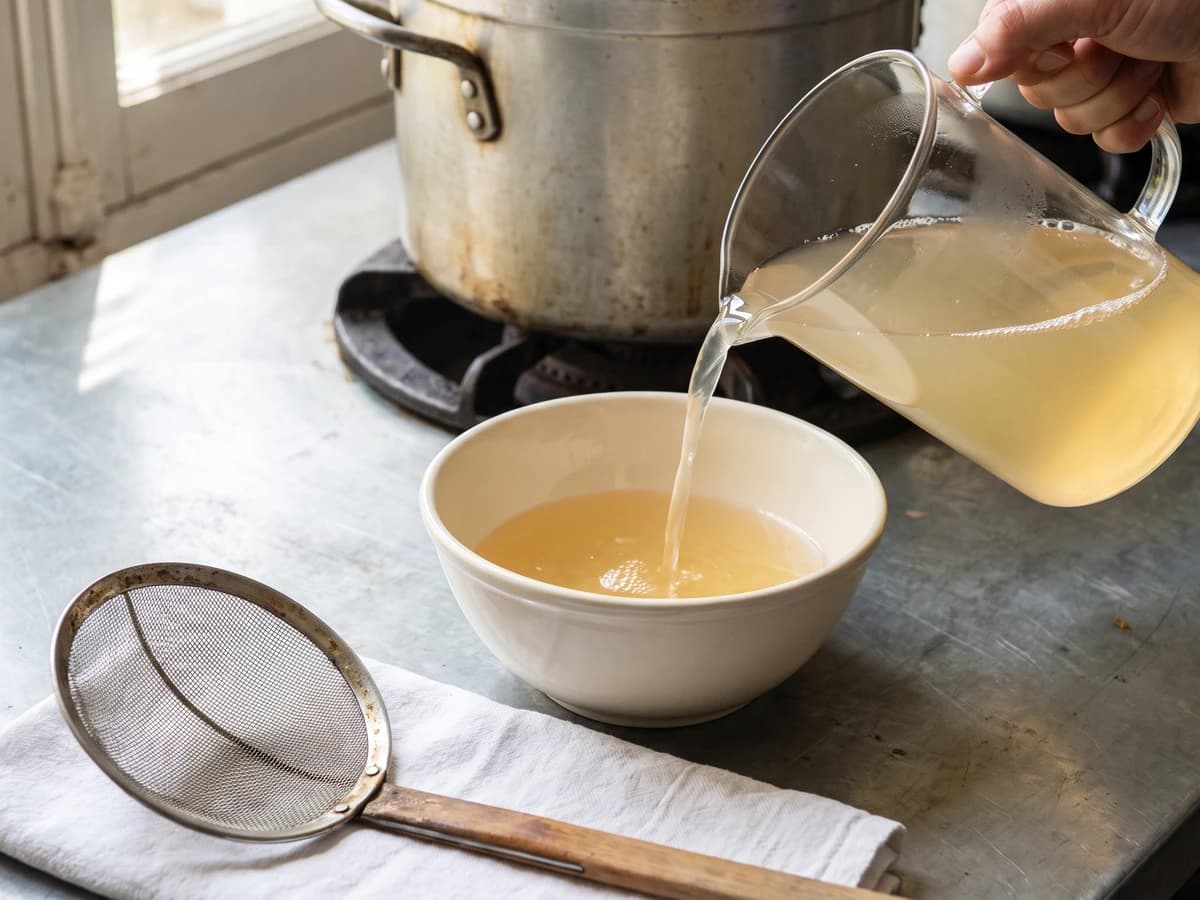
Ordinary or White Consommé
Beef shin, lean beef, and fowl begin in cold water and rise slowly toward a tremble. Skim before the boil, and you learn the quiet discipline that gives every clear French broth its backbone.
A cooking platform built around craft, culture, and the stories behind what we eat.
Created by Chef Juliette
Based on No. 103, Regency Sauce, from Le Guide Culinaire (1907) by Auguste Escoffier
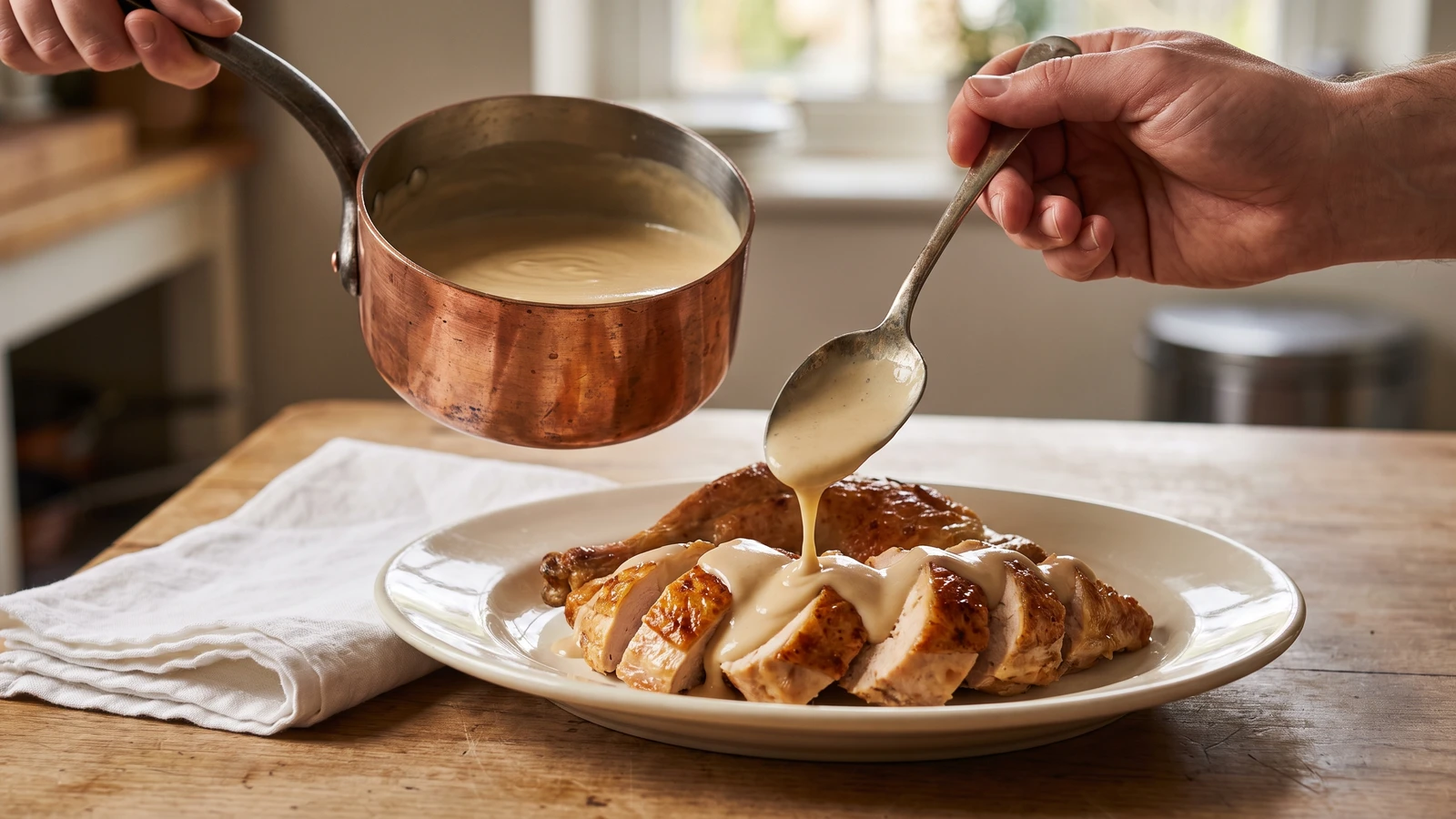
Sauce Régence turns a finished velouté into a deep, silken accompaniment through mushroom, truffle, and concentrated glaze, proving that gentle reduction, not ornament, gives a derivative sauce its authority.
Sauce Régence teaches the hierarchy of a derivative sauce: the foundation gives body, but the essences give identity. Mushroom and truffle must concentrate without being bullied, so the one true thing to know before touching the pan is this: reduce gently. The sauce is ready at nappe (when it coats the back of a spoon), not when a furious boil has driven away its perfume.
The original entry assumed a saucier on staff, a stock never off the fire, and finished Allemande Sauce, essences, and glaze waiting in neighboring pots. No salamander belongs here; the brigade scaffolding was that row of preparations and someone free to watch the reduction. Your equivalent is a heavy four-quart pan, a whisk, and the finished components measured before the burner is lit. The home formula multiplies the entry threefold to make about two quarts in one batch. One cook, one stove, one evening.
For poultry, the stated proportion remains exact: for every pint of Allemande Sauce, six tablespoons mushroom essence, two tablespoons truffle essence, and four tablespoons poultry glaze. The fish variation keeps the same essence ratio, then receives a liaison (egg-yolk thickening) and fish essence. The source leaves that final fish essence as "some," so half a cup is the practical ceiling here, added gradually until the fish foundation speaks clearly. The extra pots can go. The finished foundation, the gentle reduction, and the last concentrated essence are the dish, and they must stay.
Sauce Régence belongs to the Parisian grand-kitchen system of named derivative sauces, where a finished foundation was altered at the saucier's stove with concentrated essences and glazes. Its courtly title can obscure its practical grammar: poultry calls for Allemande Sauce and poultry glaze, while fish requires fish velouté, egg yolks, and fish essence so the foundation remains true to what it accompanies. It is not the property of a French region, but a working lesson in how the classical sauce families branch without losing their character.
Quantity
6 cups (1.42 L / about 1.45 kg)
Quantity
6 cups (1.42 L / about 1.45 kg)
Quantity
1⅛ cups (270 ml / about 270 g)
Quantity
⅜ cup (90 ml / about 90 g)
Quantity
¾ cup (180 ml / about 195 g)
Quantity
6 large (about 108 g)
Quantity
1 large (about 18 g)
Quantity
½ cup (120 ml / about 120 g)
| Ingredient | Quantity |
|---|---|
| finished Allemande Sauce, for the poultry variation | 6 cups (1.42 L / about 1.45 kg) |
| finished fish velouté, for the fish variation | 6 cups (1.42 L / about 1.45 kg) |
| mushroom essence | 1⅛ cups (270 ml / about 270 g) |
| truffle essence | ⅜ cup (90 ml / about 90 g) |
| poultry glaze, for the poultry variation | ¾ cup (180 ml / about 195 g) |
| egg yolks, for the fish liaison | 6 large (about 108 g) |
| egg yolk, for rescuing the fish variation (optional) | 1 large (about 18 g) |
| fish essence, for the fish variation | ½ cup (120 ml / about 120 g) |
Choose one branch before beginning. For poultry, use the finished Allemande Sauce and poultry glaze. For fish, use the finished fish velouté, egg yolks, and fish essence. Both receive the full mushroom and truffle essences, but the two foundations are not interchangeable. Measure everything before heating; once the reduction reaches nappe, the finishing steps move quickly.
For poultry, combine all the Allemande Sauce with the mushroom and truffle essences in a heavy four-quart pan. For fish, reserve ½ cup of the fish velouté for the liaison, then combine the remaining velouté with the mushroom and truffle essences. Bring the chosen mixture to one controlled boil over medium heat while whisking across the pan floor, then immediately lower it to the barest simmer. Reduce gently for 8 to 12 minutes, until the sauce falls from the whisk in a broad glossy ribbon and coats a spoon without running off at once. If it tightens too soon, pull it from the heat and whisk in hot water one tablespoon at a time. If it begins to catch, pour the upper sauce into a clean pan immediately and leave the browned layer behind.
For the poultry variation, whisk the poultry glaze into the reduced Allemande mixture. Hold it over low heat for 2 to 3 minutes, whisking until the glaze has disappeared into the sauce and the color deepens from ivory to warm beige. Do not reduce aggressively after the glaze enters; it is already concentrated, and a hard boil can make the sauce heavy and salty. The finished Sauce Régence should nappe the spoon but still pour in a generous ribbon. Proceed to the holding step.
For the fish variation, whisk six egg yolks with the reserved ½ cup of cool fish velouté in a heatproof bowl. Whisk in two ladlefuls of the hot reduced sauce, one at a time, then slowly whisk in another two cups. Return this tempered liaison to the saucepan over low heat. Whisk without stopping until the sauce reaches 71 to 74°C (160 to 165°F), thickens slightly, and returns to nappe. Never let it boil after the yolks enter. If tiny curds appear, remove the pan from the heat and pass the sauce through a fine sieve at once. If it separates more seriously, whisk the optional extra yolk with one tablespoon of cold fish essence in a clean bowl, then rebuild the strained sauce into it a ladleful at a time. Ça se rattrape.
Whisk the fish essence into the finished fish liaison in two or three additions over the gentlest heat. The source deliberately leaves this quantity to judgment, so treat the measured ½ cup as a ceiling. Stop when the sauce tastes distinctly of fish beneath the mushroom and truffle, before the added liquid thins its body. Warm it only long enough to restore nappe, never to a boil.
If the sauce is already perfectly smooth, straining it again is brigade scaffolding and can go. Otherwise, pass it through a fine sieve into a clean pan. Hold the Sauce Régence covered in a bain-marie (warm water bath) at 60 to 65°C (140 to 150°F) for no longer than 30 minutes, whisking occasionally. If a skin forms, whisk it back in gently; if the sauce tightens, loosen it with a spoonful of hot water. Spoon the poultry variation over roasted or poached poultry, or the fish variation over simply cooked firm white fish. À table!
1 serving (about 60g)
Culinary guides, cultural storytelling, and the editorial depth that makes cooking meaningful.
Discover Culinary ExplorerChef Juliette
Beef shin, lean beef, and fowl begin in cold water and rise slowly toward a tremble. Skim before the boil, and you learn the quiet discipline that gives every clear French broth its backbone.
Chef Juliette
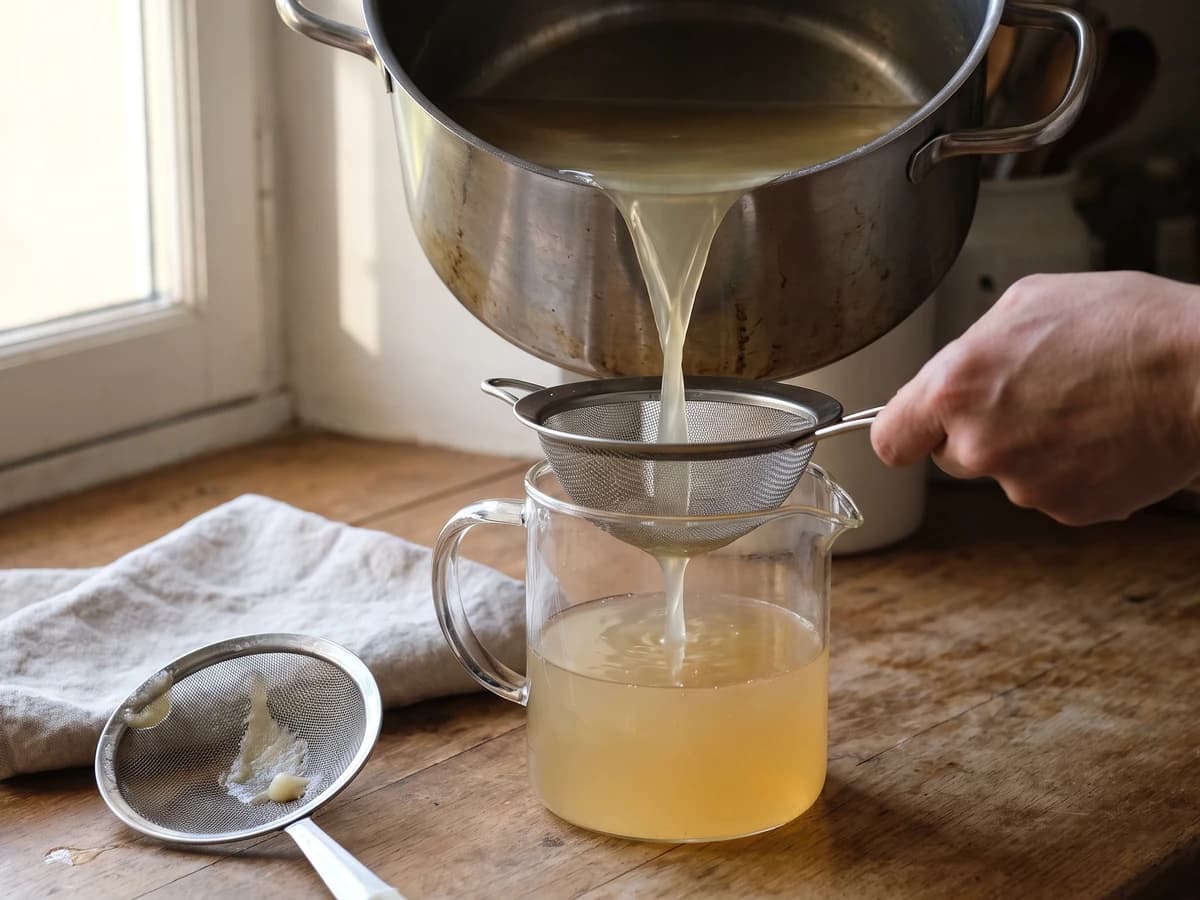
Break the veal bones small, then give them eight hours at a bare tremble. This pale, gelatinous fond becomes the quiet foundation beneath velouté, blanquette, and every sauce that must stay light.
Chef Juliette
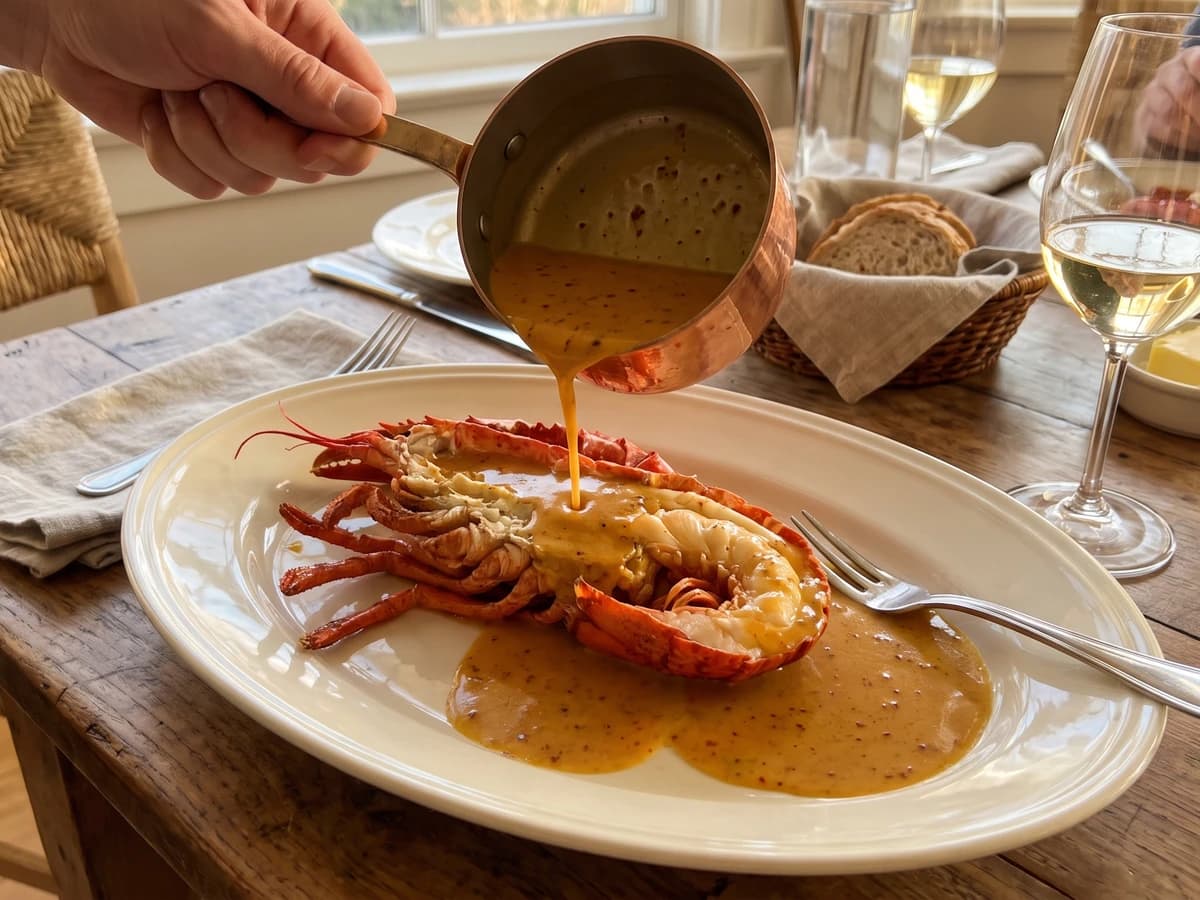
Sauce Orientale concentrates lobster-rich American Sauce with curry, then folds in cream away from the fire: a glossy, gently spiced derivative made for lobster, crayfish, and firm fish.
Chef Juliette
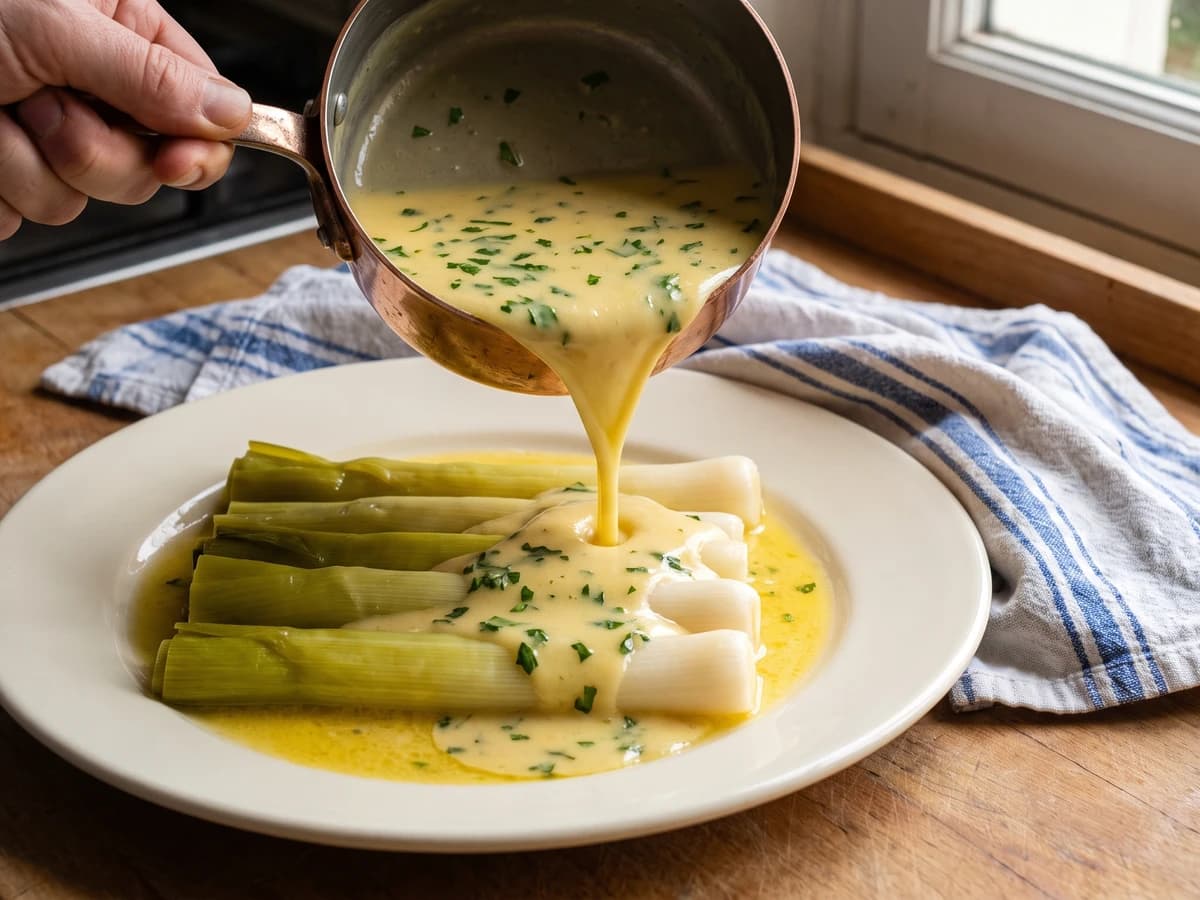
An old lesson in sauce families: Sauce Allemande takes mushroom liquor, then butter, lemon, and parsley, becoming a glossy Poulette for sheep's trotters, leeks, cauliflower, and anything needing gentle richness with a bright edge.