Chef Juliette
Ordinary or White Consommé
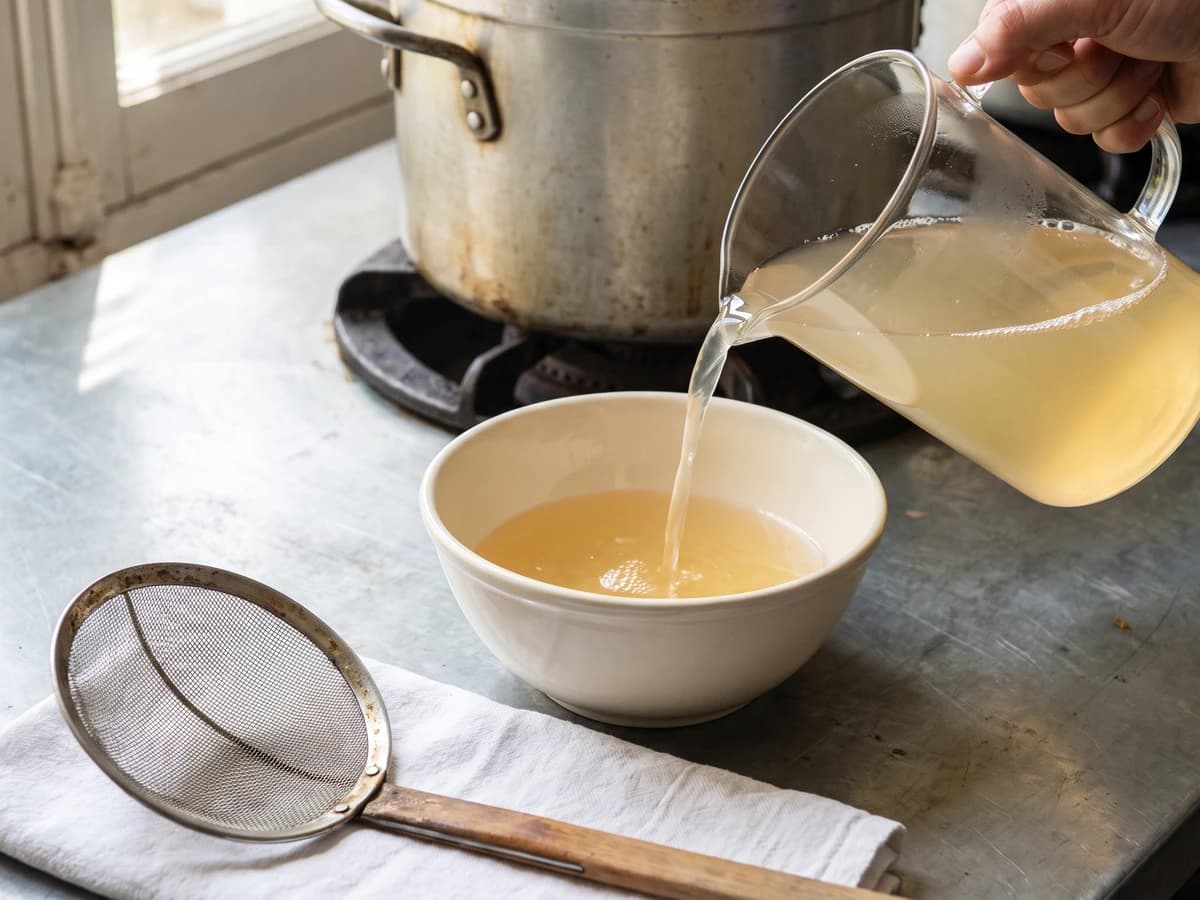
Beef shin, lean beef, and fowl begin in cold water and rise slowly toward a tremble. Skim before the boil, and you learn the quiet discipline that gives every clear French broth its backbone.
A cooking platform built around craft, culture, and the stories behind what we eat.
Created by Chef Juliette
Based on No. 102, Ravigote Sauce, from Le Guide Culinaire (1907) by Auguste Escoffier
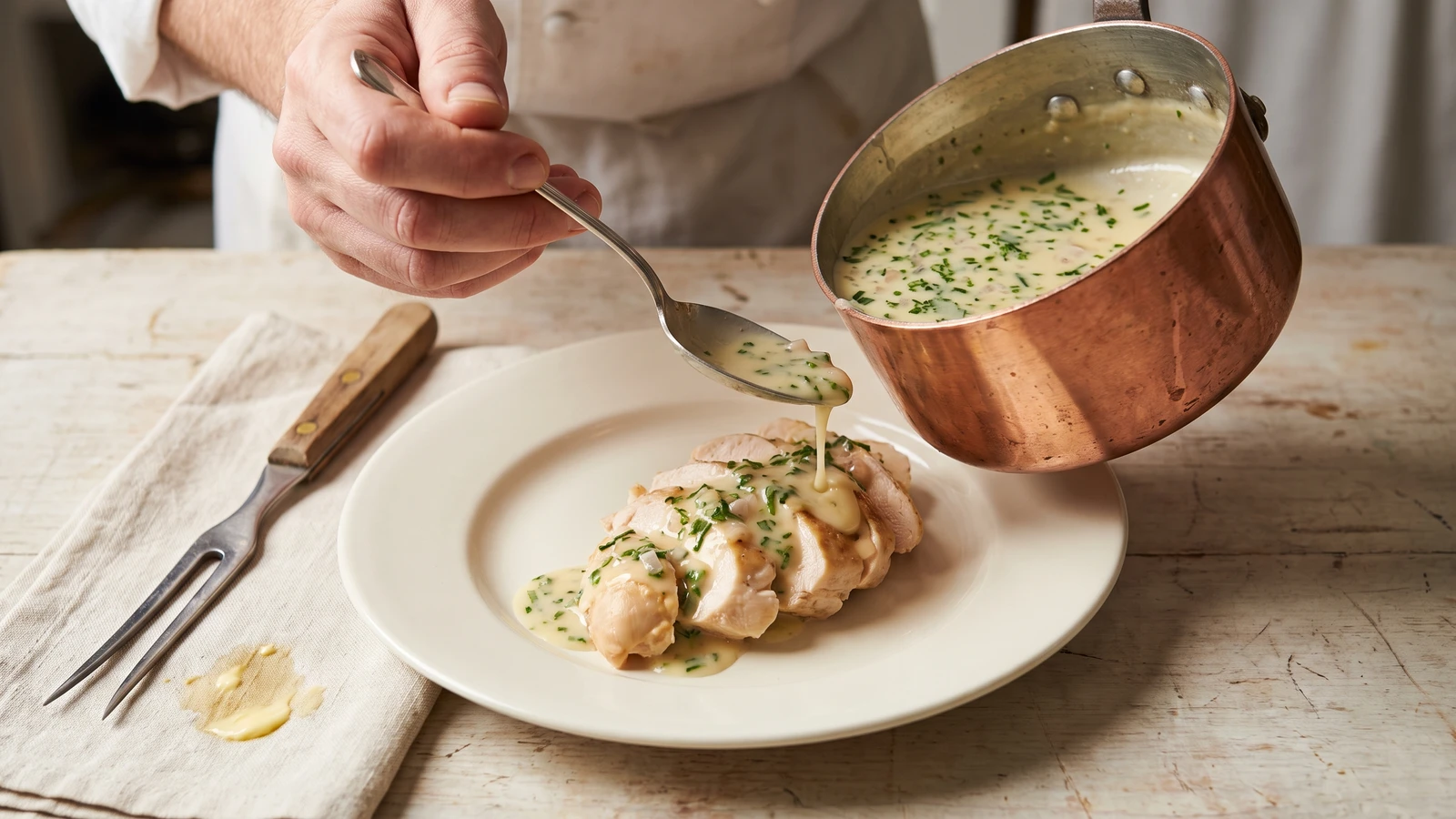
Sauce ravigote turns a calm velouté lively with white wine, vinegar, shallot butter, and three fresh herbs, a sharp green finish made for boiled poultry and the pale richness of white abats.
Sauce Ravigote (a sharp herb velouté) teaches the discipline of contrast. A mild, flour-bound sauce wakes up when wine and vinegar are reduced enough to sharpen it without stripping away its body. The one true thing to know before touching the pan is this: measure the reduction by volume, not impatience. Half means half.
The original assumes a saucier on staff, ordinary velouté waiting beside stock never off the fire, and a service pan kept ready for the next order. A home kitchen needs one wide saucepan, a measuring jug, and the two finished components prepared before cooking begins. This measured batch preserves the book's proportions exactly: two parts wine to one part vinegar, reduced by half before four parts velouté are added, then finished with the prescribed shallot butter and equal measures of chervil, tarragon, and chives. The standing stockpot is brigade scaffolding and can go. The reduction and gentle butter finish are the dish and must stay.
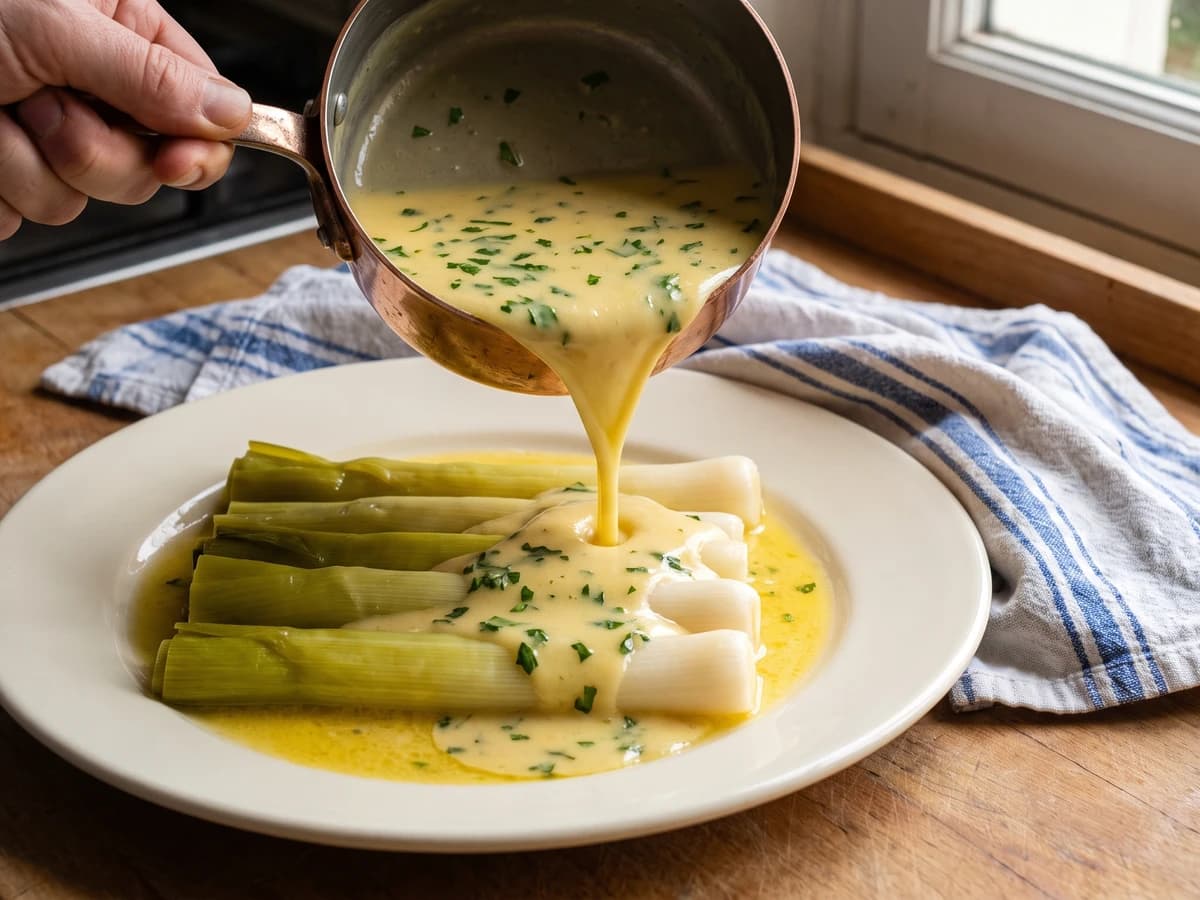
Finished properly, ravigote falls from the spoon in a glossy ivory ribbon, freckled green and bright enough to wake boiled poultry or the quiet richness of white abats. Stop the reduction at its mark, then keep the sauce below a boil once the butter enters. Those are the two moments that decide everything. One cook, one stove, one evening.
Ravigote belongs to the Parisian classical sauce repertory rather than to one regional larder; its name comes from ravigoter, to revive or reinvigorate, describing the work done by its vinegar and fresh herbs. The name covers two related preparations, a cold vinaigrette-like sauce and this hot velouté derivative, so ravigote is not automatically a cold condiment. The hot form traveled from the classical sauce pan to the bourgeois table as a companion for boiled poultry and pale abats such as calf's head and feet.
Quantity
1⅔ cups (400 ml / 400 g)
Quantity
¾ cup plus 1½ tablespoons (200 ml / 200 g)
Quantity
6¾ cups (1.6 L / about 1.65 kg)
hot but not boiling
Quantity
½ cup plus 1 teaspoon (125 ml / 120 g)
cold and cut into small pieces
Quantity
1 tablespoon (15 ml / 2 g)
finely chopped
Quantity
1 tablespoon (15 ml / 2 g)
finely chopped
Quantity
1 tablespoon (15 ml / 3 g)
finely chopped
Quantity
Up to 2 tablespoons (30 ml / 30 g)
| Ingredient | Quantity |
|---|---|
| dry white wine | 1⅔ cups (400 ml / 400 g) |
| white wine vinegar | ¾ cup plus 1½ tablespoons (200 ml / 200 g) |
| ordinary veloutéhot but not boiling | 6¾ cups (1.6 L / about 1.65 kg) |
| shallot buttercold and cut into small pieces | ½ cup plus 1 teaspoon (125 ml / 120 g) |
| fresh chervilfinely chopped | 1 tablespoon (15 ml / 2 g) |
| fresh tarragonfinely chopped | 1 tablespoon (15 ml / 2 g) |
| fresh chivesfinely chopped | 1 tablespoon (15 ml / 3 g) |
| cool water (optional) | Up to 2 tablespoons (30 ml / 30 g) |
Have the ordinary velouté hot but not boiling. Cut the cold shallot butter into eight or ten pieces, then chop the chervil, tarragon, and chives finely and keep them cool. Combine the wine and vinegar in a measuring jug; the starting volume should be 2½ cups (600 ml), so the stopping point is exactly 1¼ cups (300 ml).
Pour the wine and vinegar into a wide, nonreactive saucepan and bring them to a lively but controlled simmer over medium-high heat. Reduce until only 1¼ cups (300 ml) remain, about 12 to 15 minutes, pouring the liquid into the measuring jug near the end to check it honestly. This exact reduction is the dish: stop short and the sauce tastes blunt, go too far and it becomes hard and sour. If you overshoot, add cool water a teaspoon at a time until the reduction returns to the 300 ml line.
Return the measured reduction to the saucepan and lower the heat. Whisk in the hot ordinary velouté in three additions, making each one smooth before adding the next. Bring the sauce to a gentle boil and cook for 5 to 7 minutes, whisking across the bottom and into the corners. It should nappe, coating the back of a spoon in an even ivory layer while remaining fluid enough to pour. If small lumps appear, take the pan off the heat and whisk firmly; if they persist, pass the sauce through a fine sieve. It can be rescued.
Take the saucepan completely off the heat and wait until the bubbling stops. Monter au beurre, mount the sauce with butter, by whisking in the cold shallot butter one piece at a time, adding the next only when the last has disappeared. The sauce should become glossy and slightly fuller without turning greasy. Never boil it now. If yellow beads of butter gather on the surface, put 1 tablespoon of cool water in a clean bowl, whisk in one ladleful of the separated sauce until smooth, then add the rest gradually while whisking. Ça se rattrape.
Fold in the chervil, tarragon, and chives only after the butter is fully incorporated. Taste for balance: the sauce should be lively with wine and vinegar, rounded by velouté and butter, and freshly green at the finish. Do not return it to a boil, which dulls the herbs and weakens the butter emulsion.
Serve the ravigote at once, spooned generously over boiled poultry or certain white abats. If it must wait, set the saucepan in a bain-marie, a warm water bath, for no more than 30 minutes and whisk it occasionally; direct heat is too fierce for the finished sauce. Bring the remainder to the table in a warm sauce boat. À table!
1 serving (about 70g)
Culinary guides, cultural storytelling, and the editorial depth that makes cooking meaningful.
Discover Culinary ExplorerChef Juliette
Beef shin, lean beef, and fowl begin in cold water and rise slowly toward a tremble. Skim before the boil, and you learn the quiet discipline that gives every clear French broth its backbone.
Chef Juliette
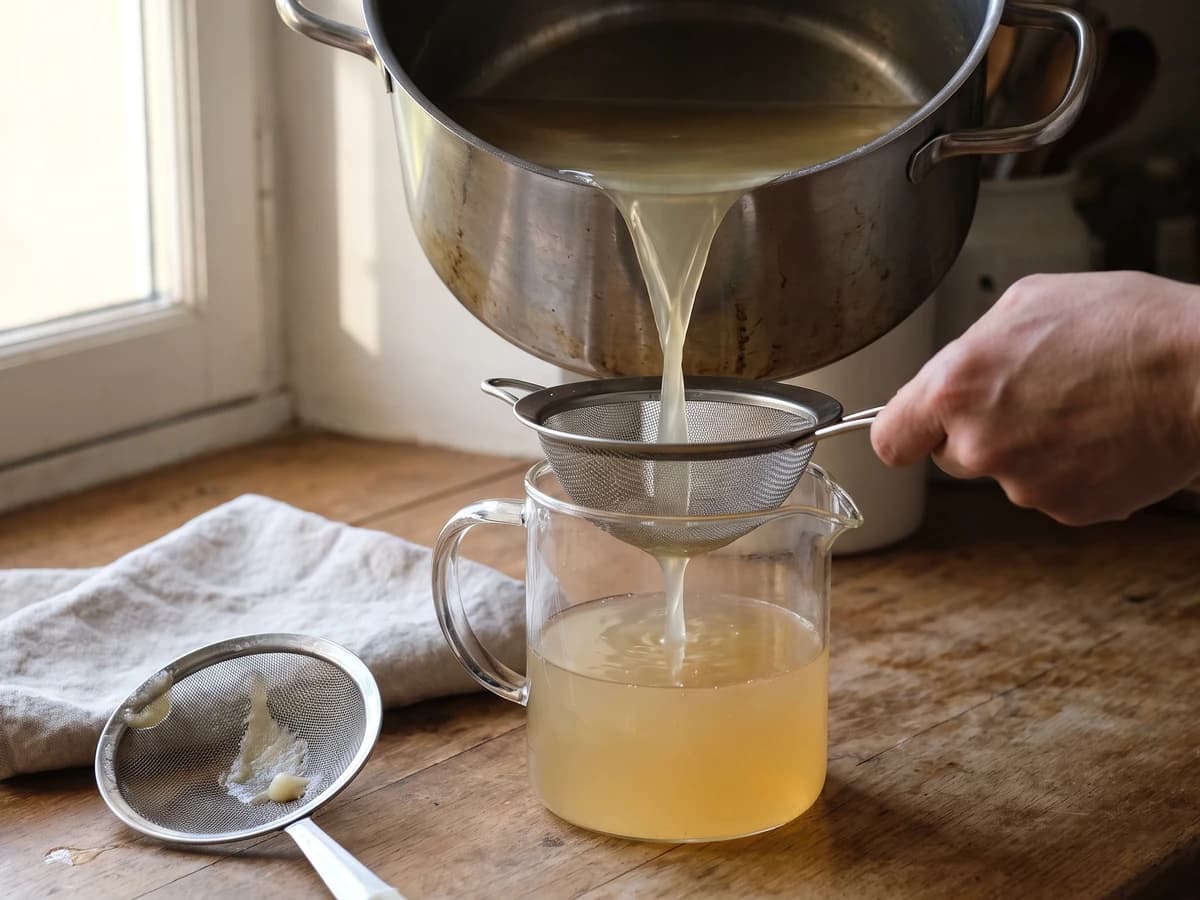
Break the veal bones small, then give them eight hours at a bare tremble. This pale, gelatinous fond becomes the quiet foundation beneath velouté, blanquette, and every sauce that must stay light.
Chef Juliette
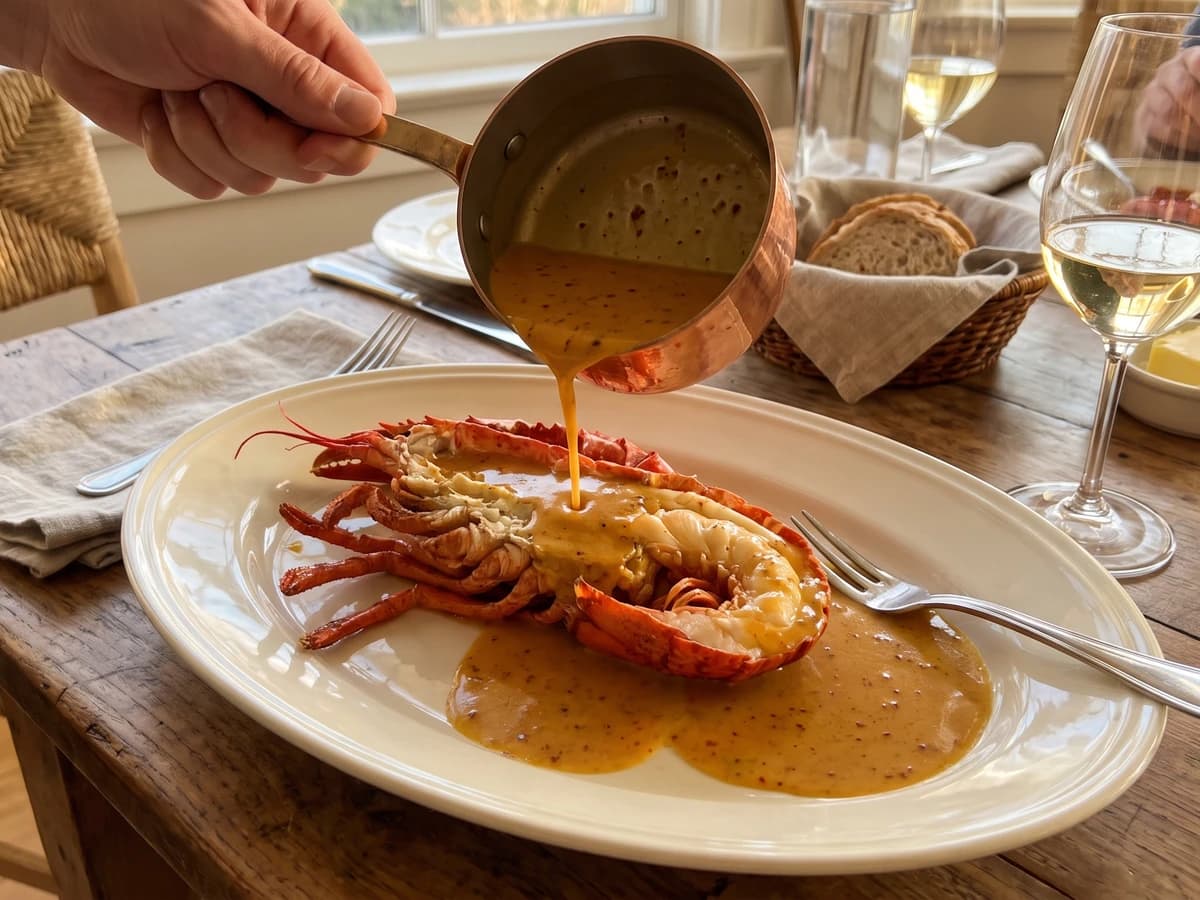
Sauce Orientale concentrates lobster-rich American Sauce with curry, then folds in cream away from the fire: a glossy, gently spiced derivative made for lobster, crayfish, and firm fish.
Chef Juliette
An old lesson in sauce families: Sauce Allemande takes mushroom liquor, then butter, lemon, and parsley, becoming a glossy Poulette for sheep's trotters, leeks, cauliflower, and anything needing gentle richness with a bright edge.