Chef Juliette
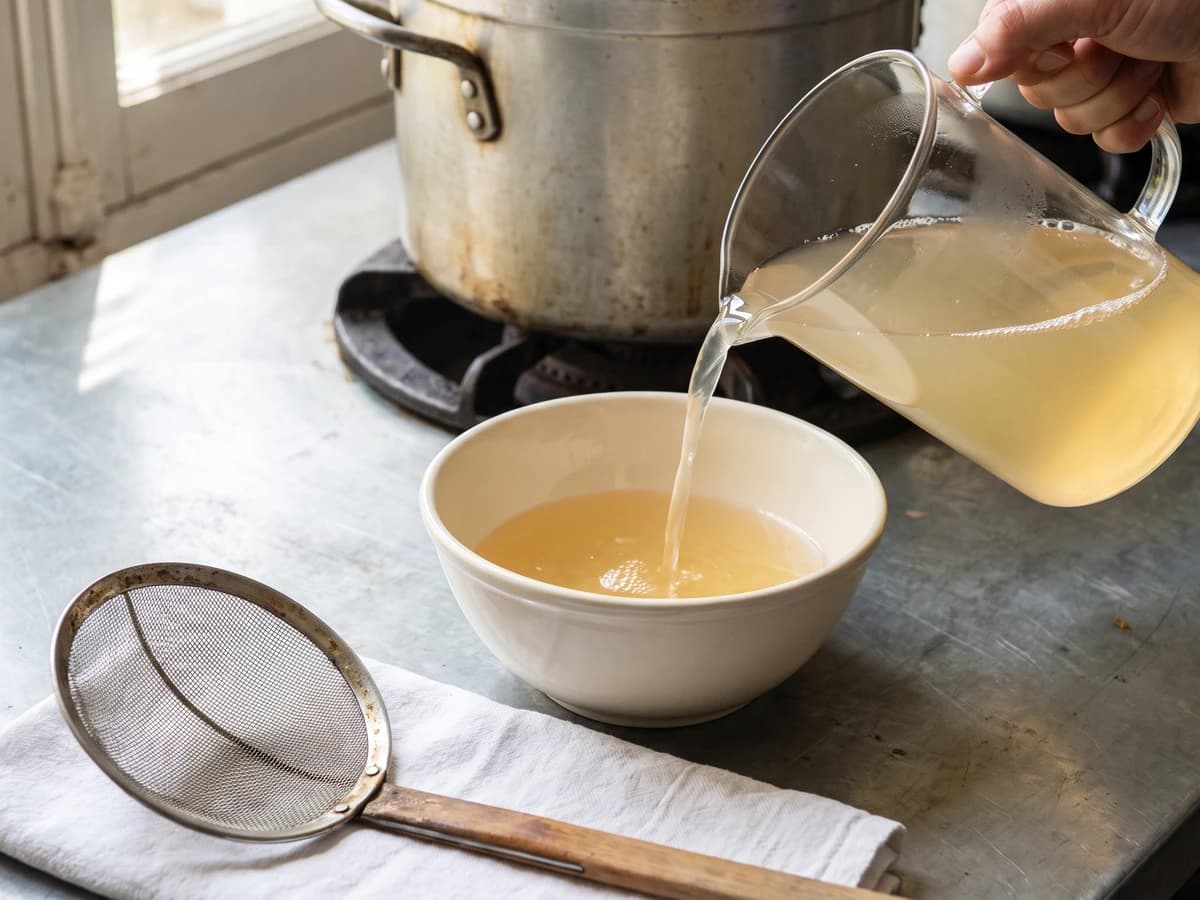
Ordinary or White Consommé
Beef shin, lean beef, and fowl begin in cold water and rise slowly toward a tremble. Skim before the boil, and you learn the quiet discipline that gives every clear French broth its backbone.
A cooking platform built around craft, culture, and the stories behind what we eat.
Created by Chef Juliette
Based on No. 100, Oriental Sauce, from Le Guide Culinaire (1907) by Auguste Escoffier
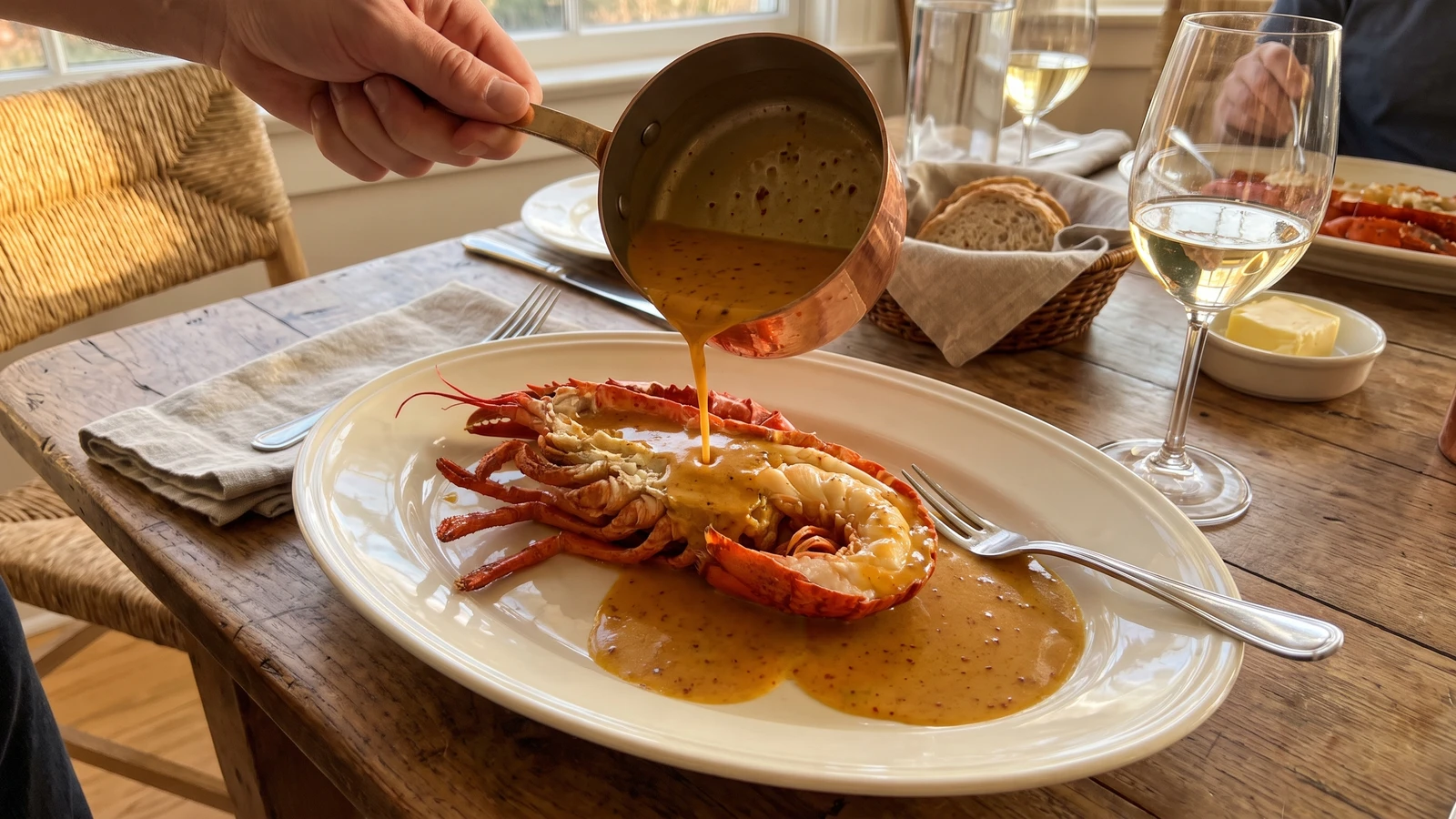
Sauce Orientale concentrates lobster-rich American Sauce with curry, then folds in cream away from the fire: a glossy, gently spiced derivative made for lobster, crayfish, and firm fish.
Sauce Orientale (a curry cream derivative of American Sauce) teaches the cleanest law of derivative sauces: concentrate the parent before the new flavor softens it. Add the cream too soon and you'll chase thickness by boiling dairy, flattening the curry and dulling the shellfish beneath it. Reduce first, finish off the fire. C'est la même grammaire.
The book assumed a saucier beside a stockpot of finished American Sauce, with enough service to keep both moving through the evening. Your honest equivalent is one prepared batch of American Sauce, a wide heavy pan, and a heatproof measure. Keeping the parent sauce perpetually hot is brigade scaffolding and can go; reducing it to one-third and adding precisely one-quarter of its starting volume in cream are the dish itself, so both remain. One cook, one stove, one evening.
The finished Sauce Orientale should be ivory-coral, fragrant rather than hot, and glossy enough to reach nappe (a coating consistency) on the back of a spoon. Measure the reduction instead of trusting its color. That one-third mark decides the sauce.
Sauce Orientale belongs to the Parisian classical sauce system, where derivative sauces were distinguished by a small, exact change to a finished parent sauce. Its parent is American Sauce, the shellfish foundation reduced here with curry and softened with cream, and it followed that sauce onto lobster, crayfish, and firm fish. The title reflects the French grand kitchen's broad vocabulary for imported curry powders, not a connection to one particular Asian region or cooking tradition.
Quantity
14 cups (3.31 liters / about 3.3 kg)
Quantity
2 tablespoons (30 ml / 16 g)
Quantity
3½ cups (830 ml / 825 g)
| Ingredient | Quantity |
|---|---|
| finished American Sauce | 14 cups (3.31 liters / about 3.3 kg) |
| mild curry powder | 2 tablespoons (30 ml / 16 g) |
| cold heavy cream | 3½ cups (830 ml / 825 g) |
Pour the finished American Sauce into a wide, heavy saucepan. Measure or mark 4⅔ cups (1.1 liters) as your finishing target, exactly one-third of the starting volume. The parent sauce is already complete, so don't rebuild or embellish it here; this derivative begins with concentration.
Warm the sauce over medium heat until fluid, then whisk the curry powder with a ladleful of the warm sauce in a bowl until completely smooth. Whisk this mixture back into the pan. Dispersing the curry first prevents dry pockets while preserving the book's sequence: curry before reduction, cream afterward.
Bring the sauce to a steady uncovered simmer, lively enough to reduce but never violent, and cook until only 4⅔ cups (1.1 liters) remain, about 1½ to 2 hours. Stir every few minutes at first, then almost constantly as the sauce thickens, reaching into the corners with a heatproof spatula. If you pass the mark without scorching, whisk in enough hot water to restore the measured volume; evaporation removed water, so replacing it restores the intended concentration. If the bottom begins to catch, immediately pour the clean upper sauce into another pan without scraping the dark film, lower the heat, and continue.
Remove the pan completely from the fire and let the hard bubbling subside. Reserve ¼ cup (60 ml / 60 g) of the measured cream, then whisk the remaining cream into the reduction in three additions. Add the reserved cream last, stopping as soon as the sauce is smooth, ivory-coral, and glossy. If fat beads appear or the sauce looks grainy, stop. Ça se rattrape: put 2 tablespoons of the reserved cold cream in a clean bowl, whisk in the troubled sauce one spoonful at a time until smooth, then gradually incorporate the rest. Do not boil the finished Sauce Orientale.
Taste for balance, remembering that American Sauce was seasoned before it reached this recipe. The curry should carry warmth and fragrance without burying the lobster foundation. Pour the Sauce Orientale into a warmed sauceboat and serve it as American Sauce is served, with lobster, crayfish, or firm fish. If it must wait, cover it and hold it for no more than 20 minutes in a bain-marie (warm-water bath), whisking once before serving. À table!
1 serving (about 60g)
Culinary guides, cultural storytelling, and the editorial depth that makes cooking meaningful.
Discover Culinary ExplorerChef Juliette
Beef shin, lean beef, and fowl begin in cold water and rise slowly toward a tremble. Skim before the boil, and you learn the quiet discipline that gives every clear French broth its backbone.
Chef Juliette
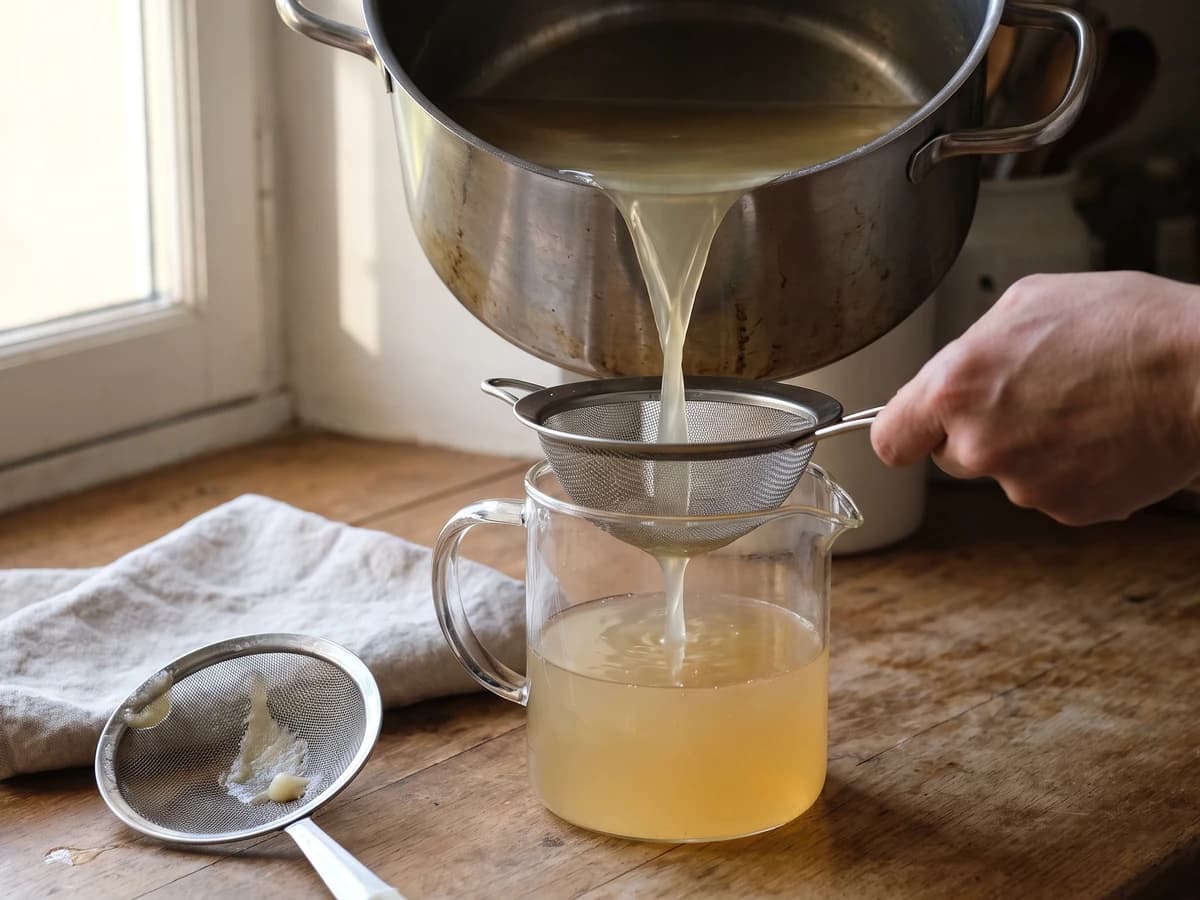
Break the veal bones small, then give them eight hours at a bare tremble. This pale, gelatinous fond becomes the quiet foundation beneath velouté, blanquette, and every sauce that must stay light.
Chef Juliette
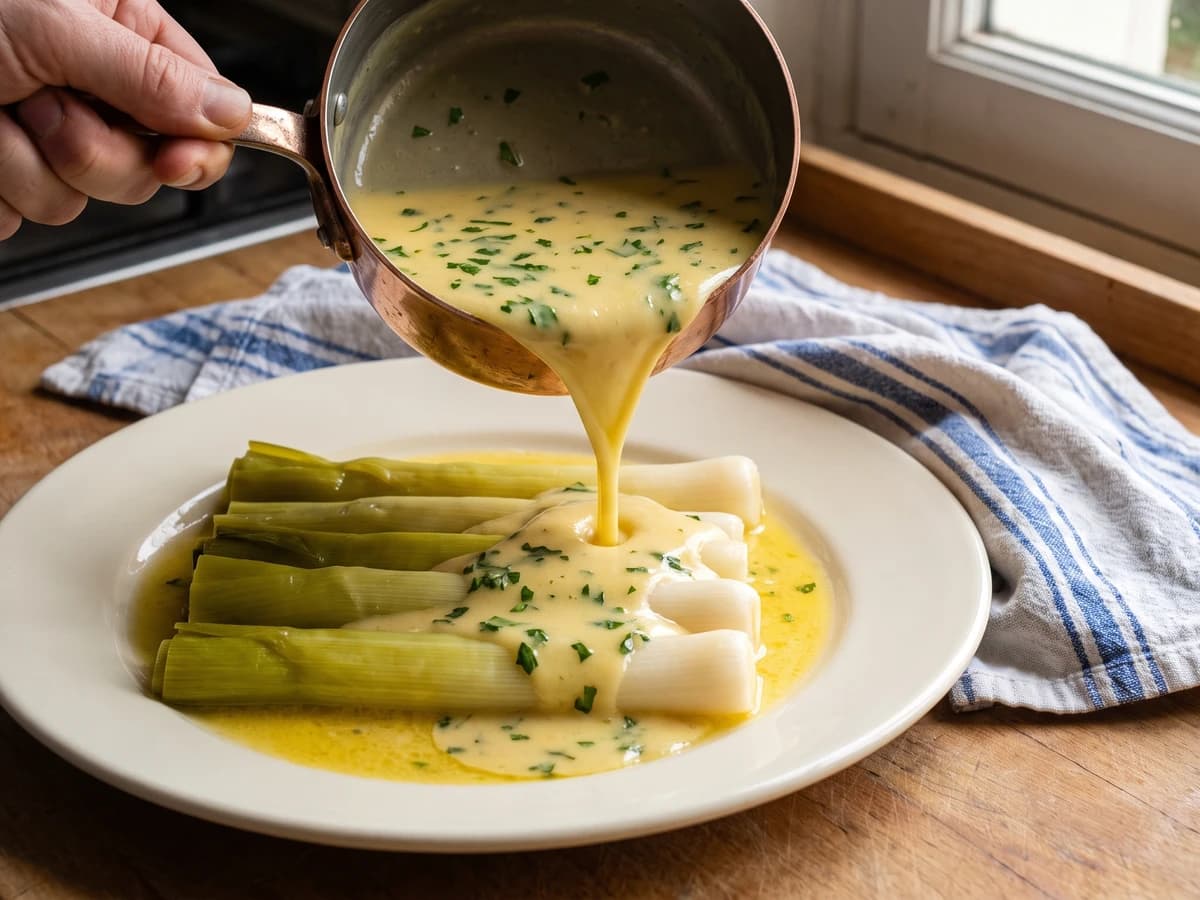
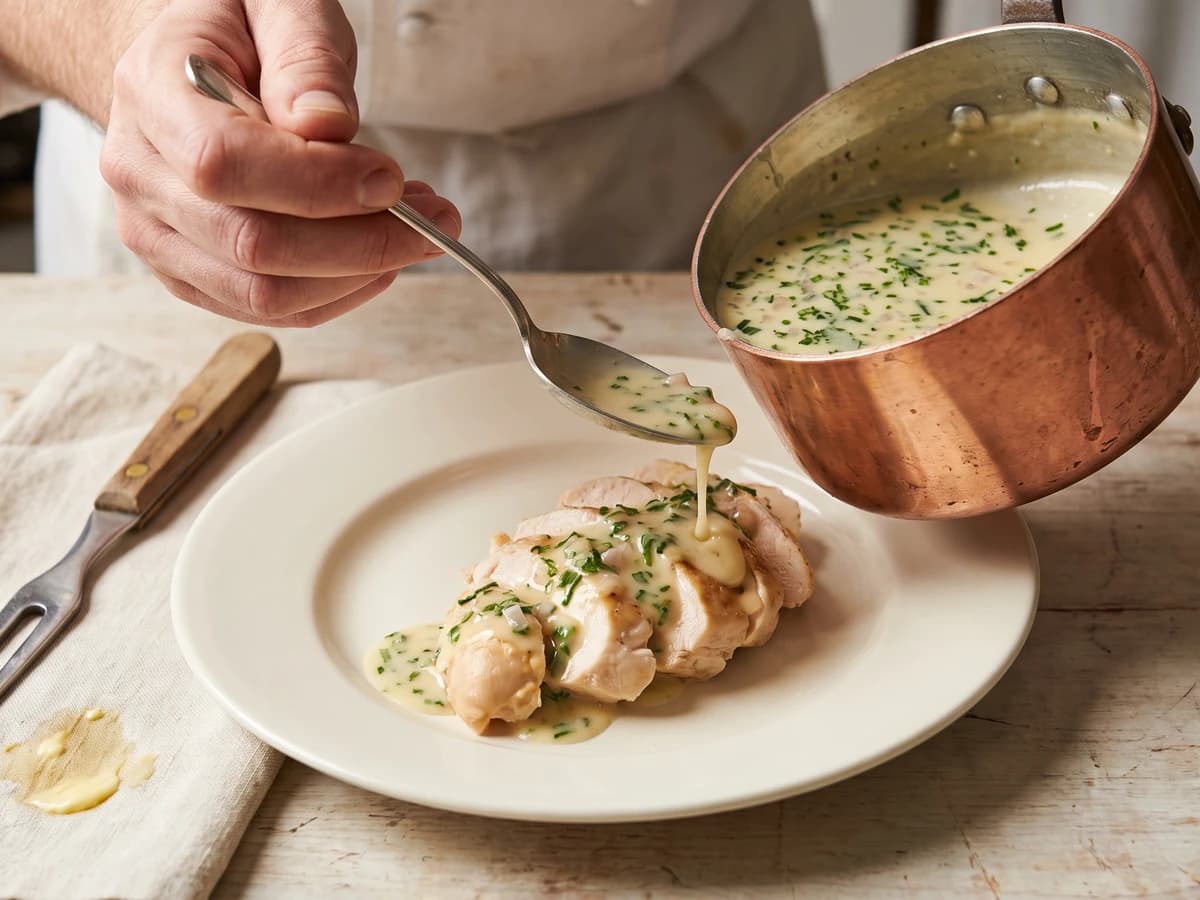
An old lesson in sauce families: Sauce Allemande takes mushroom liquor, then butter, lemon, and parsley, becoming a glossy Poulette for sheep's trotters, leeks, cauliflower, and anything needing gentle richness with a bright edge.
Chef Juliette
Sauce ravigote turns a calm velouté lively with white wine, vinegar, shallot butter, and three fresh herbs, a sharp green finish made for boiled poultry and the pale richness of white abats.