Chef Juliette
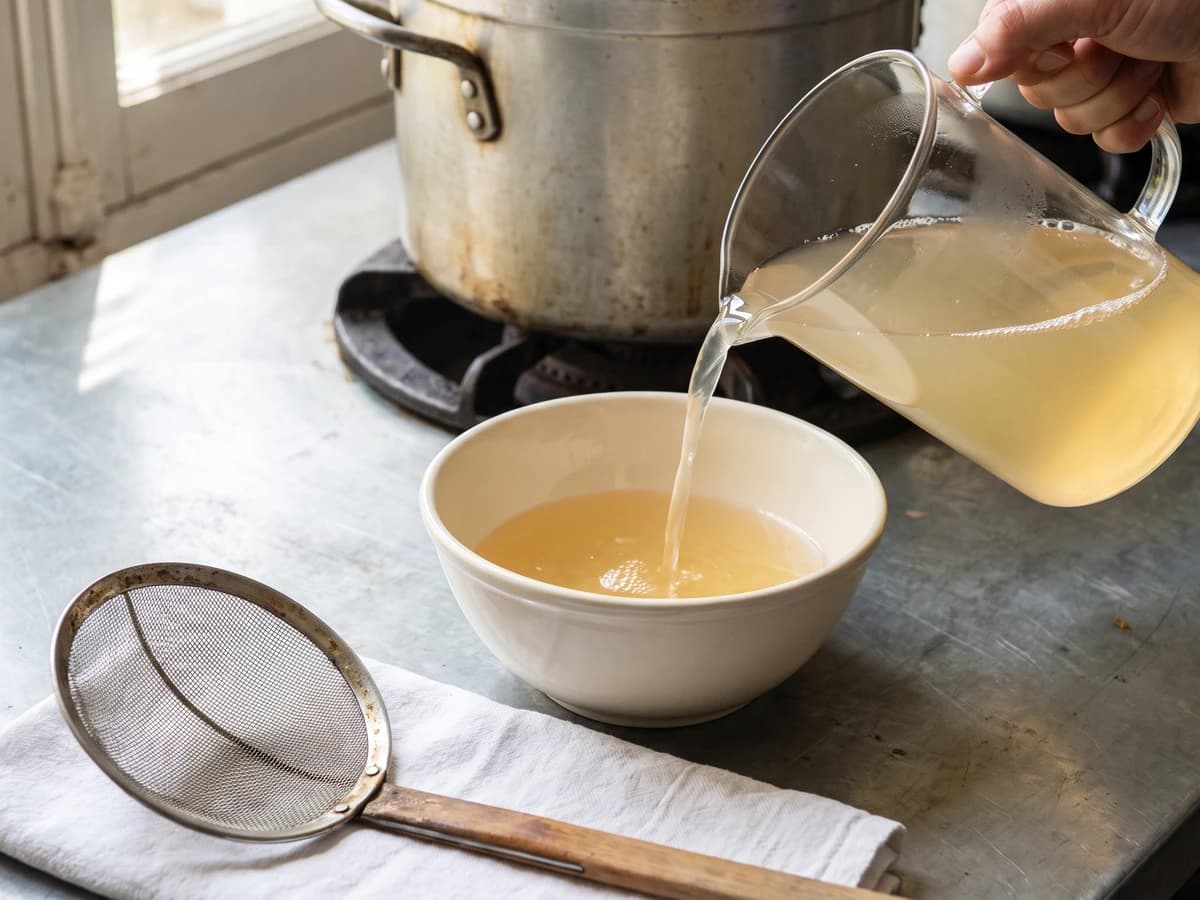
Ordinary or White Consommé
Beef shin, lean beef, and fowl begin in cold water and rise slowly toward a tremble. Skim before the boil, and you learn the quiet discipline that gives every clear French broth its backbone.
A cooking platform built around craft, culture, and the stories behind what we eat.
Created by Chef Juliette
Based on No. 104, Soubise Sauce, from Le Guide Culinaire (1907) by Auguste Escoffier
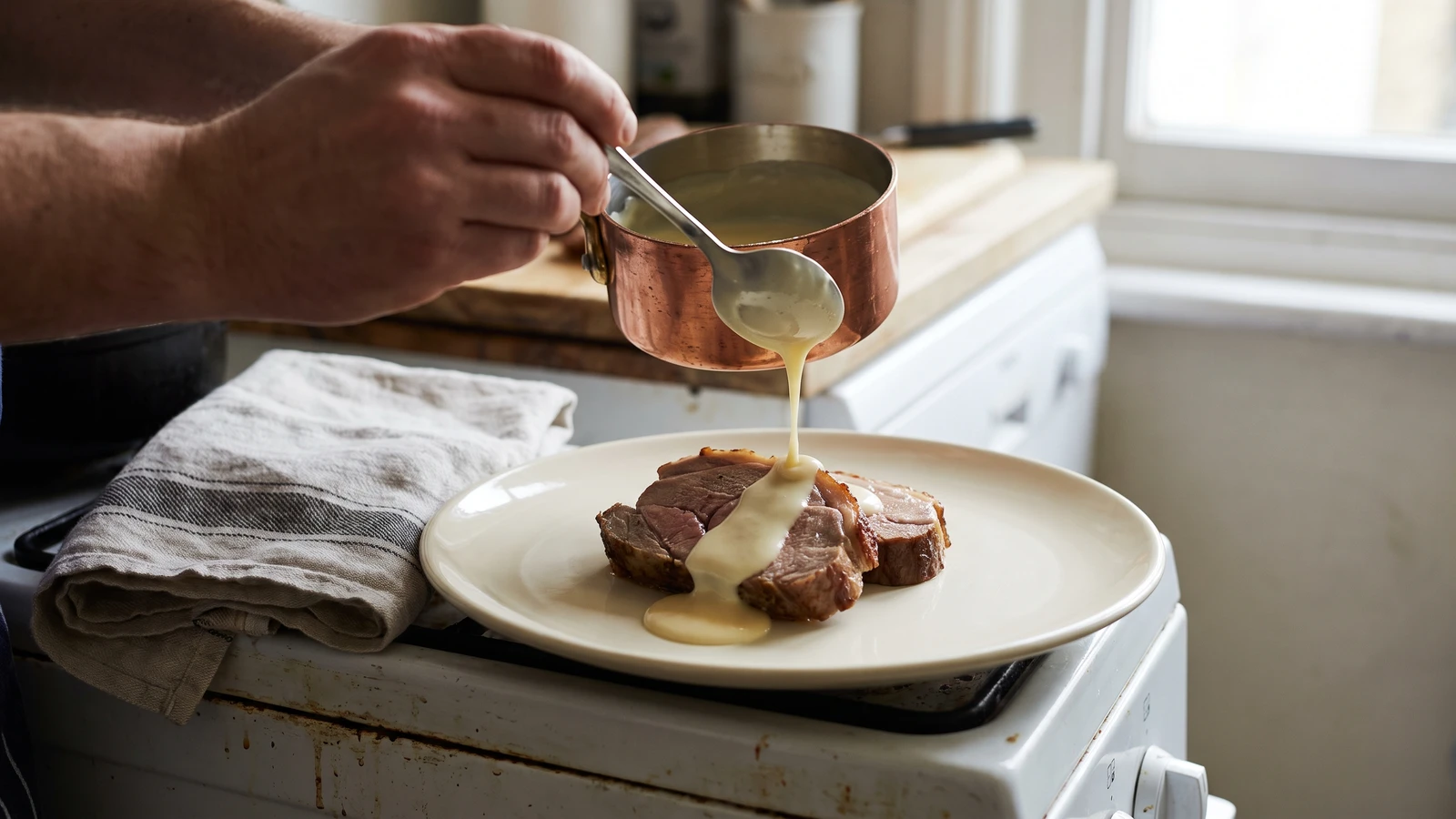
Onions softened without colour, bound with Béchamel, strained, and mounted with cream and butter: Sauce Soubise proves that the slow stew, not sweetness or browning, gives this classical sauce its quiet depth.
Sauce Soubise (a creamy onion purée sauce) teaches a severe little discipline: sweetness must come from complete softening, not from browning. Before you touch a pan, know this one thing: the onions must surrender every sharp edge while staying pale. Rush them and the finished sauce tastes thin and raw; colour them and you have made a different onion sauce.
The original entry assumed a saucier on staff, a thick Béchamel ready from the sauce station, and a tammy for the final passing. At home, one heavy saucepan, prepared Béchamel, an immersion blender, and a fine sieve do the same work in a batch one cook can manage. Only the equipment changes: the cloth tammy becomes a blender followed by a sieve because that pairing gives the same smooth finish. The separate sauce station is brigade scaffolding; the three-minute scald, the butter stew, and the thirty-minute union with Béchamel are the dish, so they stay.
Cooked correctly, Soubise is ivory, glossy, and round, with the savour of onion but none of its raw bite. Cream opens the texture and cold butter seals the sheen. One cook, one stove, one evening. The step that matters most is the slow butter stew: no colour, no raw edge, no rushing.
Sauce Soubise belongs to the Parisian classical repertoire and bears the title of the prince de Soubise, one of several noble names absorbed into kitchen language. From grand kitchens it moved to the bourgeois table as a pale accompaniment to lamb, veal, eggs, and plainly cooked vegetables. Sauce Soubise and purée Soubise are often confused: the sauce is bound with Béchamel, while purée formulas may use rice, but neither should taste of browned onion.
Quantity
8 cups (1.9 L / 1.9 kg)
for scalding
Quantity
6 cups (1.4 L / 2 lb / 907 g)
very finely minced
Quantity
1/4 cup (60 ml / 57 g)
for stewing
Quantity
1 cup plus 3 tablespoons (285 ml / 295 g)
prepared
Quantity
1 teaspoon (5 ml / 4 g)
Quantity
1 teaspoon (5 ml / 6 g), plus more if needed
divided
Quantity
1/4 cup (60 ml / 60 g)
divided
Quantity
1/4 cup (60 ml / 2 oz / 57 g)
cut into small cubes for finishing
| Ingredient | Quantity |
|---|---|
| waterfor scalding | 8 cups (1.9 L / 1.9 kg) |
| yellow onionsvery finely minced | 6 cups (1.4 L / 2 lb / 907 g) |
| unsalted butterfor stewing | 1/4 cup (60 ml / 57 g) |
| thick Béchamel sauceprepared | 1 cup plus 3 tablespoons (285 ml / 295 g) |
| powdered sugar | 1 teaspoon (5 ml / 4 g) |
| fine sea saltdivided | 1 teaspoon (5 ml / 6 g), plus more if needed |
| heavy creamdivided | 1/4 cup (60 ml / 60 g) |
| cold unsalted buttercut into small cubes for finishing | 1/4 cup (60 ml / 2 oz / 57 g) |
Bring the water to a full boil in a large saucepan. Add the minced onions and scald them for exactly 3 minutes, keeping the water lively. Drain through a fine colander, spread the onions over clean kitchen towels, and press them very dry. The scald tempers their raw edge; careful drying keeps the butter stew rich rather than watery.
Étuver means to stew gently in butter. Melt the stewing butter in the heavy saucepan over low heat, add the dried onions and half the salt, then cover and cook for 25 to 30 minutes. Stir from the bottom every few minutes until the onions are completely tender, pale, and sweet-smelling, with no resistance under the spoon. If a golden edge appears, pull the pan from the heat, stir in 1 tablespoon of cold water, and lower the flame before continuing. A few pale flecks will disappear in the purée; scorched bitterness will not, so transfer the onions to a clean pan without scraping if the bottom burns.
Stir the prepared thick Béchamel sauce into the onions, followed by the powdered sugar and remaining salt. Bring the mixture only to a bare simmer, then cook uncovered over the gentlest heat for 30 minutes, stirring often and scraping the corners of the pan. The onions and Béchamel must cook together long enough to become one sauce. If the bottom begins to catch, stop stirring and lift the clean upper portion into another saucepan without disturbing the stuck layer.
Remove the pan from the heat and blend until the onions are completely smooth. Rub the purée through a fine-mesh sieve into a clean saucepan, pressing firmly with a flexible scraper and discarding the dry fibres left behind. The blender replaces the first hard work of the tammy, but the sieve supplies its silken finish; do not omit the passing.
Warm the strained Soubise gently and stir in 3 tablespoons of the cream. If it runs from the spoon like soup, reduce it briefly before adding the butter; if it is too tight, loosen it with the reserved cream. Remove the pan from the heat and monter au beurre, mount with butter, by whisking in the cold cubes one at a time. Do not boil once the butter goes in. If oily beads appear, whisk in the final spoonful of cold cream off the heat. Ça se rattrape. Taste for salt and serve while the sauce falls from the spoon in a broad, glossy ribbon. À table!
1 serving (about 60g)
Culinary guides, cultural storytelling, and the editorial depth that makes cooking meaningful.
Discover Culinary ExplorerChef Juliette
Beef shin, lean beef, and fowl begin in cold water and rise slowly toward a tremble. Skim before the boil, and you learn the quiet discipline that gives every clear French broth its backbone.
Chef Juliette
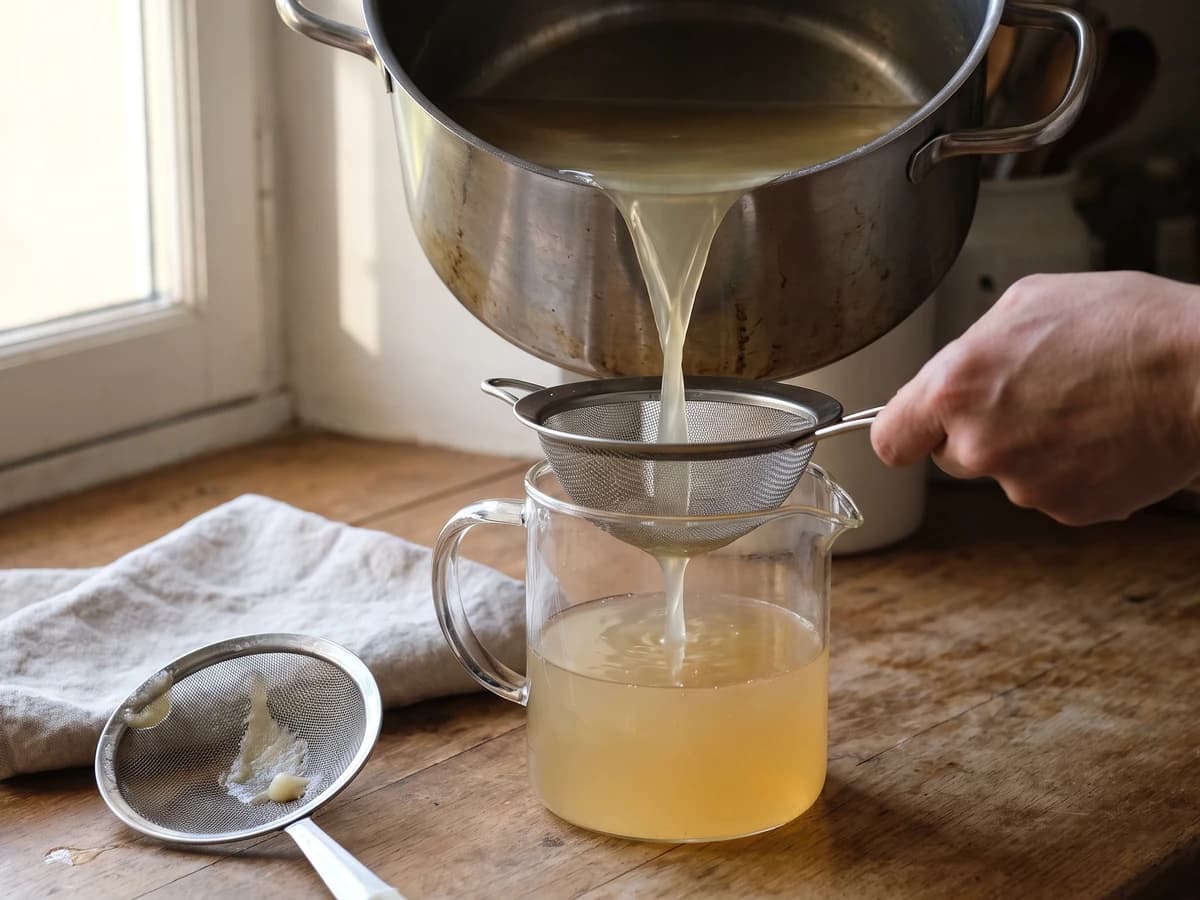
Break the veal bones small, then give them eight hours at a bare tremble. This pale, gelatinous fond becomes the quiet foundation beneath velouté, blanquette, and every sauce that must stay light.
Chef Juliette
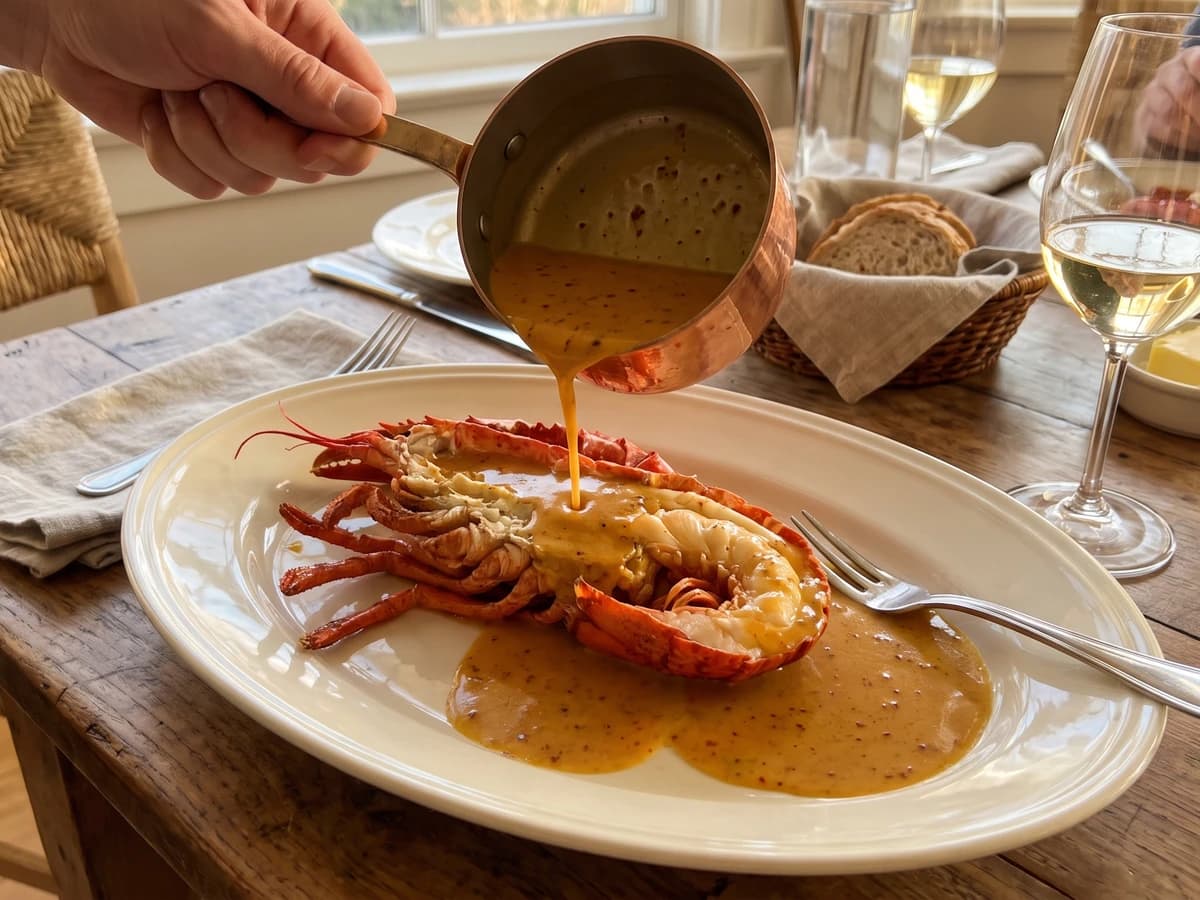
Sauce Orientale concentrates lobster-rich American Sauce with curry, then folds in cream away from the fire: a glossy, gently spiced derivative made for lobster, crayfish, and firm fish.
Chef Juliette
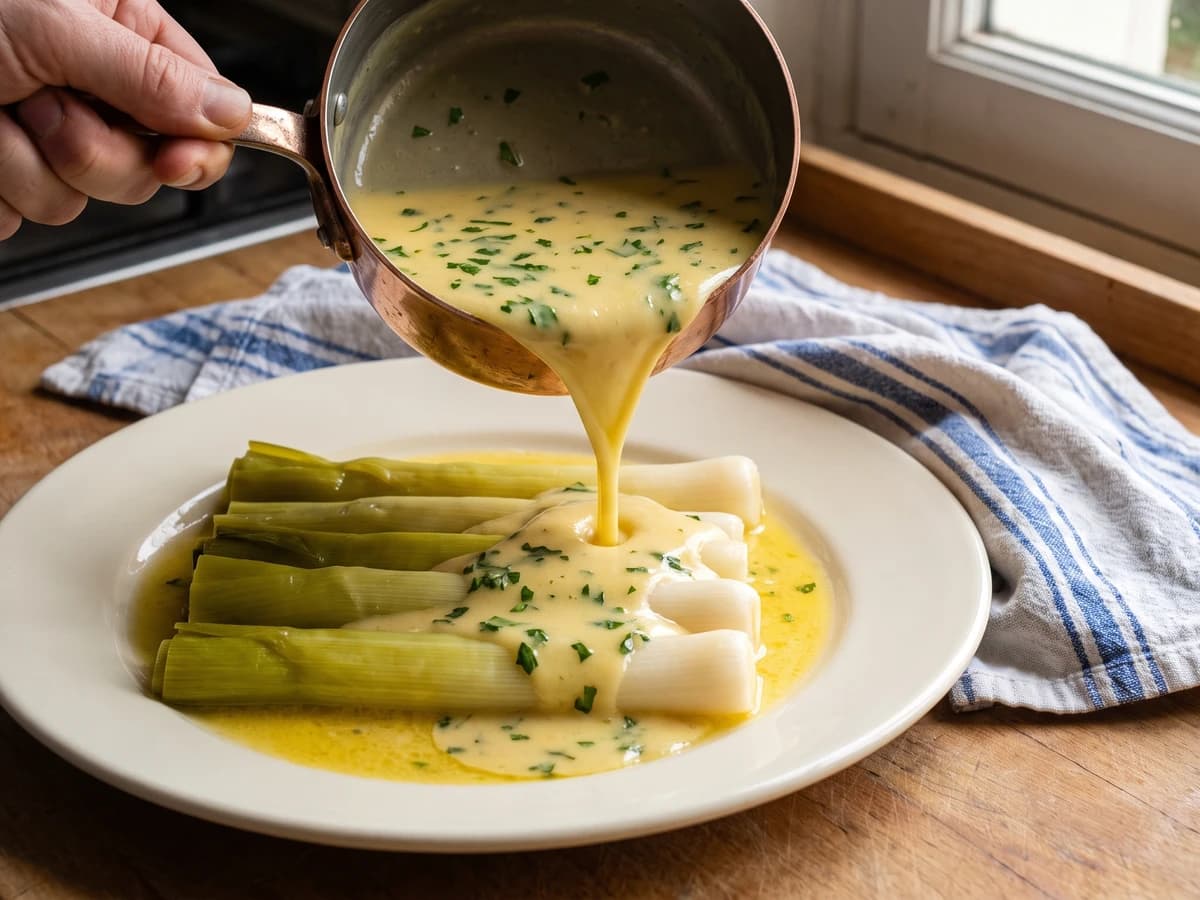
An old lesson in sauce families: Sauce Allemande takes mushroom liquor, then butter, lemon, and parsley, becoming a glossy Poulette for sheep's trotters, leeks, cauliflower, and anything needing gentle richness with a bright edge.