Chef Juliette
Ordinary or White Consommé
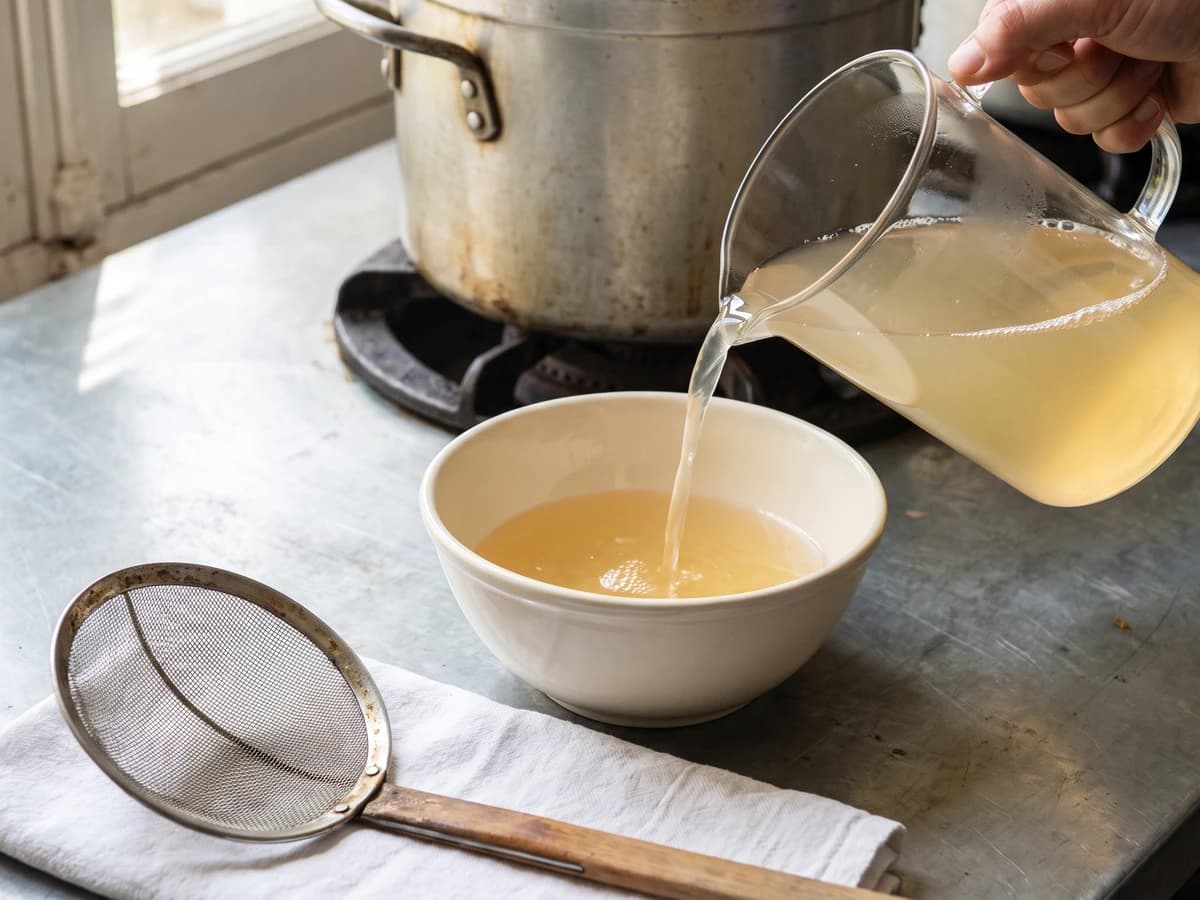
Beef shin, lean beef, and fowl begin in cold water and rise slowly toward a tremble. Skim before the boil, and you learn the quiet discipline that gives every clear French broth its backbone.
A cooking platform built around craft, culture, and the stories behind what we eat.
Created by Chef Juliette
Based on No. 2056, Cardons with Various Sauces, from Le Guide Culinaire (1907) by Auguste Escoffier
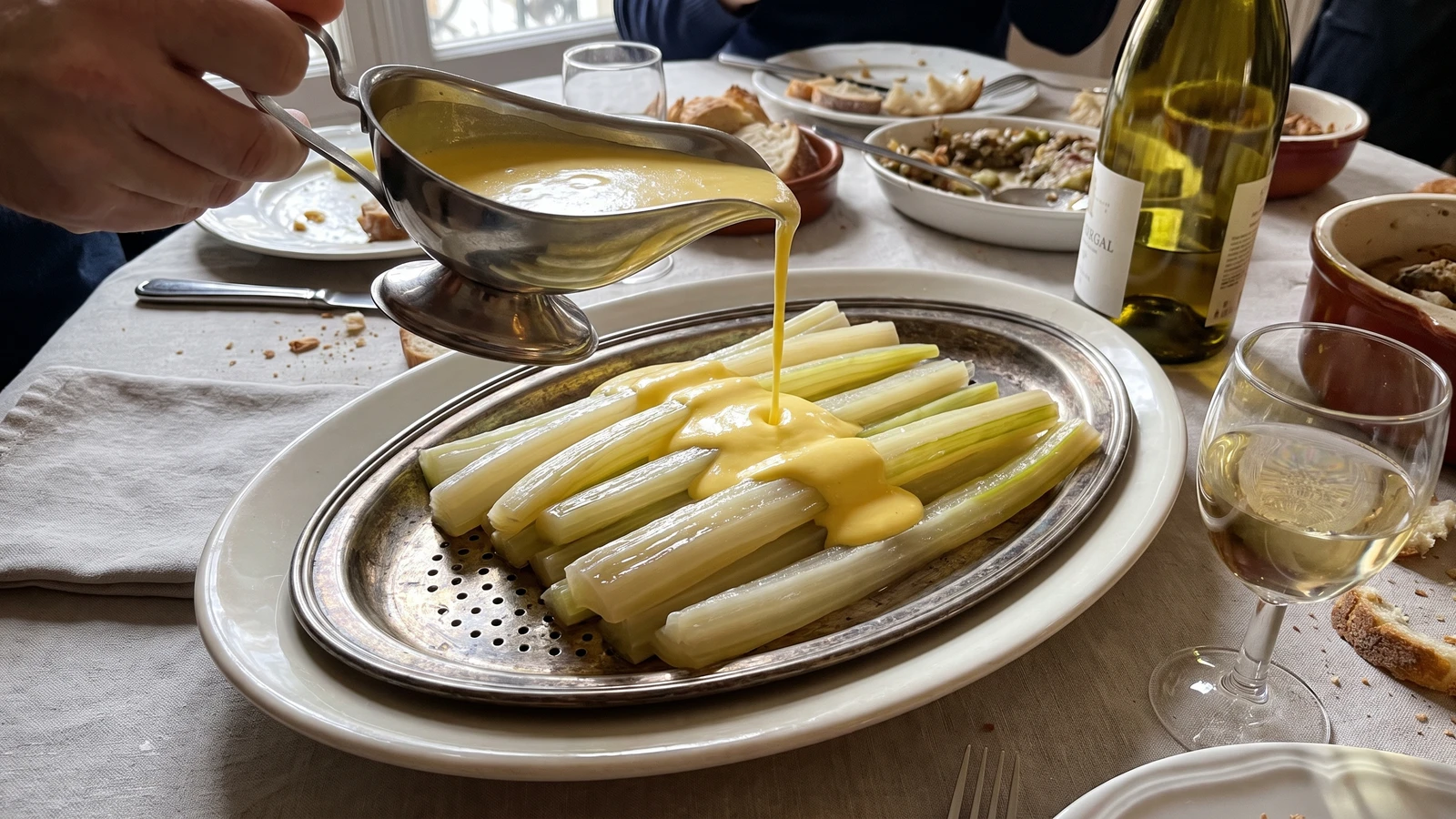
Cardons teach the art of matching one vegetable to seven classical sauces: tender ribs, properly drained, dressed in a timbale or arranged on a silver-style drainer with sauce alongside.
Cardons aux sauces diverses teach a precise lesson: the sauce changes, but the vegetable must first be impeccably tender and dry. Peel away every string before the stalks touch heat. A fibrous cardon under a magnificent sauce is still a fibrous cardon, and no saucier can argue it otherwise.
The original entry assumed a brigade with seven finished sauces ready, a saucier to warm the chosen one, stock never off the fire, and a silver drainer waiting for service. At home, you reach for one finished sauce from its own preparation, cook a four-person quantity of cardons in a blanc, then use a warmed deep bowl as the timbale or a small rack set over a platter as the drainer. The brigade's choice and holding are scaffolding, so they go. Proper peeling, gentle cooking, thorough draining, and the correct temperature for the chosen sauce are the dish, so they stay. One cook, one stove, one evening.
The reward is pale, softly bitter cardon with enough backbone to meet Gravy or Bordelaise Sauce, and enough delicacy for Cream, Hollandaise, or Mousseline Sauce. Before touching the pan, settle the knife question: when a blade enters the thickest piece without pressure, the cardons are ready. If it resists, keep cooking. Ça se rattrape.
Cardons belong especially to Lyon and the Rhône valley, where this artichoke relative, not a kind of celery, holds a place at the Christmas table, often with meat jus or marrow. The classical kitchen widened that Lyonnais practice into a service formula, offering the same cooked cardons with gravy, Half-glaze, Cream, Hollandaise, Mousseline, Italienne, or Bordelaise according to the menu. Serving them in a timbale when sauced and on a drainer when the sauce is separate is practical, not ornamental: the vessel controls whether cooking liquid dilutes the sauce.
Quantity
2 large heads, about 4 lb (1.8 kg) before trimming
stalks separated
Quantity
2 quarts (1.9 L / 1.9 kg)
Quantity
3 quarts (2.8 L / 2.8 kg)
Quantity
2, about 8 oz (225 g)
halved
Quantity
1/4 cup (60 ml / 30 g)
Quantity
1 tablespoon (15 ml / 18 g)
Quantity
1 cup (240 ml / about 240 g), choose one
| Ingredient | Quantity |
|---|---|
| cardonstalks separated | 2 large heads, about 4 lb (1.8 kg) before trimming |
| cold water for the acidulated holding bath | 2 quarts (1.9 L / 1.9 kg) |
| cold water for cooking | 3 quarts (2.8 L / 2.8 kg) |
| medium lemonshalved | 2, about 8 oz (225 g) |
| plain flour | 1/4 cup (60 ml / 30 g) |
| fine salt | 1 tablespoon (15 ml / 18 g) |
| finished sauce: Gravy; Half-glaze Sauce; Cream Sauce; Hollandaise Sauce; Mousseline Sauce; Italienne Sauce; or Bordelaise Sauce | 1 cup (240 ml / about 240 g), choose one |
Fill a large bowl with the 2 quarts of cold water. Squeeze in one lemon and add its spent halves. Pull away the leafy tops of the cardon, separate the stalks, and trim off the thorny edges. Peel the ridged face and hollow back of each stalk, drawing away every tough string in long ribbons, then cut the stalks into 4-inch (10 cm) lengths and put them immediately into the lemon water. If a stalk still catches under the peeler, it still carries strings; remove them now, because cooking softens the flesh but never dissolves those fibres.
Whisk the flour with about 1 cup of the cooking water in a 6-quart nonreactive pot until perfectly smooth, then whisk in the remaining cooking water. Add the salt, the juice of the second lemon, and its squeezed halves. This is a blanc, a pale flour-and-lemon cooking liquor that protects the cardons from darkening while they tenderize. Drain the cardons from their holding bath, add them to the pot, and press a parchment round directly onto the surface to keep them submerged. Bring to a gentle simmer and cook for 35 to 50 minutes, until a paring knife enters the thickest piece without pressure. If the centre still crunches, give it another 10 minutes. Ça se rattrape.
Lift the cardons into a large colander and discard the blanc. Let them drain for 10 minutes, then spread them briefly on a clean kitchen towel and blot without crushing them. This is the quiet step that decides whether the sauce clings or turns watery. If liquid still beads on the stalks, return them to the empty pot over low heat for 60 to 90 seconds, turning gently, just until their surfaces are dry. Do not brown them.
Select one sauce, not a parade of seven. Each is a finished component from its own preparation; this entry selects and warms it, never rebuilds it. Warm Gravy, Half-glaze Sauce, Cream Sauce, Italienne Sauce, or Bordelaise Sauce in a small saucier just until fluid and glossy, stirring the Cream Sauce carefully along the bottom. Hold Hollandaise Sauce or Mousseline Sauce in a bowl over barely warm water; direct heat breaks Hollandaise and flattens Mousseline. If a brown or cream sauce tightens beyond a coating consistency, whisk in hot water 1 teaspoon at a time. If Hollandaise shows an oily rim, remove it from the heat and whisk in 1 teaspoon of cold water. If it has fully split, put another teaspoon of cold water in a clean bowl and whisk the broken sauce into it slowly. Ça se rattrape.
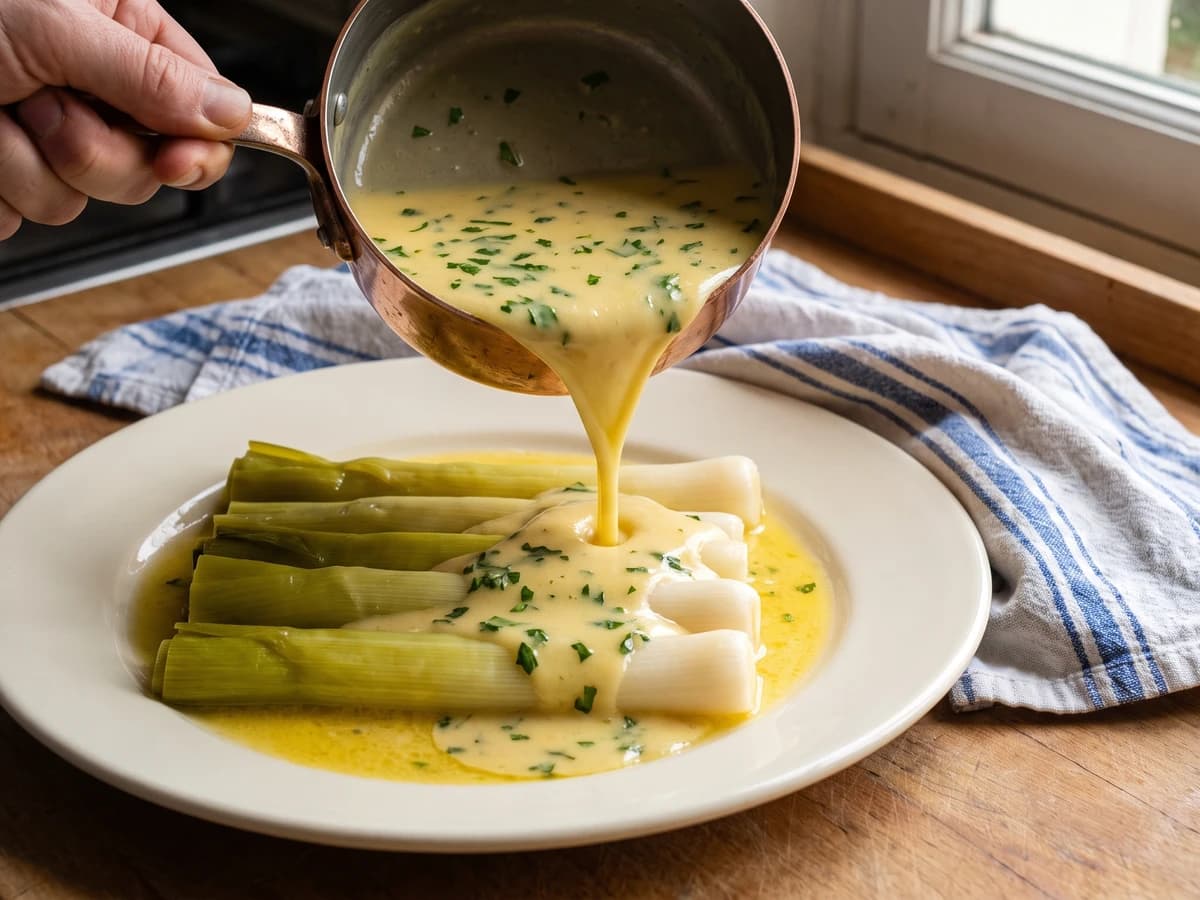
For sauced service, warm a 1 1/2-quart deep serving bowl with hot water, dry it, and use it as the timbale, the deep vessel specified by the classical service. Arrange the cardons inside, pour the chosen sauce evenly over them, and turn them once with two spoons so each piece is coated without breaking. For sauce served separately, arrange the cardons parallel like asparagus on a small food-safe rack nested inside a warmed rimmed platter, the honest home equivalent of the silver drainer, and send the sauce alongside in a warm sauceboat.
Bring the cardons to the table as soon as they are dressed or arranged. Hollandaise Sauce and Mousseline Sauce wait for no one, while the other sauces lose their gloss if held too long. The cardons should be tender enough to cut with the side of a fork, still whole, and carrying sauce rather than swimming in cooking water. À table!
1 serving (about 335g)
Culinary guides, cultural storytelling, and the editorial depth that makes cooking meaningful.
Discover Culinary ExplorerChef Juliette
Beef shin, lean beef, and fowl begin in cold water and rise slowly toward a tremble. Skim before the boil, and you learn the quiet discipline that gives every clear French broth its backbone.
Chef Juliette
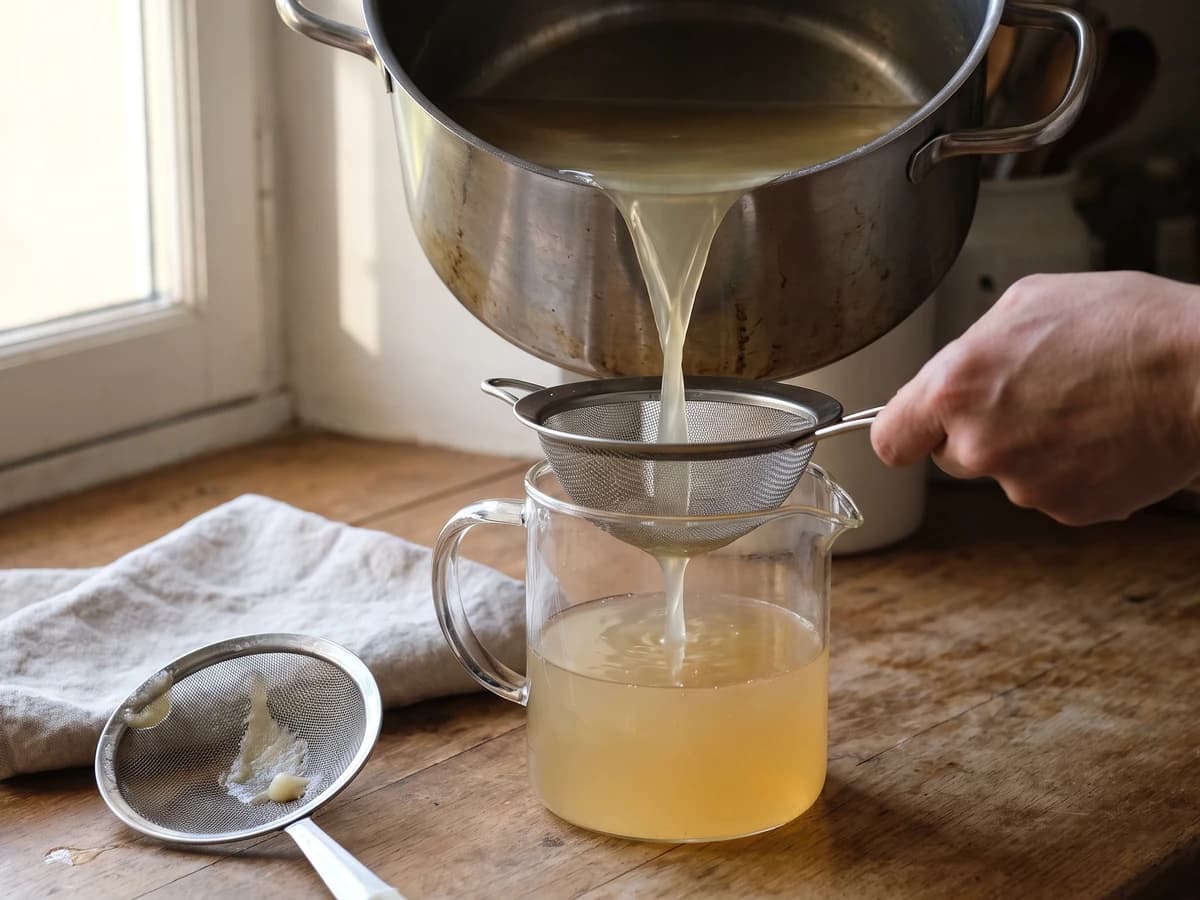
Break the veal bones small, then give them eight hours at a bare tremble. This pale, gelatinous fond becomes the quiet foundation beneath velouté, blanquette, and every sauce that must stay light.
Chef Juliette
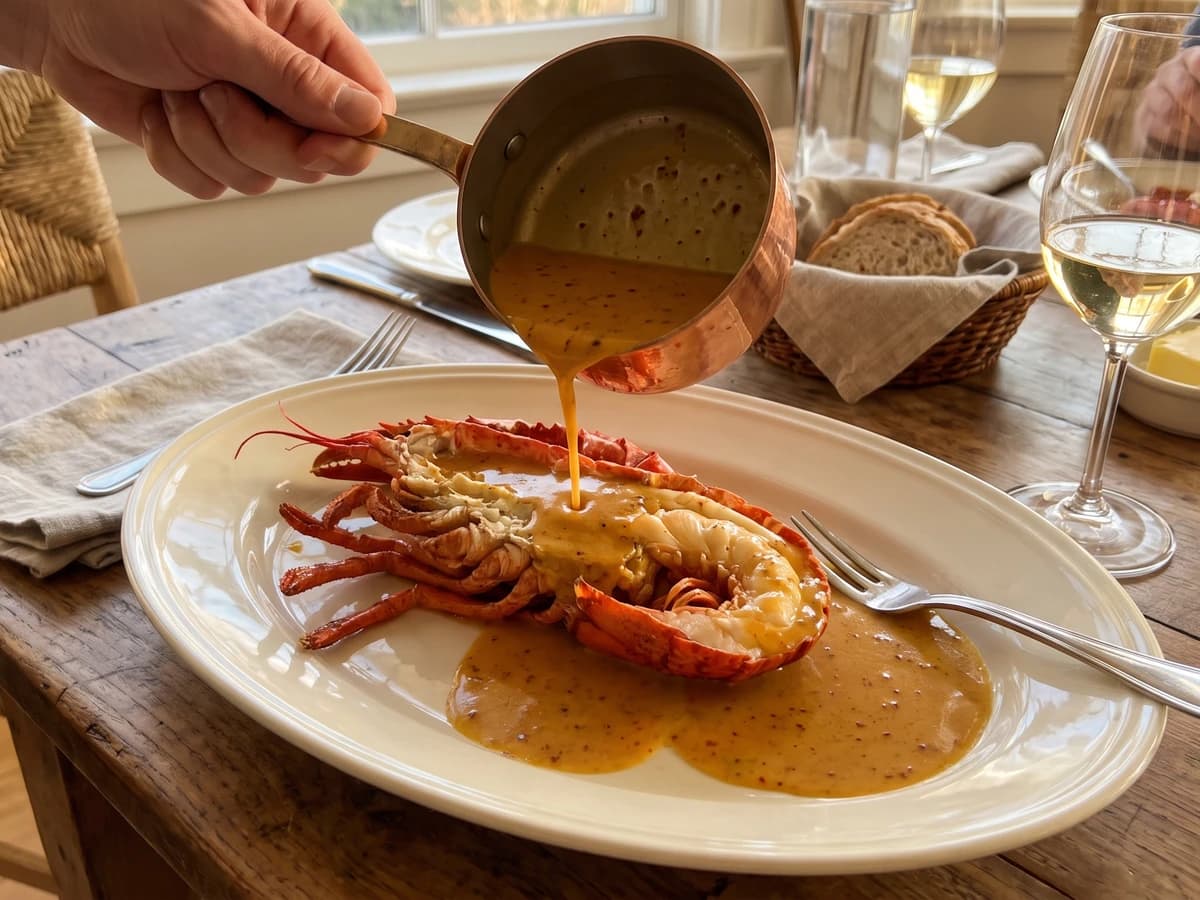
Sauce Orientale concentrates lobster-rich American Sauce with curry, then folds in cream away from the fire: a glossy, gently spiced derivative made for lobster, crayfish, and firm fish.
Chef Juliette
An old lesson in sauce families: Sauce Allemande takes mushroom liquor, then butter, lemon, and parsley, becoming a glossy Poulette for sheep's trotters, leeks, cauliflower, and anything needing gentle richness with a bright edge.