
Chef Juliette
Artichauts à la Barigoule
Artichauts à la Barigoule turns tender artichokes into little braising vessels, packed with mushrooms and fat bacon, wrapped, wine-braised, then dressed with only a spoonful of dark, concentrated sauce.
A cooking platform built around craft, culture, and the stories behind what we eat.
Created by Chef Juliette
Based on No. 2051, Aubergines à la Turque, from Le Guide Culinaire (1907) by Auguste Escoffier
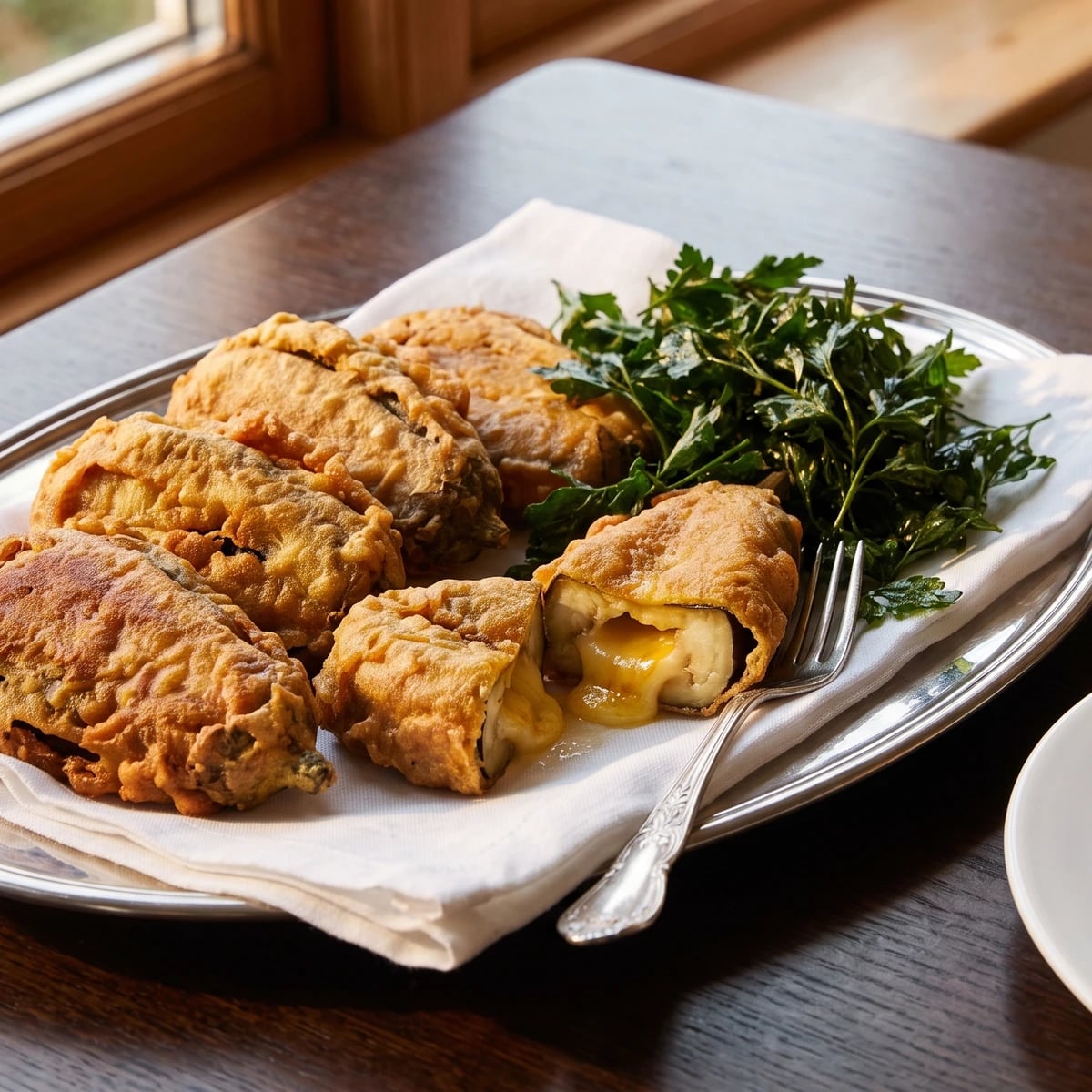
Two tender aubergine slices hide a firm yolk-and-cheese heart beneath a crisp second coat, proving that careful binding, not fussy equipment, keeps this grand-kitchen fritter together.
Aubergines à la Turque (double-fried aubergine parcels with a yolk-and-cheese centre) teaches the discipline of a sealed fritter: the filling must be firmer than seems necessary before it ever meets the fat. If the binder slumps on the spoon, the paired slices will part in the oil. Make it dense, press the parcels well, and the second frying gives you a crisp bronze shell around tender aubergine and a savoury cheese heart.
There is no saucier, stockpot, or salamander hidden in this one. The book's kitchen luxury was a fryer already hot, batter waiting at its station, and another pair of hands to assemble during service. Your equivalent is two aubergines, one heavy saucepan, a thermometer, and fifteen quiet minutes in the cold. I have reduced the brigade quantity and translated “smoking oil” into clean oil held at 185°C (365°F), because the intent is an instant crust, not smoke in your kitchen. The waiting trays are scaffolding and can go; the first fry, the firm yolk-and-cheese binding, and the second coat are the dish and must stay. One cook, one stove, one evening.
Make the filling before you mix the batter, then chill every assembled pair until it behaves like one piece. That is the step that decides the dish. If a seam loosens, press it closed with a little more cheese paste and chill it again. Ça se rattrape.
Aubergines à la Turque belongs to the Parisian classical repertoire, where French cooks used à la Turque for dishes associated with Ottoman ingredients and tastes, aubergine foremost among them. The name does not make this a documented Turkish household preparation; its flouring, paired filling, batter, and optional panure à l'anglaise place it squarely in the French grand-kitchen system. What traveled into the canon was the aubergine, while the double frying and service on a napkin were the French kitchen's own grammar.
Quantity
2 (about 1½ pounds / 680 g)
Quantity
1½ teaspoons (7.5 ml / 9 g)
divided
Quantity
½ teaspoon (2.5 ml / 1 g)
Quantity
¾ cup (180 ml / 95 g)
Quantity
2 (about 2½ tablespoons / 37 ml / 36 g)
Quantity
1½ cups (360 ml / 150 g)
freshly and finely grated
Quantity
1
Quantity
1 cup (240 ml / 125 g)
Quantity
½ cup plus 2 tablespoons (150 ml / 150 g)
added as needed
Quantity
1 tablespoon (15 ml / 14 g)
Quantity
6 cups (1.4 L / 1.3 kg)
Quantity
1 packed cup (240 ml / 30 g)
thoroughly dried
Quantity
½ cup (120 ml / 118 g) Anglaise (for Egg-and-bread-crumbing) (No. 174), in place of batter
Quantity
1½ cups (360 ml / 90 g)
| Ingredient | Quantity |
|---|---|
| medium aubergines | 2 (about 1½ pounds / 680 g) |
| fine saltdivided | 1½ teaspoons (7.5 ml / 9 g) |
| freshly ground black pepper | ½ teaspoon (2.5 ml / 1 g) |
| plain flour for dredging | ¾ cup (180 ml / 95 g) |
| pasteurized large egg yolks | 2 (about 2½ tablespoons / 37 ml / 36 g) |
| young Gruyère or Comtéfreshly and finely grated | 1½ cups (360 ml / 150 g) |
| large egg | 1 |
| plain flour for the batter | 1 cup (240 ml / 125 g) |
| very cold wateradded as needed | ½ cup plus 2 tablespoons (150 ml / 150 g) |
| neutral oil for the batter | 1 tablespoon (15 ml / 14 g) |
| neutral high-smoke-point frying oil | 6 cups (1.4 L / 1.3 kg) |
| flat-leaf parsley leavesthoroughly dried | 1 packed cup (240 ml / 30 g) |
| prepared Anglaise (optional) | ½ cup (120 ml / 118 g) Anglaise (for Egg-and-bread-crumbing) (No. 174), in place of batter |
| fine dry breadcrumbs (optional) | 1½ cups (360 ml / 90 g) |
Peel the aubergines completely and trim their stems. Cut each one lengthwise into exactly six even slices, about 6 to 8 mm thick, then match the twelve slices into six pairs of similar size. Season both sides with 1 teaspoon of the salt and the pepper only when the oil is nearly ready. Salt left sitting draws water to the surface, and wet aubergine makes the flour gummy rather than delicate.
Pour the frying oil into a heavy saucepan, leaving the pan no more than half full, and heat it to 175°C (350°F). Put the dredging flour in a shallow dish. Flour each aubergine slice lightly, shake it thoroughly, and fry two or three at a time until flexible, tender, and pale gold, about 2 to 3 minutes, turning once. Do not brown them deeply because they must face the oil again. Drain them flat on a wire rack and skim loose flour from the oil. If the first batch drinks oil and turns limp, stop and restore the temperature before continuing; blot those slices, then return them to the hot oil for twenty seconds. Ça se rattrape.
Let the slices cool until they can be handled. Mix the pasteurized raw yolks with about three-quarters of the grated cheese, then add more cheese gradually until the preparation is very firm and holds its shape when the spoon is turned. Spread a compact layer over six slices, leaving a narrow bare border, and cover each with its matching slice. Press gently from the centre outward, scrape away anything forced from the seams, and chill the parcels for 15 minutes. If a pair slides when lifted, separate it, work more of the reserved cheese into its filling, reassemble, and chill again. The firm binding is not scaffolding. It is the dish.
For the batter finish, whisk the whole egg with ½ cup (120 ml / 120 g) of the cold water and the tablespoon of oil. Add the batter flour and ¼ teaspoon of the salt, whisking only until no dry flour remains. The batter should fall like thick cream and leave an opaque coat on a spoon; loosen it with the reserved water a teaspoon at a time if necessary. For the book's alternate finish, omit the batter. Roll each cold parcel lightly in the remaining dredging flour, coat it thoroughly with the prepared Anglaise (for Egg-and-bread-crumbing) (No. 174), then cover it in the fine dry breadcrumbs. Let a crumbed parcel stand for 5 minutes so its crust grips.
Bring the clean oil to 185°C (365°F), hot enough to set the coat immediately but below its smoke point. Dip one chilled parcel at a time into the batter, cover every seam, let the excess fall away, and lower it into the oil away from you. Fry no more than two at once, turning carefully, until evenly crisp and deep gold, about 3 minutes. The filling at the centre should reach 71°C (160°F). If a seam begins to open, lift the parcel out, let it cool for a minute, patch the gap with thick batter, and fry it again. Ça se rattrape. Drain on the rack and season with the remaining salt.
Turn off the heat and let the oil fall to about 170°C (340°F). Lower the thoroughly dry parsley into the oil in two small batches with a long-handled spider, standing back as it may spit. Fry for 5 to 10 seconds, only until crisp and intensely green, then drain and salt very lightly. Line an oval platter with a clean folded napkin, arrange the aubergine parcels over it, and pile the fried parsley beside them. Serve at once. À table!
1 serving (about 270g)
Culinary guides, cultural storytelling, and the editorial depth that makes cooking meaningful.
Discover Culinary Explorer
Chef Juliette
Artichauts à la Barigoule turns tender artichokes into little braising vessels, packed with mushrooms and fat bacon, wrapped, wine-braised, then dressed with only a spoonful of dark, concentrated sauce.

Chef Juliette
Artichoke hearts, spring peas, and carrot settle into one buttered cocotte, cooking gently until tender before Manied Butter (No. 151) gives their clear vegetable liquor the lightest gloss.

Chef Juliette
Artichauts aux sauces diverses bring one generous lesson to the table: tie, boil, and drain the vegetables properly, then let one well-made sauce turn each leaf and heart into supper.

Chef Juliette
Artichauts à la Provençale turns a tight lid into technique: small artichokes, sweet peas, and lettuce soften in olive oil and their own juices, emerging tender, green, and quietly glossy.