
Chef Juliette
Smelt (Éperlans)
Tiny éperlans, lightly floured and fried until their tails stand crisp, arrive in a generous heap on a napkin with fried parsley and grooved lemon, a weeknight lesson in heat and restraint.
A cooking platform built around craft, culture, and the stories behind what we eat.
Created by Chef Juliette
Based on No. 1035, Potted Char, from Le Guide Culinaire (1907) by Auguste Escoffier
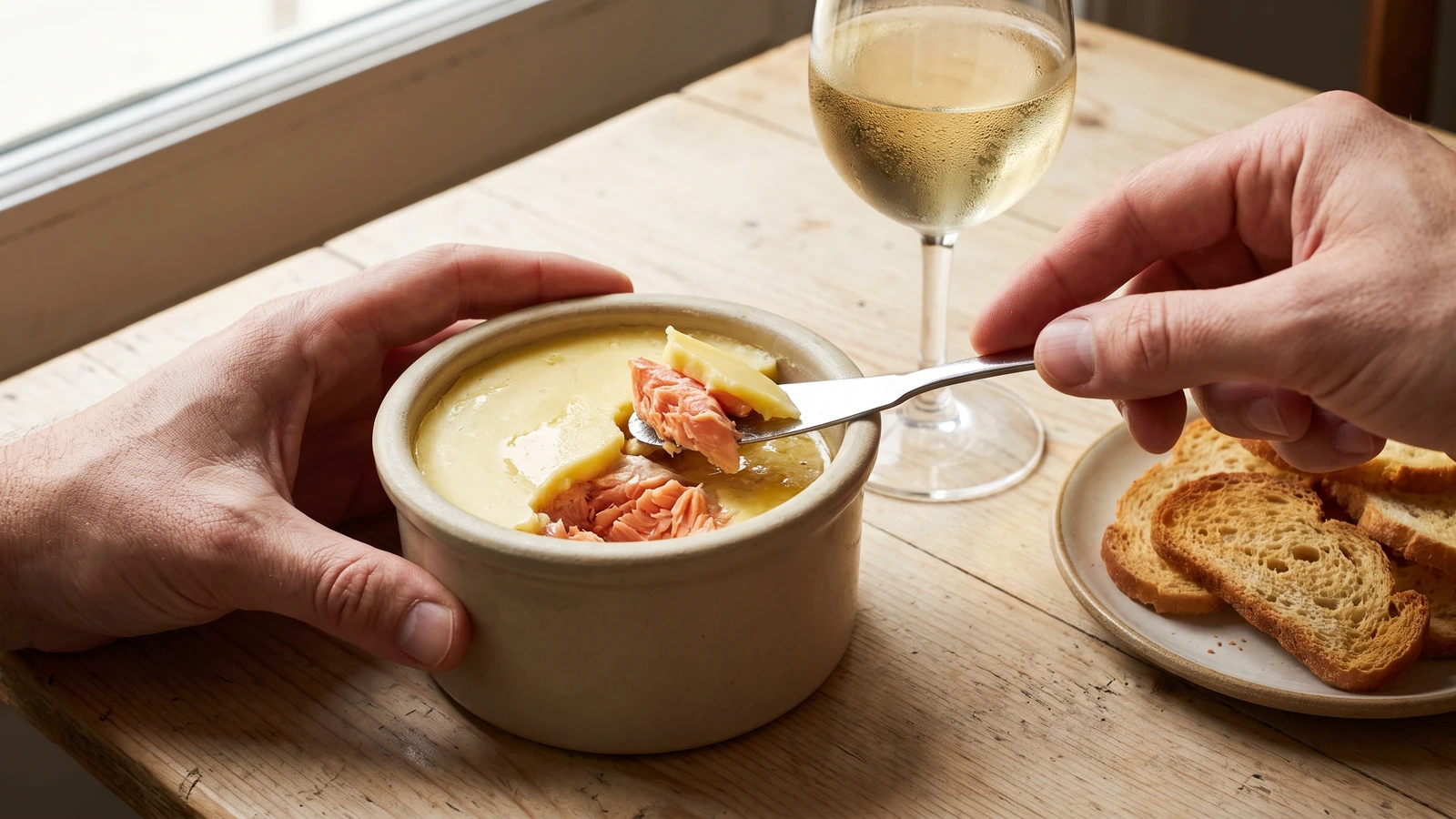
Wine-poached char packed in its earthenware crock beneath butter gold: a make-ahead first course that turns careful cooling, thorough boning, and one unbroken seal into quiet abundance.
Omble chevalier en pot (potted char) teaches the first law of potting: the butter seal is not decoration. Every flake must sit beneath clear, milk-solid-free butter, and the crock must stay cold. An exposed ridge or cracked cap gives air a path to the fish, while an unbroken seal protects its delicate flesh and holds the perfume of wine and Mirepoix close.
The original entry assumed several whole chars, a special earthenware pot, clarified butter waiting beside the range, and a reliably cold larder. For one cook, two small fish fit a nonreactive pan and a 1-quart stoneware crock; a gentle home oven replaces the range, and the refrigerator replaces the larder. The special pot and brigade quantity were scaffolding. Cooling the fish in its liquor, removing every bone, warming it beneath butter for fifteen minutes, and adding the final one-third-inch cap the next day are the dish itself. The cooking fits one evening, and the crock finishes in the cold overnight.
When it is ready, the butter lifts in a pale golden curl and reveals moist, coral-pink layers of char underneath. The one step that decides everything is the final seal: make it deep, make it unbroken, and keep it properly cold.
Omble chevalier belongs to the cold Alpine lakes of Savoie, particularly the tables around Annecy and the Lac du Bourget, where its fine flesh is traditionally handled with restraint. Potting beneath clarified butter is not uniquely Savoyard; it entered the French classical larder as a practical way of protecting cooked fish and meat from air. The grand-kitchen preparation refines that household logic with wine and Mirepoix, though its butter cap remains a refrigerated barrier rather than a shelf-stable preserve.
Quantity
2 fish, about 12 ounces (340 g) each
cleaned and scaled
Quantity
1 cup (240 ml / 160 g) Mirepoix (No. 228)
Quantity
3 cups plus 2 tablespoons (750 ml / 750 g)
Quantity
1 teaspoon (5 ml / 6 g)
divided
Quantity
1½ cups (360 ml / 325 g); if making it, begin with about 1¾ cups (420 ml / 400 g) unsalted butter
melted and divided
Quantity
1
thinly sliced and toasted for serving
| Ingredient | Quantity |
|---|---|
| whole Arctic charcleaned and scaled | 2 fish, about 12 ounces (340 g) each |
| fine Mirepoix | 1 cup (240 ml / 160 g) Mirepoix (No. 228) |
| dry unoaked white wine | 3 cups plus 2 tablespoons (750 ml / 750 g) |
| fine sea saltdivided | 1 teaspoon (5 ml / 6 g) |
| clarified buttermelted and divided | 1½ cups (360 ml / 325 g); if making it, begin with about 1¾ cups (420 ml / 400 g) unsalted butter |
| small baguette (optional)thinly sliced and toasted for serving | 1 |
If your butter is already clarified, melt it over the gentlest heat and continue. Otherwise, melt the unsalted butter slowly without stirring, skim away the white foam, and let the milk solids settle. Pour the clear golden fat through a fine sieve into a clean jug, leaving every milky speck behind. Measure 1½ cups (360 ml / 325 g). Cloudy butter still contains milk solids, which shorten the keeping quality; let it settle again and strain once more if needed.
Spread the fine Mirepoix (No. 228) across the bottom of a lidded nonreactive pan just large enough to hold the fish. Season the cavities and surfaces of the char with half the salt, lay them over the Mirepoix, and pour in the white wine. Press a parchment cartouche directly over the fish, cover, and bring the liquor slowly to a bare tremble. Poach gently for 10 to 14 minutes, depending on thickness, until the flesh beside the backbone is opaque and reaches 145°F (63°C). Never let the wine boil. If it begins to roll, lift the pan from the heat until it settles, then continue more gently; split skin is harmless here because the fillets will be packed later.
Remove the covered pan from the heat and leave the char in its cooking liquor for 20 minutes. Set the pan in a shallow bath of ice water, keeping the water outside the pan, and cool it promptly. Refrigerate the fish in the liquor until completely cold, about 2 hours. This cooling is not idle waiting: the flesh firms without drying and becomes far easier to lift cleanly from the bones. Do not leave the fish cooling at room temperature for more than 1 hour.
Lift the cold char from the liquor with two broad spatulas and drain for 10 minutes, then pat the surfaces dry. Peel away the skin, lift off the upper fillets, remove the backbone and rib cage, and retrieve the lower fillets. Pass your fingertips slowly over every piece and pull out each pin bone with tweezers. Taste a cold flake and add only as much of the remaining salt as it needs. If a fillet breaks, pack the large flakes in overlapping layers; potting forgives the appearance, but it does not forgive a hidden bone.
Heat the oven to 300°F (150°C). Arrange the char snugly in a clean 1-quart (950 ml) earthenware or stoneware crock, keeping the fillets in broad layers rather than mashing them. Reserve at least ½ cup (120 ml / 110 g) clarified butter for the final seal, then pour enough of the remaining warm butter around and over the fish to cover it completely. Run a thin skewer around the inside edge and tap the crock gently to release trapped air. Set it on a baking sheet and warm uncovered for exactly 15 minutes, preserving the source method without recooking the fish harshly.
Let the crock cool on a rack for 30 to 45 minutes, then refrigerate it until the butter is firm. Cover and leave it cold overnight. The next day, melt the reserved clarified butter just until liquid and let it become barely warm, then pour it across the surface to form an unbroken layer ⅓ inch (8 mm) thick. If the cap cracks, sinks, or leaves even one piece of char exposed, ça se rattrape: melt a little more clarified butter and cover the entire surface again. Chill until solid, cover tightly, and keep at or below 40°F (4°C) for no more than 4 days from the day the fish was cooked. This is not safe for storage at room temperature.
Take the crock from the refrigerator 15 minutes before serving so the butter loses its brittle chill without becoming oily. Break through the cap with a clean knife and spoon out broad flakes of char with a little of their butter, then serve them on crisp baguette toasts. Once the seal is opened, cover and refrigerate the remainder, use a clean utensil each time, and finish it within 24 hours. À table!
1 serving (about 230g)
Culinary guides, cultural storytelling, and the editorial depth that makes cooking meaningful.
Discover Culinary ExplorerChef Juliette
Tiny éperlans, lightly floured and fried until their tails stand crisp, arrive in a generous heap on a napkin with fried parsley and grooved lemon, a weeknight lesson in heat and restraint.

Chef Juliette
Brandade de Morue turns salt cod, warm olive oil, and milk into a pale, silky emulsion: keep everything warm and add the oil slowly, then crown the generous dome with butter-fried bread.

Chef Juliette
Salt cod worked warm with cream, one patient spoonful at a time, until the rough flakes become a glossy Nîmes paste, domed generously and ringed with butter-fried croutons for the table.
Chef Juliette
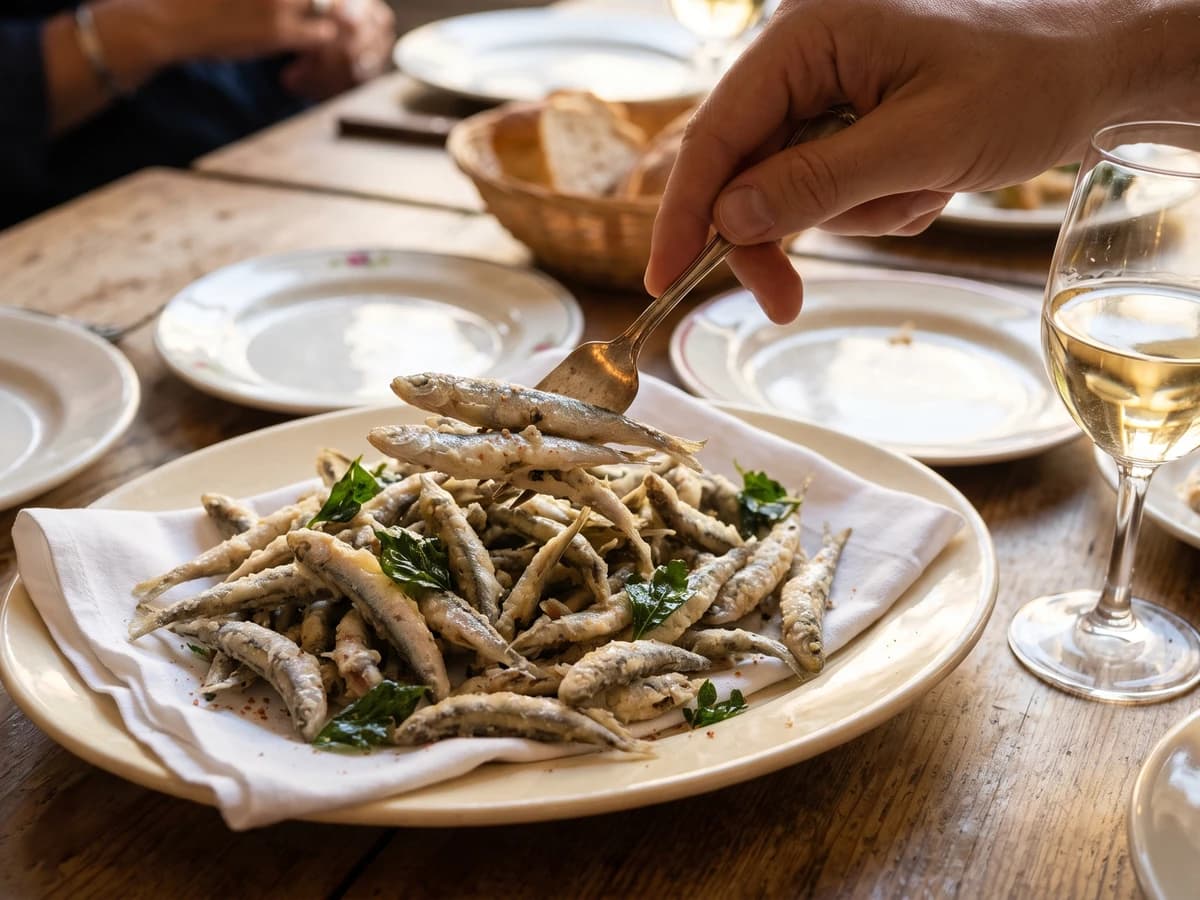
Friture de blanchaille is a lesson in hot fat and restraint: flour shaken nearly bare, minute-long batches, a snap of salt and cayenne, and fried parsley still vivid green.