
Chef Juliette
Smelt (Éperlans)
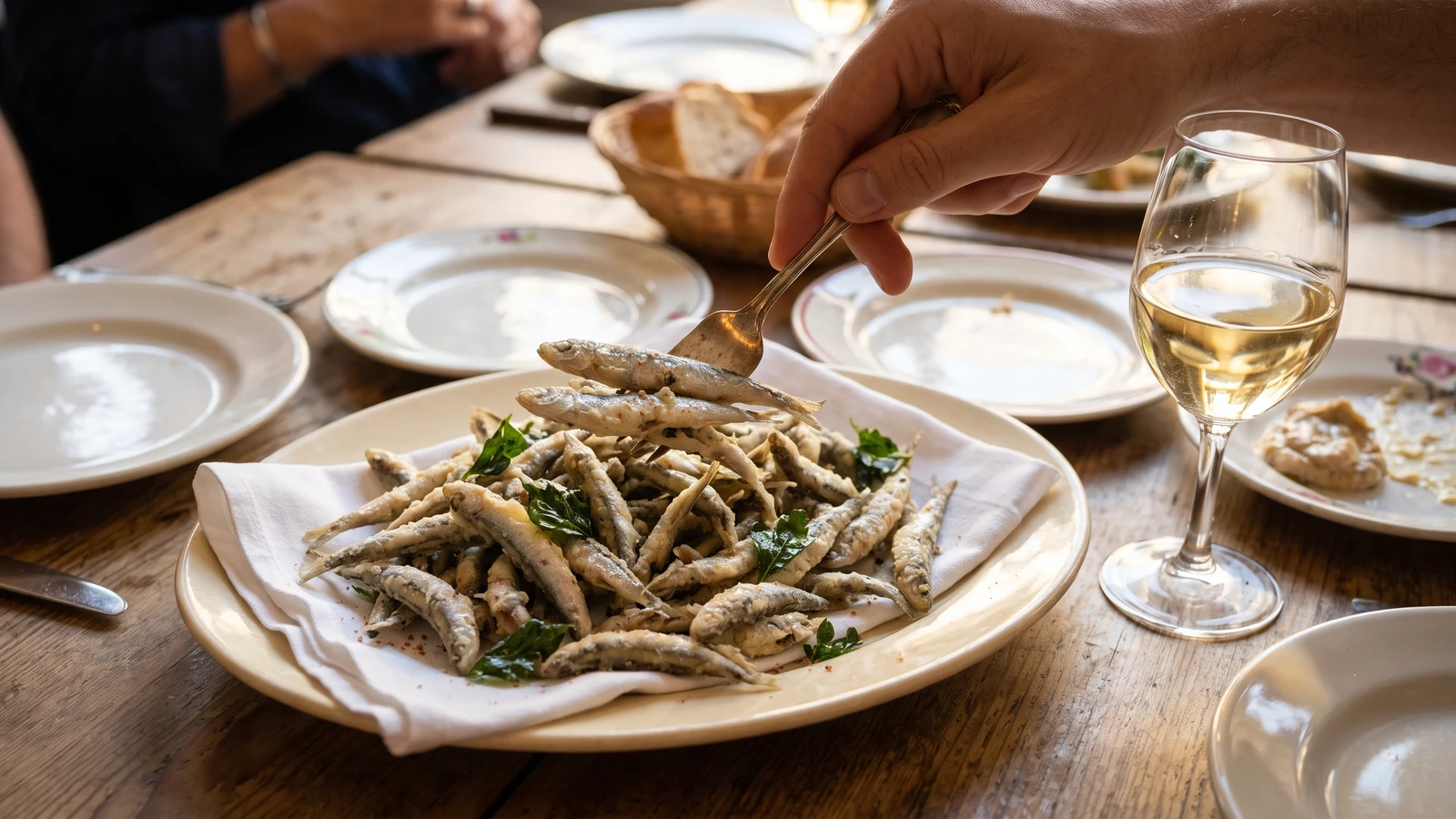
Tiny éperlans, lightly floured and fried until their tails stand crisp, arrive in a generous heap on a napkin with fried parsley and grooved lemon, a weeknight lesson in heat and restraint.
A cooking platform built around craft, culture, and the stories behind what we eat.
Created by Chef Juliette
Based on No. 1036, Whitebait, from Le Guide Culinaire (1907) by Auguste Escoffier
Friture de blanchaille is a lesson in hot fat and restraint: flour shaken nearly bare, minute-long batches, a snap of salt and cayenne, and fried parsley still vivid green.
Friture de blanchaille teaches the first law of frying: the smaller and more delicate the food, the hotter, cleaner, and shorter the cooking must be. These Thames whitebait need only a veil of flour and one minute in abundant fat. Anything more buries the fish.
The original entry assumed a dedicated sieve or frying basket, fresh fat in service quantity, linen waiting for the drain, and enough hands to send each batch straight to the table. At home, use a 4- to 5-quart heavy pot, a thermometer, a fine-mesh spider, and a rack beside the stove; four appetizer portions replace the brigade's open-ended service. The special basket and napkin presentation are scaffolding and may change. The fierce heat, hard shake to remove surplus flour, small batches, salt and cayenne, and fried parsley are the dish and must stay. I set the oil at 190°C (375°F), rather than waiting for literal smoke, because measured high heat gives the same sudden crisping without sacrificing the oil or your eyebrows. One cook, one stove, one evening.
Have the platter, seasoning, and parsley ready before the first fish meets the oil, because the clock runs for one minute and service begins the instant the basket rises. The one step that decides everything is this: shake the floured fish nearly bare, then give them room in oil that has fully recovered to 190°C (375°F).
Whitebait belongs first to the lower Thames and the London table, where it was served as a delicate fish course and became familiar enough to enter the French classical repertoire by its English name. It is not one mysterious species: whitebait is a market and culinary name for the tiny young of several fish, often herring and sprat in the Thames catch, which explains why classical books treated its parentage as a riddle. Its kinship with the Mediterranean nonat is a kinship of size, fragility, and immediate frying, not proof that the two coasts share one fish or one regional tradition.
Quantity
1 pound (454 g)
or frozen whitebait thawed completely
Quantity
1 cup (240 ml / 120 g)
Quantity
6 cups (1.4 L / about 1.3 kg)
for deep-frying
Quantity
1 large bunch, about 2 packed cups (475 ml / 60 g)
washed and dried completely, leaves and tender sprigs
Quantity
1 teaspoon (5 ml / 6 g)
Quantity
1/4 teaspoon (1.25 ml / 0.5 g)
| Ingredient | Quantity |
|---|---|
| fresh whitebaitor frozen whitebait thawed completely | 1 pound (454 g) |
| all-purpose flour | 1 cup (240 ml / 120 g) |
| fresh refined sunflower oilfor deep-frying | 6 cups (1.4 L / about 1.3 kg) |
| parsleywashed and dried completely, leaves and tender sprigs | 1 large bunch, about 2 packed cups (475 ml / 60 g) |
| fine table salt | 1 teaspoon (5 ml / 6 g) |
| cayenne pepper | 1/4 teaspoon (1.25 ml / 0.5 g) |
Heat the oven to 95°C (200°F) and place a wire rack over a rimmed tray inside; this will hold the brief succession of batches without trapping oil underneath. Mix the salt and cayenne in a small bowl, and warm the serving platter. Spread the whitebait between clean towels and pat very gently until dry, keeping their fragile bodies intact. Dry the parsley with equal care. Any water left on the parsley will make the hot oil spit fiercely.
Pour the fresh oil into a 4- to 5-quart heavy pot, leaving the vessel no more than half full. Clip on the thermometer and heat the oil gradually to 190°C (375°F), hot enough to set the flour at once but below visible smoke. The source judged readiness by smoking fat; the thermometer is the honest home equivalent. If the oil begins to smoke, slide the pot off the burner and let it return to 190°C (375°F). Ça se rattrape. Keep a metal lid beside the stove; if oil ever ignites, turn off the heat and cover the pot. Never use water.
Put one quarter of the whitebait into a wide bowl with one quarter of the flour. Turn them with your fingers until every fish is covered, handling them as little as possible, then transfer them to a dry sieve or frying basket. Shake firmly until the fish wear only a fine, even dusting. Excess flour becomes paste on the fish and burnt crumbs in the oil. If the coating clumps, the fish are still damp; tip them gently back onto fresh towels, dry them again, and begin that batch with fresh flour.
Lower the first small batch into the oil, moving away from yourself, and stir once with the spider so the fish separate. Fry for about 1 minute, until the flour looks dry and pale gold and the tiny tails feel crisp when nudged. Lift immediately, drain over the pot for 15 seconds, then spread the fish on the warm rack and season lightly with the salt and cayenne mixture. Let the oil recover fully to 190°C (375°F), then flour and fry each remaining batch in the same way. If the first batch emerges soft, the oil cooled or the pot was crowded. Don't cook it slowly until the fish dry out; drain it, restore the oil to temperature, and give it a second dip of 10 to 15 seconds. Ça se rattrape.
Skim the loose flour crumbs from the oil and let its temperature settle to 180°C (350°F). Put the completely dry parsley in the frying basket, lower it carefully, and cover the pot with a splatter screen. Fry for 10 to 15 seconds, just until the fierce bubbling subsides and the leaves turn crisp while remaining vivid green. Lift at once and drain separately on the rack. If a few sprigs darken, discard them; bitter parsley has no place on this platter.
Taste one whitebait and add only as much of the remaining salt and cayenne as it needs. Pile the fish loosely on the warm oval platter, lined with a clean white linen napkin if you want the canonical presentation, and arrange the fried parsley generously around them. Bring the platter straight to the table. No sauce waits beside it, and none is missing. À table!
1 serving (about 135g)
Culinary guides, cultural storytelling, and the editorial depth that makes cooking meaningful.
Discover Culinary ExplorerChef Juliette
Tiny éperlans, lightly floured and fried until their tails stand crisp, arrive in a generous heap on a napkin with fried parsley and grooved lemon, a weeknight lesson in heat and restraint.

Chef Juliette
Brandade de Morue turns salt cod, warm olive oil, and milk into a pale, silky emulsion: keep everything warm and add the oil slowly, then crown the generous dome with butter-fried bread.

Chef Juliette
Salt cod worked warm with cream, one patient spoonful at a time, until the rough flakes become a glossy Nîmes paste, domed generously and ringed with butter-fried croutons for the table.

Chef Juliette
Wine-poached char packed in its earthenware crock beneath butter gold: a make-ahead first course that turns careful cooling, thorough boning, and one unbroken seal into quiet abundance.