
Chef Juliette
Smelt (Éperlans)
Tiny éperlans, lightly floured and fried until their tails stand crisp, arrive in a generous heap on a napkin with fried parsley and grooved lemon, a weeknight lesson in heat and restraint.
A cooking platform built around craft, culture, and the stories behind what we eat.
Created by Chef Juliette
Based on No. 1027, Brandade de Morue, from Le Guide Culinaire (1907) by Auguste Escoffier
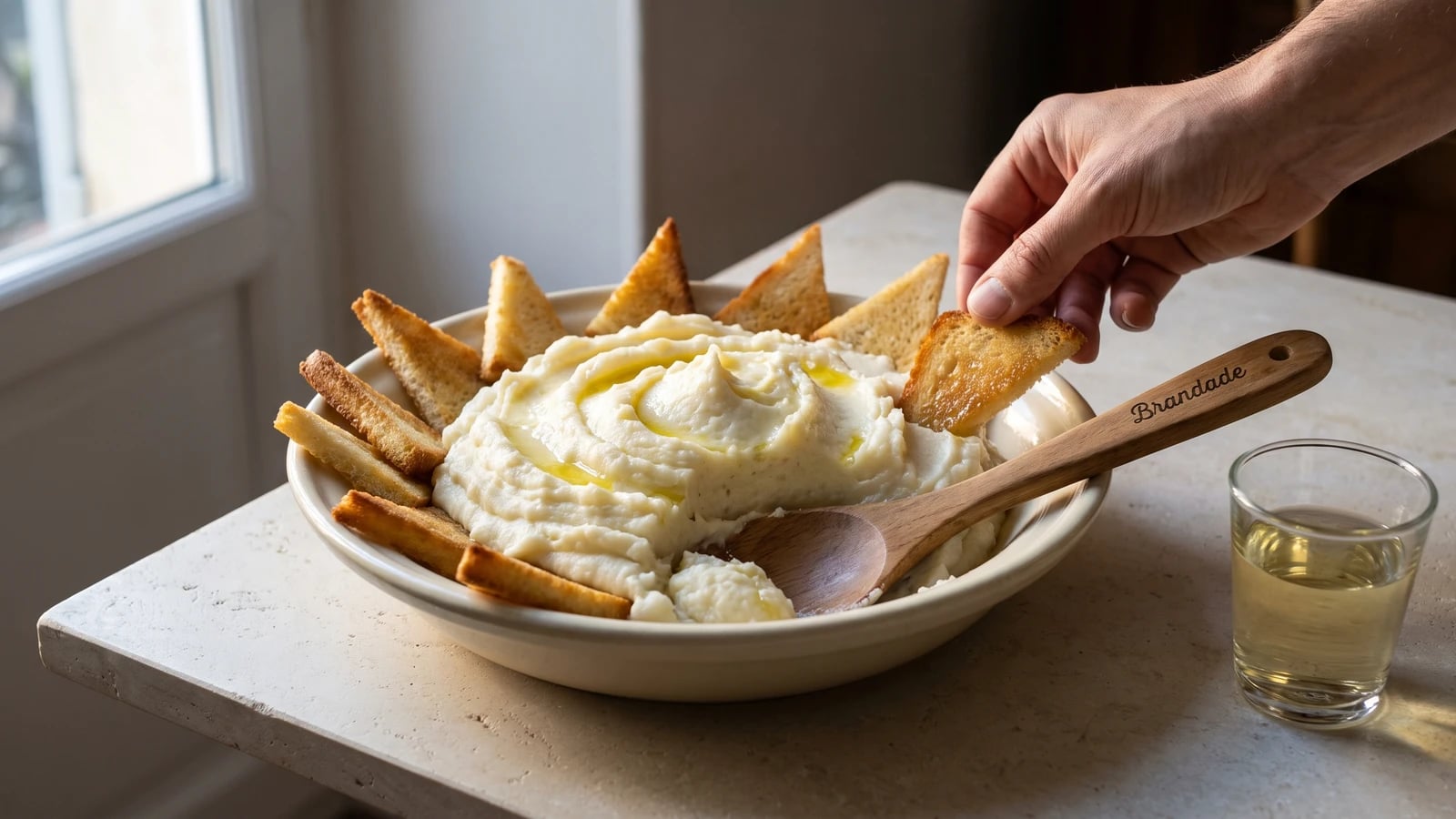
Brandade de Morue turns salt cod, warm olive oil, and milk into a pale, silky emulsion: keep everything warm and add the oil slowly, then crown the generous dome with butter-fried bread.
Brandade de Morue teaches one unforgiving but generous truth: fish, oil, and milk must meet while warm. You are building an emulsion, not simply mashing cod, and the paste turns pale and supple only when the oil enters slowly enough for the fish to take it. If the mixture cools or the oil runs ahead, it separates. Ça se rattrape, and the method gives you the warm-milk rescue at that very moment.
The book's formula assumed the rhythm of a saucier, one hand never leaving the wooden spoon while hot milk and measured oil stood ready beside the range, followed by presentation in a hot timbale, the deep serving vessel used for formal service. Here, the one-pound quantity is halved to eight ounces for four appetizer servings, with every oil-and-milk ratio kept intact. A folded towel steadies the pan, a jug in warm water keeps the oil ready, and a warmed serving bowl replaces the timbale. The tall pyramid is service scaffolding; a generous dome carries the same intent. The continuous stirring and gradual emulsion are the dish, so they stay.
At the table, the brandade should be ivory-white, softly ridged by the spoon, and rich enough to hold its crown of butter-fried bread. No potato goes into this formula. The one step that matters most is temperature: drain the morue well, warm the oil and milk, and begin the emulsion before the fish paste loses its heat. One cook, one stove, one evening.
Brandade de morue belongs above all to Nîmes, in the Gard, where Atlantic salt cod met the olive oil of the Mediterranean South. The preserved fish traveled inland through trade, then household and professional cooks pounded it with oil into an emulsion, with milk entering many canonical formulas to soften and steady the paste. Potato is common in neighboring and household versions, but this classical Nîmes line rests on cod, oil, milk, and a whisper of garlic.
Quantity
1/2 pound (8 ounces / 227 g)
cut into 4 pieces
Quantity
6 cups (1.4 L / 1.4 kg)
Quantity
3 tablespoons plus 1/2 teaspoon (47 ml / 43 g)
Quantity
1/4 small clove (about 1/2 g)
crushed to a paste
Quantity
1/2 cup plus 1 1/2 tablespoons (142 ml / 130 g)
warmed for the emulsion
Quantity
1/4 cup plus 2 teaspoons (70 ml / 72 g)
brought just to the boil
Quantity
only if needed
Quantity
2 large slices (about 2 1/2 ounces / 70 g)
crusts removed and each cut into 4 triangles
Quantity
2 tablespoons (30 ml / 28 g)
| Ingredient | Quantity |
|---|---|
| well-soaked Icelandic or Newfoundland moruecut into 4 pieces | 1/2 pound (8 ounces / 227 g) |
| cold water | 6 cups (1.4 L / 1.4 kg) |
| mild olive oil | 3 tablespoons plus 1/2 teaspoon (47 ml / 43 g) |
| garliccrushed to a paste | 1/4 small clove (about 1/2 g) |
| mild olive oilwarmed for the emulsion | 1/2 cup plus 1 1/2 tablespoons (142 ml / 130 g) |
| whole milkbrought just to the boil | 1/4 cup plus 2 teaspoons (70 ml / 72 g) |
| fine salt (optional) | only if needed |
| firm white breadcrusts removed and each cut into 4 triangles | 2 large slices (about 2 1/2 ounces / 70 g) |
| unsalted butter | 2 tablespoons (30 ml / 28 g) |
Put the well-soaked morue in a 2-quart saucepan and cover it with the cold water. Bring the water slowly to the boil over medium heat. The instant it begins to boil, start an eight-minute timer and lower the heat just enough to prevent the pieces from being knocked about. At the end, the fish should be opaque and separate readily into moist flakes.
Drain the morue thoroughly in a sieve. As soon as it is cool enough to handle, remove every piece of skin and every bone, feeling through the flakes with your fingertips. Press gently against the sieve to shed trapped water without squeezing the fish dry. Water left in the flakes weakens the emulsion; a little natural moisture keeps the paste tender.
Measure the larger quantity of olive oil into a heatproof jug and stand the jug in a bowl of hot tap water until the oil feels pleasantly warm. Bring the milk just to the boil in a small saucepan, then hold it over the lowest heat. Keep the two liquids separate and within reach. Once the stirring begins, you should not need to abandon the pan to find anything.
Heat the smaller quantity of olive oil in a sturdy saucepan over medium-high heat until it shimmers and gives the first faint sign of smoke. Add the drained morue and crushed garlic. Stir hard with a wooden spoon over brisk heat for 3 to 5 minutes, crushing the fish against the pan until it is reduced to fine shreds and gathers into a hot, rough paste. Keep scraping the bottom so the garlic cannot catch.
Take the saucepan off the heat and set it on a folded towel so it cannot skate. Stir without stopping as you add the warm olive oil one teaspoon at a time, beating each addition fully into the fish before the next. Once the paste accepts the oil readily, pour in a thread no wider than kitchen string. Whenever the brandade stiffens, beat in a tablespoonful of boiling milk, then return to the oil. Reserve the final tablespoon of milk for correcting the texture. If beads of free oil appear or the paste turns greasy, stop. Ça se rattrape: put one tablespoon of the measured boiling milk in a clean, warmed bowl, then beat in the broken brandade one spoonful at a time until it comes together again. Never chase a split emulsion with more oil.
Beat in the reserved hot milk. The finished brandade should resemble an ordinary potato purée in consistency, holding soft ridges and falling from the spoon in a mound rather than pouring. Taste before adding salt because morue carries its own. If the paste is too stiff, loosen it with a teaspoon of hot milk; if it is loose but not oily, beat it vigorously for another minute. Keep it warm in a bain-marie (warm-water bath) while you fry the bread.
Melt the butter in a skillet over medium heat just before serving. Add the bread triangles and fry them on both sides until crisp and evenly butter-gold, adjusting the heat if the butter begins to darken. Drain briefly on a clean towel, but do not let them go cold.
Spoon the warm brandade into a heated serving bowl and build it into a generous dome or modest pyramid, leaving the spoon marks visible. Set the butter-fried triangles upright around the crown and serve at once while the emulsion is supple and the bread is crisp. À table!
1 serving (about 140g)
Culinary guides, cultural storytelling, and the editorial depth that makes cooking meaningful.
Discover Culinary ExplorerChef Juliette
Tiny éperlans, lightly floured and fried until their tails stand crisp, arrive in a generous heap on a napkin with fried parsley and grooved lemon, a weeknight lesson in heat and restraint.

Chef Juliette
Salt cod worked warm with cream, one patient spoonful at a time, until the rough flakes become a glossy Nîmes paste, domed generously and ringed with butter-fried croutons for the table.

Chef Juliette
Wine-poached char packed in its earthenware crock beneath butter gold: a make-ahead first course that turns careful cooling, thorough boning, and one unbroken seal into quiet abundance.
Chef Juliette
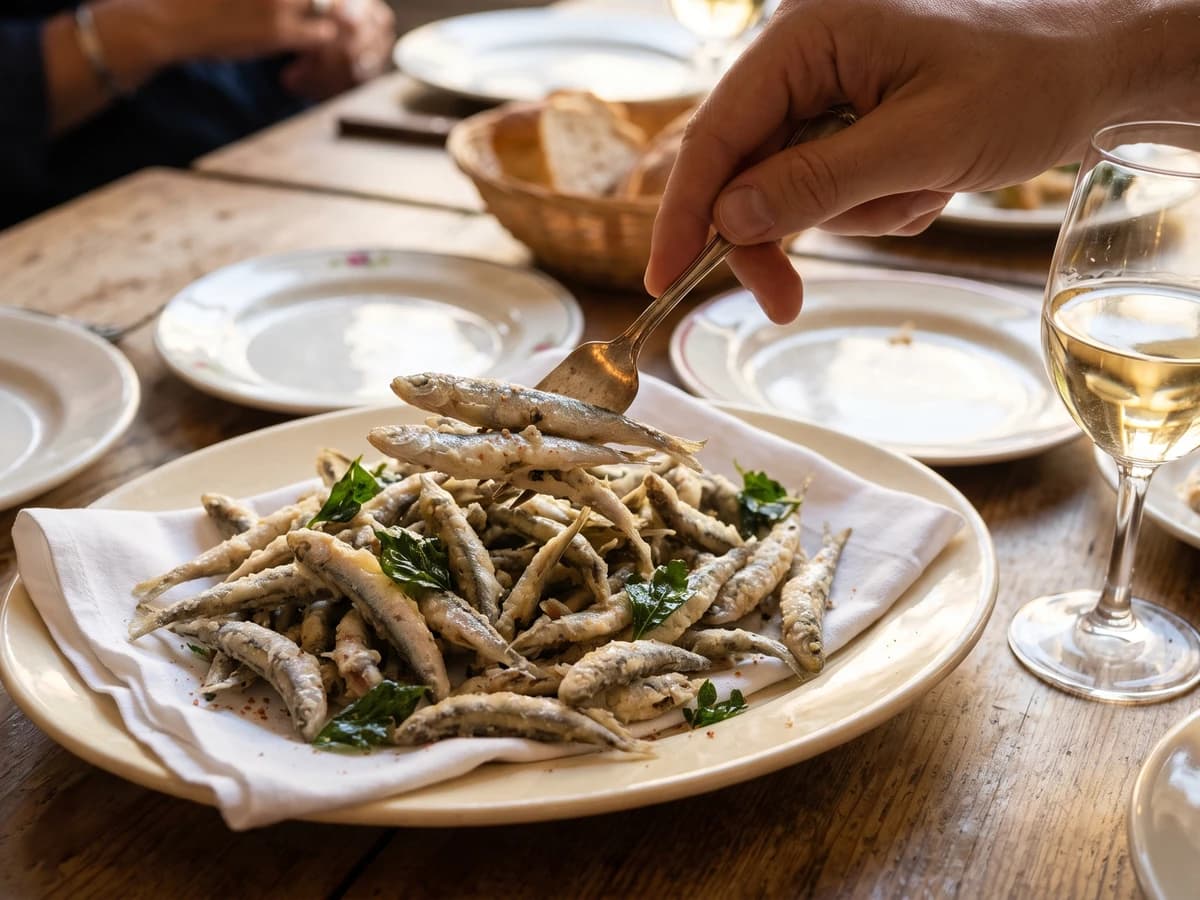
Friture de blanchaille is a lesson in hot fat and restraint: flour shaken nearly bare, minute-long batches, a snap of salt and cayenne, and fried parsley still vivid green.