
Chef Juliette
Brandade de Morue
Brandade de Morue turns salt cod, warm olive oil, and milk into a pale, silky emulsion: keep everything warm and add the oil slowly, then crown the generous dome with butter-fried bread.
A cooking platform built around craft, culture, and the stories behind what we eat.
Created by Chef Juliette
Based on No. 1002, Smelt (Éperlans), from Le Guide Culinaire (1907) by Auguste Escoffier
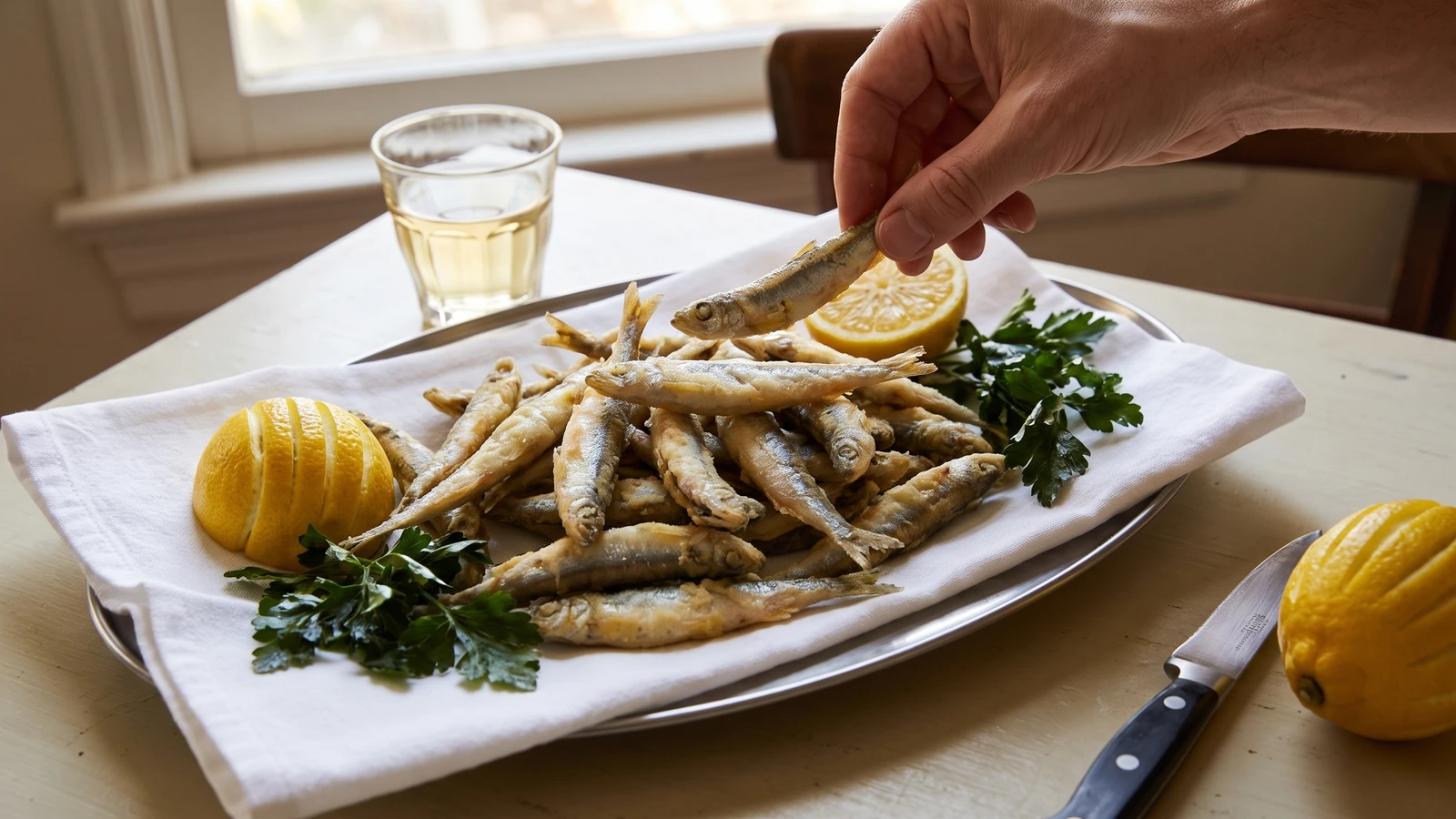
Tiny éperlans, lightly floured and fried until their tails stand crisp, arrive in a generous heap on a napkin with fried parsley and grooved lemon, a weeknight lesson in heat and restraint.
Éperlans frits (fried smelts) teach the discipline of friture: water must leave before the fish meets the fat. These fish are small enough to eat nearly whole, and they need only a veil of flour, steady heat, and enough restraint to come from the oil pale gold rather than armoured in batter. The one true thing is dryness. Wet smelts spit, steam inside their coating, and drink oil.
The original entry assumes a brigade frying station held at temperature, a hand to groove lemons and prepare parsley, and portions leaving the kitchen the instant they are ready. At home, a heavy saucepan, a thermometer, and one pound of fish cooked in three batches do the same work. The constant fryer and extra hands are scaffolding and can go; the thin flouring, hot oil, fried parsley, grooved half-lemons, and napkin service are the dish and must stay. One cook, one stove, one evening.
Drain the éperlans briefly on a rack before heaping them on the napkin, so the presentation remains generous without trapping oil underneath. Before you touch the pan, dry every fish until the towel comes away clean. That is the step that decides the dish.
Éperlans belong to the fish cookery of northern France, particularly Normandy and the Channel coast toward Picardy, where small fish from coastal and estuarine waters reached market fresh enough for immediate frying. Parisian kitchens adopted them as a friture, either heaped on a napkin or threaded onto brochettes and laid flat, always with fried parsley and grooved lemon halves. The smallest were eaten almost whole, while larger smelts left the frying platter for preparations suited to individual fish.
Quantity
About 24 fish, 3 to 4 inches (8 to 10 cm) long, totaling 1 pound (455 g)
gutted and gilled, with heads and backbones left intact
Quantity
¾ cup (180 ml / 90 g)
Quantity
1½ teaspoons (7.5 ml / 9 g)
divided
Quantity
4 cups (950 ml / 870 g), or enough to reach 1½ inches (4 cm) deep
Quantity
1 loosely packed cup (240 ml / 25 g)
washed and dried completely
Quantity
2 lemons (about 8 ounces / 225 g total)
grooved and halved crosswise
| Ingredient | Quantity |
|---|---|
| small whole smeltsgutted and gilled, with heads and backbones left intact | About 24 fish, 3 to 4 inches (8 to 10 cm) long, totaling 1 pound (455 g) |
| all-purpose flour | ¾ cup (180 ml / 90 g) |
| fine sea saltdivided | 1½ teaspoons (7.5 ml / 9 g) |
| refined peanut or sunflower oil | 4 cups (950 ml / 870 g), or enough to reach 1½ inches (4 cm) deep |
| flat-leaf parsley leaves and tender sprigswashed and dried completely | 1 loosely packed cup (240 ml / 25 g) |
| medium lemonsgrooved and halved crosswise | 2 lemons (about 8 ounces / 225 g total) |
Keep the smelts cold while you work. If they have not been cleaned, make a short slit from the vent toward the head with kitchen scissors, remove the viscera and gills, then rinse very briefly under cold water. Leave the heads and backbones intact. Spread the fish on clean towels and blot inside and out until no moisture marks the paper; crisp friture begins with a dry surface, not with more flour.
Draw six shallow channels lengthwise around each lemon with a channel knife or the point of a sharp paring knife, then halve the lemons crosswise so the grooved peel shows around each half. Pick over the parsley and confirm that it is completely dry. Set a wire rack over a sheet pan for draining, then lay a clean white cotton napkin on the serving platter. The rack removes the oil; the napkin is the classical presentation.
Pour the oil into a heavy 3- to 4-quart saucepan, filling the pan no more than one-third full, and heat it to 365°F (185°C). Keep the thermometer clipped where its tip sits in the oil without touching the pan. If the oil begins to smoke, slide the pan off the heat and let it cool to temperature. Never add water to hot oil.
Mix the flour with 1 teaspoon (5 ml / 6 g) of the salt. Working with only one batch at a time, toss eight smelts through the seasoned flour, coating the bellies as well as the skin, then shake them in a sieve until only a thin veil remains. Flour them immediately before frying. If they sit, the coating absorbs moisture and becomes paste.
Lower the first batch into the 365°F (185°C) oil one fish at a time, giving each a moment to set before adding the next. Fry for 2 to 3 minutes, moving them gently with a wire skimmer, until pale gold, firm along the spine, and crisp at the fins and tails. Let the oil return to temperature between batches. Drain the fish in a single layer on the rack and season at once with some of the remaining salt. If the first batch comes out limp and greasy, do not discard it. Ça se rattrape: bring the oil to 375°F (190°C), refry the fish for 15 to 20 seconds, and drain them separately without piling.
Return the oil to 365°F (185°C). Place the completely dry parsley in the wire skimmer, lower it into the oil, and stand back as it bubbles vigorously. Fry for 8 to 12 seconds, just until the leaves turn crisp while remaining green, then lift them out and drain on the rack. If the parsley feels damp, stop and dry it again before it approaches the oil; this is a safety rule as well as a matter of texture.
Heap the drained éperlans generously on the napkin-lined platter. Tuck the fried parsley around the mound and set the grooved lemon halves at the sides, cut faces up. Carry the platter straight to the table while the flour coat is still crisp, with a small empty plate for anyone who prefers not to eat the heads or backbones. À table!
1 serving (about 140g)
Culinary guides, cultural storytelling, and the editorial depth that makes cooking meaningful.
Discover Culinary ExplorerChef Juliette
Brandade de Morue turns salt cod, warm olive oil, and milk into a pale, silky emulsion: keep everything warm and add the oil slowly, then crown the generous dome with butter-fried bread.

Chef Juliette
Salt cod worked warm with cream, one patient spoonful at a time, until the rough flakes become a glossy Nîmes paste, domed generously and ringed with butter-fried croutons for the table.

Chef Juliette
Wine-poached char packed in its earthenware crock beneath butter gold: a make-ahead first course that turns careful cooling, thorough boning, and one unbroken seal into quiet abundance.
Chef Juliette
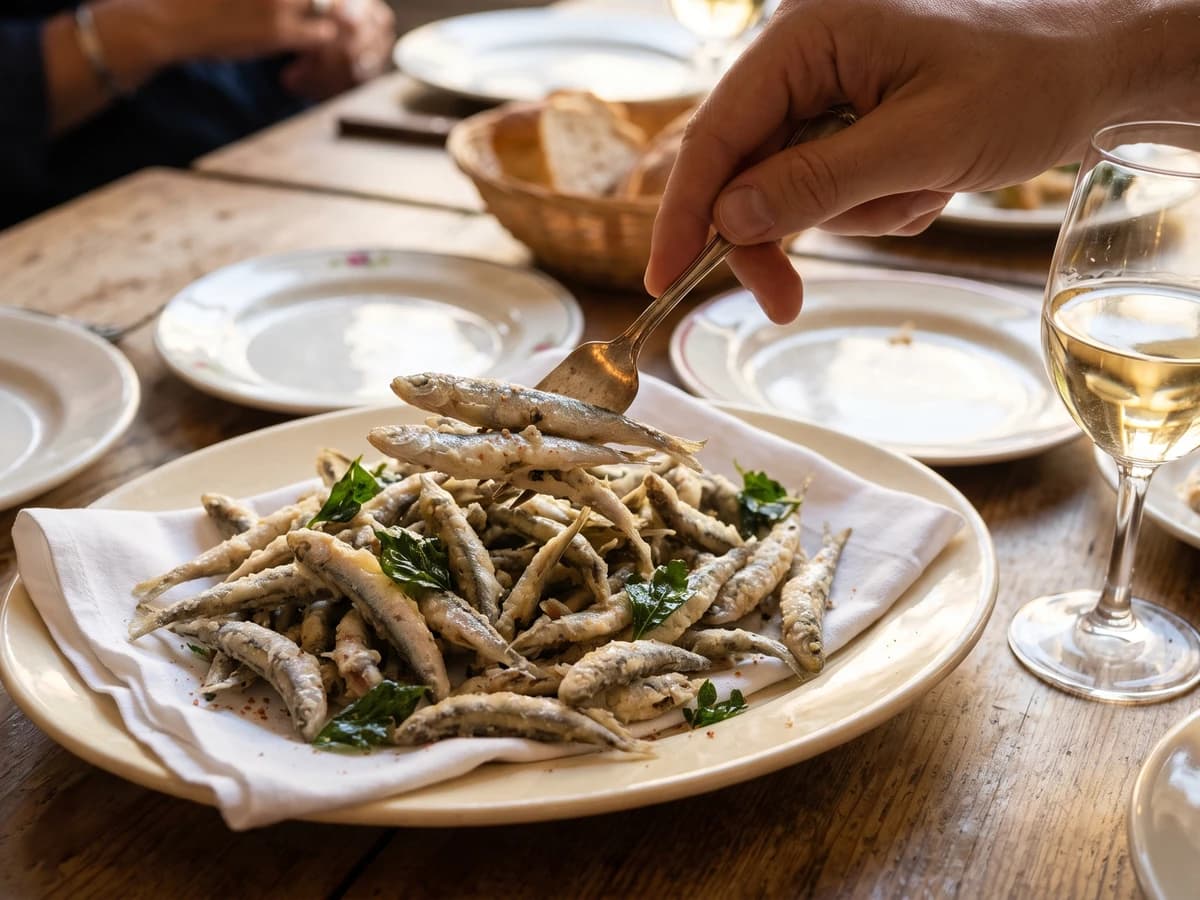
Friture de blanchaille is a lesson in hot fat and restraint: flour shaken nearly bare, minute-long batches, a snap of salt and cayenne, and fried parsley still vivid green.