Chef Juliette
Ordinary or White Consommé
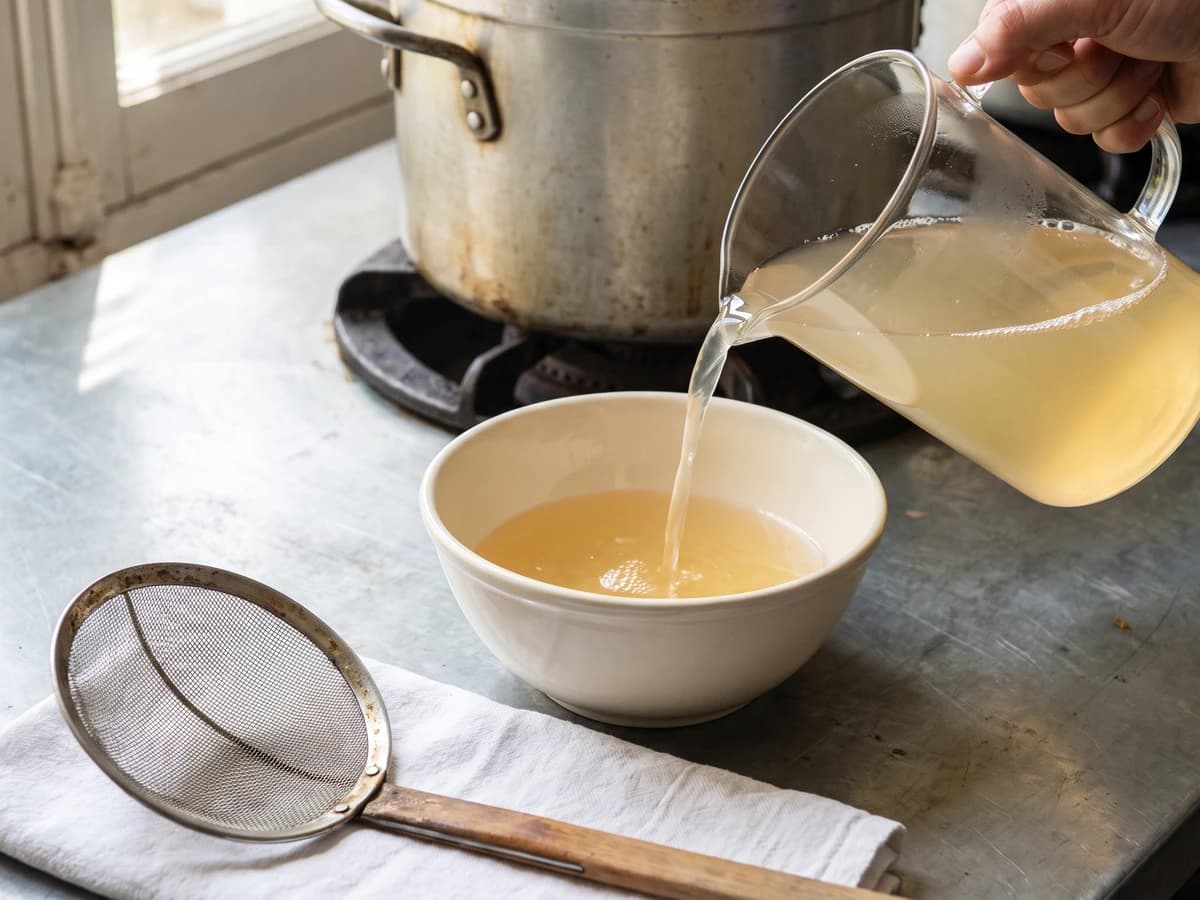
Beef shin, lean beef, and fowl begin in cold water and rise slowly toward a tremble. Skim before the boil, and you learn the quiet discipline that gives every clear French broth its backbone.
A cooking platform built around craft, culture, and the stories behind what we eat.
Created by Chef Juliette
Based on No. 228, Mirepoix, from Le Guide Culinaire (1907) by Auguste Escoffier
Mirepoix turns four humble ingredients into the working foundation of sauces, stocks, marinades, and braises. Match the dice to the cooking time, and every piece gives its flavor at the proper pace.
Mirepoix (a diced aromatic foundation) teaches one rule before all others: the size of the cut must suit the time in the pot. Coarse dice endure a long braise and release their flavor slowly; fine dice belong to a sauce or shorter cooking. Mince these ingredients and you move toward Matignon. The word carries the technique.
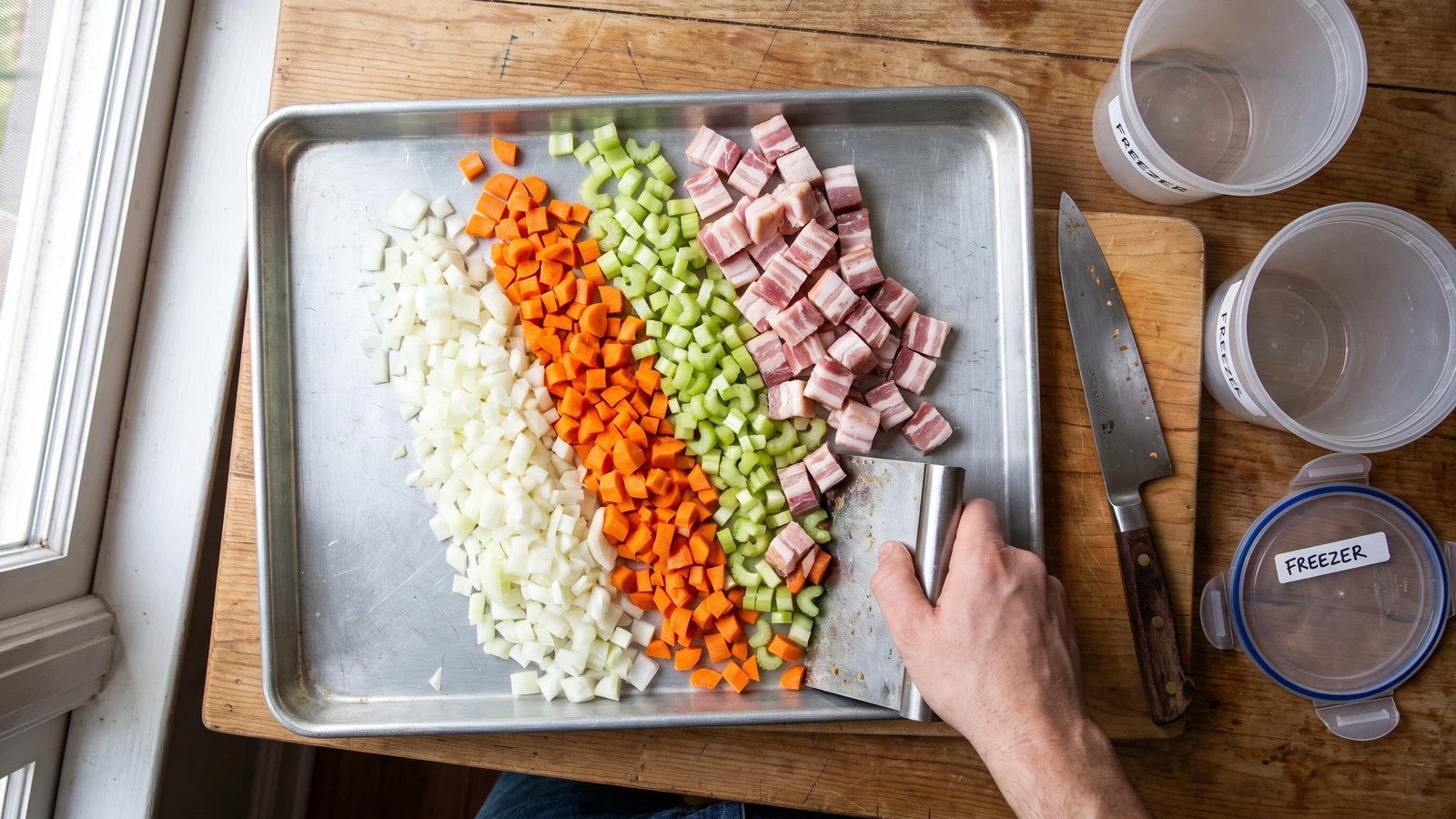
The classical kitchen assumed prep hands cutting fresh mirepoix for several stockpots and a saucier who chose the dice for each preparation. The home equivalent is a sharp knife, one cutting board, and a two-quart batch portioned for the freezer. The quantity and storage have changed because one cook doesn't need a brigade tray every morning. The constituents and the defining dice remain. One cook, one stove, one evening.
Pork gives the mixture depth, whether fresh or lightly salted belly, with ham as the source's other choice. It may be omitted when the receiving dish needs delicacy, particularly a pale sauce, fish preparation, or wine marinade. Before the knife touches an onion, decide how long this mirepoix will cook. That decision is the dish.
The name points to the ducal house associated with Mirepoix in Ariège, but the preparation belongs to France's national classical kitchen rather than specifically to the regional cooking of Occitanie. It traveled from grand-kitchen sauce and stock work into bourgeois braises, roasting pans, and household soup pots because its purpose was universally useful: giving body and fragrance to another preparation. Modern shorthand often means onion, carrot, and celery alone, but this classical entry keeps mirepoix beside Matignon, using the same aromatics and pork while making dice, rather than mincing, the decisive distinction.
Quantity
4 cups (950 ml / 600 g)
peeled and cut to the chosen dice
Quantity
1½ cups (350 ml / 200 g)
peeled and cut to the chosen dice
Quantity
1½ cups (350 ml / 180 g)
trimmed and cut to the chosen dice
Quantity
1 cup (240 ml / 150 g)
skin removed and cut to the chosen dice; unsmoked ham may replace it
| Ingredient | Quantity |
|---|---|
| yellow onionspeeled and cut to the chosen dice | 4 cups (950 ml / 600 g) |
| carrotspeeled and cut to the chosen dice | 1½ cups (350 ml / 200 g) |
| celery stalkstrimmed and cut to the chosen dice | 1½ cups (350 ml / 180 g) |
| fresh or lightly salted unsmoked pork belly (optional)skin removed and cut to the chosen dice; unsmoked ham may replace it | 1 cup (240 ml / 150 g) |
Choose one size according to the receiving dish. Cut a coarse mirepoix into ½-inch (12 mm) dice for a long stock, roast, or braise; cut ¼-inch (6 mm) dice for a sauce, short simmer, or marinade. Keep the pieces recognizably diced. A food processor chops some to paste while leaving others large, which changes both their cooking rate and the character of the preparation.
Peel the onions and carrots, then trim the celery, pulling away only strings that are genuinely tough. Cut broad vegetables into manageable lengths and give round pieces one flat side so they sit steadily beneath the knife. A brigade might square every vegetable into perfect blocks, but that is service scaffolding and can go. Reasonably even dice are the dish; costly geometric perfection is not.
Halve each onion from root to stem and set it flat. Make lengthwise cuts at the chosen spacing, add horizontal cuts where the onion's height requires them, then cut across into dice. The pieces should be close enough in size to soften together, with ivory faces and clean edges rather than a wet mince.
Cut the carrots lengthwise into planks, the planks into even sticks, and the sticks crosswise into dice. Treat the celery the same way, splitting wide stalks lengthwise before cutting across. If the first handful is ragged, don't throw it out. Ça se rattrape: sort the smaller pieces for a sauce batch and the larger ones for a braise, then reset your knife spacing before continuing.
Keep the pork cold so its fat stays firm beneath the knife. Remove skin and any hard cartilage, slice the belly into slabs, then sticks, then dice matching the vegetables. If lightly salted belly carries visible surface brine, rinse it briefly and dry it thoroughly before cutting. Use unsmoked pork or ham; smoke would become the loudest flavor in every preparation this mirepoix touches. Wash the knife, board, and your hands after handling the raw pork.
Combine the vegetables and pork only if the mirepoix will be used immediately or frozen the same day. Divide it into 2-cup (475 ml) portions, enough to establish the base of an ordinary four-serving braise or a modest stockpot. For refrigerated preparation, keep the pork in its own covered container and unite it with the vegetables at the stove.
Let the receiving recipe decide how the mirepoix cooks. For a braise or roast, render the pork gently first, then add the vegetables and soften or brown them as that dish directs. For a stock, sauce, or marinade, use the chosen fine or coarse dice without inventing a separate cooking stage here. If the vegetables catch before they soften, lower the heat, add 1 tablespoon (15 ml / 15 g) water from the receiving recipe, and scrape up the fond. The source defines mirepoix by its constituents and cut; its work is completed inside the preparation it supports.
1 serving (about 140g)
Culinary guides, cultural storytelling, and the editorial depth that makes cooking meaningful.
Discover Culinary ExplorerChef Juliette
Beef shin, lean beef, and fowl begin in cold water and rise slowly toward a tremble. Skim before the boil, and you learn the quiet discipline that gives every clear French broth its backbone.
Chef Juliette
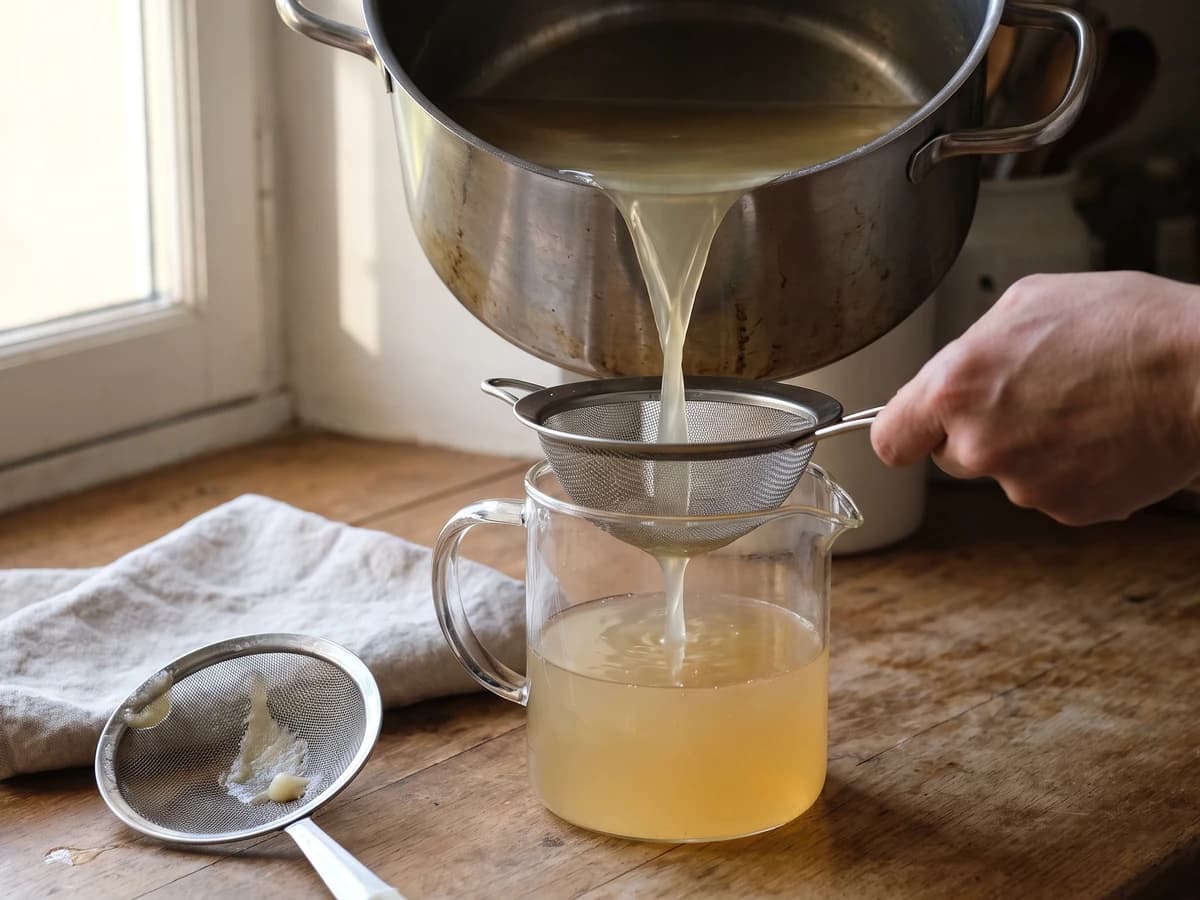
Break the veal bones small, then give them eight hours at a bare tremble. This pale, gelatinous fond becomes the quiet foundation beneath velouté, blanquette, and every sauce that must stay light.
Chef Juliette
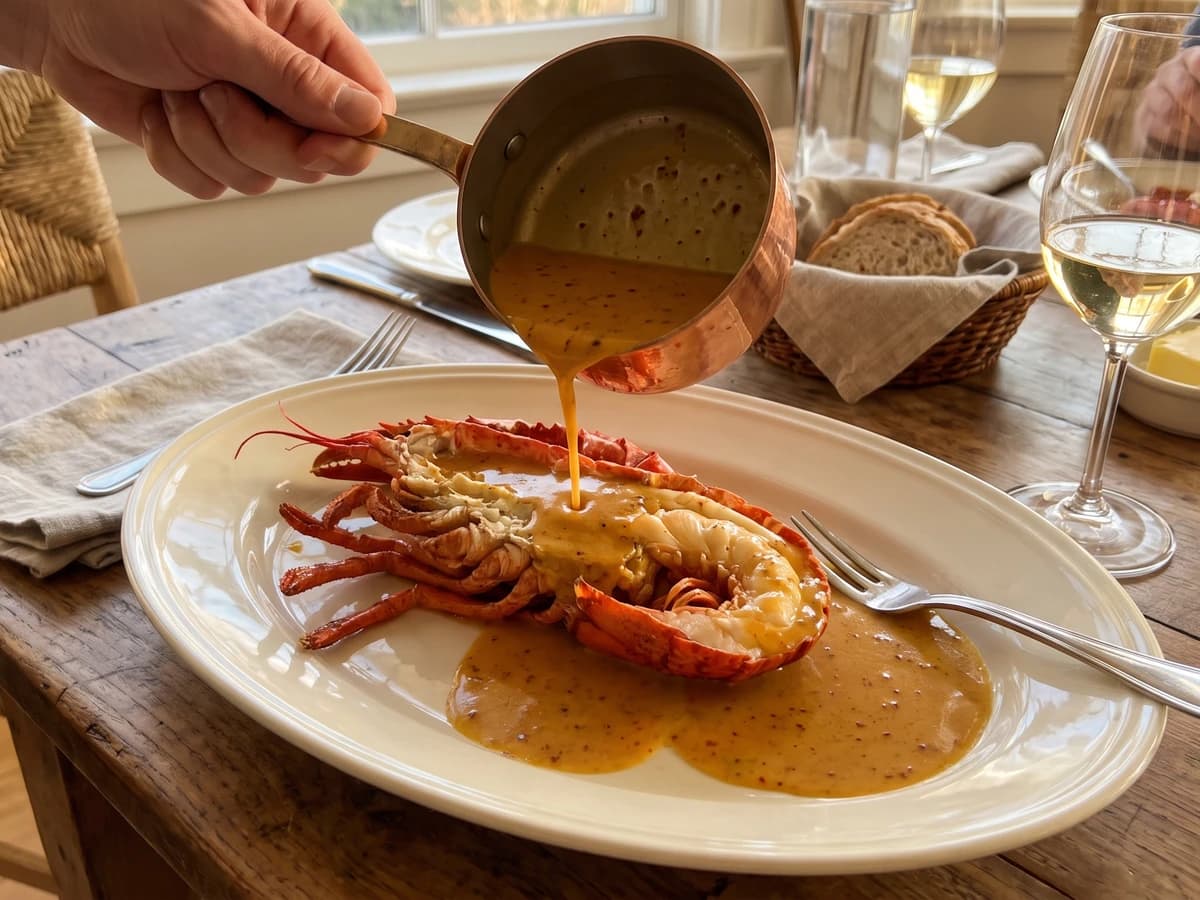
Sauce Orientale concentrates lobster-rich American Sauce with curry, then folds in cream away from the fire: a glossy, gently spiced derivative made for lobster, crayfish, and firm fish.
Chef Juliette
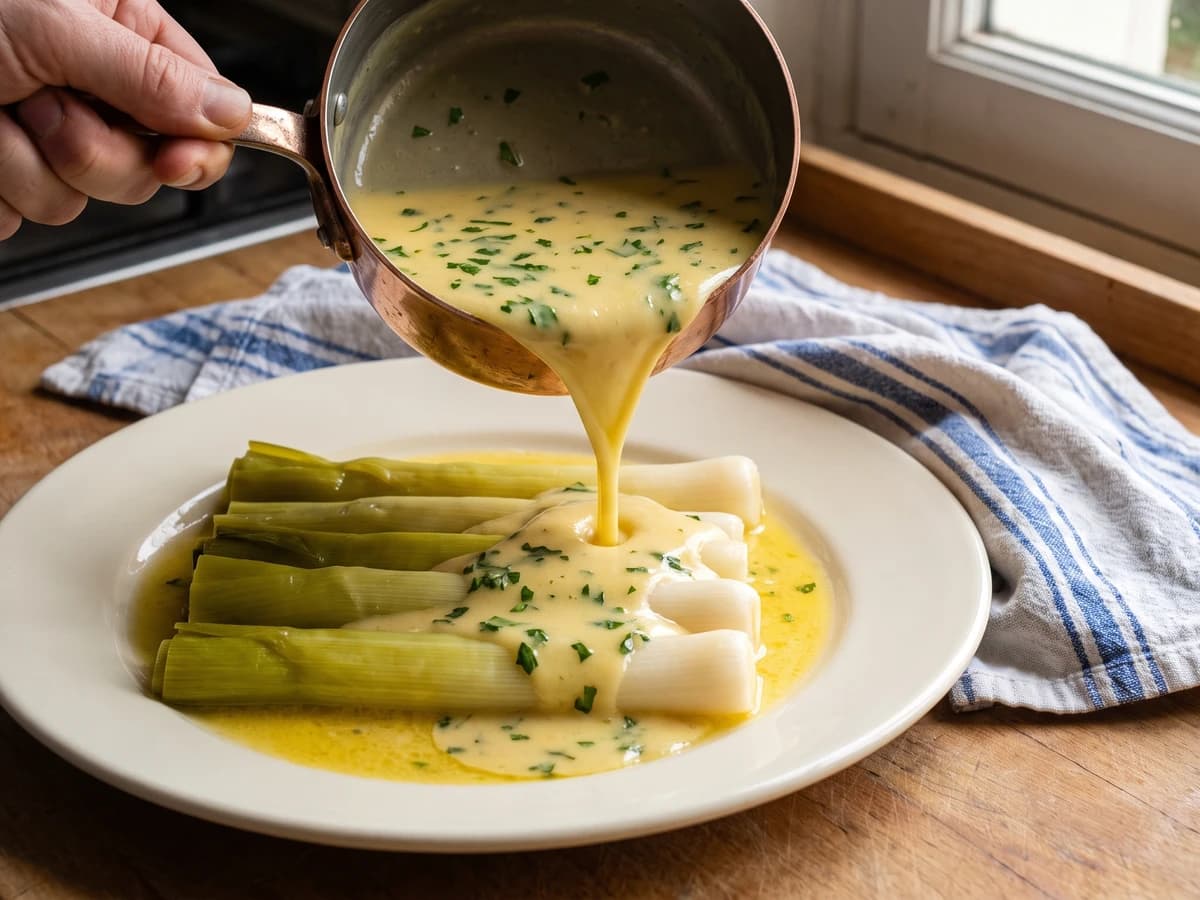
An old lesson in sauce families: Sauce Allemande takes mushroom liquor, then butter, lemon, and parsley, becoming a glossy Poulette for sheep's trotters, leeks, cauliflower, and anything needing gentle richness with a bright edge.