Chef Juliette
Ordinary or White Consommé
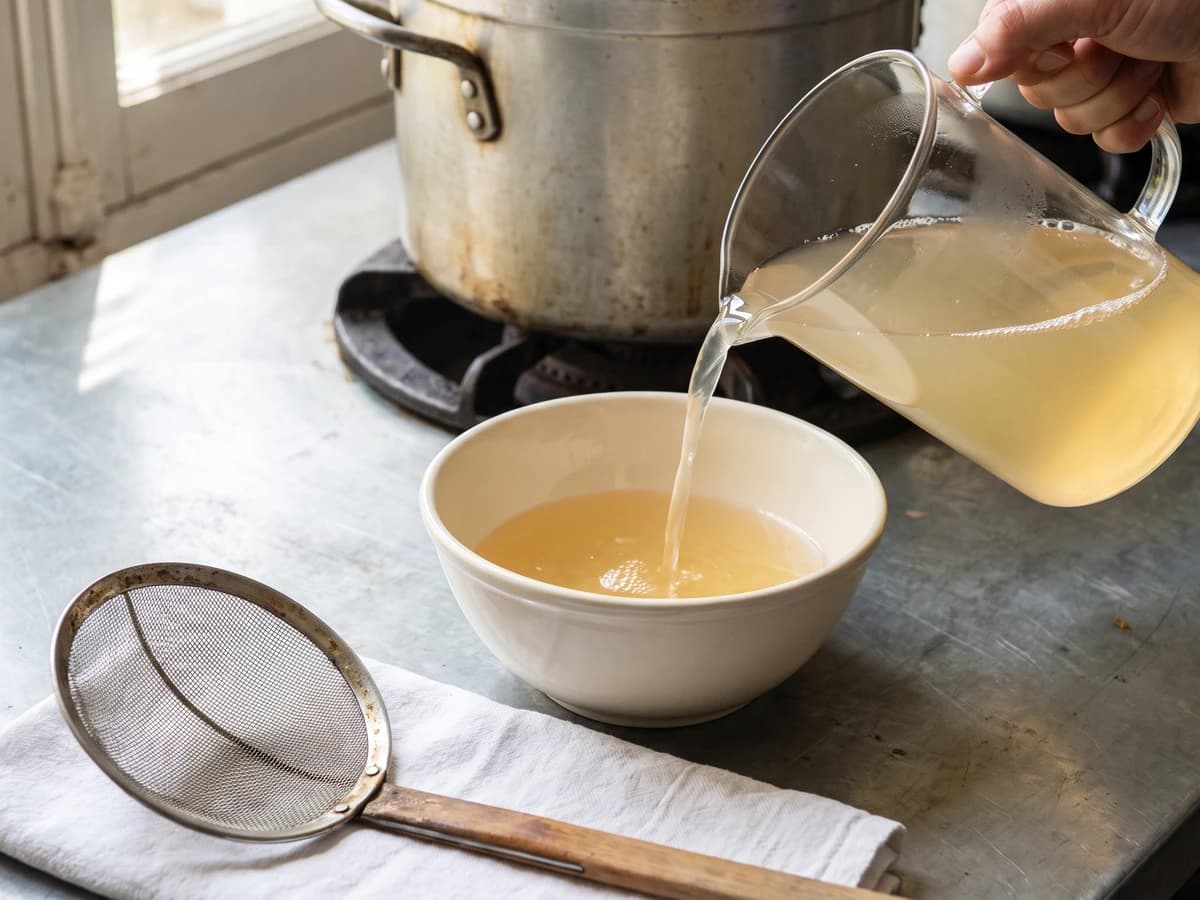
Beef shin, lean beef, and fowl begin in cold water and rise slowly toward a tremble. Skim before the boil, and you learn the quiet discipline that gives every clear French broth its backbone.
A cooking platform built around craft, culture, and the stories behind what we eat.
Created by Chef Juliette
Based on No. 174, Anglaise (for Egg-and-bread-crumbing), from Le Guide Culinaire (1907) by Auguste Escoffier
Anglaise is the quiet hinge of paner à l’anglaise: flour grips the food, seasoned egg grips the crumbs, and very hot fat sets the whole into a firm crust before anything can escape.
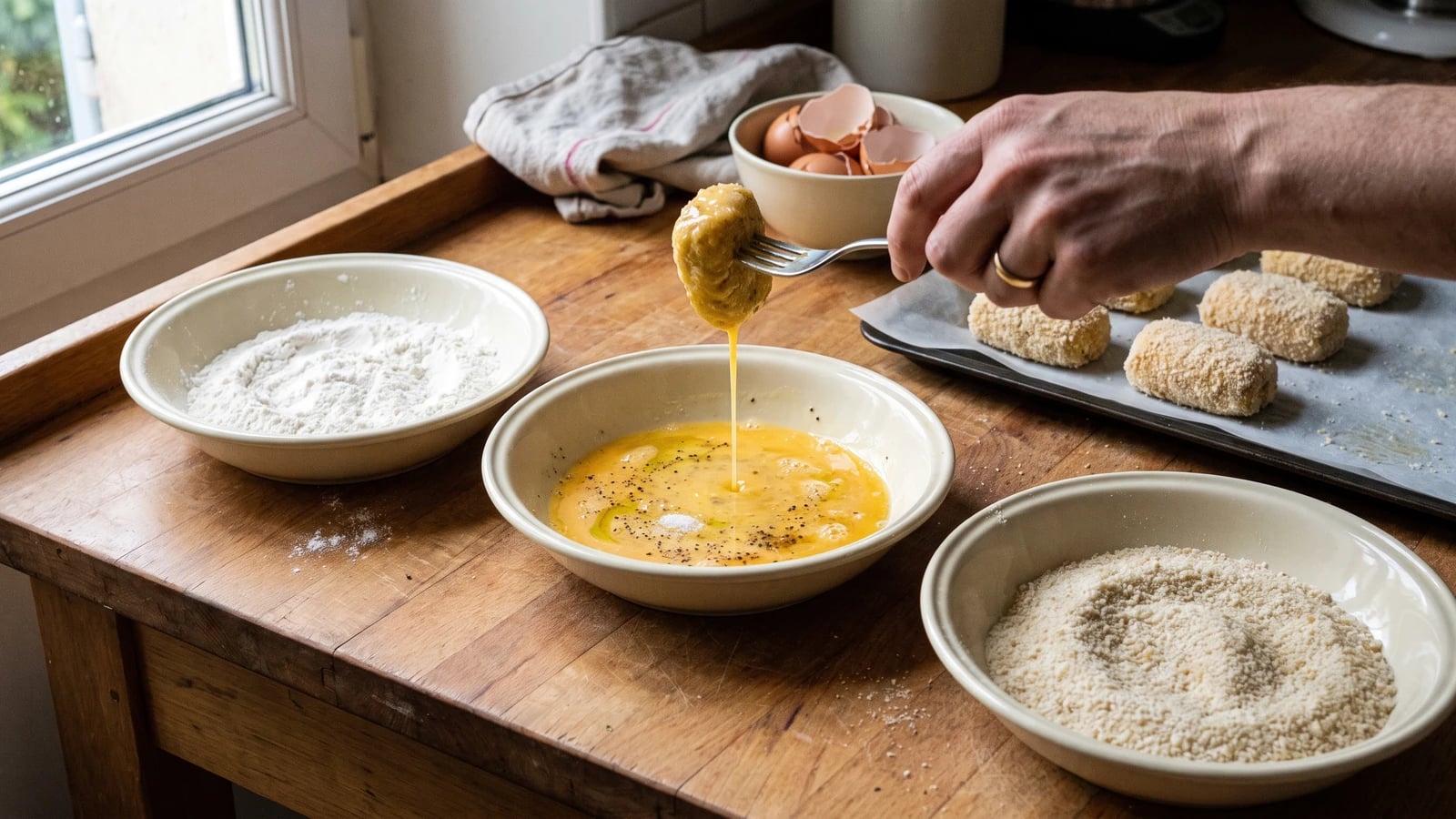
Anglaise teaches adhesion before it teaches frying. The crust is built in three thin, complete layers: flour clings to the dry food, anglaise clings to the flour, and fine crumbs cling to the anglaise. Miss the flour or leave a bare patch, and the coat slips when it meets the fat.
The old kitchen assumed a garde-manger keeping bowls of anglaise, flour, and rasped bread ready through service while a brigade sent croquettes and cutlets past them. For one cook, that standing basin of raw egg is service scaffolding and can go. Two eggs with one dessertspoonful of oil preserve the book’s ratio and make enough for four portions tonight. The indispensable sequence stays exactly as written: flour, anglaise, fine crumbs, then very hot fat.
Done properly, the crumbs turn evenly gold and the shell holds firm around a creamy croquette or a juicy piece of meat or fish. Before you touch the pan, dry every surface and make each layer thin and complete. That is the step that decides whether the crust holds.
Paner à l’anglaise belongs to the vocabulary of the grand Parisian kitchen, where à l’anglaise identifies the orderly coating of flour, seasoned egg, and bread crumbs. The method passed naturally to the bourgeois table because its crust performs useful work, keeping reduced sauce inside croquettes and protecting the juices of meat or fish in hot fat. Anglaise here means the beaten egg preparation, not crème anglaise, the pouring custard with which it is sometimes confused.
Quantity
4 portions
surfaces thoroughly dried
Quantity
1/2 cup (120 ml / 60 g)
Quantity
2
Quantity
1 dessertspoon (2 teaspoons / 10 ml / 9 g)
Quantity
1/4 teaspoon (1.25 ml / 1.5 g)
Quantity
1/8 teaspoon (0.6 ml / 0.3 g)
Quantity
1 1/2 cups (360 ml / 150 g)
| Ingredient | Quantity |
|---|---|
| prepared croquettes, cutlets, fish fillets, or other solidssurfaces thoroughly dried | 4 portions |
| all-purpose flour | 1/2 cup (120 ml / 60 g) |
| large eggs | 2 |
| neutral oil | 1 dessertspoon (2 teaspoons / 10 ml / 9 g) |
| fine salt | 1/4 teaspoon (1.25 ml / 1.5 g) |
| finely ground pepper | 1/8 teaspoon (0.6 ml / 0.3 g) |
| fine dry bread crumbs or fine bread raspings | 1 1/2 cups (360 ml / 150 g) |
Set three wide, shallow dishes in order: flour, an empty dish for the anglaise, and fine bread crumbs or raspings. Pat every piece of food thoroughly dry; if you are coating croquettes or another soft preparation, chill them until firm enough to handle. Dampness turns flour into paste, while a dry surface takes a thin, even veil.
Break the eggs into the middle dish and beat them until the whites and yolks are completely joined, with no ropes of white remaining. Add the salt, pepper, and oil, then whisk until the oil is finely dispersed. You want a fluid, cohesive mixture, not a bowl of foam. The proportion is the original one dessertspoonful of oil for each couple of eggs, simply reduced to a useful home batch. If the oil separates while the dish waits, whisk it together again. Ça se rattrape.
Roll each piece lightly in the flour, covering every face and edge, then tap away all excess. Flour is the bridge between the food and the anglaise, but a thick flour coat becomes gummy and slides away. What remains should look like a fine white dusting, without clumps or damp patches.
Lower the floured piece into the anglaise, turn it until completely coated, and lift it long enough for the excess to run back into the dish. Transfer it to the crumbs and roll or press gently until no wet egg remains visible. Keep one hand for the flour and crumbs and the other for the anglaise, or you will bread your fingers more heavily than the supper. If a bald patch appears, dab that spot with fresh anglaise and press on clean crumbs. Ça se rattrape.
Cook the coated food as its preparation requires, placing it into very hot fat without delay. For deep frying, hold the fat around 350 to 355°F (175 to 180°C); for shallow frying, it should shimmer readily without smoking. This immediate heat sets the egg and crumbs into the resistant crust that keeps a croquette’s filling or a cutlet’s juices where they belong. If the first piece sheds crumbs, finish cooking it but add nothing else yet. Skim out the loose crumbs, let the fat regain its heat, and patch any weak places on the remaining pieces before continuing. The exact cooking time belongs to the food inside, not to the anglaise.
1 serving (about 80g)
Culinary guides, cultural storytelling, and the editorial depth that makes cooking meaningful.
Discover Culinary ExplorerChef Juliette
Beef shin, lean beef, and fowl begin in cold water and rise slowly toward a tremble. Skim before the boil, and you learn the quiet discipline that gives every clear French broth its backbone.
Chef Juliette
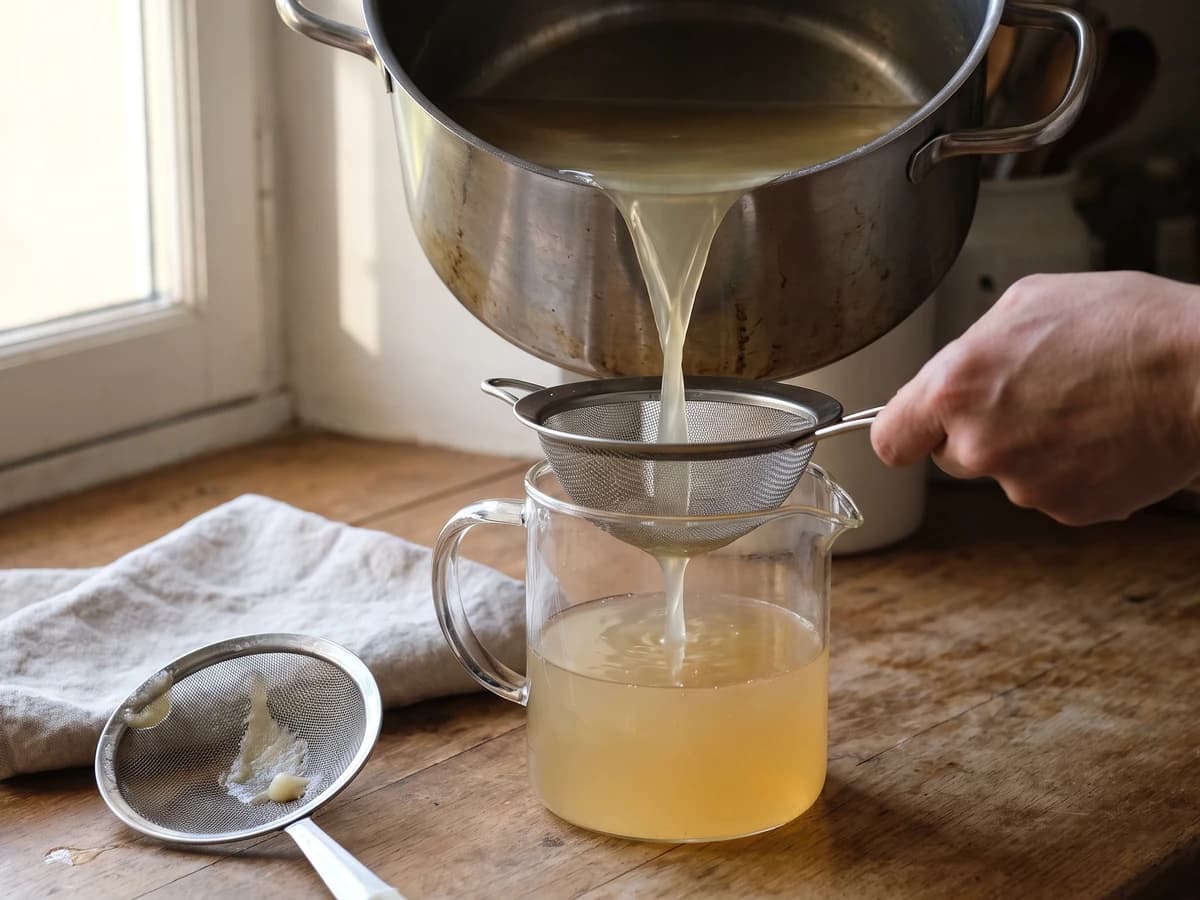
Break the veal bones small, then give them eight hours at a bare tremble. This pale, gelatinous fond becomes the quiet foundation beneath velouté, blanquette, and every sauce that must stay light.
Chef Juliette
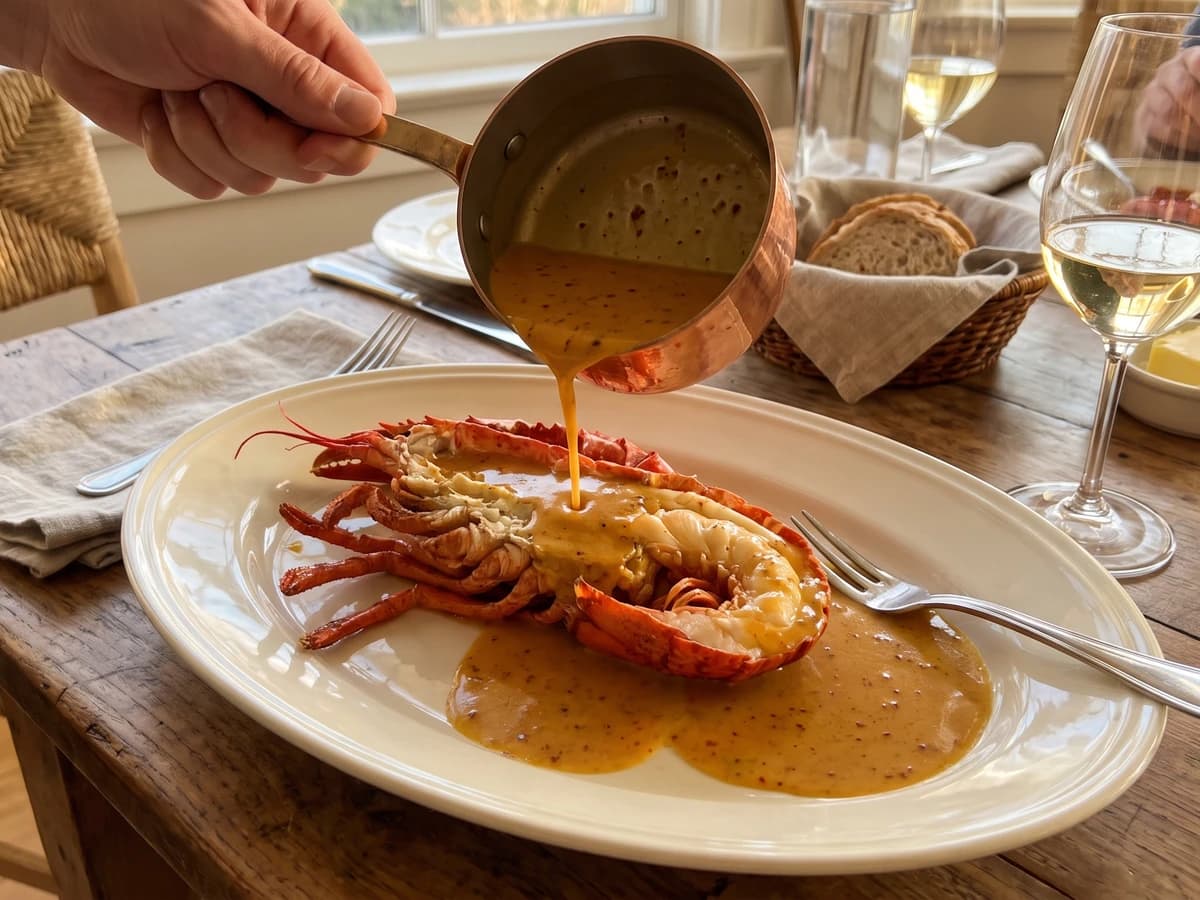
Sauce Orientale concentrates lobster-rich American Sauce with curry, then folds in cream away from the fire: a glossy, gently spiced derivative made for lobster, crayfish, and firm fish.
Chef Juliette
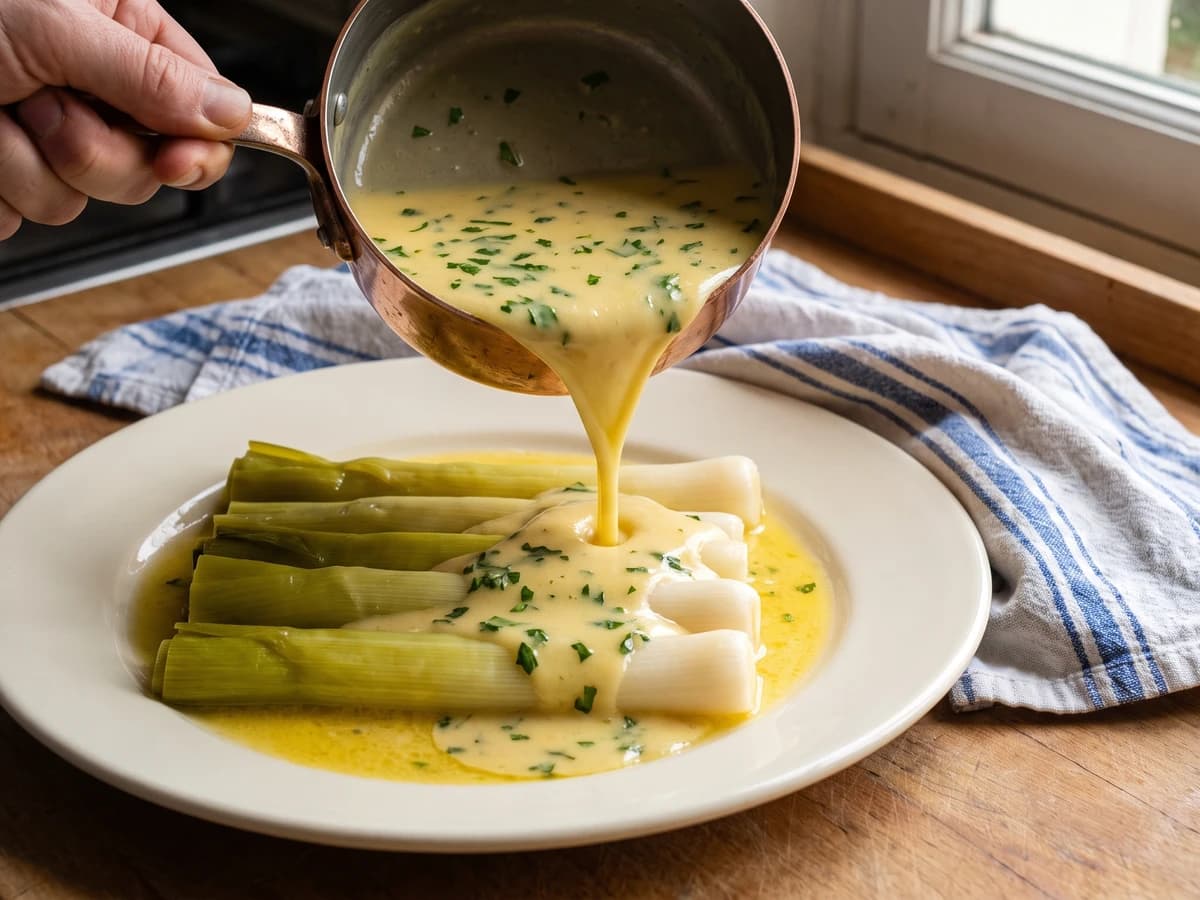
An old lesson in sauce families: Sauce Allemande takes mushroom liquor, then butter, lemon, and parsley, becoming a glossy Poulette for sheep's trotters, leeks, cauliflower, and anything needing gentle richness with a bright edge.